
Choosing the best rigid solar panels can be more challenging than it first appears. Whether you’re installing solar on an RV, powering a remote cabin, upgrading a boat, or building a reliable off-grid energy system, the right panel can significantly improve energy production, system reliability, and long-term value. The wrong choice, however, may leave you with lower efficiency, slower battery charging, or a panel that doesn’t perform as expected in real outdoor conditions.
The challenge is that the best rigid solar panel isn’t necessarily the one with the highest wattage or the lowest price. Some models prioritize maximum efficiency through advanced N-Type or TOPCon solar cells, while others focus on affordability, proven reliability, or compatibility with common 12V solar systems. A premium panel may be the best investment for year-round off-grid living, while a more budget-friendly option can be the smarter choice for occasional RV trips or weekend camping.
For this guide, we evaluated today’s leading rigid solar panels based on the factors that matter most in real-world installations: power output, conversion efficiency, solar cell technology, build quality, weather resistance, ease of installation, warranty coverage, overall value, and the types of applications each panel is best suited for.
Rather than recommending one “perfect” solar panel, we explain the strengths, limitations, and ideal use cases for every model. Whether your priority is maximum efficiency, dependable off-grid performance, or the best value for your budget, this guide will help you choose the best rigid solar panels for your specific solar project.
As an Amazon Associate, we earn from qualifying purchases.

Table of Contents
Quick Answer
The best rigid solar panel for most people in 2026 is the Renogy 200W N-Type High Efficiency Rigid Solar Panel. It offers an outstanding balance of power output, modern N-Type cell technology, durability, efficiency, and overall value, making it an excellent choice for RVs, cabins, boats, and off-grid solar systems.
If your priorities are different, there are several excellent alternatives. The BougeRV 200W TOPCon N-Type Rigid Solar Panel stands out for its advanced TOPCon technology and impressive efficiency. The Rich Solar MEGA 200 is a dependable option for larger off-grid installations, while the Newpowa 180W 10BB Solar Panel provides reliable performance for smaller 12V systems and first-time solar users. If you’re looking for the most affordable option without sacrificing dependable performance, the ECO-WORTHY 195W Monocrystalline Rigid Solar Panel offers excellent value.
The right rigid solar panel ultimately depends on your installation, available roof or mounting space, energy requirements, budget, and long-term goals. In this guide, we compare each recommended panel in detail, explaining where it excels, its limitations, and which type of user will benefit most from choosing it.
Why You Can Trust Power Ready Guide
At Power Ready Guide, we focus exclusively on backup power, solar energy, and portable power solutions. Our recommendations are based on detailed product research, manufacturer specifications, independent testing data, long-term reliability, feature comparisons, and real-world user experiences rather than marketing claims alone.
For this guide, we evaluated every rigid solar panel using the same objective criteria, including:
- Solar cell technology and conversion efficiency
- Rated power output and real-world performance
- Build quality, durability, and weather resistance
- Ease of installation and compatibility with common 12V and off-grid systems
- Manufacturer reputation and warranty coverage
- Overall value for money
- Best use cases for different types of solar installations
We don’t simply recommend the highest-wattage or most expensive solar panel. Instead, we identify the models that deliver the best combination of efficiency, reliability, durability, and long-term value for different users. Whether you’re installing solar on an RV, powering a cabin, equipping a boat, or building a permanent off-grid system, our goal is to help you choose the panel that best matches your energy needs, installation requirements, and budget.
How We Evaluated the Best Rigid Solar Panels
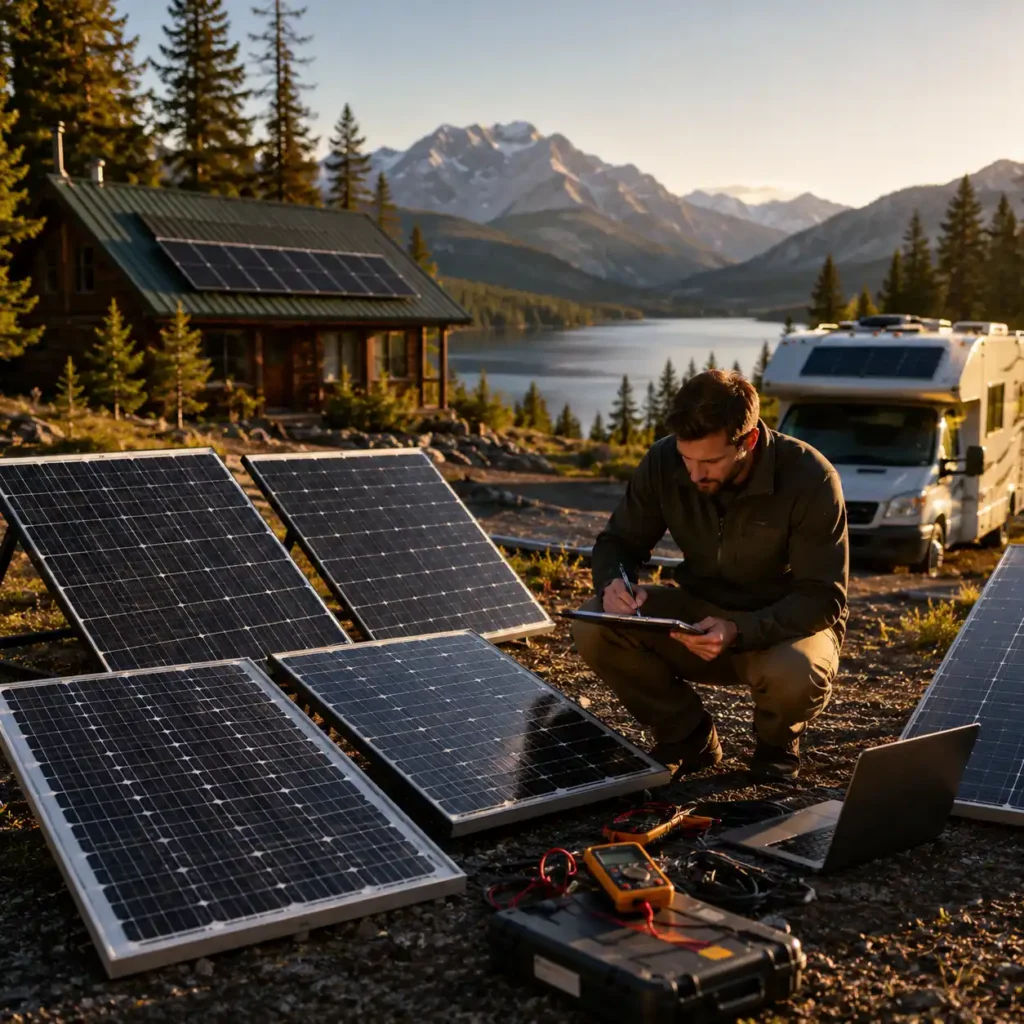
Every rigid solar panel in this guide was evaluated using the same research framework to ensure fair, consistent, and objective comparisons. Instead of focusing on a single specification, we assessed how each panel performs as a complete solar solution, balancing efficiency, durability, reliability, and long-term value.
A higher wattage or a higher advertised efficiency doesn’t automatically make a solar panel the best choice. For many buyers, factors such as cell technology, weather resistance, installation flexibility, warranty coverage, and overall build quality are just as important as maximum power output. Our evaluation reflects the real-world trade-offs that homeowners, RV owners, and off-grid users face when choosing a rigid solar panel.
Each recommendation was assessed using the following criteria:
- Solar cell technology, with preference given to modern N-Type and TOPCon panels for their improved efficiency, lower degradation rates, and better performance in high temperatures.
- Rated power output and overall energy production potential under standard testing conditions.
- Conversion efficiency, evaluating how effectively each panel converts available sunlight into usable electricity.
- Build quality and durability, including tempered glass construction, corrosion-resistant aluminum frames, and resistance to harsh weather conditions.
- Installation flexibility, considering compatibility with RVs, cabins, boats, residential rooftops, and off-grid solar systems.
- Manufacturer reputation and warranty coverage, based on brand history, product support, and long-term reliability.
- Overall value for money, comparing performance, technology, durability, and price rather than simply recommending the most expensive model.
We also considered different installation scenarios because the ideal solar panel for a weekend RV setup may not be the best choice for a permanent off-grid cabin or a home backup system.
Our goal isn’t to identify the highest-wattage solar panel on the market. It’s to recommend the right rigid solar panel for different applications, helping you invest in a model that delivers reliable performance, long service life, and the best overall value for your specific solar project.
Who This Guide Is For
Buying a rigid solar panel isn’t simply about choosing the highest wattage or the most efficient model. The right panel depends on where you’ll install it, how much energy you need to generate, your available mounting space, and how you plan to use your solar system over the coming years.
This guide is designed for anyone who wants to make a confident buying decision based on real-world requirements rather than marketing specifications.
It’s especially helpful for:
- RV owners looking for durable, high-efficiency solar panels to keep batteries charged during road trips and extended camping.
- Cabin owners building reliable off-grid solar systems for lighting, appliances, water pumps, and everyday electrical needs.
- Boat owners searching for weather-resistant panels capable of handling harsh marine environments.
- Homeowners adding solar panels to backup power systems or expanding an existing off-grid installation.
- DIY solar enthusiasts comparing today’s leading brands before investing in a new solar array.
- First-time solar buyers who want to understand the differences between modern panel technologies, including PERC, N-Type, and TOPCon, before making a purchase.
Whether your priority is maximum efficiency, long-term durability, better performance in hot climates, or the best overall value, this guide will help you choose the rigid solar panel that best matches your energy needs, installation requirements, and budget.
Quick Summary: Our Top Picks
Not every rigid solar panel is designed for the same type of installation. Some prioritize maximum efficiency through the latest N-Type or TOPCon cell technology, while others focus on affordability, proven durability, or dependable performance for everyday off-grid use.
The solar panels below earned their awards based on our evaluation of efficiency, power output, build quality, weather resistance, ease of installation, long-term reliability, warranty coverage, and overall value.
Renogy 200W N-Type High Efficiency Rigid Solar Panel
Award: Best Overall
Why It Won:
Combines modern N-Type cell technology with excellent efficiency, durable construction, and dependable long-term performance, making it the most well-rounded rigid solar panel for the majority of users.
Choose This If:
- You want the best overall balance of performance and value.
- You’re building a reliable RV or off-grid solar system.
- Long-term efficiency and durability are top priorities.
Best For:
- RVs
- Cabins
- Home backup systems
- Off-grid living
BougeRV 200W TOPCon N-Type Rigid Solar Panel
Award: Best Premium Technology
Why It Won:
Uses advanced TOPCon N-Type solar cells that provide excellent efficiency, improved temperature performance, and lower long-term degradation.
Choose This If:
- You want the newest solar cell technology.
- Maximum energy production is your priority.
- You plan to use the panel for many years.
Best For:
- Premium RV systems
- Residential solar projects
- High-performance off-grid installations
Rich Solar MEGA 200 Monocrystalline Solar Panel
Award: Best for Off-Grid Systems
Why It Won:
Offers dependable performance, solid build quality, and consistent power generation, making it an excellent choice for permanent off-grid installations.
Choose This If:
- You’re building a cabin or remote power system.
- Reliability is more important than having the latest technology.
- You need a proven panel for everyday use.
Best For:
- Cabins
- Sheds
- Remote properties
- Off-grid solar arrays
Newpowa 180W 10BB Monocrystalline Solar Panel
Award: Best Budget Pick
Why It Won:
Provides reliable performance, straightforward installation, and excellent compatibility with 12V solar systems at an attractive price point.
Choose This If:
- You’re installing your first RV solar system.
- You want dependable performance without overspending.
- Your energy needs are moderate.
Best For:
- RVs
- Camper vans
- Travel trailers
- Weekend camping
ECO-WORTHY 195W Monocrystalline Rigid Solar Panel
Award: Best Starter Kit Option
Why It Won:
Delivers dependable everyday performance and good efficiency while remaining one of the most affordable rigid solar panels in its class.
Choose This If:
- You’re building a solar system on a budget.
- You want dependable performance for basic off-grid applications.
- Cost is one of your biggest purchasing factors.
Best For:
- Budget solar projects
- Cabins
- Workshops
- Small off-grid systems
Best Rigid Solar Panels Compared
Compare the best rigid solar panels side by side to quickly see how they differ in power output, solar cell technology, efficiency, and ideal applications. This comparison table provides a fast overview of our top recommendations before you dive into the detailed product reviews below.
Whether you’re looking for the highest efficiency, the best value, or a dependable panel for an RV, cabin, or off-grid solar system, the comparison below highlights the key differences to help narrow your options.
| Model | Award | Power | Cell Technology | Best For |
|---|---|---|---|---|
| Renogy 200W N-Type | Best Overall | 200W | N-Type | Most Users |
| BougeRV 200W TOPCon | Best Premium Technology | 200W | TOPCon N-Type | Maximum Efficiency |
| Rich Solar MEGA 200 | Best for Off-Grid Systems | 200W | Monocrystalline | Cabins & Off-Grid |
| Newpowa 180W 10BB | Best Budget Pick | 180W | 10BB Monocrystalline | RVs & Camper Vans |
| ECO-WORTHY 195W | Best Starter Kit Option | 195W | Monocrystalline | Budget Solar Projects |
The Best Rigid Solar Panels Reviewed
Renogy 200W N-Type High Efficiency Rigid Solar Panel
Renogy 200W N-Type High Efficiency Rigid Solar Panel

Quick Verdict
The Renogy 200W N-Type High Efficiency Rigid Solar Panel earns our Best Overall award because it offers the strongest balance of efficiency, durability, long-term reliability, and overall value. Rather than excelling in just one category, it combines modern N-Type solar cell technology, impressive energy production, rugged construction, and versatile installation options into a panel that performs exceptionally well across a wide range of solar applications.
Its 200W output makes it suitable for powering RV battery systems, off-grid cabins, boats, sheds, and residential backup installations, while the high-efficiency N-Type cells help maximize energy generation even when installation space is limited. Lower long-term degradation and improved temperature performance also mean owners can expect dependable energy production for many years.
What ultimately makes this panel our top recommendation is how well it balances cutting-edge technology with proven reliability. Some panels cost less, while others focus on niche applications, but few deliver such a complete package of performance, build quality, efficiency, and long-term ownership value. If you’re looking for one rigid solar panel that can confidently serve almost any off-grid or mobile solar project, this is the model we’d choose first.
Solar Panel Snapshot
| Feature | Details |
|---|---|
| Best For | RVs • Cabins • Home Backup • Off-Grid Solar Systems |
| Rated Power | 200W |
| Solar Cell Type | N-Type Monocrystalline |
| Panel Type | Rigid |
| Weather Resistance | Designed for long-term outdoor use |
| Warranty | Manufacturer warranty |
| Ideal Buyer | Users looking for one high-performance solar panel that combines modern technology, excellent efficiency, and dependable long-term reliability. |
Why We Chose It
Choosing the best rigid solar panel isn’t simply about selecting the highest wattage or the lowest price. The best panel is the one that consistently delivers reliable energy production year after year while remaining durable enough to withstand changing weather conditions and everyday outdoor use.
That’s exactly why the Renogy 200W N-Type High Efficiency Rigid Solar Panel earned our top recommendation.
Its modern N-Type solar cells provide excellent conversion efficiency while reducing the performance losses that naturally occur as panels age. Compared with older cell technologies, N-Type panels typically offer lower degradation rates and better performance during hot summer conditions, helping maximize long-term energy production.
We also gave significant weight to Renogy’s reputation within the off-grid and RV community. The panel combines a durable aluminum frame, tempered glass construction, and dependable manufacturing quality with broad compatibility across 12V and larger solar systems. Whether mounted on an RV roof, a cabin, a boat, or a permanent off-grid installation, it delivers the kind of consistent performance most buyers are looking for.
For users who want one solar panel that successfully balances efficiency, reliability, durability, and long-term value, the Renogy 200W N-Type High Efficiency Rigid Solar Panel stands out as the strongest all-around choice in this guide.
Check the latest price and customer reviews on Amazon.
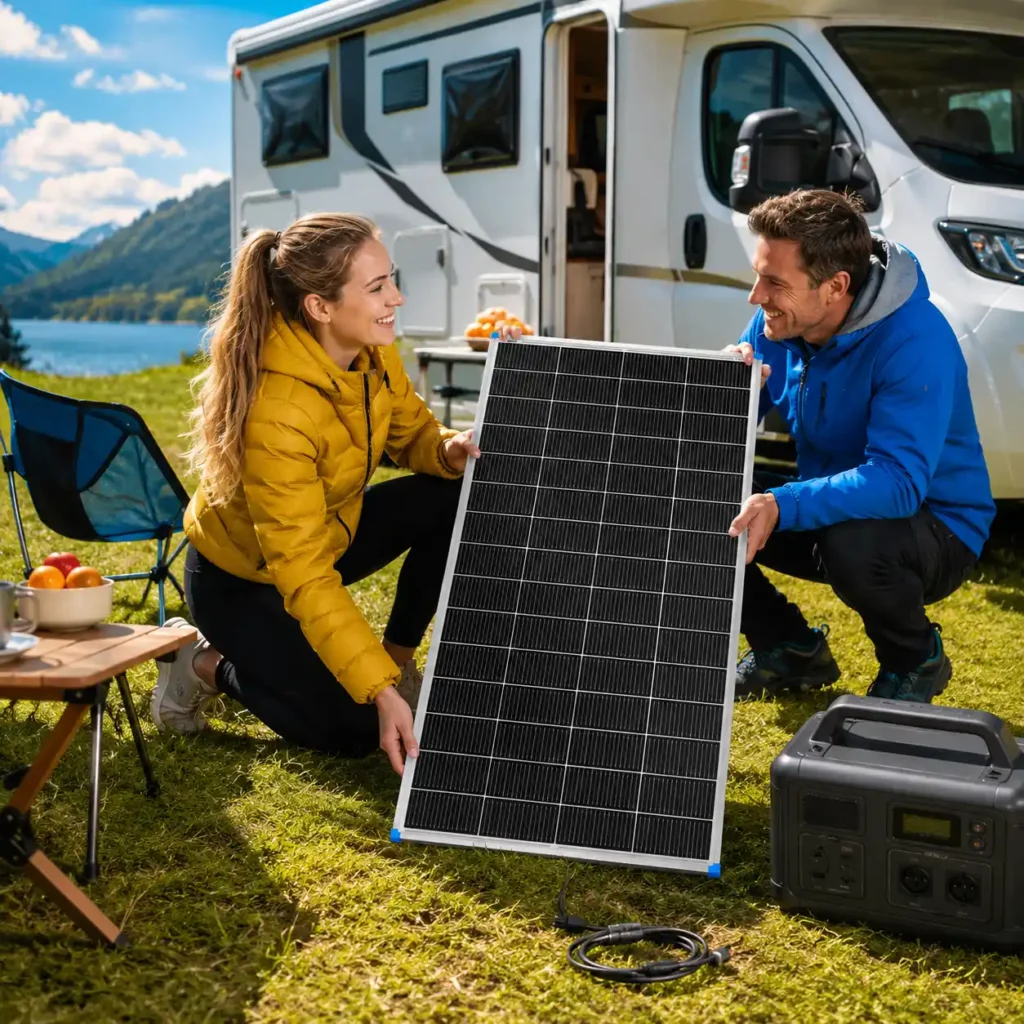
Living With It in the Real World
The Renogy 200W N-Type High Efficiency Rigid Solar Panel is one of those upgrades that quietly improves your entire solar setup. Once installed, it simply gets to work every day, converting available sunlight into reliable power without requiring constant attention or maintenance.
Imagine arriving at your off-grid cabin after several days away. Even before unloading your gear, your battery bank has already been replenished by the day’s sunlight. The lights switch on, the refrigerator is running, and your essential appliances are ready to use without the noise or fuel consumption of a generator.
The same experience applies to RV travel. During the day, the panel continues charging your battery system while you’re exploring hiking trails, relaxing at the beach, or driving to your next destination. By the evening, there’s enough stored energy to power lighting, charge laptops, run a portable refrigerator, or operate small kitchen appliances, allowing you to enjoy camp without worrying about your remaining battery capacity.
What makes the Renogy panel especially enjoyable to own is its consistency. Modern N-Type solar cells continue producing dependable power in changing weather conditions and perform particularly well during hot summer days, when many conventional panels begin to lose efficiency. Over time, its lower degradation rate means you’ll continue generating strong output year after year, making it a long-term investment rather than a short-term upgrade.
Whether mounted permanently on a cabin roof, installed on an RV, or integrated into a home backup system, the Renogy 200W panel delivers the kind of dependable daily performance that allows your solar system to fade into the background—exactly as a well-designed energy system should.
Renogy 200W N-Type Evaluation
| Evaluation Category | Editorial Assessment |
|---|---|
| Energy Production | Excellent efficiency with modern N-Type solar cells that maximize energy output throughout the day. |
| Build Quality | Strong aluminum frame and tempered glass construction designed for years of outdoor use. |
| Weather Performance | Performs reliably across changing weather conditions with improved high-temperature performance. |
| Long-Term Value | Lower degradation and dependable construction make it an excellent long-term investment. |
| Overall Rating | Our top overall recommendation thanks to its outstanding balance of efficiency, durability, reliability, and overall value. |
Who Should Buy This
- RV owners building dependable off-grid electrical systems.
- Cabin owners looking for reliable everyday solar generation.
- Homeowners expanding a backup power system with high-efficiency solar panels.
- DIY solar enthusiasts who want modern N-Type technology with excellent long-term performance.
- Buyers looking for one versatile rigid solar panel that performs exceptionally well across a wide range of applications.
Who Should Skip This
- Buyers with very limited installation space who need lightweight portable or folding solar panels.
- Users looking for the lowest possible upfront purchase price.
- People who only need occasional USB charging for small electronic devices rather than a permanent solar installation.
- Campers who prefer portable panels they can reposition throughout the day instead of fixed roof-mounted systems.
Final Verdict
The Renogy 200W N-Type High Efficiency Rigid Solar Panel earns its Best Overall award because it succeeds where many rigid solar panels require compromises. It combines excellent efficiency, dependable construction, modern N-Type technology, and consistent long-term performance into one package that suits nearly every type of solar installation.
While some panels specialize in premium efficiency or lower pricing, few offer such a complete balance of energy production, durability, ease of integration, and overall value. Whether you’re powering an RV, an off-grid cabin, a boat, or a home backup system, this panel delivers the reliable performance most solar users are looking for.
If you want one rigid solar panel that will continue producing dependable clean energy for years while fitting almost any off-grid or backup power project, the Renogy 200W N-Type High Efficiency Rigid Solar Panel is our Best Overall recommendation.
Check the latest price and customer reviews on Amazon.
Related Guide: If you’re planning to use rigid solar panels as part of a larger residential backup setup, our Best Home Battery Backup Systems (2026) guide can help you understand how battery storage fits into a reliable home energy system.
BougeRV 200W TOPCon N-Type Rigid Solar Panel
Best Premium Technology

Quick Verdict
The BougeRV 200W TOPCon N-Type Rigid Solar Panel earns our Best Premium Technology award because it combines one of today’s most advanced solar cell technologies with impressive efficiency, excellent durability, and dependable long-term performance. Built around modern TOPCon N-Type cells, it is designed for users who want to maximize energy production while investing in the latest generation of solar technology.
With a rated output of 200W, this panel is well suited for RVs, off-grid cabins, boats, home backup systems, and permanent solar installations. Its advanced cell design delivers strong energy production throughout the day while maintaining excellent performance in high temperatures and helping reduce long-term power degradation compared to many conventional solar panels.
What truly sets the BougeRV panel apart is its focus on future-proof performance. While many rigid solar panels still rely on older PERC technology, this model embraces modern TOPCon N-Type architecture, providing higher efficiency, improved low-light performance, and greater long-term energy yield. For buyers who want premium technology without compromising reliability, this is one of the strongest options available in today’s market.
Solar Panel Snapshot
| Feature | Details |
|---|---|
| Best For | Premium RV Systems • Off-Grid Cabins • Residential Solar • Home Backup |
| Rated Power | 200W |
| Solar Cell Type | TOPCon N-Type Monocrystalline |
| Panel Type | Rigid |
| Weather Resistance | Designed for dependable year-round outdoor performance |
| Warranty | Manufacturer warranty |
| Ideal Buyer | Users seeking cutting-edge solar technology with excellent efficiency, durability, and long-term energy production. |
Why We Chose It
The best rigid solar panel isn’t always the least expensive one—sometimes it’s the panel that offers the greatest long-term return through better efficiency, stronger durability, and more consistent energy production. That’s exactly where the BougeRV 200W TOPCon N-Type Rigid Solar Panel stands out.
Its modern TOPCon N-Type solar cells represent one of the newest developments in photovoltaic technology, helping improve conversion efficiency while reducing the gradual performance loss that naturally occurs as solar panels age. The result is more usable electricity over the lifetime of the panel and better overall value for users planning to keep their solar system for many years.
We also appreciated its versatility across different applications. Whether installed on an RV, a cabin roof, a residential backup system, or an off-grid power setup, the panel delivers reliable performance while maintaining the rugged construction needed for permanent outdoor use. Combined with solid manufacturing quality and advanced cell technology, it offers an excellent balance of innovation and dependability.
For buyers who want to invest in one of today’s most advanced rigid solar panels instead of older-generation designs, the BougeRV 200W TOPCon N-Type Rigid Solar Panel earns its place as our Best Premium Technology recommendation.
Check the latest price and customer reviews on Amazon.
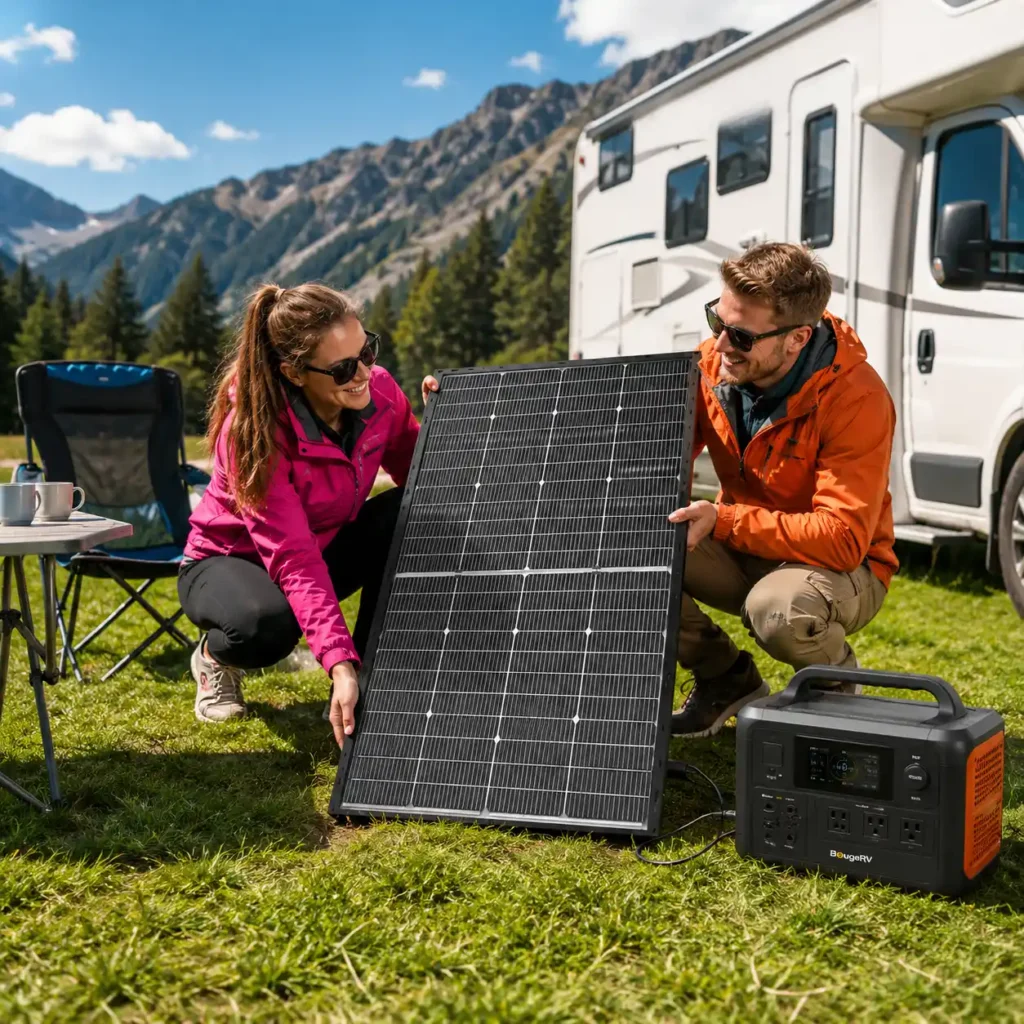
Living With It in the Real World
The BougeRV 200W TOPCon N-Type Rigid Solar Panel is the kind of upgrade you appreciate more with every season of use. Rather than simply generating electricity, it provides the confidence that your solar system will continue producing dependable power day after day, even as weather conditions change.
Imagine arriving at your off-grid cabin after a long drive. The batteries have been charging throughout the day, the refrigerator is already running, and your lighting, communication equipment, and essential appliances are ready to use without starting a noisy generator. As the sun moves across the sky, the panel continues harvesting energy, quietly replenishing your battery bank while you enjoy the outdoors.
For RV travelers, the experience feels just as effortless. While you’re hiking, fishing, or exploring a national park, the solar system continues working in the background. By evening, there’s ample stored energy for lighting, charging laptops, powering a portable refrigerator, or preparing dinner with small electric appliances. You spend less time monitoring battery levels and more time enjoying your trip.
One of the biggest advantages of the BougeRV panel becomes apparent during long-term ownership. Thanks to its advanced TOPCon N-Type technology, it maintains strong energy production even during hot summer days and over many years of operation. Instead of gradually losing performance at the same rate as many older panel designs, it continues delivering reliable output that helps maximize your investment.
Whether installed on an RV roof, a remote cabin, or a residential backup power system, the BougeRV 200W panel offers the kind of dependable everyday performance that makes solar power feel effortless.
BougeRV 200W TOPCon N-Type Evaluation
| Evaluation Category | Editorial Assessment |
|---|---|
| Energy Production | Outstanding efficiency with advanced TOPCon N-Type solar cells that maximize daily energy generation. |
| Build Quality | Durable aluminum frame and tempered glass designed for reliable long-term outdoor use. |
| Weather Performance | Excellent high-temperature performance and dependable output across changing weather conditions. |
| Long-Term Value | Modern cell technology and lower degradation provide excellent lifetime energy production. |
| Overall Rating | Our Best Premium Technology recommendation for buyers seeking the latest solar cell technology with outstanding long-term performance. |
Who Should Buy This
- RV owners who want the latest TOPCon solar technology.
- Off-grid cabin owners seeking maximum long-term energy production.
- Homeowners building premium residential backup solar systems.
- DIY solar enthusiasts who prioritize efficiency and future-ready technology.
- Buyers willing to invest in advanced performance rather than choosing the lowest upfront price.
Who Should Skip This
- Buyers focused primarily on minimizing the initial purchase cost.
- Users with very modest energy needs who don’t require premium solar technology.
- People looking for lightweight portable or folding solar panels instead of fixed rigid panels.
- Occasional users who are unlikely to benefit from the long-term advantages of TOPCon technology.
Final Verdict
The BougeRV 200W TOPCon N-Type Rigid Solar Panel proves that investing in premium solar technology can pay dividends over the entire lifespan of your solar system. Rather than simply delivering higher efficiency on paper, its advanced TOPCon N-Type cells are designed to provide stronger energy production, improved high-temperature performance, and slower long-term degradation than many traditional solar panels.
Its combination of modern photovoltaic technology, durable construction, and dependable real-world performance makes it an excellent choice for RV owners, off-grid cabins, residential backup systems, and anyone building a long-lasting solar installation. Instead of requiring frequent upgrades, it offers the confidence that your investment will continue producing reliable power for years to come.
If you’re looking for one of the most technologically advanced rigid solar panels available today and want to maximize long-term energy production, the BougeRV 200W TOPCon N-Type Rigid Solar Panel is our Best Premium Technology recommendation.
Check the latest price and customer reviews on Amazon.
Related Guide: If you want to compare different solar technologies and understand which panel type fits your installation best, our Best Flexible Solar Panels (2026) guide explores an alternative to traditional rigid panels for RVs, boats, vans, and other applications.
Rich Solar MEGA 200 Monocrystalline Solar Panel
Best for Off-Grid Systems

Quick Verdict
The Rich Solar MEGA 200 Monocrystalline Solar Panel earns our Best for Off-Grid Systems award because it combines dependable power generation, rugged construction, and proven long-term reliability for permanent solar installations. Rather than focusing on the newest cell technology, it prioritizes consistent real-world performance where reliability matters most.
Its 200W output provides dependable energy for cabins, remote workshops, tiny homes, sheds, agricultural buildings, and other off-grid applications where a stable source of electricity is essential. The high-quality monocrystalline cells deliver reliable energy production throughout the day, while the durable frame and tempered glass construction are built to withstand years of outdoor exposure.
What makes the Rich Solar MEGA 200 especially appealing is its reputation for dependable everyday operation. Instead of chasing the highest laboratory efficiency figures, it focuses on delivering consistent performance season after season. For buyers building a permanent off-grid solar system, that reliability can be even more valuable than marginal gains in efficiency.
Solar Panel Snapshot
| Feature | Details |
|---|---|
| Best For | Cabins • Remote Properties • Tiny Homes • Permanent Off-Grid Systems |
| Rated Power | 200W |
| Solar Cell Type | Monocrystalline |
| Panel Type | Rigid |
| Weather Resistance | Built for dependable year-round outdoor performance |
| Warranty | Manufacturer warranty |
| Ideal Buyer | Users building reliable permanent off-grid solar systems that prioritize durability and dependable daily energy production. |
Why We Chose It
A permanent off-grid solar system has different priorities than a portable RV installation. Once the panels are mounted, owners expect them to operate reliably for years with minimal maintenance while consistently producing enough electricity to support everyday life.
That’s exactly why the Rich Solar MEGA 200 Monocrystalline Solar Panel earned our Best for Off-Grid Systems award.
Its robust construction and dependable monocrystalline solar cells make it particularly well suited for fixed installations where long-term reliability matters more than chasing the newest solar technology. Whether powering lighting, refrigeration, water pumps, communication equipment, or battery banks, the panel delivers stable daily energy production across a wide range of environmental conditions.
We also appreciated its versatility and proven reputation among off-grid users. The durable aluminum frame, tempered glass, and dependable manufacturing quality make it a solid choice for cabins, workshops, agricultural buildings, and other remote properties where dependable electricity is essential throughout the year.
For buyers building a solar system that is expected to operate reliably season after season, the Rich Solar MEGA 200 Monocrystalline Solar Panel remains one of the strongest choices available in this guide.
Check the latest price and customer reviews on Amazon.
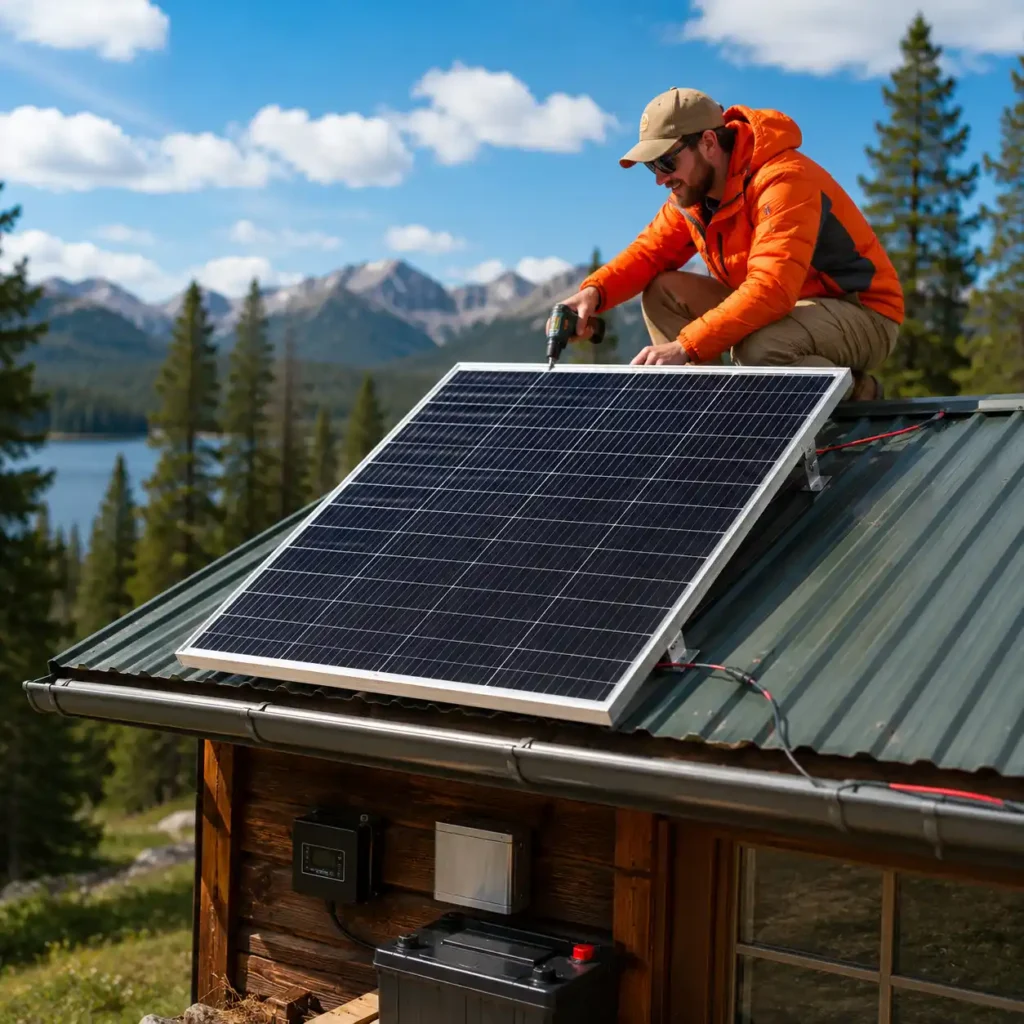
Living With It in the Real World
The Rich Solar MEGA 200 is the kind of solar panel that quietly does its job day after day without demanding much attention. Once installed, it delivers the dependable performance that off-grid property owners value most—consistent energy production with minimal maintenance.
For cabin owners, it provides enough daily generation to support lighting, refrigerators, internet equipment, water pumps, fans, and battery charging as part of a properly sized solar system. Many users also install multiple MEGA 200 panels together to build larger arrays capable of supporting more demanding off-grid lifestyles.
Its sturdy aluminum frame and tempered glass construction inspire confidence during year-round outdoor use. Whether exposed to hot summer sunshine, heavy rain, snow, or strong winds, the panel is designed to withstand the environmental conditions that permanent solar installations experience throughout the seasons.
Because Rich Solar panels use standard electrical connections and conventional mounting dimensions, expanding an existing system later is also straightforward. As energy needs grow, adding additional panels is simple, making the MEGA 200 a practical long-term investment for evolving off-grid systems.
Rich Solar MEGA 200 Evaluation
| Category | Rating |
|---|---|
| Overall Performance | ★★★★★ |
| Build Quality | ★★★★★ |
| Energy Production | ★★★★☆ |
| Durability | ★★★★★ |
| Ease of Installation | ★★★★☆ |
| Value for Money | ★★★★★ |
| Best Use Case | Permanent off-grid solar systems, cabins, workshops, tiny homes, and remote properties. |
Who Should Buy This
- Homeowners building a permanent off-grid solar system.
- Cabin owners seeking dependable year-round energy production.
- DIY solar enthusiasts planning to expand their system over time.
- Users who prioritize durability and long-term reliability over the latest solar cell technology.
- Anyone looking for a proven panel from a trusted off-grid solar brand.
Who Should Skip This
- RV owners with very limited roof space who need the highest possible efficiency per square foot.
- Buyers specifically looking for the latest N-Type or TOPCon solar technology.
- Users who frequently move their panels and would benefit from lightweight portable solar panels instead.
- Those building ultra-compact solar systems where maximizing output from limited mounting space is the highest priority.
Final Verdict
The Rich Solar MEGA 200 Monocrystalline Solar Panel demonstrates why dependable engineering often matters more than headline specifications. While newer solar technologies continue to improve efficiency, this panel focuses on what many off-grid users value most: reliable energy production, rugged construction, and dependable long-term operation.
Its durable design, consistent real-world performance, and strong reputation among cabin owners and DIY solar enthusiasts make it an excellent choice for permanent installations where reliability is essential. Rather than chasing the newest technology, it delivers the confidence that your solar system will continue producing clean energy year after year.
If you’re building an off-grid power system designed for long-term performance and dependable everyday operation, the Rich Solar MEGA 200 Monocrystalline Solar Panel is our Best for Off-Grid Systems recommendation.
Check the latest price and customer reviews on Amazon.
Related Guide: If you’re designing a solar system for an off-grid cabin or remote property, our Best Portable Generators (2026) guide can help you compare generator options that provide additional backup power when solar production is limited.
Newpowa 180W 10BB Solar Panel 12V Monocrystalline High Efficiency
Best Budget Pick

Quick Verdict
The Newpowa 180W 10BB Solar Panel earns our Best Budget Pick award by offering an impressive balance of affordability, dependable performance, and proven reliability. While it produces slightly less power than the 200W panels featured in this guide, it delivers more than enough energy for many everyday solar applications at a noticeably lower cost.
Its efficient 10BB monocrystalline solar cells are designed to maximize energy production while reducing electrical resistance, helping the panel perform consistently across changing weather conditions. Combined with its rugged aluminum frame and tempered glass construction, the Newpowa 180W is built to provide years of dependable outdoor service.
For buyers looking to build or expand a solar system without stretching their budget, this panel offers one of the strongest value propositions on the market. It focuses on practical performance rather than premium features, making it an excellent choice for first-time solar users and experienced DIY installers alike.
Solar Panel Snapshot
| Feature | Details |
|---|---|
| Best For | Budget RV Systems • Boats • Small Cabins • Vans • DIY Solar Projects |
| Rated Power | 180W |
| Solar Cell Type | 10BB Monocrystalline |
| Panel Type | Rigid |
| Weather Resistance | Designed for dependable all-season outdoor use |
| Warranty | Manufacturer warranty |
| Ideal Buyer | Budget-conscious buyers looking for reliable solar performance without paying premium prices. |
Why We Chose It
Not every solar project requires the highest-output panel available. In fact, for many RV owners, boaters, van lifers, and DIY solar enthusiasts, keeping costs under control while maintaining dependable performance is often the smarter investment.
That’s exactly where the Newpowa 180W 10BB Solar Panel stands out.
Its modern 10BB monocrystalline cell design improves current collection and helps reduce internal electrical losses, allowing the panel to generate consistent power throughout the day. Although its rated output is slightly lower than the 200W models in this guide, the real-world difference is relatively small for many common applications, especially when charging 12V battery systems or powering modest off-grid setups.
We also appreciate Newpowa’s long-standing reputation within the DIY solar community. The panel is widely used in RVs, boats, trailers, cabins, and backup power systems because it’s easy to install, compatible with standard solar components, and built to withstand years of outdoor use.
For buyers who want dependable solar performance while keeping overall project costs lower, the Newpowa 180W 10BB Solar Panel is our Best Budget Pick recommendation.
Check the latest price and customer reviews on Amazon.

Living With It in the Real World
The Newpowa 180W 10BB Solar Panel is designed for people who want dependable solar power without overspending. Once installed, it quietly generates consistent energy day after day, making it an excellent choice for everyday off-grid living, RV travel, boating, and weekend camping trips.
Its 180W output is well suited for charging 12V battery banks that power LED lighting, portable refrigerators, fans, water pumps, communication devices, and other essential equipment. For many users, a single panel provides enough daily energy for basic needs, while additional panels can easily be added as energy demands increase.
The lightweight yet durable aluminum frame makes installation straightforward on RV roofs, trailers, cabins, sheds, and boats. Standard MC4-compatible connections also simplify integration with charge controllers, portable power stations, and existing solar systems.
Perhaps its greatest strength is long-term value. The Newpowa 180W delivers reliable daily performance without requiring buyers to pay for premium technologies that may offer only modest gains in real-world conditions. For budget-conscious solar users, it represents a practical investment that continues to perform season after season.
Newpowa 180W Evaluation
| Category | Rating |
|---|---|
| Overall Performance | ★★★★☆ |
| Build Quality | ★★★★☆ |
| Energy Production | ★★★★☆ |
| Durability | ★★★★☆ |
| Ease of Installation | ★★★★★ |
| Value for Money | ★★★★★ |
| Best Use Case | Budget-friendly RV systems, boats, vans, small cabins, and DIY off-grid solar projects. |
Who Should Buy This
- RV owners looking for reliable solar performance at an affordable price.
- DIY solar enthusiasts building their first off-grid system.
- Boat owners seeking dependable battery charging while away from shore power.
- Cabin owners with modest daily energy requirements.
- Anyone who wants excellent long-term value without paying for premium solar technologies.
Who Should Skip This
- Buyers with very limited mounting space who need the highest possible wattage per panel.
- Users building larger residential solar systems where 200W+ panels offer better system efficiency.
- Those specifically looking for the latest N-Type or TOPCon solar cell technology.
- Users who require the maximum possible daily energy production from a single panel.
Final Verdict
The Newpowa 180W 10BB Solar Panel proves that you don’t need to spend a premium to build a dependable solar power system. By combining reliable energy production, durable construction, and excellent overall value, it delivers exactly what many RV owners, boaters, and DIY solar enthusiasts are looking for—practical performance at an affordable price.
While higher-powered and more advanced panels certainly have their place, the Newpowa 180W focuses on the features that matter most for everyday users: dependable operation, straightforward installation, and consistent energy generation. Its reputation within the DIY solar community further reinforces its position as one of the safest budget-friendly choices available.
If you’re looking for the best combination of affordability, reliability, and long-term value, the Newpowa 180W 10BB Solar Panel is our Best Budget Pick recommendation.
Check the latest price and customer reviews on Amazon.
Related Guide: If you’re building a cost-conscious solar setup and want to understand how much electricity your equipment actually requires, our How to Calculate Power Consumption (Complete Guide + Free Calculator) guide can help you estimate your energy needs before sizing your system.
ECO-WORTHY 195W Monocrystalline Rigid Solar Panel
Best Starter Kit Option

Quick Verdict
The ECO-WORTHY 195W Monocrystalline Rigid Solar Panel earns our Best Starter Kit Option award by making solar power more accessible for first-time buyers. It offers dependable energy production, durable construction, and straightforward installation, making it an excellent starting point for anyone building their first RV, cabin, boat, or off-grid solar system.
Its 195W output provides an ideal balance between everyday usability and affordability. Combined with efficient monocrystalline solar cells, the panel generates reliable power for charging battery banks, running essential appliances, and supporting a wide range of recreational and off-grid applications.
One of ECO-WORTHY’s greatest strengths is its beginner-friendly approach. The panel integrates easily with standard solar components and is commonly available as part of complete solar kits, allowing new users to build a functional system without navigating complicated compatibility issues. For anyone taking their first steps into solar energy, it offers a simple, dependable, and cost-effective solution.
Solar Panel Snapshot
| Feature | Details |
|---|---|
| Best For | First-Time Solar Buyers • RVs • Cabins • Boats • Small Off-Grid Systems |
| Rated Power | 195W |
| Solar Cell Type | Monocrystalline |
| Panel Type | Rigid |
| Weather Resistance | Designed for reliable all-season outdoor use |
| Warranty | Manufacturer warranty |
| Ideal Buyer | Beginners looking for an easy-to-install solar panel that offers dependable performance and excellent value. |
Why We Chose It
Starting a solar project for the first time can feel overwhelming. Between choosing panels, charge controllers, batteries, inverters, and mounting hardware, many beginners simply want equipment that is reliable, straightforward to install, and compatible with standard solar components.
That’s exactly where the ECO-WORTHY 195W Monocrystalline Rigid Solar Panel stands out.
The panel delivers dependable daily energy production while avoiding unnecessary complexity. Its durable aluminum frame, tempered glass construction, and proven monocrystalline technology make it a reliable choice for RVs, cabins, boats, sheds, and other small off-grid installations. Whether powering lights, portable refrigerators, communication devices, or charging battery banks, it provides the consistent performance that new solar users need.
Another reason we selected ECO-WORTHY is the brand’s strong focus on complete solar solutions. Many buyers begin with a single panel and later expand into a larger system using compatible batteries, charge controllers, and mounting accessories. That flexibility makes the 195W panel an excellent foundation for a growing solar installation.
For first-time solar buyers who want dependable performance, simple installation, and room to expand in the future, the ECO-WORTHY 195W Monocrystalline Rigid Solar Panel is our Best Starter Kit Option recommendation.
Check the latest price and customer reviews on Amazon.
Living With It in the Real World
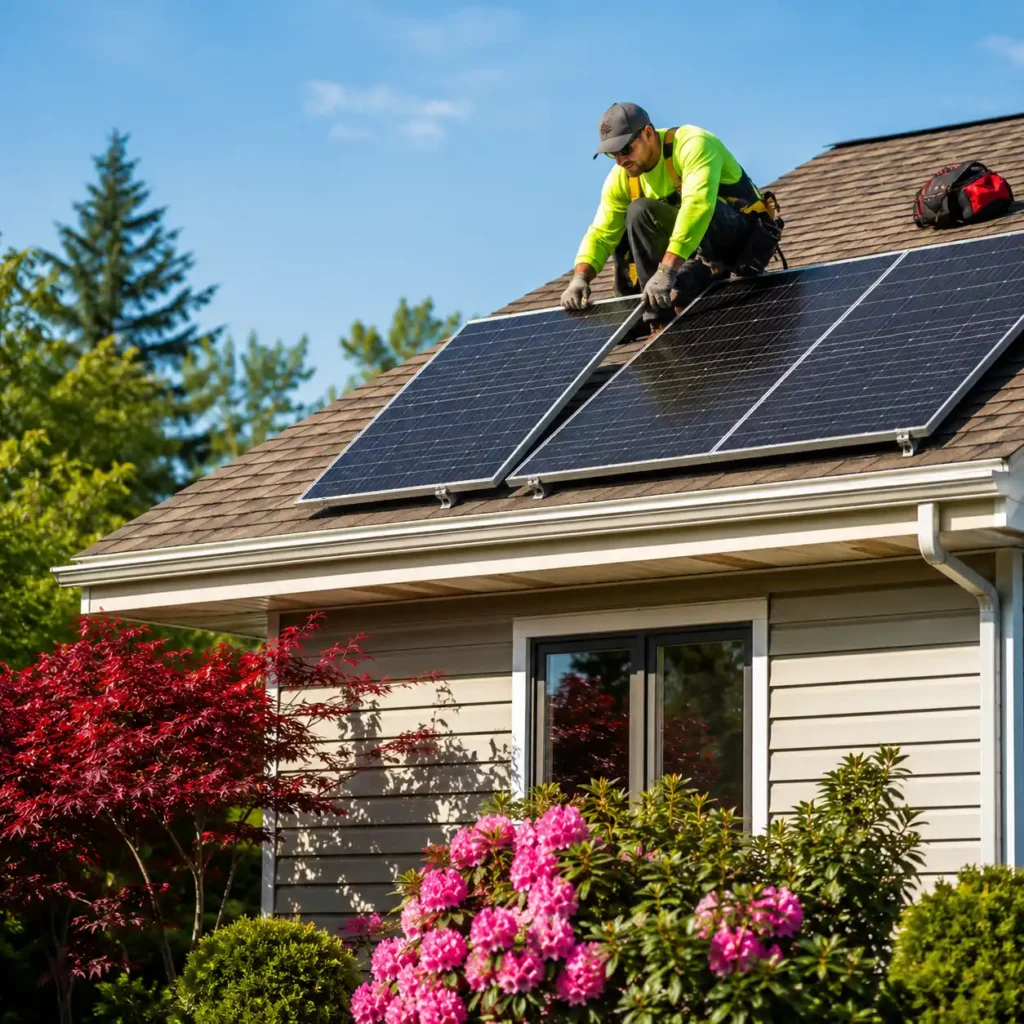
The ECO-WORTHY 195W Monocrystalline Rigid Solar Panel is built for people taking their first steps into solar power. Installation is straightforward, compatibility with standard 12V solar components is excellent, and the panel integrates easily into both new and expanding systems.
Its 195W output is well suited for charging battery banks that power LED lighting, portable refrigerators, fans, water pumps, laptops, communication devices, and other everyday essentials. Whether mounted on an RV, boat, cabin, shed, or small off-grid building, it delivers dependable daily energy production with very little maintenance.
One of the biggest advantages of choosing ECO-WORTHY is the flexibility to grow your system over time. Many users begin with a single panel before adding additional panels, batteries, or an inverter as their energy needs increase. Because the panel follows standard industry specifications, expanding the system later is both simple and cost-effective.
For beginners, that combination of ease of use, reliable performance, and future scalability makes the ECO-WORTHY 195W an especially practical investment.
ECO-WORTHY 195W Evaluation
| Category | Rating |
|---|---|
| Overall Performance | ★★★★☆ |
| Build Quality | ★★★★☆ |
| Energy Production | ★★★★☆ |
| Durability | ★★★★☆ |
| Ease of Installation | ★★★★★ |
| Value for Money | ★★★★★ |
| Best Use Case | First-time solar installations for RVs, cabins, boats, sheds, and small off-grid systems. |
Who Should Buy This
- First-time solar buyers looking for an easy-to-install panel.
- RV owners building their first off-grid power system.
- Cabin owners with modest daily electricity needs.
- DIY enthusiasts who want a reliable panel that can be expanded later.
- Anyone seeking a dependable balance of performance, affordability, and simplicity.
Who Should Skip This
- Buyers looking for the highest available panel efficiency.
- Users specifically seeking the latest N-Type, TOPCon, or bifacial solar technology.
- Large off-grid homeowners building high-capacity residential solar arrays.
- Those with limited roof space who need the maximum possible wattage from every panel.
Final Verdict
The ECO-WORTHY 195W Monocrystalline Rigid Solar Panel proves that getting started with solar power doesn’t have to be complicated or expensive. It delivers dependable performance, solid build quality, and straightforward installation in a package that’s well suited for beginners and budget-conscious buyers alike.
Its compatibility with standard solar equipment and the ability to expand into a larger system over time make it an excellent long-term investment for anyone entering the world of renewable energy. Rather than overwhelming new users with unnecessary complexity, it focuses on reliability, simplicity, and practical everyday performance.
If you’re purchasing your first rigid solar panel and want a dependable foundation for a growing solar power system, the ECO-WORTHY 195W Monocrystalline Rigid Solar Panel is our Best Starter Kit Option recommendation.
Check the latest price and customer reviews on Amazon.
Related Guide: If you’re putting together a complete solar charging system, our Best Solar Chargers (2026) guide can help you compare charging solutions and understand which options make sense for different off-grid and outdoor applications.
How to Choose the Best Rigid Solar Panels
Choosing the best rigid solar panel isn’t simply about buying the model with the highest wattage or the newest solar cell technology. The right choice depends on where you’ll install it, how much electricity you need to generate, how much space is available, and how you plan to use your solar system.
Many buyers assume that a higher wattage panel is automatically the best option. In reality, the most powerful panel isn’t always the smartest purchase. A larger panel may not fit your RV roof, could exceed the capacity of your existing charge controller, or simply generate more electricity than your system actually requires.
The goal is to build a solar system that matches your real energy needs rather than paying for unnecessary capacity or features you’ll rarely benefit from. Whether you’re powering an RV, an off-grid cabin, a boat, a tiny home, or a backup battery system, understanding a few key specifications will help you choose a panel that delivers reliable performance for years to come.
The sections below explain the most important factors to consider before buying your first—or next—rigid solar panel.
One piece of advice applies to almost every solar project: don’t shop for the highest wattage—shop for the energy system you actually need. The best rigid solar panel is the one that quietly produces dependable electricity day after day while fitting your installation, your budget, and your long-term plans.
Start With Your Solar Project
The first question isn’t, “Which rigid solar panel is the most powerful?” It’s “What are you trying to power?”
Different solar projects have very different energy requirements, and choosing the right panel starts with understanding how your system will actually be used.
Imagine two people shopping for solar panels.
One wants to install a single panel on an RV to keep a refrigerator, lights, and a few electronic devices running during weekend camping trips.
The other is building a permanent off-grid cabin that will rely on solar power every day to operate appliances, water pumps, lighting, and communication equipment.
Both need high-quality solar panels—but not necessarily the same panel.
That’s why choosing a solar panel based solely on wattage or efficiency can easily lead to overspending or building a system that doesn’t match your actual needs.
For example, RV owners often prioritize panels that maximize energy production while fitting limited roof space and minimizing additional weight. Cabin owners usually place greater importance on long-term durability and the ability to expand their solar array over time. Boat owners must also consider corrosion resistance and installation flexibility in a marine environment.
Before comparing specifications, take a moment to define the purpose of your solar system. Knowing exactly what you’re trying to power will make every other buying decision much easier—from choosing the right panel size to selecting batteries, charge controllers, and inverters.
Instead of asking how many watts a panel can produce, start by asking how your solar system will be used. That simple decision will guide every other part of your purchase and help you build a system that performs reliably for years to come.
How Much Solar Power Do You Need?
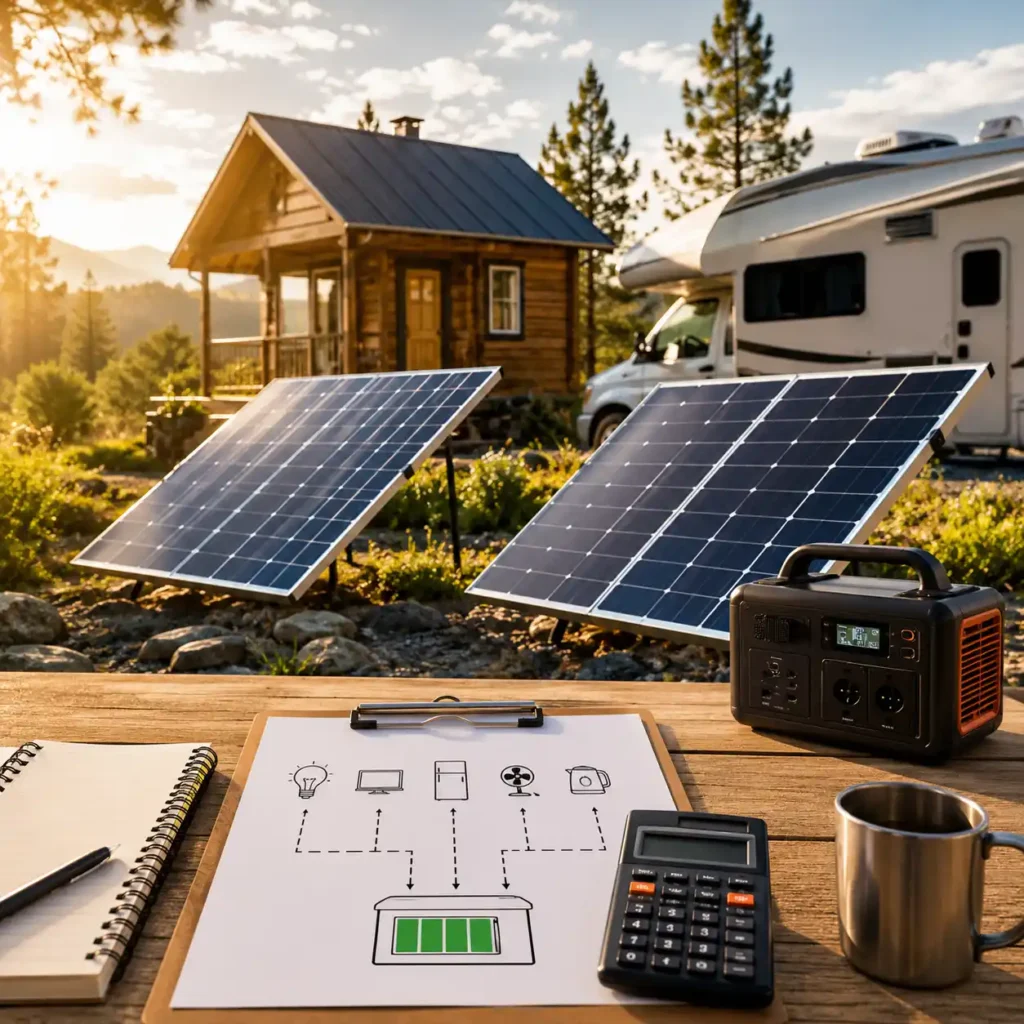
Solar panel wattage is usually the first specification buyers compare, but it’s also one of the most misunderstood.
Many people assume that installing the highest-wattage panel available will automatically create a better solar system. In reality, generating more electricity than you can store or use often adds unnecessary cost without providing meaningful benefits.
The goal isn’t to buy the largest solar panel—it’s to generate enough energy to match your daily power consumption.
Start by thinking about the devices you’ll use during a typical day.
A small RV used for weekend camping may only need enough electricity to power a portable refrigerator, LED lighting, charge smartphones, and occasionally run a laptop. A single high-quality 180W or 200W rigid solar panel may be sufficient for this type of setup when paired with an appropriately sized battery.
An off-grid cabin has very different requirements. Daily energy consumption may include lighting, refrigeration, water pumps, internet equipment, fans, televisions, and other household appliances. In these situations, multiple solar panels connected into a larger array are usually the better solution than relying on a single high-output panel.
Instead of focusing only on panel wattage, estimate how much electricity you actually consume each day. Once you know your approximate daily energy needs, it becomes much easier to determine how many solar panels your system requires.
It’s also important to remember that a solar panel’s rated wattage is measured under ideal laboratory conditions. In the real world, sunlight intensity, panel orientation, temperature, seasonal changes, shading, and weather all influence daily energy production. Because of these variables, experienced solar users typically design systems with a safety margin rather than expecting maximum output every day.
A helpful way to think about solar panel sizing is this: buy enough solar capacity for your typical daily energy use—not for the single sunniest day of the year. A well-balanced system will provide dependable performance throughout changing seasons while avoiding unnecessary cost and complexity.
Solar Panel Efficiency Explained
Solar panel efficiency is one of the most heavily advertised specifications—but it’s also one of the easiest to misunderstand.
Many buyers assume that a panel with 25% efficiency will generate dramatically more electricity than one rated at 22%. In reality, the difference is usually much smaller than the numbers suggest, especially in everyday outdoor conditions.
Solar panel efficiency simply measures how effectively a panel converts sunlight into electricity. A more efficient panel can produce more power from the same amount of roof or mounting space. That becomes especially important when installation space is limited, such as on an RV, camper van, boat, or small cabin roof.
However, efficiency should never be viewed in isolation.
A slightly less efficient panel installed at the correct angle with full sun exposure will often outperform a premium panel that spends part of the day in shade. Likewise, factors such as proper system design, battery capacity, cable quality, and charge controller efficiency all influence how much usable energy your solar system ultimately delivers.
Modern rigid solar panels generally fall into several technology categories. Traditional monocrystalline panels continue to offer an excellent balance of performance, durability, and value. Newer N-Type and TOPCon technologies improve efficiency, reduce long-term degradation, and often perform better in high temperatures and lower-light conditions, but they also tend to cost more.
When comparing efficiency ratings, it’s also important to consider the size of the panel. Two panels may produce the same 200W output while achieving different efficiency ratings because one occupies less surface area. For buyers with limited installation space, higher efficiency can make a meaningful difference. If roof space isn’t a concern, overall system cost and long-term reliability may deserve greater attention.
Rather than chasing the highest efficiency percentage available, look for a panel that delivers the best combination of energy production, durability, warranty support, and value for your specific installation. For many buyers, that balanced approach results in a more reliable and cost-effective solar system over the long term.
Monocrystalline vs. Polycrystalline vs. N-Type vs. TOPCon
Not all rigid solar panels use the same photovoltaic technology. While every panel converts sunlight into electricity, the type of solar cell affects efficiency, long-term performance, heat resistance, and overall value.
Understanding these differences makes it much easier to choose a panel that fits both your budget and your energy needs.
Monocrystalline Solar Panels
For most buyers, monocrystalline panels remain the benchmark for dependable solar performance. They offer an excellent balance of efficiency, durability, affordability, and long service life, making them suitable for everything from RVs and boats to cabins and residential backup systems.
Modern monocrystalline panels perform well in a wide range of weather conditions and have earned a reputation for consistent daily energy production. That’s why they continue to dominate today’s consumer solar market.
Several of our top recommendations—including the Rich Solar MEGA 200, Newpowa 180W, and ECO-WORTHY 195W—use proven monocrystalline technology because it delivers reliable results at a competitive price.
Polycrystalline Solar Panels
Polycrystalline panels were once a popular lower-cost alternative, but they have become far less common in today’s market.
Although they can still provide dependable electricity, they generally offer lower efficiency and require more installation space to generate the same amount of power as modern monocrystalline panels. Because of these limitations, very few of today’s premium rigid solar panels use polycrystalline technology.
Unless you’re purchasing older equipment or working within a very limited budget, monocrystalline panels are usually the better long-term investment.
N-Type Solar Panels
N-Type solar cells represent one of the biggest advancements in solar technology over the past several years.
Compared with conventional P-Type cells, N-Type panels typically experience lower long-term degradation, perform better in high temperatures, and continue generating electricity more efficiently during cloudy weather or lower-light conditions. Over the lifespan of the panel, these improvements can result in higher total energy production.
The Renogy 200W N-Type featured in this guide is an excellent example of how N-Type technology combines high efficiency with dependable everyday performance.
TOPCon Technology
TOPCon (Tunnel Oxide Passivated Contact) is an advanced solar cell architecture built upon N-Type technology.
Rather than replacing N-Type cells, TOPCon improves them by reducing electrical losses inside the solar cell. The result is higher conversion efficiency, improved low-light performance, stronger energy production during hot weather, and slower performance degradation over many years of use.
Panels such as the BougeRV 200W TOPCon N-Type combine these advantages with durable construction, making them an excellent choice for buyers who want the latest photovoltaic technology and expect to use their solar system for many years.
Which Technology Should You Choose?
For most RV owners, campers, cabin owners, and DIY solar enthusiasts, a high-quality monocrystalline panel provides everything needed for dependable everyday performance.
However, if installation space is limited, you expect to use your solar system heavily, or you want to maximize long-term energy production, investing in N-Type or TOPCon technology can be worthwhile.
Rather than focusing solely on the newest technology, consider the complete picture—including panel quality, warranty, durability, available installation space, and overall system design. The best rigid solar panel isn’t simply the one with the most advanced solar cells—it’s the one that delivers reliable performance for your specific application year after year.
Panel Size and Available Installation Space
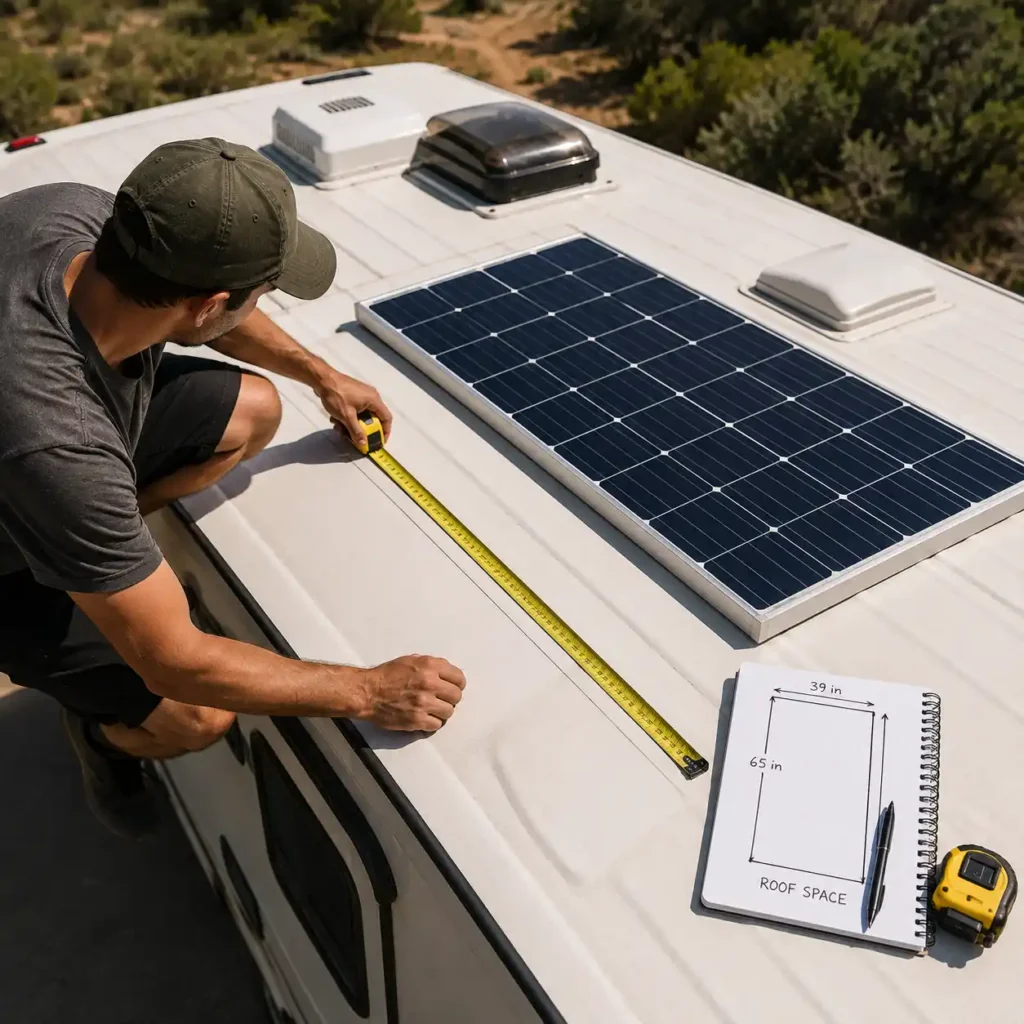
When shopping for rigid solar panels, it’s easy to focus on wattage and efficiency while overlooking one of the most important factors of all—whether the panel will actually fit your installation.
This is one of the most common mistakes first-time buyers make.
A solar panel may offer excellent specifications, but if it doesn’t fit your RV roof, cabin, boat, or mounting structure, none of those advantages matter.
Before choosing a panel, carefully measure the available installation area. Don’t forget to account for roof vents, air conditioners, skylights, antennas, roof racks, and other equipment that may reduce the usable space. On boats and camper vans, irregular roof shapes can further limit where panels can be installed.
Higher-efficiency panels often produce more power from the same amount of surface area, making them particularly valuable when installation space is limited. This is one reason why many RV owners choose modern N-Type or TOPCon panels—they can maximize energy production without requiring additional roof space.
On the other hand, if you’re installing panels on a cabin roof, ground-mounted rack, or other large structure, available space is usually less of a concern. In these situations, overall system cost, durability, and long-term reliability may have a greater impact on your purchasing decision than squeezing the highest possible efficiency into every square foot.
It’s also worth thinking beyond today’s installation. If you plan to expand your solar system in the future, leave enough room for additional panels whenever possible. A little planning now can save significant time and expense later.
Rather than asking, “What’s the biggest panel I can buy?” ask, “What’s the largest panel that fits my available space while leaving room for a practical, well-balanced solar system?” That approach almost always leads to a smarter long-term investment.
Weather Resistance and Durability
A rigid solar panel is designed to remain outdoors for decades, not just a few camping seasons. Throughout its lifetime, it may be exposed to intense sunlight, heavy rain, strong winds, snow, hail, dust, salt air, and constant temperature changes.
That’s why durability deserves just as much attention as wattage or efficiency.
One of the first features to look for is tempered glass. Unlike standard glass, tempered glass is significantly stronger and better able to withstand impacts from hail, falling debris, or accidental contact during installation and maintenance. Most high-quality rigid solar panels use low-iron tempered glass, which combines excellent light transmission with long-term durability.
The frame is equally important. Anodized aluminum frames are lightweight, corrosion-resistant, and strong enough to support the panel without adding unnecessary weight. They also help protect the solar cells from twisting or flexing caused by wind or vibration—an especially valuable feature for RVs, trailers, and boats that experience constant movement.
If you’re installing solar panels in coastal areas or marine environments, corrosion resistance becomes even more critical. Salt air can gradually damage lower-quality materials, so choosing panels with durable frames, sealed junction boxes, and weather-resistant connectors can significantly extend the life of your system.
It’s also worth checking the panel’s snow and wind load ratings. These specifications indicate how much mechanical stress the panel has been tested to withstand. Even if you don’t expect heavy snow where you live, stronger structural ratings generally reflect a more robust design that can better handle years of outdoor exposure.
Another important specification is the IP rating, particularly for the junction box and electrical connections. Most quality rigid solar panels feature an IP65, IP67, or IP68 rating, indicating protection against dust and water intrusion. While the panel itself isn’t designed to be submerged, proper sealing helps ensure reliable performance during rain, humidity, and changing weather conditions.
Finally, pay attention to the manufacturer’s warranty and expected lifespan. A longer warranty doesn’t guarantee a better product, but it often reflects greater confidence in the panel’s long-term reliability. High-quality rigid solar panels commonly continue producing useful electricity for 25 years or more, making durability one of the most important factors in your overall investment.
When comparing solar panels, remember that the least expensive option isn’t always the best value. A well-built panel that continues performing reliably for decades will almost always deliver more energy—and greater peace of mind—than a cheaper panel that begins losing performance after only a few years.
Choosing the Right Warranty and Brand
A solar panel is a long-term investment, so it’s worth paying close attention to the warranty—not just its length, but also what it actually covers.
Many buyers see a 25-year warranty and assume every part of the panel is protected for the entire period. In reality, solar panels typically come with two separate warranties, each covering different aspects of ownership.
The first is the product warranty. This covers defects in materials and manufacturing, such as premature failure, faulty workmanship, or problems that occur under normal use. Depending on the manufacturer, product warranties typically range from 10 to 25 years, with longer coverage often reflecting greater confidence in the panel’s construction and quality control.
The second is the performance warranty. Instead of covering defects, it guarantees that the panel will continue producing electricity above a specified percentage of its original rated output over time. Because all solar panels gradually lose a small amount of performance as they age, manufacturers publish degradation schedules that define the expected decline.
For example, a quality panel may guarantee that it will still produce around 84% to 90% of its original output after 25 years, depending on the manufacturer and cell technology. Panels built with modern N-Type or TOPCon cells often have lower annual degradation rates than conventional designs, allowing them to maintain higher energy production over their lifetime.
While warranties are important, they shouldn’t be your only decision factor. A long warranty is most valuable when it’s backed by a manufacturer with a strong reputation for product quality and customer support. Established brands are generally more likely to honor warranty claims, provide replacement parts, and continue supporting their products years after purchase.
It’s also worth looking beyond the specifications. Consider how long the company has been manufacturing solar equipment, whether replacement parts and technical documentation are readily available, and how consistently the brand is reviewed by customers and professional installers.
In this guide, we’ve selected panels from manufacturers that have earned solid reputations in the consumer solar market. Although each product targets a different type of buyer, all of them come from brands known for producing reliable rigid solar panels suitable for long-term use.
Ultimately, the best warranty is one you hopefully never need to use. Choosing a well-built panel from a trusted manufacturer greatly increases the chances that your solar system will continue generating dependable power for decades with minimal maintenance.
Common Buying Mistakes to Avoid
Even experienced DIY enthusiasts can make costly mistakes when buying solar panels. Fortunately, most of them are easy to avoid with a little planning.
Here are some of the most common mistakes—and how to avoid them.
Buying Based Only on Wattage
Higher wattage doesn’t automatically mean a better solar panel.
A 250W panel may look more impressive than a 180W model, but if it doesn’t fit your available installation space or produces more energy than your system needs, you’re paying for capacity you won’t fully use.
Instead, size your solar array around your daily energy consumption and available mounting space.
Ignoring Panel Dimensions
Many buyers compare only power output and forget to check the physical dimensions of the panel.
This often becomes a problem during installation, especially on RV roofs, camper vans, boats, and other compact spaces where vents, skylights, air conditioners, or roof racks reduce the usable area.
Always measure your installation space before choosing a panel—not afterward.
Forgetting About Shading
Even a small amount of shade can significantly reduce a solar panel’s performance.
Tree branches, antennas, roof accessories, nearby buildings, or seasonal shadows may affect energy production throughout the day. Before installing your panels, consider how sunlight moves across the area during different times of the day and throughout the year.
Whenever possible, choose a location with the longest period of uninterrupted sunlight.
Choosing the Wrong System Components
A solar panel is only one part of the system.
Your charge controller, battery bank, inverter, wiring, and connectors all need to work together correctly. An undersized controller or improperly matched battery can limit performance, regardless of how efficient the solar panel is.
Always make sure every component is compatible with your system’s voltage and expected power output.
Overlooking Future Expansion
Many first-time buyers build a system that meets their current needs but leaves no room to grow.
If you think you may add more appliances, increase battery storage, or install additional panels in the future, it’s worth planning for that expansion from the beginning. Leaving extra roof or rack space today can save significant time and money later.
Focusing Only on the Lowest Price
Saving money upfront can be tempting, but the cheapest panel isn’t always the most economical choice over the long term.
A well-built panel with better durability, slower degradation, and stronger warranty support may continue producing reliable power for decades, while a lower-quality alternative could lose performance much sooner.
When comparing products, think in terms of long-term value, not just the purchase price.
The Bottom Line
The best rigid solar panel isn’t necessarily the most powerful, the most efficient, or the most expensive. It’s the one that fits your available space, matches your energy needs, integrates well with the rest of your solar system, and delivers dependable performance year after year.
By avoiding these common mistakes, you’ll be far more likely to build a solar system that performs efficiently, expands easily, and provides reliable renewable energy for many years to come.
Frequently Asked Questions
Are Rigid Solar Panels Better Than Flexible Solar Panels?
For most buyers, yes. Rigid solar panels are generally more efficient, more durable, and have a much longer lifespan than flexible panels. Their aluminum frames and tempered glass construction help them withstand years of exposure to sun, rain, wind, and snow while maintaining stable performance.
Flexible solar panels still have their place, particularly on curved surfaces or in applications where minimizing weight is the highest priority. However, for RVs, cabins, residential installations, and most off-grid systems, rigid solar panels typically provide better long-term value and energy production.
How Many Watts of Solar Panels Do I Need?
The answer depends on how much electricity you use each day.
A single 180W–200W panel may be enough to keep a battery charged for light RV or camping use, while larger off-grid cabins often require several panels working together as a solar array. Instead of choosing a panel based only on wattage, calculate your daily energy consumption and size your system accordingly.
Do Rigid Solar Panels Work on Cloudy Days?
Yes, but they produce less electricity than they do in full sunlight.
Modern monocrystalline, N-Type, and TOPCon panels continue generating power under cloudy conditions, although output can drop significantly depending on cloud cover. High-quality panels generally perform better in low-light conditions than older solar technologies, but no solar panel produces its rated output without adequate sunlight.
Can I Connect Multiple Rigid Solar Panels Together?
Yes. Multiple rigid solar panels can be connected in series, parallel, or a combination of both, depending on your charge controller, battery voltage, and system design.
Before connecting panels together, always verify that the combined voltage and current remain within the limits of your charge controller and other system components.
How Long Do Rigid Solar Panels Last?
Most quality rigid solar panels are designed to operate for 25 years or longer.
Over time, all solar panels gradually lose a small amount of generating capacity, but high-quality models typically continue producing around 84%–90% of their original rated output after 25 years, depending on the manufacturer and cell technology.
Can Rigid Solar Panels Charge a Portable Power Station?
Yes—as long as the solar panel’s voltage and connector type are compatible with the portable power station’s solar input specifications.
Many modern power stations from EcoFlow, Jackery, BLUETTI, and Anker support charging from rigid solar panels using an MPPT solar input. Always verify the maximum input voltage, current, and connector requirements before connecting your system.
What Is the Difference Between 12V and 24V Solar Panels?
The terms 12V and 24V don’t refer to the exact voltage produced by the panel. Instead, they indicate the type of battery system the panel is designed to charge when paired with an appropriate charge controller.
A so-called 12V solar panel typically produces around 18–22 volts under normal operating conditions, while a 24V panel produces considerably higher voltage. Always match your solar panel with the correct system voltage and charge controller.
Are Rigid Solar Panels Waterproof?
Rigid solar panels are built to withstand outdoor weather, including rain, snow, and humidity.
Most quality panels feature weather-resistant junction boxes and connectors with IP-rated protection against water and dust. While they are designed for permanent outdoor installation, they should never be submerged in water.
Do Solar Panels Need Direct Sunlight to Generate Electricity?
No. Solar panels generate electricity whenever sunlight reaches the photovoltaic cells, even on cloudy or overcast days.
Direct sunlight produces the highest output, but diffuse light can still generate useful electricity. Actual production depends on weather conditions, panel orientation, shading, and the season.
Do Rigid Solar Panels Require Regular Maintenance?
Rigid solar panels require very little maintenance.
Occasionally removing dirt, leaves, pollen, bird droppings, or snow helps maintain optimal performance. It’s also a good idea to inspect mounting hardware, cables, and electrical connections periodically to ensure the system remains safe and operating efficiently. Most homeowners and RV owners find that a simple visual inspection and occasional cleaning are all that’s needed.
Can Solar Panels Be Installed Flat?
Yes. Rigid solar panels can be installed flat on RV roofs, camper vans, boats, and some residential roofs. However, a flat installation usually generates less electricity than panels mounted at an angle that faces the sun.
A tilted panel captures sunlight more directly throughout the day, improving overall energy production—especially during the winter months when the sun sits lower in the sky. That said, flat mounting is often the most practical solution for RVs and mobile applications because it simplifies installation, reduces wind resistance, and minimizes the overall height of the system.
If your installation allows for adjustable mounting brackets, angling the panels toward the sun can noticeably improve energy output when parked for extended periods.
Are Expensive Solar Panels Worth It?
It depends on your priorities.
Premium solar panels often offer higher efficiency, lower annual degradation, stronger warranties, and improved performance in high temperatures or low-light conditions. They can also generate more electricity from the same roof space, making them an excellent choice when installation area is limited.
However, a premium panel isn’t always the best investment for every buyer. If you have plenty of available mounting space and moderate energy needs, a well-built mid-range monocrystalline panel can provide outstanding performance at a lower cost.
Rather than focusing on price alone, compare the panel’s efficiency, durability, warranty coverage, expected lifespan, and long-term energy production. In many cases, the best value comes from choosing the panel that delivers the lowest cost per watt over its entire service life, not simply the lowest purchase price.
Final Verdict
Choosing the best rigid solar panel isn’t about finding the highest wattage, the newest technology, or the lowest price. It’s about selecting a panel that fits your available space, matches your daily energy needs, and continues delivering reliable performance for years to come.
Throughout this guide, we’ve compared dozens of specifications that often overwhelm first-time buyers—efficiency ratings, solar cell technologies, warranties, durability, weather resistance, and real-world performance. While every product in our lineup earned its place for a different reason, one thing became clear: there is no single “best” solar panel for everyone.
Instead, the right choice depends on how and where you plan to use it.
If you’re looking for the best overall combination of efficiency, reliability, and long-term value, the Renogy 200W N-Type High Efficiency Rigid Solar Panel is our top recommendation. It offers outstanding all-around performance and is an excellent choice for RVs, cabins, boats, and off-grid systems where dependable energy production matters most.
Buyers who want the latest photovoltaic technology should consider the BougeRV 200W TOPCon N-Type Solar Panel. Its advanced cell design delivers excellent efficiency, strong performance in challenging weather conditions, and lower long-term degradation, making it an ideal option for those planning to keep their solar system for many years.
For larger off-grid installations where long-term reliability is the priority, the Rich Solar MEGA 200 stands out as an excellent choice. Its proven monocrystalline design makes it particularly well suited for cabins, workshops, and permanent solar installations that require dependable day-after-day performance.
If you’re working within a tighter budget, the Newpowa 180W Solar Panel proves that you don’t have to spend a premium to build a reliable solar system. It offers solid performance, durable construction, and excellent value for first-time buyers or anyone looking to expand an existing setup without overspending.
And if you’re just beginning your solar journey, the ECO-WORTHY 195W Solar Panel is a practical and approachable starting point. It combines dependable performance with beginner-friendly installation, making it an excellent introduction to off-grid solar power.
No matter which panel you choose, remember that the solar panel itself is only one part of the system. A properly sized battery, an efficient MPPT charge controller, quality wiring, and careful installation all play equally important roles in determining how much usable energy your system will produce.
It’s also worth thinking beyond today’s needs. Many solar users begin with a simple setup to power a few essential devices, only to expand their systems later with additional batteries, inverters, or solar panels. Choosing equipment that allows for future growth can save both time and money as your energy requirements evolve.
Related Guide
At Power Ready Guide, our goal isn’t simply to recommend products—it’s to help you understand why one solution may be a better fit than another. A well-designed solar system should provide reliable, renewable power for decades, whether you’re camping off-grid, traveling in an RV, preparing for emergencies, or building an independent energy system for your home or cabin.
We hope this guide has given you the knowledge and confidence to choose the right rigid solar panel for your needs. With the right combination of quality equipment, thoughtful planning, and realistic expectations, you’ll enjoy dependable solar power for many years to come.
Ready to choose your solar panel?
Compare our top recommendations above, consider the size of your installation, estimate your daily energy needs, and select the panel that best matches your system—not simply the one with the biggest numbers on the specification sheet. A carefully chosen solar panel is an investment that can continue paying dividends every sunny day for decades.