
Choosing the best inverter generator isn’t simply about buying the model with the highest wattage. The right generator depends on what you need to power, how much runtime you need, where you plan to use it, and how important quiet operation and clean power are for your equipment.
Inverter generators are designed for a wide range of uses, from camping and RV travel to emergency home backup. Unlike conventional generators, they can adjust engine speed to match the electrical load, helping reduce fuel consumption and operating noise while producing stable power for sensitive electronics.
The challenge is finding the right balance between power, portability, runtime, fuel flexibility, and everyday usability. A compact inverter generator may be ideal for camping and basic backup, while a higher-output dual-fuel model can provide substantially more capacity for an RV or essential household loads.
The goal of this guide is not to identify the biggest inverter generator available. It is to identify the models that make the most sense for different real-world applications and budgets. We evaluated power output, inverter performance, fuel options, runtime, noise, portability, safety features, RV compatibility, and practical backup capability to determine where each model fits best.
Whether you need a lightweight generator for weekend camping, a quiet option for an RV, or a higher-output system for emergency home backup, the right choice starts with understanding how you actually plan to use it.
One principle applies to almost every buyer: don’t buy the biggest inverter generator—buy the one that provides the power you actually need with enough capacity and flexibility for the way you use it.
As an Amazon Associate, I earn from qualifying purchases.
Table of Contents
Quick Answer
If you’re looking for the best inverter generator overall, the Honda EU3200i is our top recommendation. It offers an excellent balance of portable power, quiet operation, fuel efficiency, and practical features, making it a strong choice for camping, RV travel, and essential home backup.
If you need more power and fuel flexibility, the Westinghouse iGen5000DFc EFI is our top mid-size dual-fuel choice. The Pulsar PGDA70BiSCO is better suited to buyers who need substantially higher output for demanding RV or emergency backup applications. For buyers who prioritize low weight and easy transportation, the Champion Power Equipment 201317 is our ultralight choice. The maXpeedingrods 4000W Dual Fuel Inverter Generator provides a more affordable way to get dual-fuel flexibility and inverter technology.
Our top picks for 2026 are:
- Best Overall: Honda EU3200i
- Best Mid-Size Dual-Fuel: Westinghouse iGen5000DFc EFI
- Best High-Output: Pulsar PGDA70BiSCO
- Best Ultralight: Champion Power Equipment 201317
- Best Value Dual-Fuel: maXpeedingrods 4000W Dual Fuel Inverter Generator
Why You Can Trust Power Ready Guide
Choosing an inverter generator is a practical decision that involves more than comparing wattage numbers or reading manufacturer claims. We evaluate each model based on the factors that matter when a generator is actually used in the real world.
For this guide, we considered power output, inverter technology, fuel flexibility, runtime, noise, portability, safety features, RV compatibility, and suitability for different backup-power situations. We also considered how each generator fits its intended use rather than assuming that the most powerful model is automatically the best choice.
Our recommendations are designed to help readers understand the trade-offs between compact, lightweight generators and larger models built for more demanding loads. We focus on practical usability, not simply the longest specification list.
We also separate manufacturer specifications from our editorial assessment. When a specification matters to a buying decision, we verify it against the relevant product information and consider how that specification affects real-world use.
Our goal is straightforward: help you choose an inverter generator that fits your actual power requirements, intended use, and expectations for portability, reliability, and long-term value.
How We Evaluated Inverter Generators
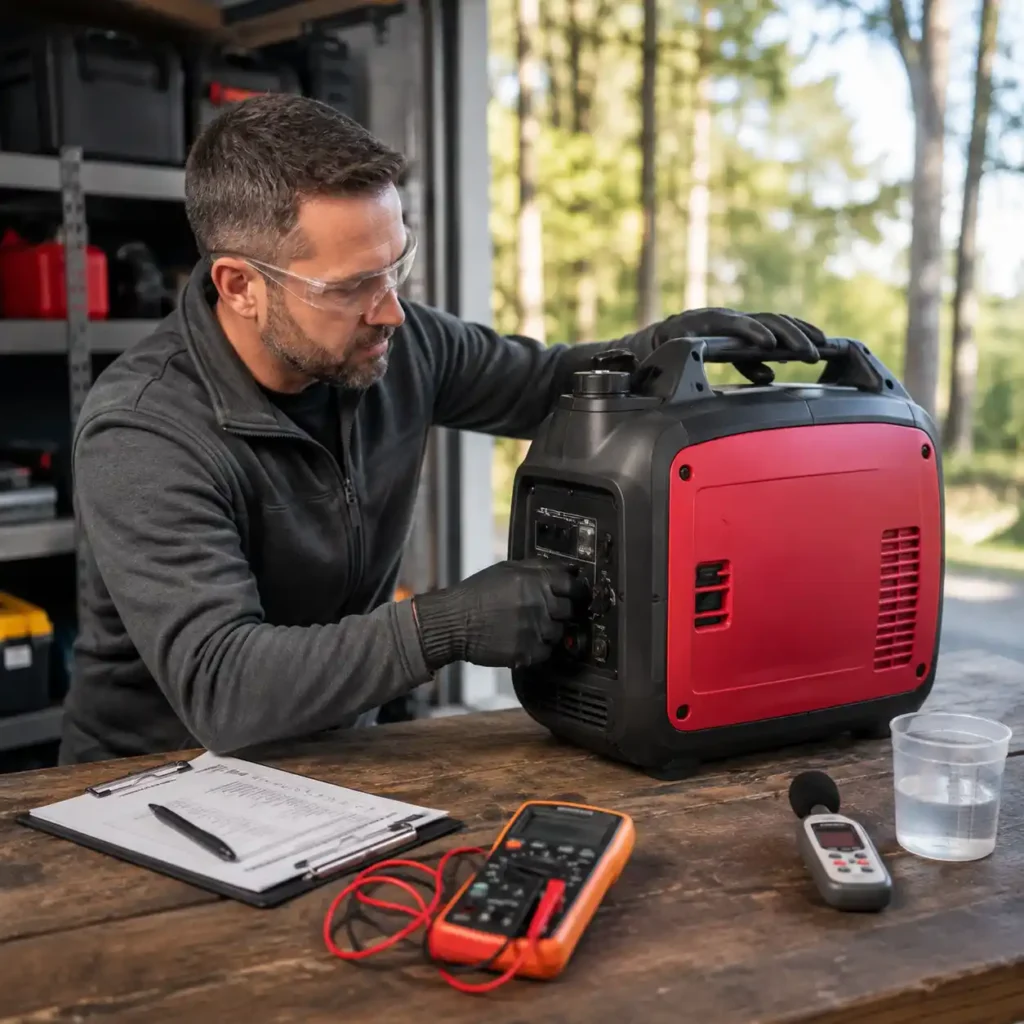
We evaluated the five inverter generators in this guide using the specifications and practical factors that have the greatest impact on everyday use. Rather than ranking models by maximum wattage alone, we considered how each generator performs within the type of application it is designed to serve.
Power Output: We compared running and starting wattage to determine how well each generator can handle sustained loads and appliances with higher startup demands.
Inverter Performance: We considered inverter technology, power quality, and suitability for sensitive electronics such as laptops, televisions, chargers, and modern appliances.
Fuel Flexibility and Efficiency: We evaluated gasoline and dual-fuel configurations, along with practical runtime and the ability to choose between fuel sources when operating conditions change.
Noise and Portability: We considered published noise levels, overall size, weight, and the practical effort required to transport, store, and position each generator.
Safety and Convenience: We looked at features such as carbon-monoxide protection, electric or remote starting, monitoring, and other functions that can make a generator easier and safer to use.
Real-World Use: Finally, we considered where each model makes the most sense, including camping, RV travel, essential home backup, and lighter portable-power applications.
This approach allows us to compare generators with different power levels and designs without treating one specification as universally more important than the others. The result is a more useful ranking based on how each model fits a specific buyer and use case.
Who This Guide Is For
This guide is for buyers who want the flexibility of an inverter generator and need help choosing the right size and configuration for their specific use.
It is particularly useful if you are:
- Camping or tailgating and want quiet, portable power for lights, electronics, small appliances, or other recreational equipment.
- Traveling in an RV and need enough power to operate an air conditioner, refrigerator, microwave, and other essential equipment.
- Preparing for power outages and want a portable generator for essential household loads such as a refrigerator, freezer, lighting, networking equipment, or a sump pump.
- Looking for dual-fuel flexibility so you can use gasoline or propane depending on availability and operating needs.
- Replacing an older generator and want the benefits of inverter technology, including quieter operation, better fuel efficiency at lighter loads, and stable power for electronics.
- Prioritizing portability and need a generator that can be transported regularly rather than kept permanently in one location.
This guide is not intended for buyers who need a permanently installed whole-house standby generator or a system designed to power every household circuit simultaneously. Those applications require a different type of backup-power solution.
The goal here is to help you identify the inverter generator that fits your actual power requirements, intended environment, and priorities rather than simply choosing the highest-wattage model.
Quick Summary: Our Top Picks
If you’re looking for the best inverter generator without reading every detailed review, the summary below highlights our top recommendations for different power requirements, portability needs, fuel preferences, and backup applications.
Our selections are based on power output, inverter technology, fuel flexibility, runtime, noise, portability, safety features, RV compatibility, and overall practical value. Each model serves a different type of buyer, making it easier to choose an inverter generator that matches your actual needs.
Honda EU3200i
Award: Best Premium Compact Inverter Generator
Why It Won:
Combines strong portable power with a compact design, quiet operation, fuel efficiency, and advanced convenience features. It offers an excellent balance for buyers who want a premium inverter generator without moving into a much larger and heavier class.
Choose This If:
- You want a premium compact inverter generator.
- Portability and quiet operation are important.
- You need dependable power for camping, RV travel, or essential backup.
Best For:
- Camping
- RV travel
- Essential home backup
- Portable power
Westinghouse iGen5000DFc EFI
Award: Best Mid-Size Dual-Fuel Inverter Generator
Why It Won:
Combines higher output with inverter technology, electronic fuel injection, and dual-fuel flexibility. It provides a practical middle ground for buyers who need more capacity than a compact generator can offer without moving to a substantially larger high-output unit.
Choose This If:
- You need more power than a compact inverter generator provides.
- You want gasoline and propane flexibility.
- You plan to use one generator for both RV travel and home backup.
Best For:
- RV travel
- Home backup
- Emergency preparedness
- Higher-demand portable power
Pulsar PGDA70BiSCO
Award: Best High-Output Dual-Fuel Inverter Generator
Why It Won:
Delivers substantially higher output while combining inverter technology, dual-fuel operation, 120/240V capability, and RV-ready functionality. It is a strong choice when demanding appliances and larger electrical loads require more capacity.
Choose This If:
- You need high continuous and starting power.
- You want gasoline and propane flexibility.
- You need a generator for demanding RV or emergency backup applications.
Best For:
- High-demand home backup
- RV travel
- Emergency preparedness
- Large appliances
Champion Power Equipment 201317
Award: Best Ultralight Inverter Generator
Why It Won:
Its lightweight design, compact size, quiet operation, and inverter technology make it particularly practical for buyers who need a generator that is easy to transport and deploy. It prioritizes portability rather than maximum output.
Choose This If:
- Low weight is one of your top priorities.
- You regularly transport your generator.
- You need power for camping, tailgating, or lighter backup loads.
Best For:
- Camping
- Tailgating
- Road trips
- Light emergency backup
maXpeedingrods 4000W Dual Fuel Inverter Generator
Award: Best Value Dual-Fuel Inverter Generator
Why It Won:
Combines inverter technology, dual-fuel capability, portable design, and Bluetooth control in a more value-focused package. It gives buyers additional fuel flexibility without requiring the size or output of a high-capacity emergency generator.
Choose This If:
- You want dual-fuel flexibility at a value-oriented price point.
- You need a portable generator for multiple uses.
- You want inverter technology with convenient Bluetooth control.
Best For:
- Camping
- RV travel
- Portable backup
- Emergency preparedness
Comparison Table
| Generator | Starting / Running Watts | Fuel | Best For | Key Advantage |
|---|---|---|---|---|
| Honda EU3200i | 3,200W / 3,200W | Gasoline | Camping, RVs, essential backup | Premium compact design with quiet operation and advanced convenience features |
| Westinghouse iGen5000DFc EFI | 5,000W / 3,900W | Gasoline / Propane | RV travel, home backup | EFI technology combined with dual-fuel flexibility and higher output |
| Pulsar PGDA70BiSCO | 7,250W / 6,000W (gasoline) | Gasoline / Propane | High-demand RV and home backup | High output, 120/240V capability, remote start, and dual-fuel operation |
| Champion Power Equipment 201317 | 2,500W / 1,850W | Gasoline | Camping, tailgating, light backup | Ultralight design with quiet operation and clean inverter power |
| maXpeedingrods 4000W Dual Fuel Inverter Generator | 4,000W peak | Gasoline / Propane | Camping, RVs, portable backup | Dual-fuel flexibility with inverter technology and Bluetooth control |
The Best Inverter Generators Reviewed
Honda EU3200i
Best Overall Compact Inverter Generator

Quick Verdict
The Honda EU3200i earns our Best Overal Compact Inverter Generator award because it delivers a rare combination of useful power, compact size, quiet operation, and premium everyday usability. Rather than trying to compete with much larger generators on raw output, it focuses on giving campers, RV owners, and homeowners a highly refined portable power solution that is easy to live with.
Its 3,200-watt output provides substantially more capacity than typical 2,000-watt-class compact generators, while the inverter design allows it to remain practical for sensitive electronics and lower-demand equipment. Honda’s electronic fuel injection also eliminates the need for a traditional carburetor, which is particularly useful for buyers who may leave the generator stored for periods between trips or emergencies.
The trade-off is straightforward: this is a premium gasoline-only generator, so buyers who need dual-fuel flexibility or substantially more capacity for larger household loads should look elsewhere. For users who value refined operation, portability, and dependable performance more than maximum wattage, however, the EU3200i remains one of the strongest compact inverter generators in this lineup.
Camping Snapshot
| Feature | Details |
|---|---|
| Best Use | Camping • RV Travel • Essential Home Backup |
| Rated Power | 3,200W peak / 2,600W running |
| Fuel Type | Gasoline |
| Inverter Design | Yes |
| Noise Level | Approximately 54–58 dBA |
| Weight | Less than 60 lbs |
| Best For | Buyers who want premium portable power without moving into a larger, heavier generator class. |
Why We Chose It
The Honda EU3200i stands out because its strengths are not based on a single headline specification. Its real advantage is how well the entire package works together.
For a camper, the difference becomes apparent when the generator has to be transported, positioned at camp, started, and left running for several hours. A bulky generator with plenty of power may perform the job, but it can become a nuisance every time it needs to be moved. The EU3200i takes a more practical approach, providing enough output for many common camping and RV loads without turning portability into an afterthought.
Its electronic fuel injection is another meaningful advantage for long-term ownership. Instead of relying on a conventional carburetor, the fuel system is designed to simplify starting and improve operation across changing conditions. Combined with Honda’s inverter technology, this makes the EU3200i particularly appealing to buyers who want a generator they can store between uses and rely on when it is needed.
We also considered the generator’s operating environment. A portable generator used around a campsite, RV, or home needs to be more than powerful—it needs to be tolerable to have nearby. The EU3200i’s relatively quiet operation and compact design make it a better fit for these environments than many larger conventional generators.
The result is a generator that doesn’t try to be everything to everyone. It is not the choice for maximum household output or dual-fuel redundancy. Instead, it is a premium compact inverter generator for buyers who value quality, portability, quiet operation, and dependable everyday usability.
Check the latest price and customer reviews on Amazon.
Living With It at Camp
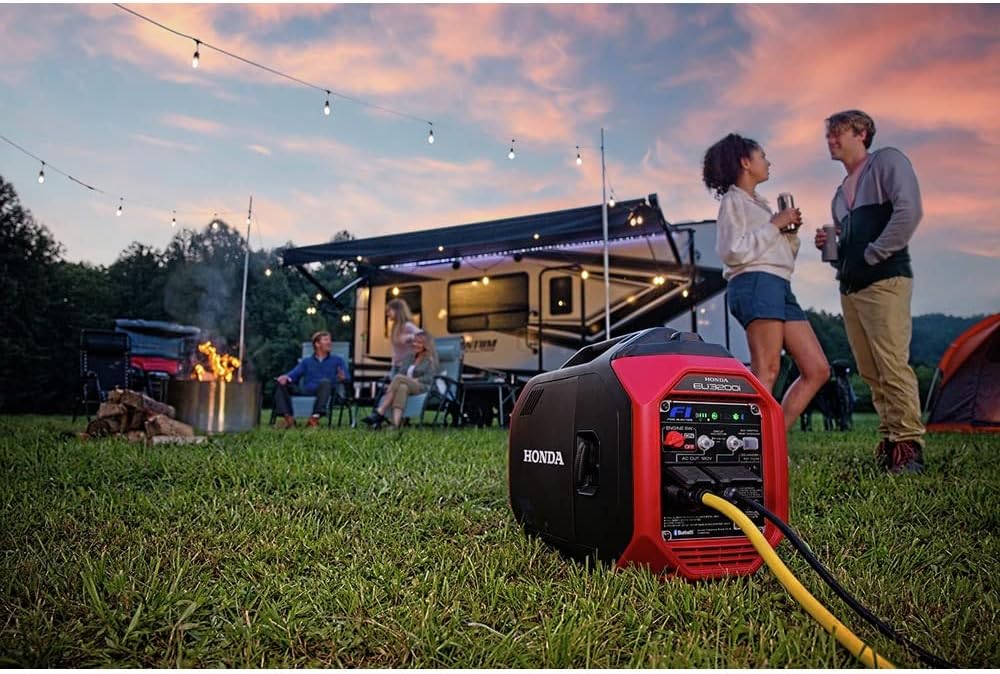
The Honda EU3200i makes the most sense when portability is part of the experience rather than an occasional requirement. Imagine arriving at an RV site or established campsite with enough equipment for a comfortable weekend away. You unload the generator, position it in the appropriate outdoor location, connect the equipment you actually need, and let it provide power without becoming the center of the campsite.
Its relatively compact form is particularly useful when the generator has to be moved between storage, a vehicle, and the operating location. You are not dealing with the bulk of a high-output open-frame generator, yet you have considerably more capacity than the smallest recreational models.
The EU3200i is also well suited to a campsite where people spend significant time outdoors. Quiet operation matters when the generator is running while you prepare meals, charge devices, use a small appliance, or keep an RV’s essential equipment operating. The inverter design also makes it a practical match for modern electronics that require stable power.
For occasional emergency use at home, the same characteristics become useful in a different way. The generator can be stored until an outage occurs and then used for selected essential loads rather than attempting to reproduce the home’s entire electrical demand.
Honda EU3200i Evaluation
| Model | Power Output | Fuel | Best Use | Key Advantage |
|---|---|---|---|---|
| Honda EU3200i | 3,200W peak / 2,600W running | Gasoline | Camping, RVs, Essential Backup | Compact premium inverter design with EFI and low operating noise |
| Westinghouse iGen5000DFc EFI | 5,000W peak / 3,900W running | Gasoline / Propane | RV Travel, Home Backup | EFI, dual-fuel flexibility, and strong mid-range output |
| Pulsar PGDA70BiSCO | 7,250W peak / 6,000W running | Gasoline / Propane | High-Demand RV, Home Backup | High portable output with 120/240V capability |
| Champion 2500W Inverter | 2,500W peak / 1,850W running | Gasoline | Camping, Tailgating, Road Trips | Ultra-lightweight design with quiet operation |
| maXpeedingrods MXR4500i | 4,500W peak / 3,600W running | Gasoline / Propane | Camping, RVs, Home Backup | Dual-fuel flexibility with Bluetooth monitoring |
Who Should Buy This
- Buyers who want a premium compact inverter generator from an established manufacturer.
- Campers and RV owners who value quiet operation and easy transportation.
- Users who need more capacity than a typical 2,000-watt-class generator can provide.
- Homeowners looking for portable power for essential loads during an outage.
- Buyers who value electronic fuel injection and convenient everyday operation.
Who Should Skip This
- Buyers who specifically need dual-fuel operation for emergency preparedness.
- Users who need enough output to run several high-demand household appliances simultaneously.
- Buyers whose primary priority is getting the lowest possible purchase price.
- Anyone looking for a very small generator that can be easily carried by hand for short recreational trips.
Final Verdict
The Honda EU3200i earns our Best Overal Compact Inverter Generator award because it gets the important details right without trying to compete with high-output generators on their terms. It provides meaningful portable power while keeping the size, noise, and operating experience manageable for camping, RV travel, and essential backup.
Its gasoline-only design and premium positioning will not suit every buyer. Those who need dual-fuel capability or substantially more power have better alternatives elsewhere in this guide. But for buyers who want a refined compact inverter generator that can move easily from recreational use to emergency backup, the EU3200i is an exceptionally well-rounded choice.
If portability, quiet operation, dependable performance, and long-term usability matter more to you than maximum wattage, the Honda EU3200i is our Best Premium Compact Inverter Generator.
Check the latest price and customer reviews on Amazon.
Related Guide: If you need substantially more capacity for extended household backup, our Best Portable Generators (2026) guide compares larger portable generator options for demanding loads and longer outages.
Westinghouse iGen5000DFc EFI
Award: Best Mid-Size Dual-Fuel Inverter Generato

Quick Verdict
The Westinghouse iGen5000DFc EFI earns our Best Mid-Size Dual-Fuel Inverter Generator award because it occupies a particularly useful middle ground between compact recreational generators and much larger high-output machines. It gives buyers substantially more capacity than a small inverter generator while retaining the advantages of inverter technology and the flexibility of gasoline or propane operation.
Its 5,000-watt peak output and 3,900-watt running output on gasoline make it suitable for a broader range of demanding loads, including many RV applications and essential home-backup setups. Electronic fuel injection adds another layer of convenience, while the dual-fuel design gives you the option to choose between gasoline and propane depending on availability and operating conditions.
The iGen5000DFc EFI is particularly appealing when one generator needs to serve several purposes. It has enough output for equipment that would overwhelm a compact 2,000- or 3,000-watt generator, yet it remains considerably more manageable than the largest generators in this lineup.
The trade-off is size and weight. This is not the model to choose if your main priority is carrying a generator by hand or keeping your camping equipment as light as possible. But for buyers who want a versatile generator that can move between RV travel, emergency preparedness, and moderate home-backup duties, it offers a strong combination of capacity and flexibility.
Camping Snapshot
| Feature | Details |
|---|---|
| Best Use | RV Travel • Home Backup • Emergency Preparedness |
| Rated Power | 5,000W peak / 3,900W running on gasoline |
| Fuel Type | Gasoline / Propane |
| Inverter Design | Yes |
| Fuel System | Electronic Fuel Injection (EFI) |
| RV Ready | Yes |
| Best For | Buyers who need more portable power and fuel flexibility without moving into the largest generator class. |
Why We Chose It
The Westinghouse iGen5000DFc EFI stands out because it solves a common problem for generator buyers: compact models can be too restrictive, while high-output generators can be unnecessarily large for everyday use.
For an RV owner, for example, a 2,000-watt-class generator may handle basic electronics and lighting but leave little room for an air conditioner or other high-demand equipment. Moving to a much larger generator can solve the capacity problem, but at the cost of additional weight, storage space, and fuel requirements. The iGen5000DFc EFI provides a useful middle option.
Its dual-fuel capability is another reason it earns a place in this guide. Gasoline provides the higher rated output, while propane gives owners another way to operate the generator when fuel availability or storage considerations make it preferable. That flexibility can be particularly valuable when the generator is kept primarily for emergency use but also serves during RV trips or outdoor activities.
Electronic fuel injection further distinguishes this model from simpler portable generators. For a generator that may sit unused between trips or emergency events, EFI contributes to a more convenient ownership experience and reduces reliance on the traditional carbureted design found on many portable generators.
We also value its versatility. The iGen5000DFc EFI is not narrowly optimized for one scenario. It can support an RV setup, provide essential household backup during an outage, and serve as a higher-capacity portable power source when a compact generator simply isn’t enough.
That combination of useful mid-range output, dual-fuel flexibility, inverter technology, and EFI convenience makes the iGen5000DFc EFI one of the most versatile choices in our lineup.
Check the latest price and customer reviews on Amazon.

Living With It at Camp
The Westinghouse iGen5000DFc EFI makes sense for campers and RV owners who want more freedom in how they use their electrical system. Instead of planning every appliance around the limited capacity of a small generator, you have considerably more room to run several useful loads without immediately reaching the generator’s limits.
Picture an RV weekend where the refrigerator is running, the battery charger is replenishing the house batteries, and you want to use another appliance without constantly managing every watt. The additional capacity of the iGen5000DFc EFI makes that kind of setup more practical.
Its dual-fuel capability also changes the way you can plan longer trips. Gasoline can be used when you need the generator’s higher output, while propane provides another fuel option when you want to rely on stored fuel or preserve your gasoline supply. For an RV owner who also keeps the generator available for emergencies at home, that flexibility has value beyond a single camping trip.
The generator’s larger size does mean that transportation requires more planning than with an ultralight inverter. This is better viewed as equipment that you move to the campsite or backup location rather than something you casually carry around. For buyers comfortable with that trade-off, the additional capacity makes it a much more versatile piece of equipment.
Westinghouse iGen5000DFc EFI Evaluation
| Evaluation Category | Editorial Assessment |
|---|---|
| Power & Performance | Strong mid-range output provides useful capacity for RV appliances and essential household backup loads. |
| Fuel Flexibility | Dual-fuel operation gives buyers the option to use gasoline or propane according to availability and operating needs. |
| Convenience | Electronic fuel injection and electric/remote starting add practical convenience for regular and emergency use. |
| Versatility | Its combination of inverter technology, higher output, and dual-fuel capability makes it suitable for both RV and home-backup applications. |
| Overall Rating | A versatile mid-size inverter generator that offers a strong balance of capacity, fuel flexibility, and practical everyday usability. |
Who Should Buy This
- RV owners who need more capacity than a compact inverter generator can provide.
- Homeowners who want one generator for both RV travel and emergency backup.
- Buyers who value gasoline and propane flexibility.
- Users who want inverter technology without stepping up to a much larger high-output generator.
- Buyers who appreciate the convenience of electronic fuel injection and remote starting.
Who Should Skip This
- Buyers who only need enough power for lights, phones, and small electronics.
- Users who require the highest output possible for multiple large household appliances.
- Buyers who specifically want a gasoline-only generator with the smallest possible footprint.
- Anyone unwilling to trade additional size and weight for higher electrical capacity.
Final Verdict
The Westinghouse iGen5000DFc EFI earns our Best Mid-Size Dual-Fuel Inverter Generator award because it occupies one of the most useful positions in the lineup. It offers enough capacity to handle significantly more demanding equipment than compact recreational generators while retaining inverter technology and the flexibility of two fuel sources.
Its appeal is ultimately about versatility. An RV owner can use it on the road, a homeowner can keep it available for essential backup, and an emergency-preparedness setup can benefit from having both gasoline and propane available. The larger form factor is a reasonable trade-off for that additional capability.
If you need a generator that can bridge the gap between lightweight camping power and heavy-duty home backup, the Westinghouse iGen5000DFc EFI is our Best Mid-Size Dual-Fuel Inverter Generator.
Check the latest price and customer reviews on Amazon.
Related Guide: If you need a more permanent solution for connecting a generator to your home, see our Best Transfer Switches for Generators (2026) guide.
Pulsar PGDA70BiSCO
Award: Best High-Output Dual-Fuel Inverter Generator

Quick Verdict
The Pulsar PGDA70BiSCO earns our Best High-Output Dual-Fuel Inverter Generator award because it is designed for buyers who have outgrown the capacity of compact and mid-size portable generators. With substantially more available power, dual-fuel operation, and 120/240V capability, it is built for applications where the generator needs to handle heavier electrical loads.
Its high output makes it particularly relevant for demanding RV setups and emergency backup situations where several appliances may need to operate at the same time. Instead of carefully limiting every load to stay within the narrower operating range of a smaller generator, users have considerably more capacity available for equipment with higher starting and running requirements.
The dual-fuel configuration adds another practical advantage. Gasoline provides the generator’s higher output, while propane gives owners an alternative fuel source that can be useful for emergency preparedness or situations where propane storage is more convenient than maintaining a larger gasoline supply.
The trade-off is size. This is not a generator chosen primarily for easy hand-carrying or minimalist camping. Its value comes from the amount of power and flexibility it provides. For buyers who need serious portable capacity but still want inverter technology rather than a conventional open-frame design, the PGDA70BiSCO is a compelling option.
Camping Snapshot
| Feature | Details |
|---|---|
| Best Use | High-Demand RV Travel • Home Backup • Emergency Preparedness |
| Rated Power | 7,250W peak / 6,000W running on gasoline |
| Fuel Type | Gasoline / Propane |
| Inverter Design | Yes |
| Voltage | 120V / 240V |
| Remote Start | Yes |
| Best For | Buyers who need high portable output for demanding RV, emergency backup, and larger electrical loads. |
Why We Chose It
The Pulsar PGDA70BiSCO stands apart from the rest of this lineup primarily because of the amount of electrical capacity it brings to a portable inverter generator. When a buyer needs to operate more than a refrigerator, lights, and a few small electronics, generator sizing becomes much more important. High-demand appliances can have substantial startup requirements, and limited generator capacity can quickly become restrictive.
This is where the Pulsar’s higher output becomes meaningful. A homeowner preparing for an outage may want to support several essential circuits or appliances rather than choosing which individual device gets power. Likewise, an RV owner with larger electrical demands may need enough capacity to operate equipment that would be impractical with a smaller recreational generator.
The 120/240V capability is another important distinction. It expands the range of applications the generator can serve and makes it more relevant to users whose backup requirements extend beyond typical low-power camping equipment.
We also considered fuel flexibility. For a high-output generator intended for emergency use, having gasoline and propane available provides an additional layer of operational flexibility. Owners can select the fuel that makes the most sense for the situation rather than depending entirely on one fuel source.
The PGDA70BiSCO is therefore not about being the easiest generator to carry or the quietest option in the lineup. Its strength is portable high-output capability combined with inverter technology and dual-fuel flexibility. For buyers whose priority is having enough power when a smaller generator would simply fall short, that is the characteristic that matters most.
Check the latest price and customer reviews on Amazon.
Living With It at Camp
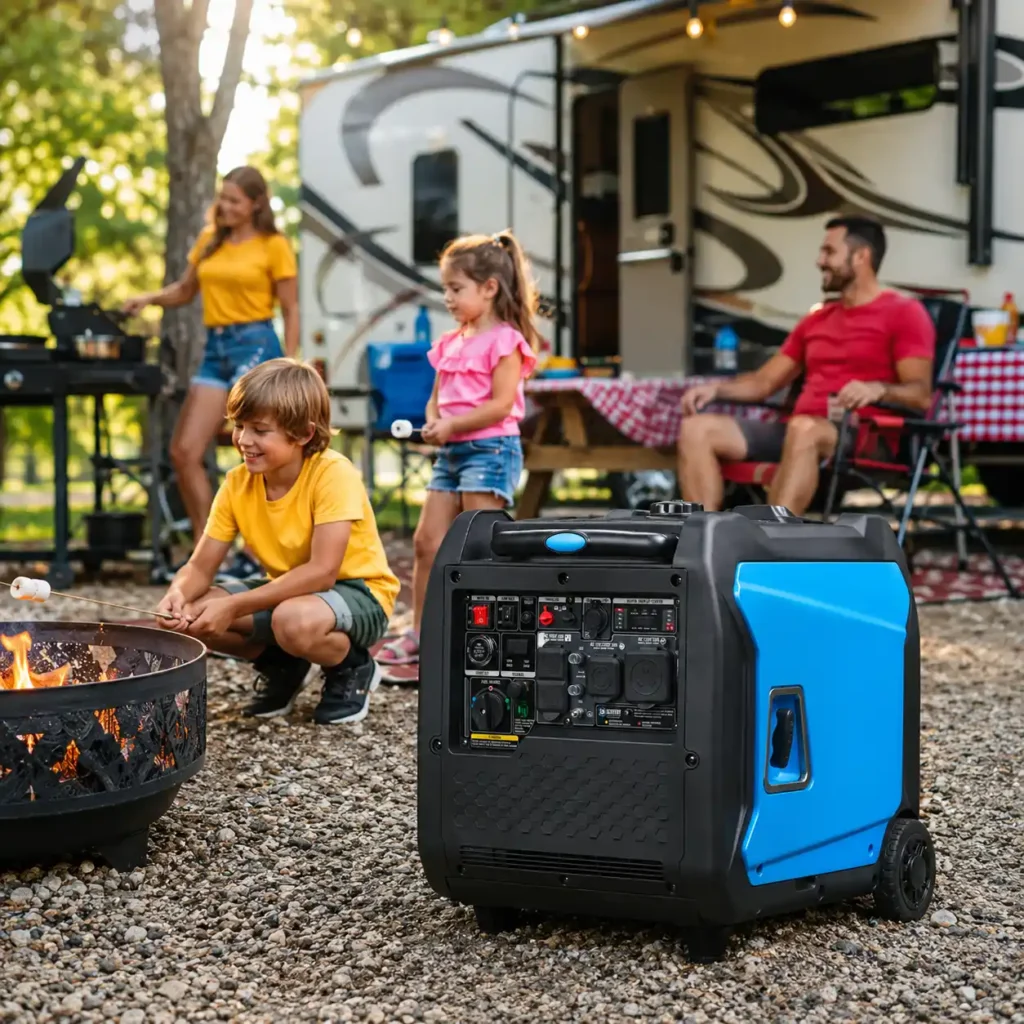
The Pulsar PGDA70BiSCO is the kind of generator that makes sense when a campsite or RV setup has moved well beyond basic recreational power. Instead of planning the trip around a small generator’s limitations, its higher output gives you more flexibility to operate demanding equipment when needed.
For an RV owner, that can mean running larger appliances without having to disconnect everything else first. The same advantage applies during an extended outage at home, where the generator can serve as a portable source of power for selected high-demand loads rather than being limited to phones, lights, and small electronics.
Its larger size does require a different approach to transportation and placement. This is equipment you plan around, rather than something you casually carry from one location to another. Once positioned safely outdoors, however, the combination of high output, 120/240V capability, and dual-fuel operation gives it a much broader role than a compact recreational generator.
The dual-fuel setup is particularly useful when the generator is part of an emergency-preparedness plan. Having propane available as an alternative fuel source can provide additional flexibility when gasoline supplies are limited or when stored propane is the more convenient option.
Pulsar PGDA70BiSCO Evaluation
| Evaluation Category | Editorial Assessment |
|---|---|
| Power & Performance | High output provides substantial capacity for demanding RV equipment, appliances, and essential backup loads. |
| Fuel Flexibility | Gasoline and propane operation gives users additional flexibility during extended trips or emergency situations. |
| Voltage Capability | 120/240V operation expands its usefulness for larger electrical loads and more demanding backup applications. |
| Convenience | Remote starting and inverter technology make a high-output generator easier to operate across different use scenarios. |
| Overall Rating | A high-capacity dual-fuel inverter generator for buyers who prioritize substantial portable power over compact size and easy hand transport. |
Who Should Buy This
- RV owners with higher electrical demands who need more capacity than a compact or mid-size generator provides.
- Homeowners preparing for outages who need to support larger essential loads.
- Buyers who want both gasoline and propane fuel options.
- Users who need 120/240V capability for more demanding backup applications.
- Buyers who prioritize output and versatility over lightweight portability.
Who Should Skip This
- Campers who only need power for small electronics and basic recreational equipment.
- Backpackers or users who need a generator that can be easily carried by hand.
- Buyers who rarely need more than 2,000–3,000 watts of portable power.
- Users whose main priority is the smallest possible generator footprint.
- Buyers who do not need dual-fuel capability or high-output backup power.
Final Verdict
The Pulsar PGDA70BiSCO earns our Best High-Output Dual-Fuel Inverter Generator award because it fills a specific gap in the market: buyers who need considerably more portable power but still want the advantages of inverter technology and dual-fuel operation.
Its high output and 120/240V capability make it particularly useful for demanding RV setups and emergency backup situations where smaller generators can become restrictive. The ability to use gasoline or propane adds another layer of flexibility for longer trips and preparedness planning.
This is not the right choice if portability means carrying a lightweight generator to a campsite. Its larger form factor is part of the trade-off for having substantially more available power. But when the priority is running larger loads from a portable inverter generator, that trade-off makes sense.
For buyers who need serious portable capacity, fuel flexibility, and broader electrical capability, the Pulsar PGDA70BiSCO is our Best High-Output Dual-Fuel Inverter Generator.
Check the latest price and customer reviews on Amazon.
Related Guide: If you’re considering a higher-capacity backup solution for your home, our Best Whole House Backup Power Systems (2026) guide compares systems designed to keep essential household circuits and major appliances running during longer power outages.
Champion Power Equipment 201317
Award: Best Ultralight Inverter Generator

Quick Verdict
The Champion Power Equipment 201317 earns our Best Ultralight Inverter Generator award because it focuses on the one thing that larger generators cannot provide: genuinely easy portability. With a compact design and a lightweight build, it is intended for buyers who want to take portable power with them without turning transportation into a separate task.
Its 2,500-watt starting output and 1,850-watt running output are well suited to lighter recreational loads, small appliances, electronics, and basic emergency-power needs. The inverter design also provides clean power for sensitive electronics, making it more versatile than a simple low-cost conventional generator.
The biggest advantage becomes apparent before the generator is even running. Whether it is being loaded into a vehicle for a weekend camping trip, moved around a tailgating area, or stored between uses, the lighter design makes the generator considerably easier to handle than the higher-output models in this guide.
That portability does come with a clear limitation: this is not a high-capacity home-backup generator. Buyers who need to run large appliances or several demanding loads simultaneously will need substantially more output. But for recreational users who value convenience and transportability above maximum power, the 201317 is one of the most practical options in this lineup.
Camping Snapshot
| Feature | Details |
|---|---|
| Best Use | Camping • Tailgating • Road Trips • Light Backup |
| Rated Power | 2,500W peak / 1,850W running |
| Fuel Type | Gasoline |
| Inverter Design | Yes |
| Noise Level | Quiet operation for recreational use |
| Weight | Approximately 39 lbs |
| Best For | Buyers who prioritize low weight and easy transportation for camping, travel, and lighter portable-power needs. |
Why We Chose It
The Champion 201317 earns its position in this guide for a very different reason than the higher-output generators. Instead of asking how much equipment it can power at once, the more useful question is how easily you can bring it wherever portable electricity is needed.
That distinction matters for recreational users. A generator that stays behind because it is too heavy or inconvenient to transport does not provide much practical value. The 201317 is designed around the opposite philosophy: keep the generator compact enough that taking it along does not require extensive planning.
For camping and tailgating, that can make a noticeable difference. You may only need to power a few essentials, charge electronics, run a small appliance, or provide electricity for a comfortable outdoor setup. In those situations, carrying substantially more generator than you actually need can be unnecessary.
The inverter design is another reason we consider this model useful for modern recreational use. Portable electronics, chargers, laptops, and other sensitive devices benefit from the cleaner power output associated with inverter generators.
We also like the clear positioning of this model. It does not pretend to replace a large emergency generator. Instead, it provides a practical amount of power in a package designed around mobility. For buyers who regularly move their generator between home, vehicle, campsite, and storage, that trade-off can be more valuable than having several thousand additional watts sitting unused.
The Champion 201317 therefore stands out as the choice for buyers who want portable power to remain genuinely portable.
Check the latest price and customer reviews on Amazon.

Living With It at Camp
The Champion 201317 is easiest to appreciate when you actually have to move your generator more than once. For a weekend camping trip, road trip, or tailgating event, the generator can be loaded into a vehicle without requiring the same amount of space or effort as a larger portable unit.
At the campsite, its smaller footprint also makes placement simpler. You can position it safely outdoors near the equipment that needs power without dedicating a large amount of space to the generator itself. That makes it particularly convenient for campers who value a straightforward setup and do not need enough capacity to run an entire RV or household.
Its power level is well matched to lighter recreational loads. Charging electronics, powering lights, running small appliances, and supporting other basic campsite equipment are all more realistic use cases than trying to operate several high-demand appliances simultaneously.
The biggest benefit is therefore convenience rather than capacity. When the generator is something you expect to transport regularly, a lightweight design can have a greater practical impact than several thousand additional watts that you rarely need.
Champion Power Equipment 201317 Evaluation
| Evaluation Category | Editorial Assessment |
|---|---|
| Power & Performance | Provides practical output for lighter camping, tailgating, electronics, and basic portable-power needs. |
| Portability | Its approximately 39-pound weight makes transportation significantly easier than with larger inverter generators. |
| Noise | Quiet operation is well suited to campsites, outdoor recreation, and other environments where excessive generator noise is undesirable. |
| Ease of Use | Compact dimensions and straightforward portable-generator design make it convenient to transport, position, and store. |
| Overall Rating | A highly portable inverter generator that prioritizes low weight, convenient transportation, and practical recreational power over maximum capacity. |
Who Should Buy This
- Campers who regularly transport their generator by vehicle.
- Tailgaters and outdoor users who need convenient portable electricity.
- Buyers who prioritize low weight over maximum power output.
- Users who mainly need to operate electronics, lights, and smaller appliances.
- Anyone looking for a compact inverter generator that is easy to store between trips.
Who Should Skip This
- Homeowners who need to power several high-demand appliances during an outage.
- RV owners who require substantial capacity for air conditioning and other major loads.
- Buyers who specifically need dual-fuel operation.
- Users who want enough output for large household backup applications.
- Anyone who expects a portable generator to serve as a substitute for a high-capacity emergency generator.
Final Verdict
The Champion Power Equipment 201317 earns our Best Ultralight Inverter Generator award because it solves a very specific problem exceptionally well: providing useful portable power without making transportation unnecessarily difficult.
Its 1,850-watt running capacity is not designed for heavy household loads, but that is not the purpose of this model. Its strength lies in being small enough to take camping, load into a vehicle, move around an outdoor setup, and store without the logistical demands associated with larger generators.
For recreational users who need moderate power and value mobility above everything else, that trade-off makes sense. If your priority is high-output emergency backup, another model in this guide will be a better fit.
For buyers who want a genuinely portable inverter generator for camping, tailgating, and lighter backup needs, the Champion Power Equipment 201317 is our Best Ultralight Inverter Generator.
Check the latest price and customer reviews on Amazon.
Related Guide: If you need a compact power source specifically for recreational use, our Best Portable Power Stations for Camping (2026) guide compares battery-powered alternatives that offer quiet operation without gasoline.
maXpeedingrods 4000W Dual Fuel Inverter Generator
Award: Best Value Dual-Fuel Inverter Generator
Quick Verdict
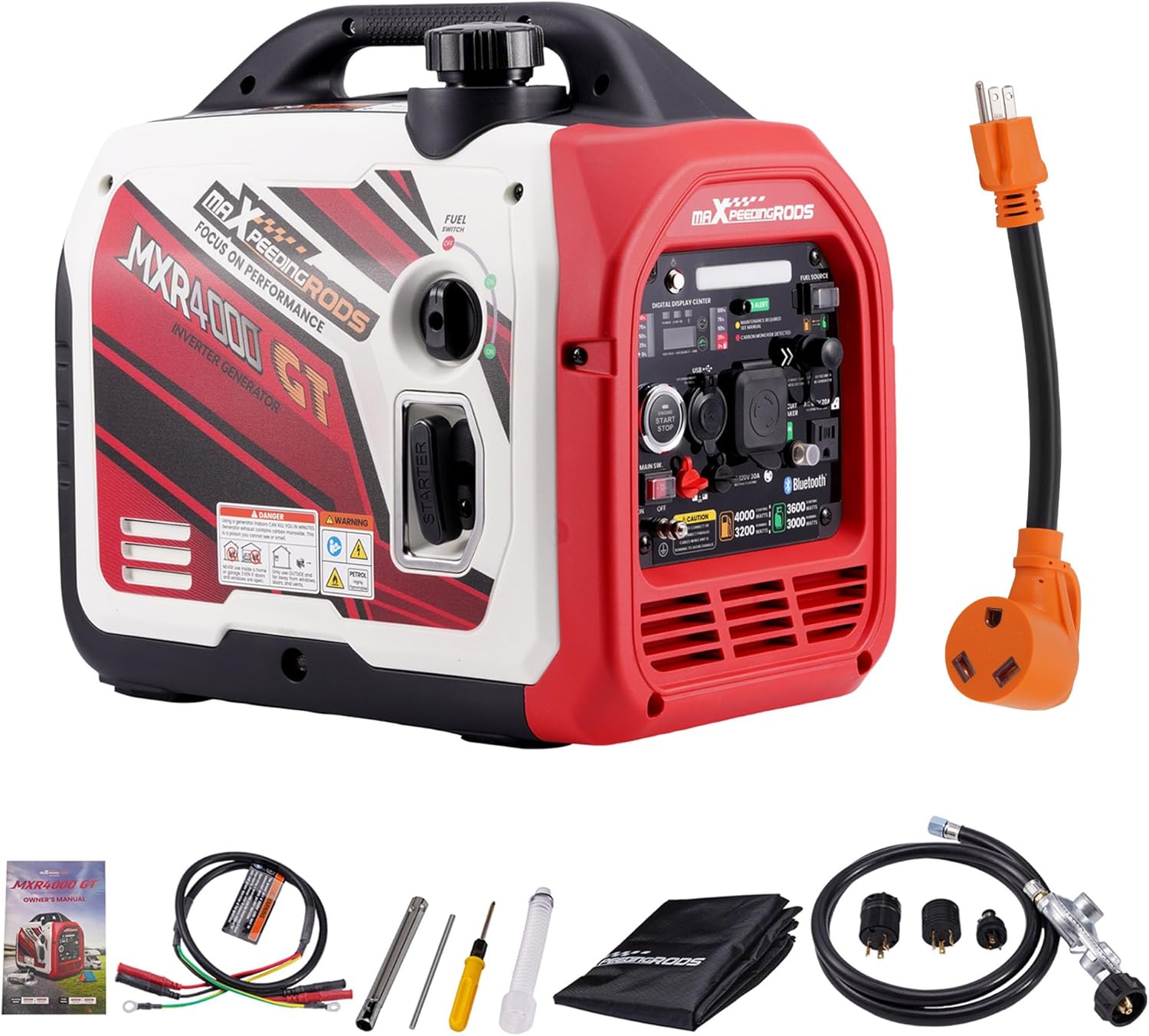
The maXpeedingrods 4000W Dual Fuel Inverter Generator earns our Best Value Dual-Fuel Inverter Generator award because it combines useful portable power, gasoline and propane flexibility, inverter technology, and convenient controls without moving into the size and output class of the largest generators in this guide.
Its 4,000-watt peak capacity gives it considerably more headroom than lightweight recreational generators, making it suitable for a broader range of camping, RV, and emergency-backup applications. The ability to operate on either gasoline or propane is particularly useful for buyers who want flexibility without committing to a single fuel source.
Another practical advantage is Bluetooth connectivity, which gives users a more convenient way to monitor and manage the generator during operation. For buyers who appreciate modern controls but do not necessarily need the premium positioning of a high-end generator, this adds useful functionality without changing the basic portable-generator experience.
The maXpeedingrods model is not the strongest choice for maximum household backup capacity, nor is it the lightest generator in the lineup. Its appeal is the middle ground: enough power for more demanding portable applications, dual-fuel flexibility, and useful modern features at a value-oriented position.
Camping Snapshot
| Feature | Details |
|---|---|
| Best Use | Camping • RV Travel • Portable Backup • Emergency Preparedness |
| Rated Power | 4,000W peak |
| Fuel Type | Gasoline / Propane |
| Inverter Design | Yes |
| Bluetooth Control | Yes |
| Fuel Flexibility | Dual-fuel operation |
| Best For | Buyers who want versatile dual-fuel portable power with useful modern features at a value-focused price point. |
Why We Chose It
The maXpeedingrods generator stands out because it offers a practical combination of features that many buyers would otherwise have to pay more to obtain. Instead of concentrating on one premium characteristic, it brings together moderate-to-high portable output, dual-fuel operation, inverter technology, and Bluetooth control in a single package.
That combination makes it particularly interesting for buyers whose generator has to perform several roles. It can accompany an RV trip, provide power at a campsite, or remain available as a backup option when an unexpected outage affects the home.
Fuel flexibility is especially useful here. Gasoline remains the straightforward choice when maximum available output is the priority, while propane provides an alternative that can be convenient for planned storage and emergency preparedness. Having both options means the generator does not depend entirely on one fuel supply.
The 4,000-watt class also gives it a useful advantage over ultralight recreational generators. Buyers can support more equipment without immediately moving to a much larger high-output machine. That makes the generator easier to justify for households that want one portable unit capable of handling both recreational and occasional emergency duties.
We also considered the practical value of Bluetooth connectivity. It does not replace the generator’s core power capabilities, but remote monitoring can make operation more convenient when the generator is positioned outside an RV, campsite, or home.
Ultimately, the maXpeedingrods earns its place because it offers a broad set of useful capabilities rather than specializing in just one. For buyers who want dual-fuel flexibility and more power than an ultralight generator can provide while keeping the overall package value-focused, it is a compelling option.
Check the latest price and customer reviews on Amazon.

Living With It at Camp
The maXpeedingrods 4000W Dual Fuel Inverter Generator is particularly useful for buyers who want one portable generator that can adapt to different trips and different power requirements. It gives you more flexibility than an ultralight recreational model without requiring the capacity of a large emergency generator.
At an RV campsite, that additional capacity can make everyday routines easier. Instead of limiting the setup to charging electronics and running a few small devices, you have more room to operate several moderate loads at the same time. This can be useful when the generator is supporting an RV refrigerator, battery charger, lights, and other equipment during a longer stay.
The dual-fuel design also becomes valuable over the course of ownership. Gasoline can be used when higher output is needed, while propane provides another option for planned trips or emergency storage. That flexibility means the generator can serve different purposes without requiring the owner to rely exclusively on one fuel type.
Bluetooth control adds another small but practical convenience. When the generator is operating outside the RV or at a campsite, being able to monitor its status without repeatedly walking over to the unit can make everyday operation easier.
The maXpeedingrods is therefore best viewed as a flexible all-purpose portable generator. It does not specialize in extreme portability or maximum household capacity. Instead, it gives buyers a useful combination of power, fuel choice, and modern convenience for a range of portable applications.
maXpeedingrods 4000W Dual Fuel Inverter Generator Evaluation
| Evaluation Category | Editorial Assessment |
|---|---|
| Power & Performance | Provides useful capacity for a broad range of camping, RV, and portable backup applications. |
| Fuel Flexibility | Dual-fuel operation allows users to choose gasoline or propane according to availability and operating needs. |
| Portability | Offers a practical balance between useful output and manageable transportation for a mid-size portable generator. |
| Convenience | Bluetooth connectivity adds convenient monitoring and control during everyday operation. |
| Overall Rating | A value-focused dual-fuel inverter generator that combines useful power, fuel flexibility, and modern convenience. |
Who Should Buy This
- Buyers who want dual-fuel flexibility without moving to a high-output generator.
- Campers and RV owners who need more capacity than an ultralight generator provides.
- Users who want one generator for recreational use and occasional emergency backup.
- Buyers who appreciate Bluetooth monitoring and modern convenience features.
- Value-conscious users looking for a versatile inverter generator rather than a specialized premium model.
Who Should Skip This
- Buyers who need the lightest possible generator for frequent hand transport.
- Homeowners who need enough capacity for multiple major household appliances during extended outages.
- Users who specifically want a premium generator with the most refined ownership experience.
- Buyers who have no use for dual-fuel operation.
- Campers whose power requirements are limited to phones, lights, and other very low-wattage electronics.
Final Verdict
The maXpeedingrods 4000W Dual Fuel Inverter Generator earns our Best Value Dual-Fuel Inverter Generator award because it delivers a broad combination of useful features without trying to compete with much larger generators on maximum output.
Its strongest advantage is flexibility. Gasoline and propane operation gives users more fuel options, while inverter technology makes it suitable for modern electronics and recreational equipment. The additional capacity also gives it a wider range of applications than a lightweight camping generator, while Bluetooth connectivity adds useful convenience during operation.
It is not the best choice for buyers who need either extreme portability or enough power for demanding whole-home backup. But for users looking for a versatile middle-ground generator that can handle camping, RV travel, and occasional emergency use, its combination of capability and value is compelling.
For buyers who want dual-fuel flexibility, useful portable power, and modern convenience without paying for substantially more generator than they need, the maXpeedingrods 4000W Dual Fuel Inverter Generator is our Best Value Dual-Fuel Inverter Generator.
Check the latest price and customer reviews on Amazon.
Related Guide: Before choosing a generator based on its wattage rating, our How to Calculate Power Consumption (Complete Guide + Free Calculator) guide can help you estimate the actual electrical load of your appliances and determine how much generator capacity your setup really needs.
How to Choose an Inverter Generator
Choosing the right inverter generator starts with understanding how much power you actually need, how you plan to use the generator, and which features matter for your specific situation. A compact model can be ideal for camping and basic electronics, while RV owners or homeowners preparing for outages may need substantially more capacity.
Start by estimating the running wattage of the devices you expect to power and then account for their starting wattage. Appliances with electric motors, compressors, or pumps can require significantly more power when they start than they use during normal operation. Your generator should have enough capacity to handle both the continuous load and these temporary starting demands.
Fuel type is another important consideration. Gasoline generators are widely available and can provide strong output, while dual-fuel models give you the option of switching between gasoline and propane. That flexibility can be particularly useful for emergency preparedness because it allows you to maintain more than one fuel option.
Portability should also match the way you intend to use the generator. Lightweight inverter generators are easier to transport for camping, tailgating, and road trips, but higher-output models are generally larger and heavier. If the generator will remain at a home or RV site most of the time, additional capacity may be more valuable than minimizing weight.
Noise level matters when using a generator around campsites, RVs, or residential areas. One of the main advantages of inverter technology is that many inverter generators can operate more quietly and efficiently than conventional portable generators, particularly when the electrical load is relatively light. Published noise ratings should be compared with some caution because manufacturers may measure sound at different distances, loads, and operating conditions. A lower dBA specification does not necessarily mean one generator will sound dramatically quieter than another in every real-world situation, so published figures are best treated as a useful reference rather than a perfectly standardized comparison.
Inverter generators should always be operated outdoors in a well-ventilated area and positioned away from doors, windows, vents, and other openings where exhaust gases could enter an occupied space. Carbon monoxide protection and automatic shutdown features add an important layer of protection, but they do not replace proper generator placement and ventilation.
If you plan to connect a portable generator to household circuits, use the appropriate transfer equipment installed according to local electrical requirements rather than connecting the generator directly to a household outlet. Always follow the generator manufacturer’s instructions for clearance, grounding, fueling, and operation.
Finally, consider the features that affect everyday operation, including electric or remote start, fuel monitoring, parallel capability, 120/240V output, and compatibility with the equipment you intend to power. The best inverter generator is not necessarily the most powerful model; it is the one that provides enough output, practical portability, appropriate fuel flexibility, and the features that fit your intended use.
SEO / cannibalization note: this section deliberately stays focused on how to choose an inverter generator. We do not go deeply into transfer switches, whole-house systems, power stations, or detailed wattage calculations here, because those topics belong to other pages or to the dedicated practical sections that come later in this article.
What Can an Inverter Generator Power?
An inverter generator can power far more than phones, lights, and small camping equipment, but the exact devices you can run depend on the generator’s running wattage, starting wattage, and the total electrical load connected at the same time.
Unlike a portable power station, an inverter generator produces electricity continuously while its engine is running. This makes it particularly useful for situations where you need to operate appliances for several hours rather than relying entirely on stored battery capacity.
The most important distinction is between running watts and starting watts. Electronics and resistive loads such as lights generally have relatively predictable power requirements, while refrigerators, pumps, air conditioners, and other motor-driven appliances can require significantly more electricity for a short period when they start.
A generator should not be selected solely by its maximum advertised wattage. Continuous output, starting requirements, fuel type, runtime, noise, and the specific loads you need to support all affect whether a model is appropriate for your use case.
This means a generator with sufficient continuous output may be able to support several moderate loads at the same time, but adding an air conditioner or another high-starting-load appliance could exceed its available capacity.
For camping, RV travel, and emergency backup, an appropriately sized inverter generator can support anything from essential electronics and refrigeration to higher-demand equipment such as RV air conditioners and selected household appliances. The practical limit depends on the generator’s continuous and starting output and the total load operating at the same time.
For emergency home backup, the priority is usually different. Rather than attempting to power every appliance in the house, a portable inverter generator is better suited to selected essential loads such as refrigeration, lighting, communications equipment, internet equipment, and other critical devices.
The practical rule is simple: match your generator’s continuous output to the combined load you expect to run and allow additional capacity for startup surges from motor-driven appliances.
Common Devices You Can Run
Refrigerators and Freezers
A refrigerator is one of the most common appliances people want to keep running during a power outage. Although its average electricity consumption is relatively moderate, the compressor can require substantially more power when it starts.
This makes both running and starting wattage important when choosing an inverter generator. A generator that comfortably handles the refrigerator’s normal operating load may still struggle if another high-starting-load appliance turns on at the same time.
Lights and Small Electronics
LED lights, televisions, laptops, phone chargers, routers, radios, and other small electronics are among the easiest loads for an inverter generator to support.
These devices generally consume relatively little power compared with heating appliances, air conditioners, and motor-driven equipment. This makes them practical loads for smaller inverter generators and useful priorities during an emergency outage.
Laptops and Networking Equipment
An inverter generator can provide power for laptops, monitors, Wi-Fi routers, modems, and other home-office equipment during an outage. This can be particularly valuable when working remotely or when maintaining internet and communication access is a priority.
Because these devices are relatively low-power compared with major household appliances, they can often be operated alongside other essential loads without consuming a large portion of the generator’s available capacity.
Portable Refrigerators and Camping Equipment
For camping and RV travel, inverter generators can support portable refrigerators, fans, lighting, battery chargers, entertainment equipment, and other recreational loads.
The advantage is that the generator can continue producing electricity throughout the day rather than depending solely on a stored battery. This makes it useful for extended trips where access to shore power is limited or unavailable.
Coffee Makers and Small Kitchen Appliances
Coffee makers, small electric cooking appliances, and similar equipment can usually be powered by an appropriately sized inverter generator. However, these appliances often consume considerably more electricity than phones, lights, or laptops.
A coffee maker may therefore use a meaningful portion of a smaller generator’s available output. If several appliances are already operating, check their combined wattage before adding another high-demand load.
RV Air Conditioners
RV air conditioners require significantly more power than most everyday camping electronics. Their compressors also create a starting surge, making generator sizing particularly important.
Some inverter generators are specifically suited to RV applications, but whether a particular generator can start and continuously operate an RV air conditioner depends on the air conditioner’s electrical requirements and the generator’s available starting and running wattage.
What Inverter Generators May Not Handle Well
High-demand heating appliances and large household equipment can quickly consume the available capacity of a portable inverter generator. Electric space heaters, clothes dryers, electric ranges, large water heaters, and central air-conditioning systems can require substantially more power than many portable generators can provide.
This is why generator selection should begin with the appliances you actually need during an outage or trip rather than with the generator’s advertised peak wattage.
Inverter Generator Runtime Examples
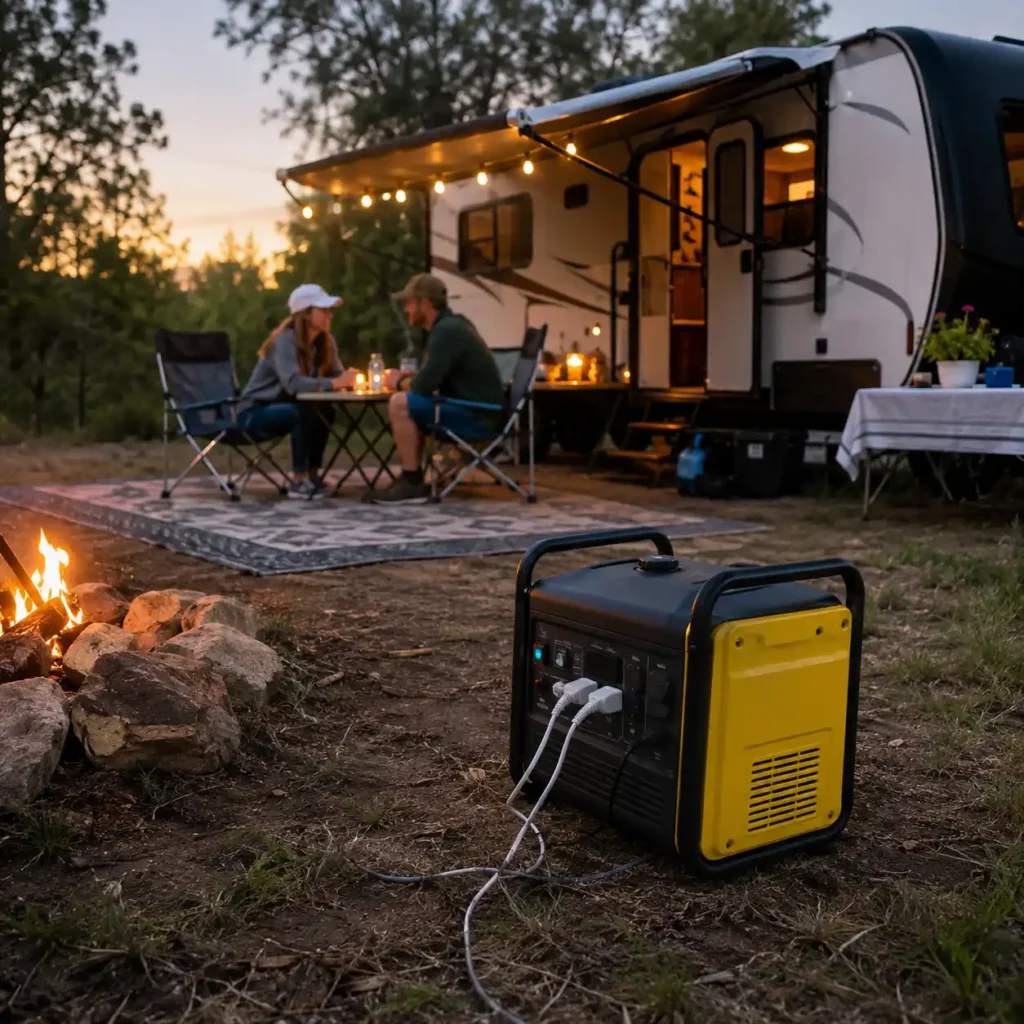
How long an inverter generator can run depends on several variables, including fuel-tank capacity, electrical load, fuel type, operating mode, ambient temperature, and whether the generator is able to reduce engine speed at lighter loads.
A generator operating at a relatively light load will generally consume less fuel than the same generator running close to its rated output. This is one reason advertised runtime figures should be treated as reference points rather than guarantees. Actual runtime can vary considerably depending on what you connect and how the load changes throughout the day.
For example, a refrigerator does not necessarily consume its maximum rated power continuously. Its compressor cycles on and off, meaning the generator may experience periods of higher demand followed by lighter loads. The same principle applies to many RV and household appliances.
| Generator | Fuel | Test Load | Approx. Runtime |
|---|---|---|---|
| Honda EU3200i | Gasoline | 25% load | Up to 8.6 hours |
| Westinghouse iGen5000DFc EFI | Gasoline | 25% load | Up to 18 hours |
| Pulsar PGDA70BiSCO | Gasoline | 50% load | Up to 8.5 hours |
| Champion 2500W Inverter | Gasoline | 25% load | Up to 11.5 hours |
| maXpeedingrods MXR4500i | Gasoline | 25% load | About 8.5 hours |
These figures are manufacturer-rated runtimes under specified test loads and are not directly comparable as fuel-efficiency measurements. Actual runtime will vary with electrical load, fuel type, operating conditions, and generator settings.
What Affects Generator Runtime?
Electrical Load
The amount of electricity your equipment requires is one of the biggest factors affecting fuel consumption. Running a generator at a high percentage of its available capacity generally uses more fuel than operating it at a lighter load.
If your essential loads total only a fraction of the generator’s rated output, choosing a much larger generator may therefore result in unnecessary fuel consumption compared with a properly sized model.
Fuel Type
For dual-fuel generators, runtime can differ between gasoline and propane. The generator’s output and fuel consumption may also change depending on which fuel is being used.
Gasoline is often associated with higher available output, while propane provides an alternative fuel source that can be particularly useful for emergency preparedness and long-term storage planning.
Load Changes
Generator loads rarely remain constant. A refrigerator may cycle, an air conditioner may start and stop, and electronic devices may finish charging during the day.
Because of this, calculating runtime based solely on the combined nameplate wattage of every connected device can produce an unrealistic result. Real-world consumption depends on how those devices actually operate.
How Runtime Changes Under Different Loads
Consider a camping setup using an inverter generator to support a refrigerator, LED lighting, phone chargers, a laptop, and several other small devices. The generator may spend much of its operating time at a relatively modest load, particularly when the refrigerator compressor is not running and electronic devices are being charged intermittently.
A different situation occurs when the generator is supporting an RV air conditioner or several high-demand appliances. Startup surges and sustained higher loads can increase fuel consumption significantly, reducing the amount of time available from the same tank of fuel.
For emergency home backup, the most efficient approach is often to prioritize essential equipment rather than attempting to operate everything simultaneously. Refrigeration, communications, lighting, and selected household equipment can be scheduled around the generator’s available capacity, allowing fuel to last longer while maintaining the most important services.
This is also why runtime should never be evaluated independently of generator capacity. A generator with a larger fuel tank may advertise a longer runtime, but if it is also powering a substantially larger load, the practical operating time can be much shorter than expected.
When comparing inverter generators, look at runtime alongside fuel capacity, rated output, and the load used to produce the manufacturer’s runtime figure. A runtime claim at 25% load, for example, should not be interpreted as the expected runtime when the generator is operating near its maximum continuous output.
The most useful question is not simply “How many hours will this generator run?” but “How many hours will it run while powering the equipment I actually need?”
This approach gives you a much more realistic understanding of fuel requirements and helps prevent unpleasant surprises during a long camping trip or extended power outage.
Common Devices to Run With an Inverter Generator
Understanding which devices you can realistically run is more useful than looking only at a generator’s maximum wattage. The same inverter generator can be an excellent match for one household or campsite and completely unsuitable for another, depending on the equipment being powered.
The key is to consider both running watts and starting watts, especially for appliances with motors or compressors. You also need to account for the possibility that several devices may operate simultaneously.
Refrigerator and Freezer
Refrigerators and freezers are among the most common priorities during a power outage. Their average power consumption is relatively modest, but the compressor can require additional starting power when it cycles on.
A properly sized inverter generator can usually handle a refrigerator while leaving capacity for other essential loads. However, if you plan to run multiple refrigeration appliances simultaneously, add their expected running and starting requirements before choosing the generator.
Lights, Phones, and Small Electronics
LED lights, smartphones, tablets, cameras, radios, and chargers generally require relatively little power. These devices are therefore easy loads for most inverter generators, including smaller recreational models.
During an outage, they can often operate alongside a refrigerator, router, or laptop without consuming a significant portion of the generator’s available capacity.
Wi-Fi Router, Modem, and Computer
Internet equipment and computers can be important backup loads for people who work remotely or need to maintain communication during an outage.
A router and modem typically represent a relatively small electrical load, while a desktop computer and monitor require more power. If you need to keep a home office operational, calculate the combined consumption of the computer, monitor, networking equipment, and any peripherals rather than looking at each device individually.
Portable Refrigerator
Portable compressor refrigerators are particularly useful for camping, RV travel, and extended off-grid trips. Their electrical demand is generally manageable for an appropriately sized inverter generator, although the compressor still creates a startup load.
Because the refrigerator cycles rather than running continuously at maximum power, its actual energy consumption over several hours may be considerably lower than its maximum rated input suggests.
Coffee Maker and Small Kitchen Appliances
Coffee makers, microwaves, electric kettles, and similar kitchen appliances can require considerably more power than phones, lights, or laptops.
This is where generator capacity becomes important. A smaller inverter generator may run one of these appliances successfully, but adding another high-wattage device at the same time can exceed its continuous output.
If you plan to use several kitchen appliances during an outage or while camping, operate them sequentially when necessary rather than assuming the generator can support all of them simultaneously.
RV Air Conditioner
An RV air conditioner is one of the more demanding appliances commonly connected to a portable inverter generator. The compressor requires additional power during startup, and the air conditioner can consume a substantial amount of electricity while operating.
Whether a particular generator can run an RV air conditioner depends on both the air conditioner’s starting requirements and the generator’s available starting and running wattage. Always check the specifications of the specific air-conditioning unit before assuming compatibility.
Power Tools and Pumps
Circular saws, drills, shop vacuums, sump pumps, and other motor-driven equipment can produce significant startup demands. These loads can be particularly challenging for smaller inverter generators.
If you intend to use power tools or pumps, pay close attention to starting wattage rather than selecting a generator based only on its continuous output rating.
Electric Heaters and High-Wattage Appliances
Electric space heaters, electric kettles, clothes dryers, electric ranges, and similar resistive appliances can consume large amounts of electricity continuously.
Although an inverter generator may technically have enough starting capacity for one of these devices, running it alongside several other appliances can quickly exceed the generator’s available output.
Inverter Generator vs. Portable Power Station

Inverter generators and portable power stations can both provide electricity away from the grid, but they solve the problem in very different ways. Choosing between them depends on how much power you need, how long you expect to operate, and whether fuel availability, noise, or emissions are important considerations.
An inverter generator uses an internal-combustion engine to produce electricity from gasoline or another fuel source. A portable power station stores electricity in a battery and delivers that stored energy through AC and DC outputs. This fundamental difference affects everything from runtime and refueling to noise, maintenance, and outdoor usability.
When an Inverter Generator Makes More Sense
An inverter generator is generally the better choice when you need sustained power and expect to operate equipment for extended periods. As long as you have sufficient fuel, the generator can continue producing electricity without waiting for a battery to recharge.
This makes generators particularly useful for longer camping trips, RV travel, construction and outdoor work, and emergency situations where the power outage may last for many hours or several days.
Generators also offer a significant advantage when the required electrical load is relatively high. Larger inverter generators can provide several thousand watts of continuous output, allowing them to support appliances and equipment that would quickly drain a battery-based power station.
For emergency preparedness, fuel flexibility can also be valuable. Dual-fuel inverter generators allow users to keep both gasoline and propane available, providing an additional option when one fuel source becomes difficult to obtain.
When a Portable Power Station Makes More Sense
A portable power station is often more convenient when quiet operation, zero tailpipe emissions, and simple setup are the priorities. This makes battery-powered systems particularly attractive for emergency backup situations where quiet, emission-free operation is important..
There is no engine to start, no gasoline to store, and no exhaust produced during operation. This makes battery-powered systems particularly attractive for indoor-adjacent emergency use, quiet campsites, photography, remote work, and other situations where engine noise would be disruptive.
Portable power stations are also easier to use for short-duration, lower-power needs. You can recharge the battery from the electrical grid, a vehicle, or compatible solar panels and then use the stored energy when needed.
The limitation is energy storage. Once the battery is depleted, the power station needs to be recharged. A solar-compatible model can be replenished during daylight, but charging speed depends on the available solar input and weather conditions.
Which One Should You Choose?
Choose an inverter generator if your priority is sustained high-output power, long operating periods, or the ability to refuel and continue operating.
Choose a portable power station if you prioritize silent operation, zero direct emissions during use, simple setup, and convenient battery-powered electricity for shorter-duration applications.
For some users, the best solution is not choosing one technology exclusively. A portable power station can handle quiet, low-power loads such as electronics, networking equipment, and lighting, while an inverter generator can provide higher sustained output when larger appliances or extended runtime are required.
The right choice ultimately depends on the role the equipment needs to play. A generator is primarily an energy-production system, while a power station is primarily an energy-storage system. Understanding that distinction makes it much easier to determine which technology fits your camping, RV, or emergency-backup needs.
Frequently Asked Questions
What size inverter generator do I need?
The right generator size depends on the appliances you need to run at the same time. Add their running wattage together, then account for the highest starting-wattage requirement among motor-driven appliances such as refrigerators, pumps, and air conditioners. Choosing a generator with some additional capacity beyond your normal load provides useful operating headroom.
Can a 2,000-watt inverter generator run an RV air conditioner?
Usually not reliably without reducing the air conditioner’s startup demand. A typical 13,500 BTU RV air conditioner can require substantially more power during compressor startup than during normal operation, so a 2,000-watt generator may overload when the compressor starts. A larger generator or an appropriate soft-start system may be necessary, depending on the specific air conditioner
What size inverter generator do I need for a 30-amp RV?
Many 30-amp RV setups can work well with an inverter generator in roughly the 3,000- to 4,000-watt class, particularly when the RV has one air conditioner and several additional loads. The exact requirement depends on the air conditioner’s startup demand and which appliances you expect to operate simultaneously
What size inverter generator do I need for a 50-amp RV?
A 50-amp RV can require substantially more power than a typical 30-amp setup, particularly if it has two air conditioners or several high-demand appliances. Rather than sizing the generator from the 50-amp label alone, calculate the actual simultaneous loads and startup requirements of the equipment you intend to use. Larger systems may require a high-output generator or multiple compatible generators operating in parallel.
Can an inverter generator run a refrigerator?
Yes. A properly sized inverter generator can run a refrigerator or freezer, but you need to account for the compressor’s starting demand. A refrigerator may use relatively little power while operating normally but require substantially more for a brief period when the compressor starts
How many watts does a refrigerator need from a generator?
The exact requirement varies by refrigerator, but the startup load can be significantly higher than its normal running consumption. The safest approach is to check the appliance nameplate or measure its actual consumption rather than relying on a generic wattage estimate.
Are inverter generators quieter than conventional generators?
Yes. Inverter generators generally operate more quietly because their engines can reduce speed when electrical demand is low. Current RV-focused guidance commonly places quiet inverter generators around the 50–60 dBA range at partial load, although actual noise varies by model and testing conditions.
Are inverter generators more fuel-efficient?
They can be, particularly when operating at lighter or variable loads. An inverter generator can adjust engine speed according to electricity demand instead of maintaining a constant engine speed at all times. Actual fuel consumption still depends on the generator, fuel type, load, and operating conditions
Is a dual-fuel inverter generator worth it?
For many buyers, yes. A dual-fuel model provides the flexibility to use gasoline or propane, which can be useful for RV travel and emergency preparedness. The practical advantage is having an alternative fuel source available rather than depending entirely on gasoline.
How long can an inverter generator run continuously?
There is no universal runtime limit because fuel capacity and consumption vary significantly between models and loads. A generator running a light electrical load can operate considerably longer on one tank than the same generator working near its rated capacity. Always follow the manufacturer’s operating and maintenance instructions rather than assuming a single runtime applies to every situation.
Can you run two inverter generators together?
Some inverter generators support parallel operation, allowing compatible units to work together and provide substantially more available power. However, parallel capability is model-specific, so only generators and parallel kits approved by the manufacturer should be combined.
Can an inverter generator power sensitive electronics?
Yes. Inverter generators are designed to produce stable electrical output that is well suited to sensitive electronics such as laptops, televisions, chargers, and networking equipment. This stable output is one of the major reasons inverter generators are popular for camping and RV applications.
Can an inverter generator power a whole house?
A portable inverter generator can provide backup power for selected household circuits, but most portable models are not designed to power an entire home with every appliance operating simultaneously. The appropriate approach is to identify essential loads and ensure the generator has sufficient capacity for those circuits. Proper connection to household wiring also requires appropriate transfer equipment and installation practices.
Can you run an inverter generator in the rain?
You should follow the manufacturer’s instructions regarding weather exposure and never operate a fuel-burning generator where water can reach electrical components or where ventilation is restricted. Most importantly, an inverter generator should never be operated inside a house, garage, basement, shed, or other enclosed or partially enclosed space because of the risk of carbon monoxide poisoning.
How do you calculate how much generator power you need?
Start by listing every device you expect to operate simultaneously. Add their running wattage, then identify the appliance with the largest additional startup requirement. Your generator needs enough continuous output for the combined running load and enough surge capacity to handle the relevant startup demand. Checking the actual appliance nameplates is more reliable than using generic online wattage estimates.
What is the main advantage of an inverter generator?
The biggest advantages are stable electrical output, quieter operation, improved fuel efficiency at lighter loads, and compact portable designs. These characteristics make inverter generators particularly well suited to camping, RV travel, electronics, and portable emergency power.
What is the biggest disadvantage of an inverter generator?
The main trade-offs are usually a higher purchase price and, depending on the model, lower maximum output than a conventional generator of similar physical size. Larger inverter generators can also become heavy. For buyers who need very high output at the lowest possible cost per watt, a conventional generator may still be worth considering.
Final Verdict
The best inverter generator is not necessarily the model with the highest wattage, the largest fuel tank, or the longest advertised runtime. The right choice depends on how you plan to use the generator, which appliances you need to power, how much portability matters, and whether you prioritize fuel flexibility, quiet operation, or higher electrical capacity.
For most buyers, the Honda EU3200i remains our Best Overall recommendation. It offers an excellent balance of portable power, refined operation, portability, quiet performance, and everyday usability. It is particularly well suited to campers, RV owners, and buyers who want a premium inverter generator that can handle a wide range of portable-power needs without moving into a much larger generator class.
For buyers who need more capacity and fuel flexibility, the Westinghouse iGen5000DFc EFI is a stronger choice. Its combination of higher output, dual-fuel operation, electronic fuel injection, and RV-ready capability makes it particularly useful for users who need additional power for RV travel, emergency preparedness, and selected home-backup loads.
The Pulsar PGDA70BiSCO is the better fit for buyers who prioritize high portable output. Its 120/240V capability and dual-fuel design give it a broader role in demanding RV and emergency-backup situations, while its larger capacity makes it more appropriate for substantial electrical loads than the compact models in this guide.
For buyers whose priority is easy transportation, the Champion Power Equipment 201317 offers a very different proposition. Its lighter design makes it particularly attractive for camping, tailgating, road trips, and other situations where carrying and storing the generator is an important part of the ownership experience.
The maXpeedingrods 4000W Dual Fuel Inverter Generator rounds out our recommendations as a value-focused option for buyers who want useful portable output, dual-fuel flexibility, inverter technology, and modern convenience features without moving into the largest generator category.
Ultimately, choosing an inverter generator means matching power capacity to actual electrical demand rather than simply buying the biggest model available. You need enough running wattage for the appliances you expect to operate simultaneously, sufficient starting capacity for motor-driven equipment, and enough headroom to avoid continuously operating the generator at its limit.
Your intended use matters just as much. A camper carrying the generator between campsites has very different priorities from an RV owner running larger appliances or a homeowner preparing for an extended outage. Fuel type, noise level, portability, runtime, voltage capability, and control features should therefore be evaluated together rather than treated as isolated specifications.
Based on our evaluation, these five inverter generators cover distinctly different needs without forcing every buyer toward the same type of machine. The Honda EU3200i is our strongest all-around choice, while the Westinghouse and Pulsar models provide progressively more capacity, the Champion emphasizes portability, and the maXpeedingrods model focuses on value and fuel flexibility.
Our Recommendation
This guide reflects our current evaluation of the inverter generator market as of 2026. We focus on models that provide meaningful differences in power, portability, fuel flexibility, and intended use rather than simply filling the list with generators from the same category.
We do not list fixed prices in this guide because Amazon pricing can change frequently. Instead, we recommend checking the current product page for the latest price, availability, specifications, and customer feedback before making a purchase.
Our recommendations are based on the characteristics that matter most for real-world generator ownership, including available output, inverter design, portability, fuel flexibility, operating convenience, and suitability for the intended application. A generator that is excellent for lightweight camping is not automatically the best choice for RV travel or emergency home backup.
Generator requirements can also change over time. New models may replace older products, manufacturers may update specifications, and Amazon availability can change. We therefore recommend reviewing the current product information before purchasing, particularly when a generator will be part of an emergency-preparedness plan.
If you are still unsure which inverter generator is appropriate for your specific appliances or RV setup, start with your actual electrical load rather than the generator’s advertised peak wattage. Understanding your running and starting requirements is the most reliable way to narrow the options and avoid paying for capacity you do not need.
Related Guides
Choosing an inverter generator is only one part of building a reliable backup-power system. Depending on your situation, you may also need to compare larger portable generators, transfer equipment, whole-house backup systems, or alternative battery-based power solutions.
The guides below cover related backup-power needs:
- Best Portable Generators (2026) — Compare portable generators across different power levels, fuel types, and applications when you need an alternative to an inverter-focused setup.
- Best Transfer Switches for Generators (2026) — Learn how transfer switches can connect compatible generator systems to selected household circuits for safer, more practical home backup.
- Best Whole House Backup Power Systems (2026) — Compare higher-capacity residential backup solutions for homeowners who need to support essential household circuits and major appliances during extended outages.
- Best Portable Power Stations (2026) — Explore battery-based alternatives when silent operation, zero direct emissions during use, and simple portable backup are more important than continuous engine-powered generation.
- Best Solar Generators (2026) — Compare battery-based systems that combine portable energy storage with solar charging for camping, emergency preparedness, and off-grid applications.