
Whether you’re preparing for storm season, installing a portable generator for emergency backup, or simply looking for a safer way to power your home during outages, choosing the best transfer switch for generators is one of the most important decisions you can make. A properly selected transfer switch not only simplifies generator operation but also protects your home’s electrical system while ensuring backup power is delivered safely to the circuits that matter most.
The challenge is that the best transfer switch isn’t simply the one with the highest amperage or the largest number of circuits. One model may be ideal for powering a few essential household appliances during occasional outages, while another is better suited for larger portable generators, future electrical expansion, or fully automatic standby generator systems. Installation requirements, compatibility, ease of operation, and long-term reliability are often just as important as the specifications listed on the box.
For this guide, we evaluated today’s leading generator transfer switches based on the factors that matter most to homeowners: electrical capacity, number of supported circuits, compatibility with portable and standby generators, installation flexibility, build quality, safety features, ease of operation, overall value, and long-term reliability. Rather than focusing only on technical specifications, we compared how each transfer switch performs in real residential backup power scenarios.
Instead of recommending one “perfect” solution for every home, this guide explains the strengths, limitations, and ideal use cases for each model. Whether you need an affordable manual transfer switch for a portable generator or a premium automatic transfer switch for whole-home backup, we’ll help you choose the best transfer switch for generators that matches your home’s electrical needs, budget, and future backup power plans.
As an Amazon Associate, we earn from qualifying purchases.

Table of Contents
Quick Answer
Choosing the best transfer switch for generators isn’t simply about selecting the highest amperage rating or the largest number of circuits. The right transfer switch should safely connect your generator to your home’s electrical system, protect utility workers and household wiring from dangerous backfeeding, and provide reliable access to the circuits you need most during a power outage. For many homeowners, ease of installation, compatibility with their generator, and future expansion options are just as important as electrical capacity.
The products in this guide include both manual transfer switches for portable generators and a fully automatic transfer switch designed for standby generator systems. Manual transfer switches require the homeowner to start the generator and switch selected circuits manually, making them an excellent choice for portable backup generators. Automatic transfer switches continuously monitor utility power and transfer electrical loads automatically when paired with compatible standby generators, providing seamless whole-home backup without user intervention.
After comparing today’s leading models, the Reliance Controls 31410CRK Pro/Tran 2 (30A, 10-Circuit) earns our Best Overall recommendation. It offers an excellent balance of capacity, safety, installation quality, circuit flexibility, and long-term reliability, making it the best choice for most homeowners using a portable generator for emergency backup power.
If your backup power needs are different, there are several excellent alternatives. The Reliance Controls 31406CRK Pro/Tran 2 is ideal for smaller homes with fewer essential circuits, the Reliance Controls A510C Pro/Tran2 is the best choice for higher-capacity 50-amp generator installations, the Connecticut Electric EmerGen Transfer Switch Kit provides excellent value for budget-conscious buyers, while the Generac RXSW200A3 200A Automatic Transfer Switch is the clear choice for homeowners installing a whole-house standby generator.
Ultimately, the best transfer switch for generators depends on your generator type, the number of household circuits you want to power, your electrical panel configuration, and whether you prefer manual operation or fully automatic backup. Throughout this guide, we’ll compare each recommended model in detail, explain where it excels, and help you choose the transfer switch that best fits your home’s backup power system.
Why You Can Trust Power Ready Guide
At Power Ready Guide, we focus exclusively on backup power, portable generators, transfer switches, home electrical safety, solar energy, and emergency preparedness. Every recommendation in this guide is based on extensive product research, official manufacturer specifications, electrical safety standards, long-term reliability, independent testing data, and real-world homeowner experiences rather than marketing claims alone.
For this guide, we evaluated every generator transfer switch using the same objective criteria to ensure fair and consistent comparisons. Instead of concentrating on a single specification such as amperage or the number of supported circuits, we assessed each model as a complete backup power solution, balancing safety, installation flexibility, compatibility, ease of operation, build quality, and long-term ownership value.
Our evaluation considered:
- Manual versus automatic operation.
- Amperage rating and supported electrical load.
- Number of transferable circuits.
- Compatibility with portable and standby generators.
- Build quality and enclosure durability.
- Electrical safety features and code-compliant design.
- Ease of installation and overall user experience.
- Manufacturer reputation, warranty coverage, and long-term reliability.
- Overall value based on performance, flexibility, and ownership experience.
We don’t recommend the most expensive transfer switch for generators—we recommend the one that delivers the best combination of safety, reliability, ease of use, installation quality, and long-term value for each type of homeowner. Whether you’re installing your first portable generator or upgrading to a fully automatic standby generator system, our goal is to help you choose a transfer switch that provides dependable backup power while protecting both your home and your electrical system.
How We Evaluated the Best Transfer Switches for Generators
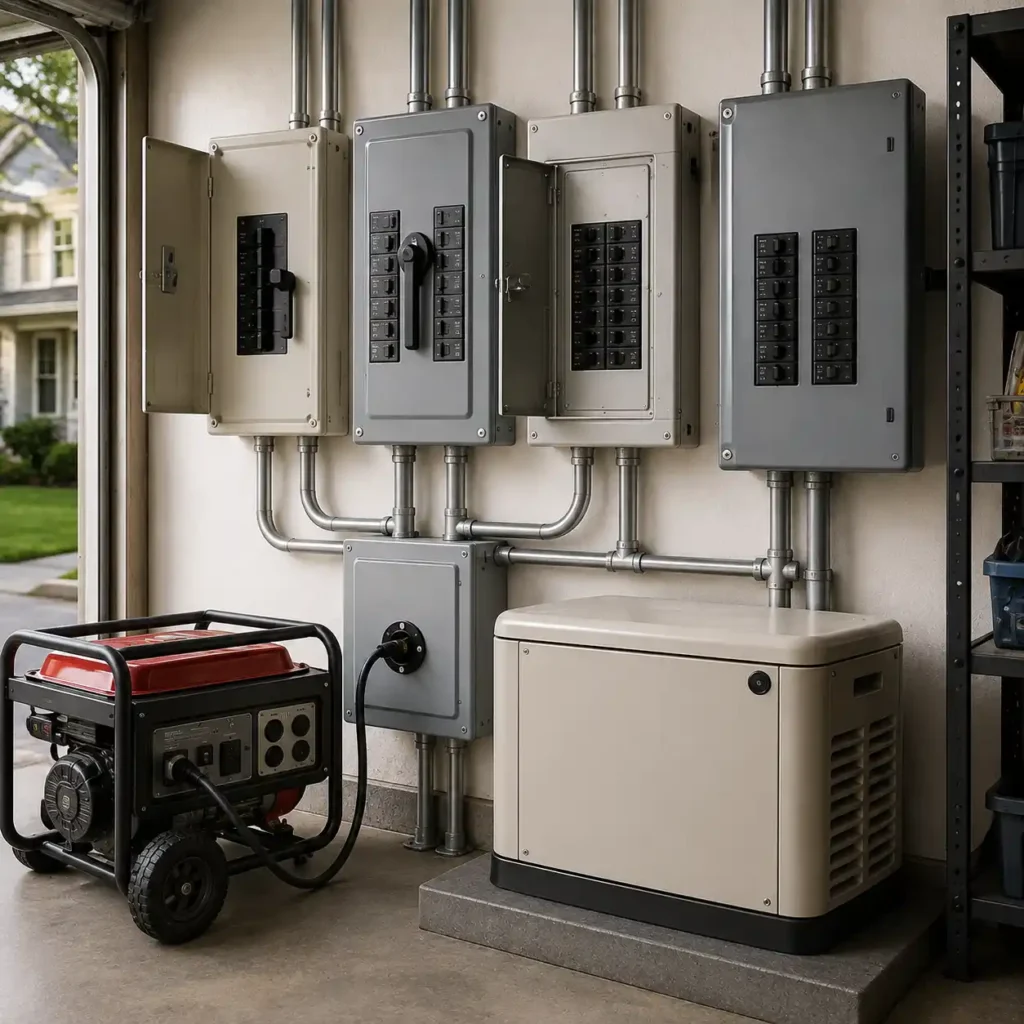
Homeowner comparing generator transfer switches, reviewing electrical panel compatibility, circuit capacity, installation quality, and backup power safety while planning a residential generator system.
Every generator transfer switch in this guide was evaluated using the same research framework to ensure fair, consistent, and objective comparisons. Rather than focusing on a single specification such as amperage or the number of supported circuits, we assessed how each model performs as a complete home backup power solution, balancing electrical safety, installation flexibility, ease of operation, compatibility, and long-term ownership value.
The highest amperage rating doesn’t automatically make a transfer switch the best choice for every homeowner. In many cases, factors such as panel compatibility, the number of essential circuits, installation complexity, generator type, and overall build quality have a much greater impact on long-term satisfaction than electrical capacity alone. Our evaluation reflects the practical considerations homeowners face when selecting a transfer switch for safe residential backup power.
Each recommendation was assessed using the following criteria:
- Amperage rating and electrical capacity, ensuring compatibility with different generator sizes and household electrical loads.
- Number of supported circuits, allowing homeowners to power the appliances and equipment that matter most during an outage.
- Manual versus automatic operation, evaluating which solution best fits portable generators or permanently installed standby generators.
- Generator compatibility, including support for portable generators, inverter generators, and whole-house standby systems.
- Installation flexibility, considering electrical panel compatibility, wiring accessibility, and suitability for residential applications.
- Build quality and safety, including enclosure construction, switch reliability, and compliance with established electrical safety standards.
- Ease of operation, evaluating clearly labeled circuits, intuitive controls, and overall user experience during power outages.
- Manufacturer reputation and long-term reliability, based on product quality, warranty coverage, and proven performance over time.
- Overall value for money, balancing features, installation quality, durability, and long-term ownership costs rather than simply recommending the most expensive transfer switch.
We also considered different homeowner scenarios because the ideal transfer switch for generators varies depending on the backup system being installed. Some homeowners need a compact manual transfer switch to power a few essential circuits during occasional outages, while others require a high-capacity solution capable of supporting larger portable generators or fully automatic standby generator systems.
Our objective isn’t to recommend the transfer switch with the highest specifications on paper. Instead, we identify the models that deliver the best combination of safety, reliability, installation quality, and everyday usability, helping homeowners build a dependable backup power system that continues performing whenever the electrical grid goes down.
Who This Guide Is For
Choosing a transfer switch for generators isn’t simply about matching amperage ratings or selecting the model with the most circuits. The right transfer switch depends on your generator type, your home’s electrical panel, the appliances you want to power during an outage, and whether you prefer manual operation or a fully automatic backup system.
This guide is designed for homeowners who want to make an informed buying decision based on electrical safety, real-world performance, long-term reliability, and practical installation considerations rather than marketing claims alone.
It’s especially helpful for:
- Homeowners using portable generators who need a safe, code-compliant way to connect backup power without the risk of dangerous backfeeding.
- Families preparing for power outages who want to keep essential appliances such as refrigerators, freezers, lighting, heating systems, well pumps, and internet equipment operating during emergencies.
- Homeowners installing a standby generator who need an automatic transfer switch capable of providing seamless whole-house backup when utility power fails.
- People comparing manual and automatic transfer switches before investing in a residential backup power system.
- Buyers looking for reliable long-term value who want a transfer switch that combines proven safety, durable construction, straightforward operation, and compatibility with future generator upgrades.
Whether your goal is protecting a few critical household circuits during occasional outages or building a complete whole-home backup power system, this guide will help you choose the best transfer switch for generators that matches your home’s electrical requirements, generator setup, and long-term backup power plans.
Quick Summary: Our Top Picks
Not every generator transfer switch is designed for the same type of backup power system. Some prioritize simplicity and affordability for portable generators, while others support larger electrical loads, provide greater circuit flexibility, or automate the entire transfer process for standby generators.
The transfer switches below earned their awards based on our evaluation of electrical capacity, supported circuits, installation flexibility, safety, build quality, ease of operation, compatibility, and long-term ownership value.
Reliance Controls 31410CRK Pro/Tran 2 (30A, 10-Circuit)
Award: Best Overall
Why It Won:
Offers the best overall balance of circuit capacity, proven reliability, installation quality, and ease of operation, making it an excellent choice for most homeowners using a portable generator for emergency backup power.
Choose This If:
- You want the best all-around manual transfer switch.
- You need enough circuits to power essential household loads.
- You value proven reliability and long-term durability.
Best For:
- Most homeowners
- Portable generators
- Essential home backup
- 10-circuit installations
Reliance Controls 31406CRK Pro/Tran 2 (30A, 6-Circuit)
Award: Best for Small Homes
Why It Won:
Provides the same dependable Pro/Tran 2 quality in a more compact six-circuit configuration, making it ideal for smaller homes or homeowners who only need to back up critical appliances.
Choose This If:
- You only need a few essential circuits.
- You want a simpler and more affordable installation.
- You own a small or mid-sized portable generator.
Best For:
- Small homes
- Essential circuits
- Budget-conscious installations
- Portable generator backup
Reliance Controls A510C Pro/Tran2 (50A, 10-Circuit)
Award: Best 50-Amp Option
Why It Won:
Combines higher electrical capacity with a flexible 10-circuit design, making it an excellent solution for larger portable generators and homeowners with greater backup power requirements.
Choose This If:
- You own a 50-amp portable generator.
- You need higher electrical capacity.
- You want additional flexibility for larger household loads.
Best For:
- High-output generators
- Larger homes
- Heavy electrical loads
- 50-amp backup systems
Connecticut Electric EmerGen Transfer Switch Kit (30A, 10-Circuit)
Award: Best Budget Alternative
Why It Won:
Delivers dependable performance, practical features, and solid circuit capacity at a competitive price, making it an excellent value for homeowners seeking safe generator integration without overspending.
Choose This If:
- You want dependable performance at a lower price.
- You need a complete transfer switch kit.
- You are building your first home backup system.
Best For:
- Budget-conscious buyers
- Portable generators
- Residential backup
- Value-focused installations
Generac RXSW200A3 200A Automatic Transfer Switch
Award: Best Automatic Transfer Switch
Why It Won:
Provides seamless automatic power transfer, whole-home compatibility, and the level of reliability expected from one of the industry’s leading standby generator manufacturers.
Choose This If:
- You own or plan to install a standby generator.
- You want automatic operation during outages.
- You need whole-home backup capability.
Best For:
- Standby generators
- Whole-home backup
- Automatic power transfer
- Premium residential installations
Still not sure which generator transfer switch is the best fit for your home? The detailed reviews below explain where each model excels, its limitations, and which type of homeowner will benefit most from choosing it.
Best Transfer Switches for Generators Compared
| Model | Award | Capacity | Type | Best For |
|---|---|---|---|---|
| Reliance Controls 31410CRK Pro/Tran 2 | Best Overall | 30A, 10 Circuits | Manual | Most homeowners using portable generators |
| Reliance Controls 31406CRK Pro/Tran 2 | Best for Small Homes | 30A, 6 Circuits | Manual | Small homes and essential backup circuits |
| Reliance Controls A510C Pro/Tran2 | Best 50-Amp Option | 50A, 10 Circuits | Manual | Larger generators and higher electrical loads |
| Connecticut Electric EmerGen Transfer Switch Kit | Best Budget Alternative | 30A, 10 Circuits | Manual | Budget-friendly residential backup systems |
| Generac RXSW200A3 200A | Best Automatic Transfer Switch | 200A Whole House | Automatic | Standby generators and whole-home backup |
The table above provides a quick overview of our top recommendations, but selecting the best transfer switch for generators involves more than simply comparing amperage ratings or circuit counts. Installation requirements, generator compatibility, ease of operation, expansion potential, and the type of backup system you’re building all play an important role in choosing the right model.
In the detailed reviews below, we’ll examine each transfer switch individually, highlighting its strengths, limitations, ideal applications, and the type of homeowner who will benefit most from choosing it. This approach makes it easier to identify the transfer switch that best matches your generator, electrical panel, and long-term backup power goals.
Best Transfer Switches for Generators Reviews
A generator transfer switch is far more than an accessory for your backup power system—it is the critical component that allows your generator to power your home safely during an outage. By isolating your home’s electrical system from the utility grid, a properly installed transfer switch helps prevent dangerous backfeeding while providing a safe and organized way to restore electricity to essential household circuits.
Although many transfer switches appear similar, they differ significantly in circuit capacity, amperage, installation flexibility, generator compatibility, and overall ease of use. The right choice depends not only on your generator but also on your home’s electrical panel, the number of circuits you plan to back up, and whether you prefer manual operation or a fully automatic standby solution.
The reviews below explain why each transfer switch earned its award, where it performs best, its limitations, and which type of homeowner will benefit most from choosing it. Rather than focusing only on specifications, we evaluated every model based on real residential backup power scenarios, long-term reliability, installation practicality, and overall ownership experience to help you choose the best transfer switch for generators with confidence.
Reliance Controls 31410CRK Pro/Tran 2 Review
Best Overall Transfer Switch for Generators

Quick Verdict
The Reliance Controls 31410CRK Pro/Tran 2 earns our Best Overall Transfer Switch for Generators award because it delivers the strongest combination of safety, circuit flexibility, installation quality, and long-term reliability for homeowners using a portable generator for emergency backup power.
Designed around a 30-amp, 10-circuit configuration, it provides enough capacity to keep the most important household loads running during a power outage, including refrigerators, freezers, lighting circuits, furnaces, sump pumps, internet equipment, and other essential appliances. The Pro/Tran 2 platform has also been on the market for many years, giving it a strong reputation among electricians, generator installers, and homeowners who want a dependable manual transfer switch that is easy to operate during an emergency.
Unlike simpler transfer switch kits that feel limited once installed, the 31410CRK offers a practical balance between compact size and useful circuit capacity. It is flexible enough for small and medium-sized homes while still providing room for a well-planned essential-load backup system. Clear circuit labeling, durable metal construction, and straightforward manual operation make it one of the easiest transfer switches in this category to use correctly under real outage conditions.
For homeowners who want a safe, code-compliant, and proven transfer switch for a portable generator without paying for unnecessary whole-house automation, the Reliance Controls 31410CRK Pro/Tran 2 is the model we would choose for the widest range of residential backup power situations.
Product Snapshot
| Feature | Details |
|---|---|
| Best For | Portable Generators • Essential Home Backup • Emergency Preparedness |
| Transfer Switch Type | Manual |
| Amperage Rating | 30A |
| Number of Circuits | 10 |
| Generator Compatibility | Portable Generators up to 30A |
| Installation | Indoor Hardwired Transfer Switch |
| Build Material | Powder-Coated Steel Enclosure |
| Ideal User | Homeowners seeking a reliable, code-compliant manual transfer switch with enough circuit capacity for a well-balanced essential-load backup system. |
Why We Chose It
The Reliance Controls 31410CRK Pro/Tran 2 earned our Best Overall Transfer Switch for Generators award because it offers the most balanced combination of circuit capacity, installation quality, proven reliability, and everyday usability among all the models in this guide.
One of the biggest advantages of this transfer switch is its 10-circuit configuration. That number is large enough to support a practical residential backup setup without becoming unnecessarily complex for most homeowners. A well-planned installation can typically keep refrigeration, lighting, heating equipment, sump pumps, garage door openers, internet equipment, and several convenience outlets available during an outage, which is exactly the level of backup power many families need in real-world emergencies.
We also chose this model because of Reliance Controls’ long-standing reputation in the residential generator market. The Pro/Tran 2 series is widely used by electricians and generator installers across North America, and its design has been refined through years of real-world residential use. That established track record gives it an advantage over newer or less proven transfer switch kits that may offer similar specifications on paper but lack the same history of dependable performance.
Another reason this model stands out is its straightforward manual operation. During a power outage, homeowners need a transfer switch that is easy to understand and operate correctly, even under stressful conditions. The clearly labeled circuits and simple generator/utility switching mechanism reduce the likelihood of confusion while making it easier to manage household loads safely when generator power is limited.
The build quality is also noticeably better than many entry-level alternatives. The steel enclosure feels durable, the switches have a solid mechanical action, and the overall construction is designed for long-term residential service rather than occasional light-duty use. This is important because a transfer switch is typically installed for many years and must continue operating reliably whenever an outage occurs.
Finally, we appreciate that the 31410CRK strikes an excellent balance between capability and cost. Smaller six-circuit models can feel restrictive once additional appliances need backup power, while larger 50-amp systems often require bigger generators and higher installation costs. The 30-amp, 10-circuit format sits in the sweet spot for a large percentage of portable generator owners, making it the easiest recommendation for the broadest range of residential backup power scenarios.
Check the latest price and customer reviews on Amazon.
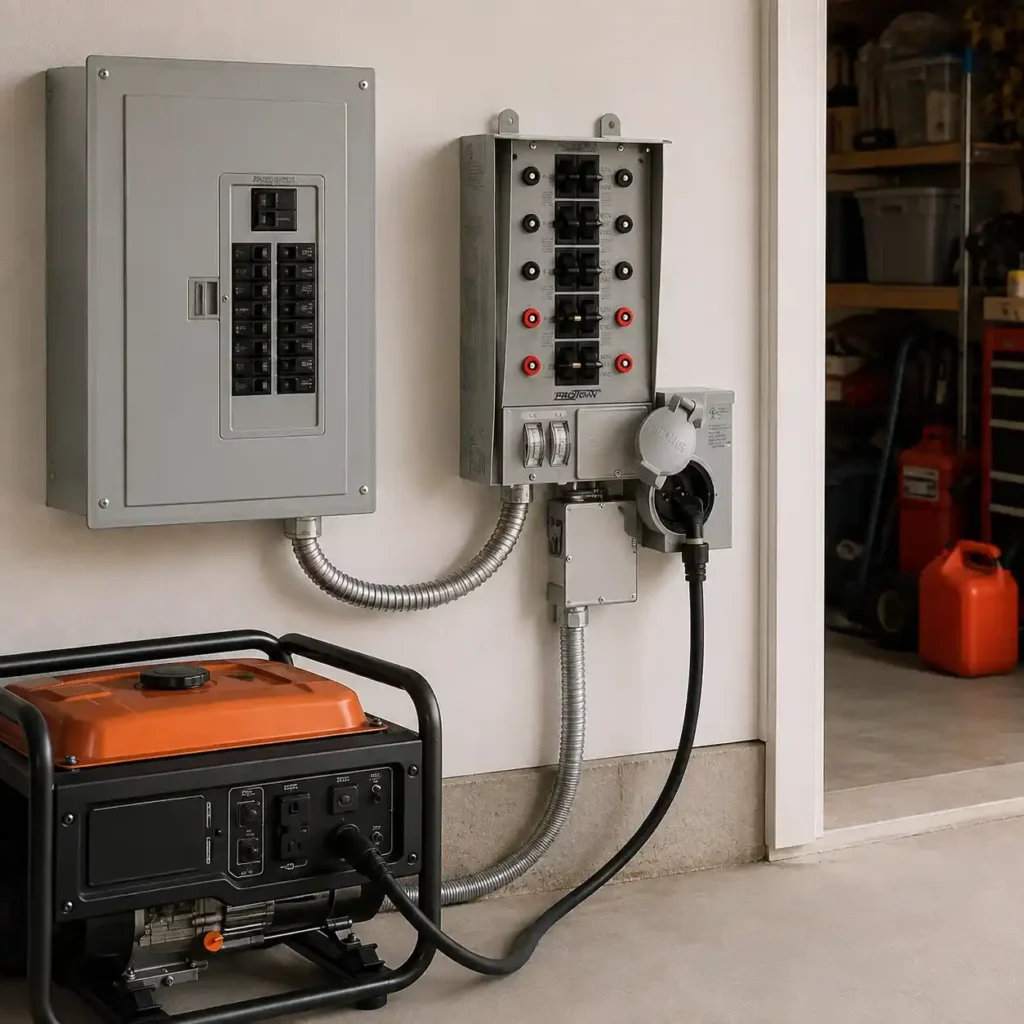
Living With It Every Day
For many homeowners, the biggest advantage of the Reliance Controls 31410CRK Pro/Tran 2 is how quickly it becomes a natural part of an emergency backup routine. Because the transfer switch is permanently wired next to the main electrical panel, there is no need to run extension cords through doors or windows or decide which appliances to unplug when utility power fails.
Imagine a severe thunderstorm knocking out electricity for several hours. Instead of searching for portable power strips or disconnecting appliances throughout the house, you simply move the selected circuits from Utility to Generator, start the portable generator, and restore power to the circuits that matter most. Refrigerators stay cold, lights remain on, the furnace blower continues operating, and internet equipment keeps working without the confusion that often accompanies temporary emergency setups.
The 10-circuit layout also provides useful flexibility in everyday planning. Many homeowners initially back up only refrigeration, lighting, and heating equipment, then later add a garage door opener, home office outlets, or a sump pump as their backup power priorities evolve. Having ten available circuits makes those future adjustments much easier than with smaller six-circuit transfer switches.
Another practical advantage is the clear mechanical switching action. Each circuit has a dedicated switch with obvious Utility and Generator positions, reducing the likelihood of operating errors during an outage. This may seem like a small detail, but during a stressful emergency, simple and intuitive controls are extremely valuable.
Over the long term, the 31410CRK tends to be one of those products homeowners rarely think about until they actually need it—and that is precisely what you want from a transfer switch. Once installed, it provides a permanent, organized, and code-compliant connection point for portable generator backup power, making outage preparation significantly less stressful for the entire household.
Reliance Controls 31410CRK Pro/Tran 2 Evaluation
| Evaluation Category | Editorial Assessment |
|---|---|
| Home Backup Capability | Excellent for essential residential circuits during power outages. |
| Circuit Flexibility | 10 circuits provide a practical balance between capacity and simplicity. |
| Installation Quality | Well-designed enclosure and wiring layout suitable for professional residential installation. |
| Ease of Operation | Clearly labeled switches make generator operation straightforward even during emergencies. |
| Long-Term Reliability | Proven Pro/Tran 2 platform with an excellent reputation for dependable residential use. |
| Overall Rating | Our strongest overall recommendation for portable-generator home backup systems. |
Who Should Buy This
- Homeowners using a 30A portable generator for emergency backup power.
- Families who want to keep refrigeration, lighting, heating equipment, sump pumps, and internet equipment running during outages.
- Buyers looking for a safe, code-compliant alternative to extension-cord-based generator setups.
- Homeowners who want enough circuits for a well-balanced essential-load backup system without moving to a larger 50A installation.
- Anyone seeking a proven, long-term reliable manual transfer switch with straightforward operation.
Who Should Skip This
- Homeowners who only need to back up two or three small circuits and could save money with a smaller six-circuit transfer switch.
- Buyers installing a whole-house standby generator that requires automatic transfer capability.
- Homes with very large electrical loads that would benefit from a 50A transfer switch and higher-capacity generator.
- Users looking for fully automatic backup operation with no manual switching during outages.
Final Verdict
The Reliance Controls 31410CRK Pro/Tran 2 earns our Best Overall Transfer Switch for Generators award because it delivers the most practical combination of safety, circuit capacity, installation quality, ease of operation, and long-term reliability for the majority of portable-generator homeowners.
Its 30A, 10-circuit configuration is large enough to support a realistic essential-load backup strategy while remaining easier to install, operate, and afford than larger whole-house transfer systems. The durable steel enclosure, clearly labeled switching mechanism, and well-established Pro/Tran 2 platform give it a level of confidence that many competing transfer switches simply do not match.
For homeowners who want a safe, dependable, and future-friendly manual transfer switch that can keep the most important household circuits running during power outages, the Reliance Controls 31410CRK Pro/Tran 2 is the model we would choose for the widest range of residential backup power applications.
Check the latest price and customer reviews on Amazon.
Related Guide: If you’re choosing a portable generator to use with a manual transfer switch, our Best Portable Generators (2026) guide can help you compare generator capacity, fuel options, portability, and features for home backup.
Reliance Controls 31406CRK Pro/Tran 2 Review
Best Transfer Switch for Small Homes

Quick Verdict
The Reliance Controls 31406CRK Pro/Tran 2 earns our Best Transfer Switch for Small Homes award because it delivers the same proven Pro/Tran 2 reliability and safety as its larger sibling while using a more compact and affordable 30-amp, 6-circuit configuration that is ideal for homeowners with modest backup power needs.
For many small homes, cabins, apartments with dedicated generator connections, or households that only need to keep a few critical appliances running during an outage, a 10-circuit transfer switch can be unnecessary. The 31406CRK focuses on the essentials, making it easier to install, easier to operate, and more cost-effective while still providing a safe, code-compliant connection for a portable generator.
Its six available circuits are typically enough to support a practical emergency setup that includes refrigeration, lighting, a furnace or boiler control circuit, internet equipment, and a few convenience outlets. Because the system is permanently wired to the electrical panel, homeowners avoid the inconvenience and safety concerns associated with extension-cord-based generator setups.
For homeowners who want a simple, dependable, and professionally designed manual transfer switch without paying for unused circuit capacity, the Reliance Controls 31406CRK Pro/Tran 2 is one of the strongest small-home backup solutions available.
Product Snapshot
| Feature | Details |
|---|---|
| Best For | Small Homes • Cabins • Essential Circuit Backup • Portable Generators |
| Transfer Switch Type | Manual |
| Amperage Rating | 30A |
| Number of Circuits | 6 |
| Generator Compatibility | Portable Generators up to 30A |
| Installation | Indoor Hardwired Transfer Switch |
| Build Material | Powder-Coated Steel Enclosure |
| Ideal User | Homeowners seeking a compact, reliable, and affordable manual transfer switch for powering a small number of essential household circuits during outages. |
Why We Chose It
The Reliance Controls 31406CRK Pro/Tran 2 earned our Best Transfer Switch for Small Homes award because it solves a problem that many homeowners overlook: not every backup power system needs ten circuits.
For smaller homes and modest portable generators, a six-circuit transfer switch is often the more practical choice. It allows homeowners to focus generator capacity on the appliances that matter most instead of paying for additional circuits that may never be used. This approach can also reduce installation complexity and make load management during an outage much easier.
We also selected this model because it shares the same Pro/Tran 2 design philosophy as the larger 31410CRK. Homeowners still get the durable steel enclosure, clearly labeled circuit switches, and the proven reliability that has made Reliance Controls one of the most trusted names in residential generator transfer equipment.
Another important advantage is its excellent match for smaller portable generators. Many homeowners use 3000W to 5000W portable generators for emergency backup, and pairing those generators with a compact six-circuit transfer switch creates a more balanced and efficient system than connecting them to a larger panel designed for heavier loads.
The simplified layout also makes everyday operation easier. During an outage, homeowners can quickly identify the supported circuits and transfer power without sorting through unnecessary switches or unused circuit positions. That simplicity is especially valuable for households that only use their generator occasionally and want a backup system that remains intuitive even after long periods without use.
Finally, the 31406CRK offers outstanding value for budget-conscious buyers. It provides the same safety benefits, permanent installation, and professional appearance as larger transfer switches while keeping both equipment costs and installation expenses lower. For homeowners whose backup power goal is simply to keep the essentials running safely and reliably, it is one of the smartest and most cost-effective choices in the entire manual transfer switch category.
Check the latest price and customer reviews on Amazon.
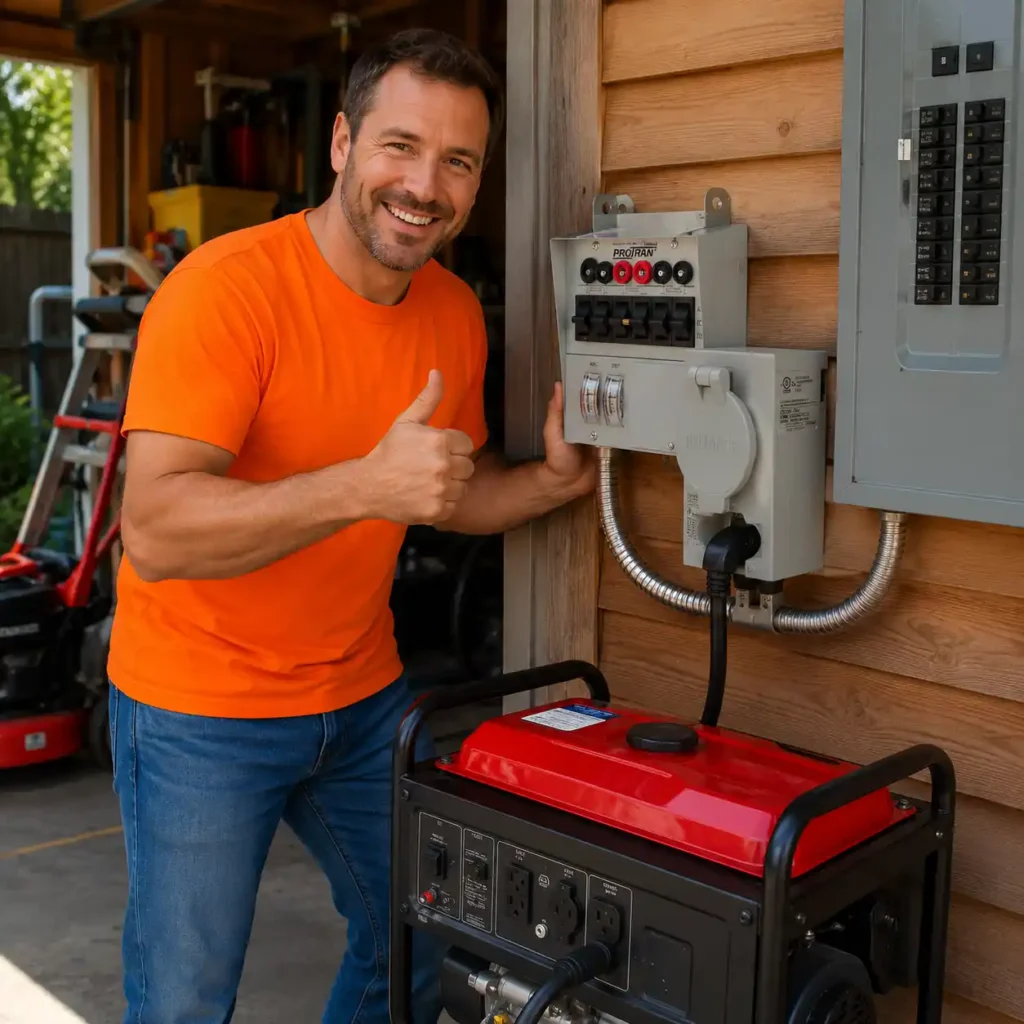
Living With It Every Day
One of the biggest advantages of the Reliance Controls 31406CRK Pro/Tran 2 is that it removes much of the stress associated with occasional power outages. Because the transfer switch is permanently installed next to the electrical panel, homeowners do not need to drag extension cords through the house or decide which appliances should be disconnected when the power goes out.
Imagine a winter storm causing a several-hour outage in a small home. With the 31406CRK, you can quickly start the portable generator, switch the selected circuits from Utility to Generator, and restore power to the essentials within minutes. The refrigerator stays cold, key lighting circuits remain available, the heating system continues operating, and internet equipment keeps working for communication and remote work.
The six-circuit layout is often an advantage rather than a limitation. In smaller homes, fewer circuits make it easier to prioritize the most important loads and avoid overloading a modest portable generator. Many homeowners find that a focused backup strategy is simpler to manage than a larger panel with numerous optional circuits.
Another practical benefit is the clear and intuitive switching mechanism. Each circuit has a dedicated manual switch with clearly marked Utility and Generator positions, making operation straightforward even for users who only need backup power a few times per year.
Over time, the 31406CRK becomes a reliable part of the home’s emergency preparedness plan. It provides a permanent, organized, and code-compliant generator connection that is far safer and more convenient than temporary extension-cord-based solutions.
Reliance Controls 31406CRK Pro/Tran 2 Evaluation
| Evaluation Category | Editorial Assessment |
|---|---|
| Home Backup Capability | Excellent for small homes and essential residential circuits. |
| Circuit Flexibility | Six circuits provide a focused and easy-to-manage backup configuration. |
| Installation Quality | Durable enclosure and well-organized wiring layout suitable for professional installation. |
| Ease of Operation | Simple manual switching with clearly labeled circuit controls. |
| Long-Term Reliability | Proven Pro/Tran 2 platform with a strong reputation for dependable residential service. |
| Overall Rating | Our top recommendation for homeowners who need a compact and affordable essential-circuit transfer switch. |
Who Should Buy This
- Homeowners with small or medium-sized homes who only need essential backup power.
- Families who want to keep refrigeration, lighting, heating controls, and internet equipment running during outages.
- Buyers using a 3000W–5000W portable generator for emergency backup.
- Homeowners looking for a simpler and more affordable alternative to larger 10-circuit transfer switches.
- Anyone seeking a compact, reliable, and code-compliant manual transfer switch for occasional power outages.
Who Should Skip This
- Homeowners who need to back up more than six household circuits.
- Buyers planning to power multiple large appliances simultaneously during extended outages.
- Homes using high-capacity portable generators that would benefit from a larger transfer switch.
- Users who want fully automatic standby generator operation with no manual switching.
Final Verdict
The Reliance Controls 31406CRK Pro/Tran 2 earns our Best Transfer Switch for Small Homes award because it delivers the same proven safety, durability, and ease of use as the larger Pro/Tran 2 models while focusing on the needs of homeowners with modest backup power requirements.
Its 30A, 6-circuit design is ideal for powering a carefully selected group of essential household loads without adding unnecessary complexity or expense. The durable steel enclosure, intuitive switching layout, and long-established Pro/Tran 2 platform make it a dependable long-term investment for small-home emergency preparedness.
For homeowners who want a simple, safe, and cost-effective transfer switch that can keep the essentials running during power outages, the Reliance Controls 31406CRK Pro/Tran 2 is one of the strongest compact manual transfer switch options available today.
Check the latest price and customer reviews on Amazon.
Related Guide: If you’re looking for a compact backup solution for a smaller home, our Best Portable Power Stations Under $500 (2026) guide can help you compare more affordable options for keeping essential devices powered during outages.
Reliance Controls A510C Pro/Tran 2 Review
Best 50-Amp Transfer Switch for Larger Generators

Quick Verdict
The Reliance Controls A510C Pro/Tran 2 earns our Best 50-Amp Transfer Switch for Larger Generators award because it is specifically designed for homeowners who need more backup power capacity than a standard 30A transfer switch can comfortably provide.
With a 50-amp, 10-circuit configuration, the A510C is capable of supporting larger portable generators, high-output inverter generators, and more demanding residential backup power systems. It provides enough capacity for homeowners who need to run multiple large appliances simultaneously, including refrigerators, freezers, furnace systems, sump pumps, well pumps, microwave ovens, and additional convenience circuits during extended outages.
Unlike smaller transfer switches that can become restrictive as backup power needs grow, the A510C offers significantly more headroom for future expansion. The familiar Pro/Tran 2 design keeps operation straightforward while allowing homeowners to build a more capable essential-load backup system without moving to a fully automatic whole-house standby installation.
For homeowners who own a larger 120/240V portable generator and want a safe, durable, and code-compliant transfer switch with greater power-handling capability, the Reliance Controls A510C Pro/Tran 2 is one of the strongest manual transfer switch options available in the 50A category.
Product Snapshot
| Feature | Details |
|---|---|
| Best For | Large Portable Generators • High-Demand Appliances • Extended Home Backup • 120/240V Systems |
| Transfer Switch Type | Manual |
| Amperage Rating | 50A |
| Number of Circuits | 10 |
| Generator Compatibility | 120/240V Portable Generators up to 50A |
| Installation | Indoor Hardwired Transfer Switch |
| Build Material | Heavy-Duty Powder-Coated Steel Enclosure |
| Ideal User | Homeowners using a larger 120/240V portable generator who need more power capacity and greater flexibility for supporting multiple essential household circuits during extended outages. |
Why We Chose It
The Reliance Controls A510C Pro/Tran 2 earned our Best 50-Amp Transfer Switch for Larger Generators award because it fills an important gap between standard 30A manual transfer switches and much more expensive whole-house standby generator systems.
Many homeowners eventually discover that a 30A transfer switch becomes the limiting factor once they upgrade to a larger portable generator. Even if the generator itself has enough capacity to run additional appliances, the transfer switch may restrict how much power can be safely delivered to the selected household circuits. The A510C solves this problem by providing a full 50-amp connection, making it a far better match for high-output 120/240V portable generators.
We also selected this model because it retains the familiar Pro/Tran 2 architecture that has made Reliance Controls one of the most trusted names in residential generator transfer equipment. Homeowners get the same clear circuit labeling, dedicated manual switches, durable steel construction, and straightforward operation found in the smaller Pro/Tran 2 models, but with significantly greater power-handling capability.
Another major advantage is its ability to support more demanding residential loads. Homes with well pumps, larger furnace systems, multiple refrigeration appliances, workshop circuits, or additional convenience loads often benefit from the extra headroom that a 50A transfer switch provides. This additional capacity can reduce the need for constant load juggling during an extended outage.
The 10-circuit configuration is also particularly well chosen. It provides enough flexibility to build a comprehensive essential-load backup system while remaining much easier to manage than a full electrical panel transfer arrangement. Homeowners can prioritize the circuits that matter most without the complexity and cost associated with automatic whole-house standby systems.
Finally, we appreciate that the A510C offers a strong upgrade path for homeowners planning future generator expansion. Instead of replacing both the generator and the transfer switch later, buyers can install a 50A-capable transfer switch from the beginning and have room to grow as their backup power requirements increase.
Check the latest price and customer reviews on Amazon.
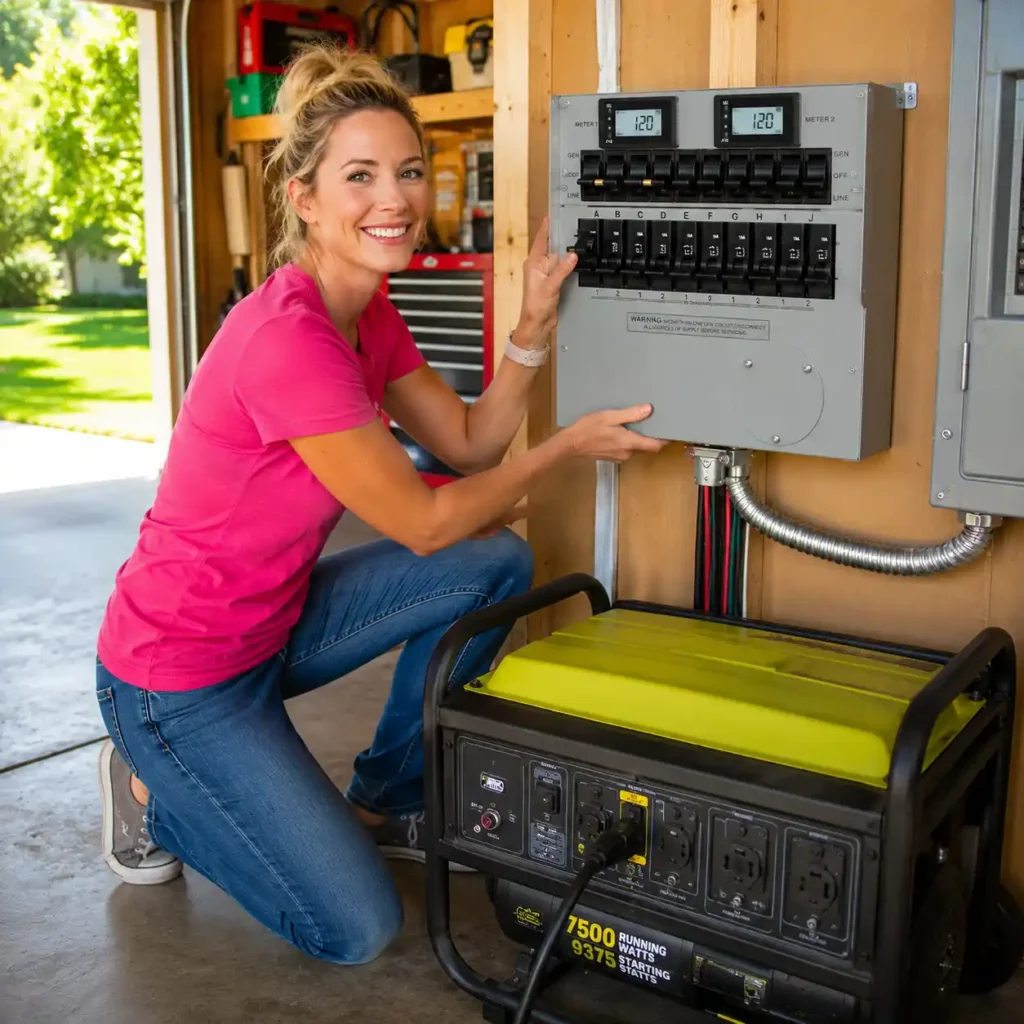
Living With It Every Day
The Reliance Controls A510C Pro/Tran 2 is designed for homeowners who need more than just a few lights and a refrigerator during a power outage. In everyday use, its biggest advantage is the extra capacity and flexibility it provides when paired with a larger 120/240V portable generator.
Imagine a rural home losing power during a summer storm. With a smaller transfer switch, you might have to choose between running the well pump, keeping the refrigerator powered, or operating the furnace blower. The A510C’s 50A connection gives a properly sized generator much more room to support several of these loads at the same time, reducing the need for constant manual load management.
The 10-circuit layout also makes outage planning easier for larger households. Many homeowners dedicate circuits to refrigeration, heating, lighting, a well pump, a sump pump, internet equipment, and a few kitchen or workshop outlets. Because the transfer switch is permanently installed, switching from utility power to generator power takes only a few minutes and avoids the clutter and safety risks associated with extension cords.
Another practical benefit is that the Pro/Tran 2 switching mechanism remains very straightforward despite the higher power rating. Each circuit has a clearly labeled Utility and Generator position, making operation intuitive even for family members who do not regularly work with electrical equipment.
Over time, the A510C becomes less of an emergency accessory and more of a long-term resilience upgrade for the home. It provides the confidence that a larger portable generator can be connected safely and used efficiently whenever severe weather, utility failures, or extended outages occur.
Reliance Controls A510C Pro/Tran 2 Evaluation
| Evaluation Category | Editorial Assessment |
|---|---|
| Home Backup Capability | Excellent for larger homes and high-demand essential-load backup systems. |
| Circuit Flexibility | 10 circuits provide substantial flexibility for managing multiple essential household loads. |
| Power Handling | 50A rating offers significantly more headroom than standard 30A transfer switches. |
| Ease of Operation | Simple manual switching with clear Utility and Generator circuit positions. |
| Long-Term Reliability | Heavy-duty Pro/Tran 2 construction designed for dependable long-term residential service. |
| Overall Rating | Our top recommendation for homeowners using larger 120/240V portable generators and requiring greater backup power capacity. |
Who Should Buy This
- Homeowners using a large 120/240V portable generator for whole-home essential-load backup.
- Families who need to power well pumps, sump pumps, larger furnace systems, multiple refrigerators, and additional household circuits during outages.
- Buyers looking for a 50A manual transfer switch with room for future generator expansion.
- Homeowners who want more flexibility than a standard 30A transfer switch can provide.
- Anyone seeking a durable, heavy-duty, and code-compliant transfer switch for higher-demand residential backup power systems.
Who Should Skip This
- Homeowners with small backup power needs who only require a few essential circuits.
- Buyers using smaller 3000W–5000W portable generators that do not require a 50A connection.
- Homes where a 6-circuit or 10-circuit 30A transfer switch would be sufficient and more cost-effective.
- Users looking for fully automatic standby generator operation rather than a manual transfer switch.
Final Verdict
The Reliance Controls A510C Pro/Tran 2 earns our Best 50-Amp Transfer Switch for Larger Generators award because it provides the additional capacity, flexibility, and future-proofing that larger portable generator systems require.
Its 50A, 10-circuit design offers significantly more headroom than standard 30A transfer switches, making it an excellent choice for homes with well pumps, larger HVAC systems, multiple refrigeration appliances, workshop circuits, or other higher-demand essential loads. At the same time, it retains the familiar Pro/Tran 2 simplicity, durable steel construction, and straightforward manual operation that have made Reliance Controls a trusted name in residential backup power.
For homeowners who want a safe, reliable, and expandable manual transfer switch capable of supporting a more demanding residential backup system without the cost and complexity of a full automatic standby installation, the Reliance Controls A510C Pro/Tran 2 is one of the strongest 50A transfer switch options available today.
Check the latest price and customer reviews on Amazon.
Related Guide: If you’re comparing this higher-capacity transfer switch with other solutions for demanding home backup setups, our Best Whole House Backup Power Systems (2026) guide can help you evaluate systems designed to support larger household loads during extended outages.
Connecticut Electric EmerGen Transfer Switch Kit Review
Best Budget Transfer Switch for Generators

Quick Verdict
The Connecticut Electric EmerGen Transfer Switch Kit earns our Best Budget Transfer Switch for Generators award because it delivers the essential safety and convenience benefits of a permanently installed transfer switch while keeping the overall cost significantly lower than most premium manual transfer switch systems.
For homeowners who need a safe, code-compliant connection for a portable generator but do not want to spend heavily on advanced features or heavy-duty 50A equipment, the EmerGen kit offers an excellent entry point into residential backup power. It provides a practical 30-amp, 10-circuit configuration that is capable of supporting the most important household loads during a power outage, including refrigerators, freezers, lighting circuits, heating controls, sump pumps, and internet equipment.
What makes this model especially appealing is that it focuses on the core functionality homeowners actually need during an outage. The transfer mechanism is straightforward, the circuit layout is easy to understand, and the included installation components help simplify the overall setup process for a professional electrician.
While it does not offer the same premium feel, long-established reputation, or heavy-duty construction as the higher-end Reliance Controls Pro/Tran 2 models, it still provides a substantial upgrade over extension-cord-based generator setups and gives homeowners a much safer and more organized way to distribute generator power throughout the home.
For budget-conscious homeowners who want a reliable manual transfer switch that covers the essentials without unnecessary complexity or expense, the Connecticut Electric EmerGen Transfer Switch Kit is one of the strongest value-oriented choices available in the residential generator backup category.
Product Snapshot
| Feature | Details |
|---|---|
| Best For | Budget-Friendly Home Backup • Portable Generators • Essential Residential Circuits • First-Time Generator Owners |
| Transfer Switch Type | Manual |
| Amperage Rating | 30A |
| Number of Circuits | 10 |
| Generator Compatibility | Portable Generators up to 30A |
| Installation | Indoor Hardwired Transfer Switch Kit |
| Build Material | Powder-Coated Steel Enclosure |
| Ideal User | Homeowners seeking an affordable, code-compliant manual transfer switch that provides enough circuit capacity for a practical essential-load portable generator backup system without the cost of premium transfer switch platforms. |
Why We Chose It
The Connecticut Electric EmerGen Transfer Switch Kit earned our Best Budget Transfer Switch for Generators award because it offers one of the best price-to-functionality ratios in the residential portable generator backup market.
Many budget-oriented transfer switch kits cut costs by reducing circuit capacity, using lighter-duty components, or omitting important installation hardware. The EmerGen kit avoids many of those compromises by providing a full 10-circuit configuration, which is unusually generous for a product positioned in the budget category.
We also selected this model because it delivers the most important safety advantage of any transfer switch: preventing dangerous backfeeding into the utility grid. Homeowners who are currently relying on extension cords or improvised generator connections gain a substantial safety improvement by installing a properly wired manual transfer switch, even if they do not need premium commercial-grade equipment.
Another reason this model stands out is its approachable design for first-time generator owners. The circuit switches are clearly arranged, the operating procedure is easy to understand, and the overall system is less intimidating than some larger or more complex transfer switch installations. That simplicity is valuable for homeowners who may only use backup power a few times per year but still want a system that can be operated confidently during an emergency.
The included installation kit components also add meaningful value. Having the necessary connection hardware packaged together helps reduce the number of additional parts that must be sourced separately and can simplify the installation process for a licensed electrician.
Finally, we appreciate that the EmerGen kit makes permanent home backup power accessible to a wider range of homeowners. Not every household needs a premium Pro/Tran 2 system or a 50A heavy-duty transfer switch. For many families, the goal is simply to keep food cold, maintain basic lighting, power heating controls, and stay connected during occasional outages. For that purpose, the Connecticut Electric EmerGen Transfer Switch Kit delivers a practical, affordable, and safety-focused solution that performs well above what its budget-friendly positioning might suggest.
Check the latest price and customer reviews on Amazon.
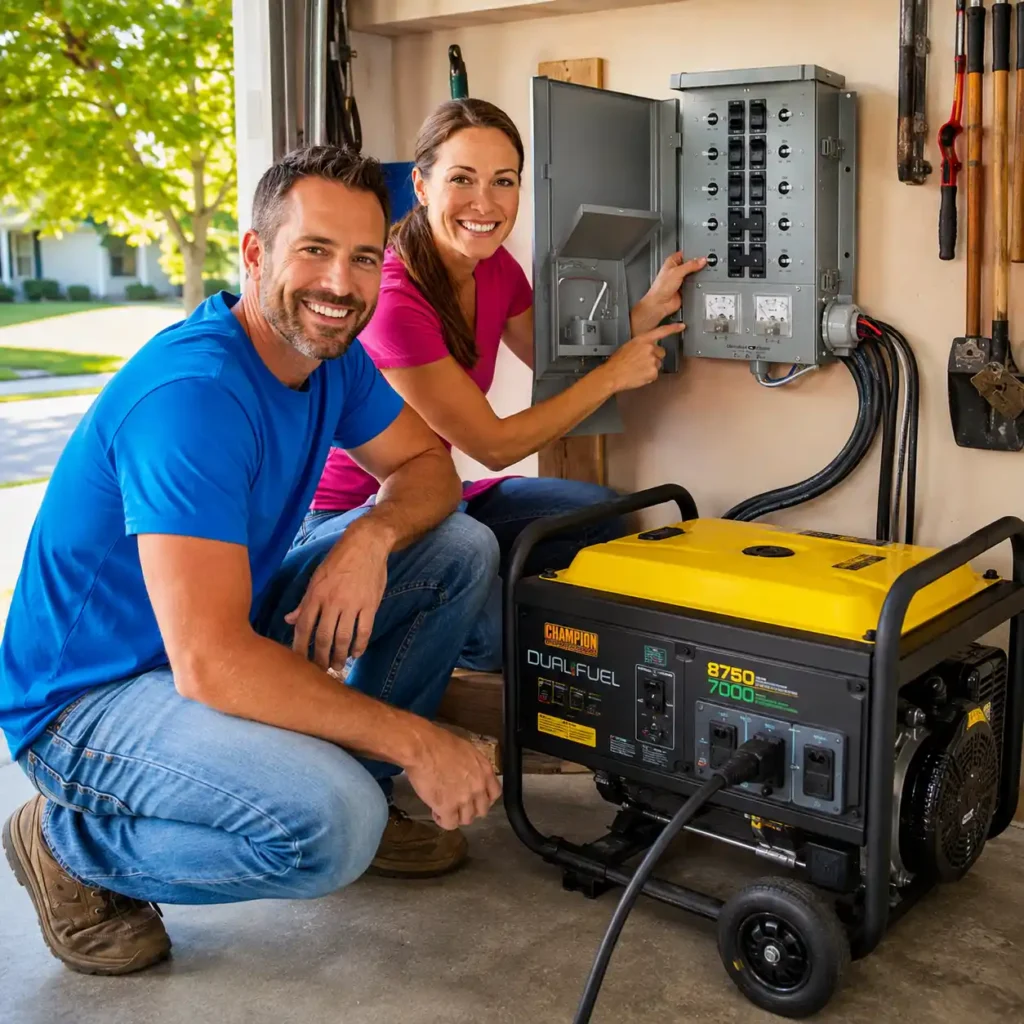
Living With It Every Day
The Connecticut Electric EmerGen Transfer Switch Kit is designed for homeowners who want a simple and affordable emergency backup solution without turning their electrical system into a complex project. In everyday use, its biggest advantage is how much more organized and convenient it feels compared with relying on extension cords during a power outage.
Imagine a storm knocking out power on a summer evening. Instead of running multiple extension cords from the generator through doors or windows, you simply start the generator, move the selected circuits from Utility to Generator, and restore power to the circuits that matter most. The refrigerator keeps running, several lighting circuits remain available, the Wi-Fi router stays powered, and basic household activities can continue with far less disruption.
The 10-circuit layout provides more flexibility than many homeowners expect from a budget-oriented transfer switch. A typical setup can support refrigeration, kitchen outlets, lighting, heating controls, a sump pump, and a few additional convenience circuits, allowing the backup system to feel much more like a permanent household solution rather than a temporary emergency workaround.
Another practical advantage is that the manual switching process remains straightforward and easy to understand. The clearly arranged circuit switches make it simple to identify which loads are connected to generator power, which is especially helpful for homeowners who may only use the system occasionally during seasonal storms or utility outages.
Over time, the EmerGen kit becomes less about saving money and more about improving preparedness. It provides a permanent, code-compliant connection point for a portable generator, reduces setup time during emergencies, and eliminates many of the safety concerns associated with improvised generator connections.
Connecticut Electric EmerGen Transfer Switch Kit Evaluation
| Evaluation Category | Editorial Assessment |
|---|---|
| Home Backup Capability | Very good for essential residential circuits and occasional emergency backup use. |
| Circuit Flexibility | 10 circuits provide excellent flexibility for a budget-oriented transfer switch. |
| Installation Value | Included kit components help simplify professional installation and reduce additional hardware costs. |
| Ease of Operation | Simple manual switching with an easy-to-understand circuit layout for first-time generator owners. |
| Long-Term Reliability | Solid residential performance for homeowners seeking dependable essential-load backup on a budget. |
| Overall Rating | Our top budget recommendation for homeowners who want a safe and practical portable generator transfer switch without premium-level pricing. |
Who Should Buy This
- Homeowners looking for an affordable entry point into permanent generator backup power.
- Families who want to keep refrigeration, lighting, heating controls, and internet equipment running during occasional outages.
- Buyers using a 30A portable generator for emergency home backup.
- First-time generator owners who want a simple and easy-to-understand manual transfer switch.
- Anyone seeking a safe, code-compliant alternative to extension-cord-based generator setups without paying for a premium transfer switch platform.
Who Should Skip This
- Homeowners who need heavy-duty 50A backup power capability for larger generators and higher electrical loads.
- Buyers planning to power multiple large appliances simultaneously for extended periods.
- Homes requiring whole-house standby generator integration with automatic transfer capability.
- Users who want the premium build quality, advanced features, and long-established reputation of higher-end transfer switch systems such as the Reliance Controls Pro/Tran 2 series.
Final Verdict
The Connecticut Electric EmerGen Transfer Switch Kit earns our Best Budget Transfer Switch for Generators award because it successfully delivers the core safety, convenience, and usability benefits of a permanently installed transfer switch at a significantly lower price point than most premium alternatives.
Its 30A, 10-circuit configuration provides enough flexibility for a practical essential-load backup system, while the included installation hardware and straightforward manual operation make it especially appealing for first-time generator owners. Although it does not offer the heavy-duty construction or premium refinement of higher-end Pro/Tran 2 models, it still represents a substantial upgrade over temporary extension-cord-based generator setups.
For homeowners who want a safe, reliable, and budget-friendly transfer switch that can keep the most important household circuits running during power outages without unnecessary complexity or expense, the Connecticut Electric EmerGen Transfer Switch Kit is one of the strongest value-oriented choices available in today’s residential portable generator backup market.
Check the latest price and customer reviews on Amazon.
Related Guide: If you want to understand how much electricity your backup equipment may actually need, our Power Consumption Formula Explained (With Real-World Examples) guide can help you estimate electrical loads before choosing your generator and transfer switch setup.
Generac RXSW200A3 200A Review
Best Automatic Transfer Switch for Whole-House Backup
Quick Verdict
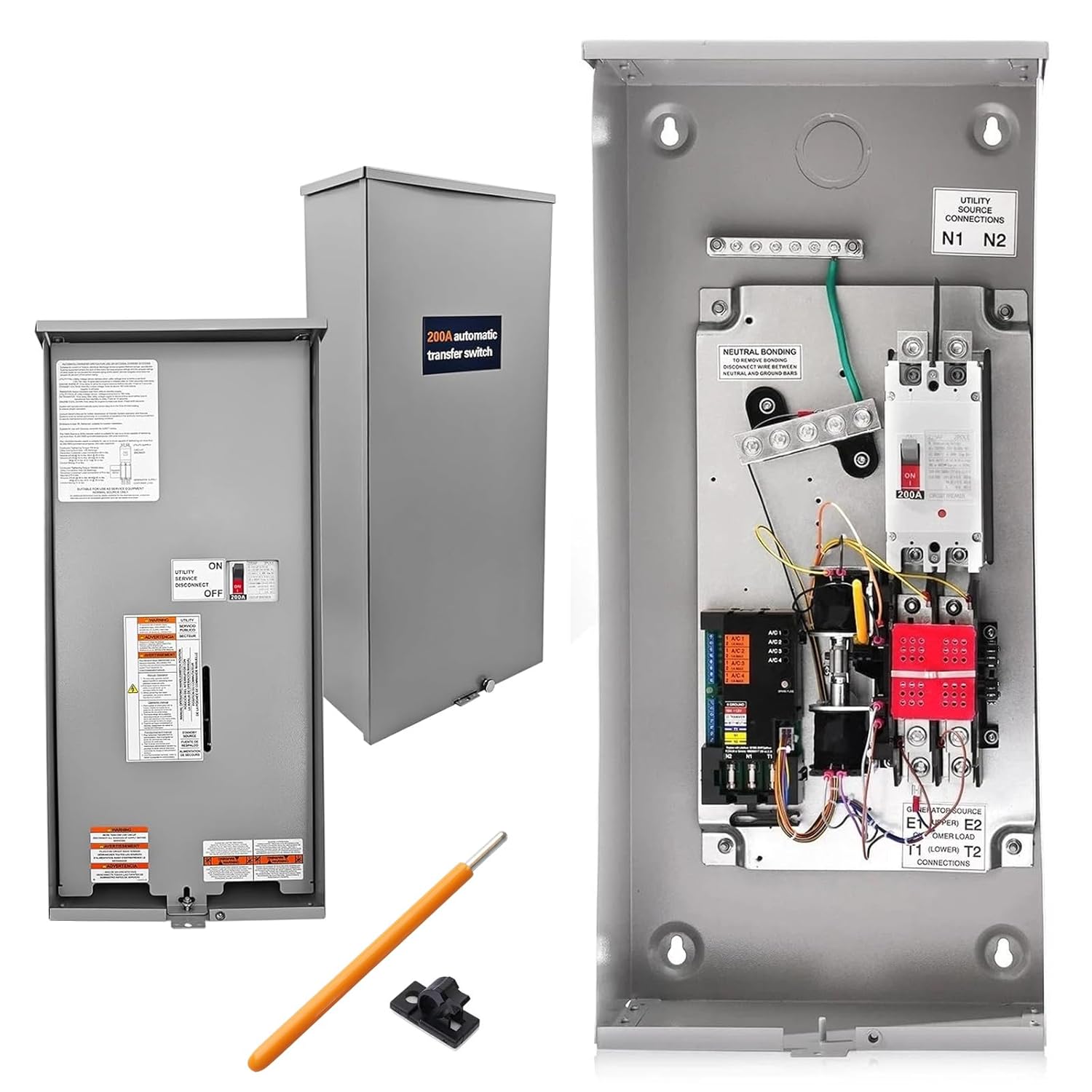
The Generac RXSW200A3 200A earns our Best Automatic Transfer Switch for Whole-House Backup award because it is designed for homeowners who want fully automatic standby generator protection for the entire home rather than manual circuit-by-circuit backup power management.
Unlike the manual transfer switches featured earlier in this guide, the RXSW200A3 is a 200-amp service-rated automatic transfer switch that continuously monitors utility power and automatically transfers the home to standby generator power within seconds of an outage. When utility power is restored, the switch safely transfers the home back to the electrical grid without requiring any homeowner intervention.
This level of automation is especially valuable for households that cannot tolerate extended power interruptions, including homes with medical equipment, security systems, home offices, refrigeration loads, HVAC systems, well pumps, or other critical electrical infrastructure. Because it is rated for 200A whole-house service, the RXSW200A3 can support virtually all residential circuits when paired with a properly sized standby generator.
Generac has also designed this model specifically for integration with Generac Guardian standby generators, providing seamless communication between the generator and the transfer switch for reliable automatic operation, self-testing routines, and coordinated system management.
For homeowners seeking a premium whole-house backup solution that operates automatically during power outages and restores power with minimal interruption, the Generac RXSW200A3 200A is one of the most capable residential automatic transfer switches available today.
Product Snapshot
| Feature | Details |
|---|---|
| Best For | Whole-House Backup • Standby Generators • Automatic Power Transfer • Critical Residential Loads |
| Transfer Switch Type | Automatic |
| Amperage Rating | 200A Service-Rated |
| Number of Circuits | Whole-House Service Transfer |
| Generator Compatibility | Generac Guardian Standby Generators and compatible automatic standby systems |
| Installation | Outdoor/Indoor Professional Standby Generator Installation |
| Build Material | NEMA-Rated Steel Enclosure |
| Ideal User | Homeowners seeking fully automatic whole-house backup power with a standby generator system that can restore power within seconds of an outage and operate with minimal user intervention. |
Why We Chose It
The Generac RXSW200A3 200A earned our Best Automatic Transfer Switch for Whole-House Backup award because it provides a fundamentally different level of backup power capability than any manual transfer switch in this guide.
The most important distinction is automatic operation. Manual transfer switches require the homeowner to notice the outage, start the generator, and manually move selected circuits from utility power to generator power. The RXSW200A3 eliminates that entire process by continuously monitoring incoming utility power and initiating an automatic transfer sequence whenever an outage is detected. This allows critical household systems to regain power within seconds, even if nobody is home.
We also selected this model because it is service-rated for 200-amp residential electrical service, which makes it suitable for whole-house transfer applications rather than just a limited group of essential circuits. When paired with a properly sized standby generator, homeowners can maintain operation of HVAC systems, kitchen appliances, lighting, refrigeration, well pumps, security systems, home offices, and other major household loads without manually prioritizing circuits during an emergency.
Another major advantage is Generac’s integrated standby generator ecosystem. The RXSW200A3 is designed specifically to work with Generac Guardian standby generators, enabling coordinated communication between the generator controller and the transfer switch. This integration supports automatic startup, transfer timing, generator exercise cycles, and system diagnostics, resulting in a more reliable and user-friendly whole-house backup experience.
The NEMA-rated steel enclosure is also built for permanent residential installation and long-term outdoor exposure. Unlike portable-generator transfer equipment that may be used only occasionally, an automatic standby transfer switch must remain operational year-round and be ready to respond instantly whenever utility power fails.
Finally, we chose the RXSW200A3 because it delivers the highest level of convenience and protection available in this guide. For homeowners who travel frequently, have critical electrical loads, live in areas with frequent outages, or simply want their home to continue operating normally during a power interruption, the ability to restore power automatically without manual intervention is often worth the additional investment compared with portable-generator-based transfer switch systems.
Check the latest price and customer reviews on Amazon.
Living With It Every Day
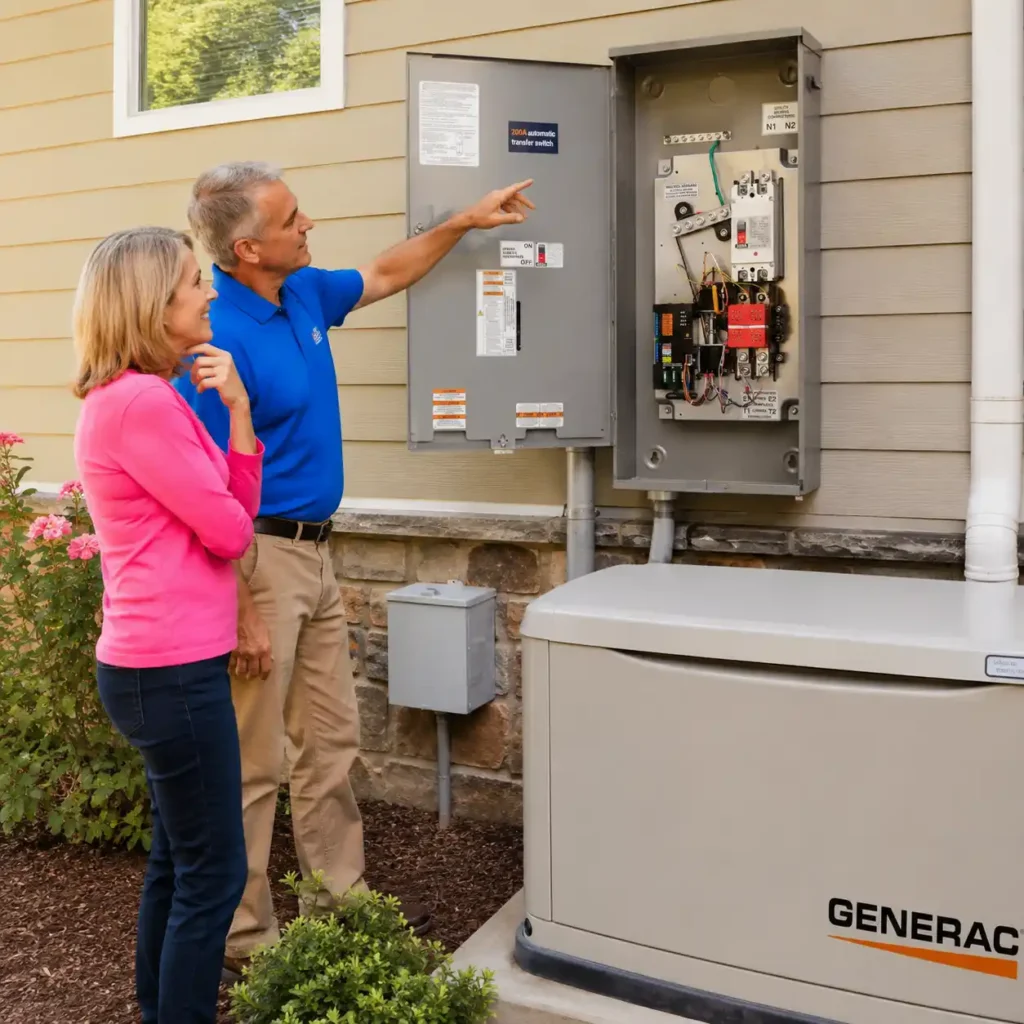
The Generac RXSW200A3 200A is built for homeowners who want backup power that feels almost invisible during an outage. Unlike portable-generator transfer switches that require manual setup and circuit management, this system is designed to take over automatically whenever utility power fails.
Imagine a winter storm causing a neighborhood-wide blackout while your family is asleep or away from home. Within seconds, the standby generator starts automatically, the RXSW200A3 transfers the electrical load from the utility to the generator, and the home’s major systems continue operating with minimal interruption. Refrigerators stay cold, HVAC equipment keeps running, security systems remain active, internet equipment stays online, and there is no need to run extension cords or manually switch individual circuits.
For households with medical devices, remote work requirements, smart-home systems, or temperature-sensitive equipment, this automatic response can be far more valuable than the additional convenience alone. The system continuously monitors utility power and handles both the transfer to generator power and the return to utility power automatically, reducing the risk of user error during stressful outage situations.
Another major advantage is that the 200A whole-house design eliminates the need to decide which circuits receive backup power. Instead of building a limited essential-load panel, homeowners can maintain a much more normal daily routine during extended outages, especially when paired with a properly sized standby generator capable of supporting the home’s larger electrical loads.
Over time, the RXSW200A3 becomes less of an emergency accessory and more of a permanent resilience upgrade for the entire property. Once professionally installed, it operates quietly in the background, automatically testing the standby generator on scheduled intervals and remaining ready to restore power whenever the electrical grid becomes unavailable.
Generac RXSW200A3 200A Evaluation
| Evaluation Category | Editorial Assessment |
|---|---|
| Whole-House Backup Capability | Excellent support for full residential service transfer when paired with a properly sized standby generator. |
| Automatic Operation | Outstanding fully automatic utility monitoring and power transfer with no homeowner intervention required during outages. |
| Generator Integration | Seamless compatibility with Generac Guardian standby generators for coordinated system operation and diagnostics. |
| Installation Quality | Heavy-duty NEMA-rated enclosure designed for permanent residential standby generator installations and long-term outdoor service. |
| Long-Term Reliability | Professional-grade standby transfer switch platform designed for continuous monitoring and dependable emergency operation year-round. |
| Overall Rating | Our strongest recommendation for homeowners seeking premium automatic whole-house backup power with a standby generator system. |
Who Should Buy This
- Homeowners installing a Generac Guardian standby generator for automatic whole-house backup.
- Families who want power restored automatically within seconds of an outage without any manual switching.
- Homes with medical equipment, security systems, home offices, well pumps, HVAC systems, or other critical electrical loads.
- Homeowners who travel frequently and need backup protection even when nobody is home.
- Anyone seeking a premium, long-term whole-house standby generator solution with minimal user intervention.
Who Should Skip This
- Homeowners using portable generators that require a manual transfer switch.
- Buyers looking for the lowest possible upfront installation cost.
- Small homes that only need a few essential circuits backed up during occasional outages.
- Users who prefer a simple manual transfer switch installation rather than a professionally installed standby generator system.
Final Verdict
The Generac RXSW200A3 200A earns our Best Automatic Transfer Switch for Whole-House Backup award because it delivers the highest level of convenience, protection, and automation available in this guide.
Its 200A service-rated design, fully automatic utility monitoring, and seamless integration with Generac Guardian standby generators make it an outstanding choice for homeowners who want their entire home protected during power outages without manually managing circuits or starting a portable generator.
While it requires a larger investment and professional installation, the ability to restore power automatically within seconds, maintain whole-house operation, and provide reliable protection for critical residential systems year-round places it in a completely different category from portable-generator transfer switch solutions.
For homeowners seeking a premium automatic standby generator transfer switch that offers true whole-house backup capability, professional-grade reliability, and worry-free operation during outages, the Generac RXSW200A3 200A is one of the strongest residential automatic transfer switch options available today.
Check the latest price and customer reviews on Amazon.
Related Guide: If you’re considering alternatives to a standby generator for whole-home resilience, our Best Home Battery Backup Systems (2026) guide can help you compare battery-based systems designed for automatic backup power and long-term household energy storage.
How to Choose the Best Transfer Switch for Your Generator
Choosing the best transfer switch for generators is not just about matching a plug or selecting the cheapest panel available. The transfer switch determines how safely your generator connects to your home, how many appliances you can power during an outage, and how easily the system can grow if your backup power needs increase in the future.
A poorly chosen transfer switch can become a long-term limitation. Homeowners often discover too late that they do not have enough circuits for additional appliances, that their generator is larger than the transfer switch can support, or that upgrading later requires significantly more electrical work than installing the correct model from the beginning.
The key is to evaluate your generator type, electrical loads, desired level of automation, and future expansion plans before purchasing the switch itself.
The following sections explain the most important factors that separate a reliable long-term installation from a temporary emergency solution.
Manual vs. Automatic Transfer Switches
The first decision is whether you need a manual or automatic transfer switch.
Manual transfer switches require you to start the generator and move selected circuits from utility power to generator power yourself. They are less expensive, easier to install, and ideal for portable generators used during occasional outages.
Automatic transfer switches (ATS) continuously monitor utility power and automatically start a compatible standby generator when an outage occurs. They restore power within seconds and require virtually no homeowner intervention.
For most portable generator owners, a manual transfer switch provides the best balance of cost, simplicity, and reliability. Automatic systems make the most sense when you have a permanently installed standby generator and need uninterrupted power for critical household loads.
30A vs. 50A Transfer Switches
| Transfer Switch Size | Typical Generator Range | Best For |
|---|---|---|
| 30A | 3000W–7500W portable generators | Essential household circuits |
| 50A | 8000W–15000W portable generators | Larger homes and higher electrical loads |
| 200A ATS | Permanent standby generators | Whole-house automatic backup systems |
A 30A transfer switch is sufficient for the majority of homeowners who want to power refrigeration, lighting, heating controls, internet equipment, and a few convenience circuits.
A 50A transfer switch becomes worthwhile when you need to support well pumps, larger HVAC equipment, multiple refrigerators or freezers, or additional household circuits simultaneously.
For a deeper breakdown of amperage sizing, generator compatibility, installation costs, and real-world load examples, see our **30A vs. 50A Generator Transfer Switch: Which One Do You Need?** guide.
How Many Circuits Do You Need?

Circuit count is one of the most commonly overlooked specifications when choosing the best transfer switch for generators. Many homeowners focus on generator wattage but forget that the transfer switch determines how many separate household circuits can actually receive backup power during an outage.
A 6-circuit transfer switch is usually sufficient for a small home or apartment-style electrical load where the goal is to power only the essentials: a refrigerator, a few lighting circuits, internet equipment, and perhaps a furnace control circuit.
A 10-circuit transfer switch is generally the sweet spot for most single-family homes. It provides enough flexibility to power refrigeration, lighting, heating equipment, a sump pump, garage door opener, home office outlets, and several convenience circuits without constantly deciding which appliances must remain disconnected.
For homeowners installing a whole-house standby generator, a 200A automatic transfer switch transfers the entire electrical service rather than selected branch circuits, allowing the home to operate much more normally during extended outages.
A useful planning exercise is to walk through your home and list the appliances you would realistically want during a 12–24 hour power outage. Most homeowners are surprised to discover that 8–10 circuits is usually enough for a comfortable essential-load backup setup, while anything smaller can quickly become restrictive as backup power priorities change over time.
Common Essential Circuits to Prioritize
Many homeowners struggle to decide which circuits should be connected to a generator transfer switch. A useful approach is to focus on food preservation, heating or cooling support, water management, lighting, and communication equipment before considering convenience appliances.
A practical priority list looks like this:
Refrigerator
Freezer
Furnace or boiler controls
Sump pump or well pump
Kitchen lighting
Internet modem and Wi‑Fi router
Home office outlets
Garage door opener
Security system
Most portable-generator owners discover that these circuits provide the majority of the comfort and safety benefits during a typical 12–24 hour outage. Prioritizing them before adding entertainment equipment or nonessential appliances usually results in a more efficient and less expensive backup power setup.
Portable Generator Compatibility
Always verify that the transfer switch is designed for the same voltage configuration, amperage rating, and connector type as your portable generator. Physical compatibility alone is not enough; the electrical characteristics must also match.
For portable generators, confirm the following:
120V or 120/240V output
30A L14-30 connection
50A 14-50 connection
Neutral switching requirements
Generator grounding instructions
Most modern portable generators intended for home backup provide 120/240V output through an L14-30 receptacle, which is why 30A transfer switches are so common. Larger generators often use a 14-50 connection, requiring a compatible 50A transfer switch and inlet box.
It is also important to understand whether your generator has a bonded neutral or a floating neutral, because some transfer switches are designed around specific neutral-handling configurations. A mismatch may not prevent the system from operating, but it can lead to nuisance breaker trips, grounding problems, GFCI issues, or electrical code violations.
When in doubt, compare the generator’s owner’s manual, receptacle type, voltage rating, and neutral configuration with the transfer switch specifications before purchasing. Spending a few minutes verifying compatibility can prevent costly rewiring or troubleshooting later.
Installation Considerations
Transfer switches should generally be installed by a licensed electrician, especially when they are connected directly to a home’s main electrical panel. Although some manufacturers market their kits as DIY-friendly, improper installation can create serious shock, fire, and backfeeding hazards.
Before choosing a transfer switch, evaluate several practical installation factors:
Available space beside the electrical panel
Indoor vs. outdoor mounting requirements
Distance to the generator inlet box
Conduit routing and wall penetration requirements
Local electrical code requirements
Permit and inspection requirements in your area
One of the most common installation mistakes is choosing a transfer switch that physically fits the budget but not the available wall space near the service panel. Another is underestimating the cost of running conduit from the generator inlet location to the transfer switch.
In many cases, the labor cost difference between installing a 6-circuit switch and a 10-circuit switch is relatively small, because the electrician is already working inside the panel. For that reason, it is often worth spending slightly more upfront for additional circuit capacity rather than paying for a larger upgrade later.
A well-planned installation should not only meet today’s backup power needs but also leave room for future generator upgrades, additional circuits, or battery backup integration if your home’s energy strategy evolves over time.
Think About Future Power Needs
One of the biggest mistakes homeowners make is sizing a transfer switch only for today’s outage priorities. What seems sufficient during the first power outage often becomes limiting as household needs change.
Future additions may include:
A second refrigerator or freezer
Home office equipment
Security and networking systems
Well pumps or sump pumps
Mini-split HVAC systems
Battery backup or solar integration equipment
A family that initially wants backup power only for refrigeration and lighting may later add a home office, security cameras, networking equipment, or a second freezer, quickly consuming the available circuit capacity.
This is why many electricians recommend treating a transfer switch as a 10–15 year investment rather than a temporary emergency accessory. Choosing a 10-circuit 30A model instead of a 6-circuit model often adds only a modest amount to the overall project cost while providing significantly greater flexibility for future expansion.
If you expect your home’s electrical demands to grow, selecting a transfer switch with slightly more circuit capacity than you currently need is usually a much better long-term investment than replacing the entire system later.
Real-World Transfer Switch Examples

Choosing the right transfer switch becomes much easier when you look at real household backup scenarios instead of focusing only on amperage ratings, circuit counts, and specification sheets. Many homeowners understand the difference between 30A and 50A transfer switches, but they are often unsure which option actually fits their generator, their home, and the appliances they expect to use during a power outage.
A transfer switch that is perfect for a small townhouse with a 4000W portable generator may be completely inadequate for a larger home with a well pump, multiple refrigerators, and HVAC equipment. The goal is not to buy the largest transfer switch available—it is to choose a system that safely supports the loads your household truly depends on during an outage while leaving enough flexibility for future expansion.
The examples below are based on common residential backup power situations, including small homes, typical single-family homes, larger properties with well pumps, and whole-house standby generator installations. They are designed to help homeowners estimate which transfer switch size is most appropriate for their generator, electrical loads, and outage priorities before purchasing equipment or scheduling installation.
Typical Single-Family Home
For many homeowners, this is the scenario that matters most. A typical single-family home usually falls somewhere between a small emergency setup and a full whole-house standby system, which is why choosing the right transfer switch size becomes especially important.
Typical setup
5000W–7500W portable generator
Refrigerator and freezer
Lighting circuits
Furnace blower
Sump pump
Internet and home office equipment
Garage door opener
Recommended transfer switch: 30A, 10-circuit manual transfer switch
This is the configuration we would choose for the majority of homeowners looking for the best transfer switch for generators without moving into the cost and complexity of a standby generator system.
The reason a 10-circuit 30A transfer switch works so well is that it provides enough flexibility to support the appliances that are most commonly needed during a real outage. Refrigeration, heating equipment, lighting, networking hardware, and a few convenience outlets can usually operate simultaneously without forcing the homeowner to constantly decide which circuit must be disconnected.
It also leaves room for future adjustments. Many homeowners initially back up only refrigeration and lighting, then later decide to add a home office circuit, security equipment, a second freezer, or additional utility-room outlets. A 10-circuit switch makes those changes much easier than a smaller six-circuit model.
Another advantage is that this setup pairs naturally with the L14-30 connection used by most modern portable generators in the 5000W–7500W range. Installation is typically straightforward for a licensed electrician, and the overall system remains relatively affordable while still providing a substantial improvement over extension-cord-based generator setups.
For households that want reliable backup power for the appliances that matter most during a 12–24 hour outage, this is usually the most practical and cost-effective transfer switch configuration available.
Larger Home With Well Pump
Homes with a private well pump often have very different backup power requirements than homes connected to municipal water service. A well pump is a 240V motor load, and its startup surge can be significantly higher than its normal running wattage. That is why many homeowners with wells discover that a basic 30A transfer switch feels restrictive once they begin planning a realistic outage scenario.
Typical setup
9000W–12000W 120/240V portable generator
Well pump
Sump pump
Multiple refrigerators or freezers
Furnace or heat pump air handler
Additional kitchen and utility circuits
Recommended transfer switch: 50A, 10-circuit manual transfer switch
The larger 50A transfer switch provides additional headroom for higher simultaneous power demand and is much better suited to generators that deliver substantial 120/240V output. This becomes especially important when several motor-driven appliances may start at nearly the same time, such as a well pump, sump pump, refrigerator compressor, or furnace blower.
Another advantage is future flexibility. Homeowners with larger properties often add equipment such as workshop circuits, additional freezers, water-treatment systems, or mini-split HVAC units over time. A 50A transfer switch is less likely to become a bottleneck if the backup system expands later.
It is important to remember that a 50A transfer switch does not automatically increase the power available from the generator. The generator must also provide sufficient continuous output, proper 120/240V service, and a compatible 14-50 connection or equivalent wiring arrangement.
For homes with a well pump, multiple large appliances, and a higher overall electrical demand, a 50A, 10-circuit manual transfer switch is usually the safest and most future-friendly choice. It offers the flexibility needed for larger residential backup systems without requiring the cost and complexity of a full whole-house standby generator installation.
Whole-House Standby Backup
For some homeowners, powering only a few essential circuits is not enough. Households with central air conditioning, medical equipment, home offices, security systems, well pumps, or frequent extended outages often need a backup solution that keeps the entire home operating as normally as possible. In these situations, a whole-house standby generator system paired with an automatic transfer switch becomes the most appropriate option.
Typical setup
18kW–26kW standby generator
Central HVAC system
Kitchen appliances
Laundry equipment
Lighting throughout the home
Security and networking systems
Well pump and other major household loads
Recommended transfer switch: 200A automatic transfer switch
Unlike manual transfer switches that require the homeowner to start a portable generator and move selected circuits from utility power to generator power, a 200A automatic transfer switch continuously monitors incoming utility service. When a power outage occurs, it automatically starts the standby generator and transfers the home to generator power within seconds. Once utility power is restored, the switch safely returns the home to grid power without requiring any user intervention.
This type of system is particularly valuable for homeowners who travel frequently, work remotely, or cannot tolerate extended interruptions to heating, cooling, refrigeration, or communication systems. Because the transfer switch is rated for whole-house service, there is usually no need to create a separate essential-load subpanel or manually prioritize individual circuits during an outage.
The trade-off is cost and installation complexity. A whole-house standby system requires professional installation, permits, fuel supply planning, and a properly sized standby generator, making it a much larger investment than a portable-generator-based setup.
However, for homeowners seeking the highest level of convenience, protection, and automatic outage response, a 200A automatic transfer switch paired with a standby generator provides the closest experience to having uninterrupted utility power during severe weather and extended grid outages.
Common Transfer Switch Buying Mistakes
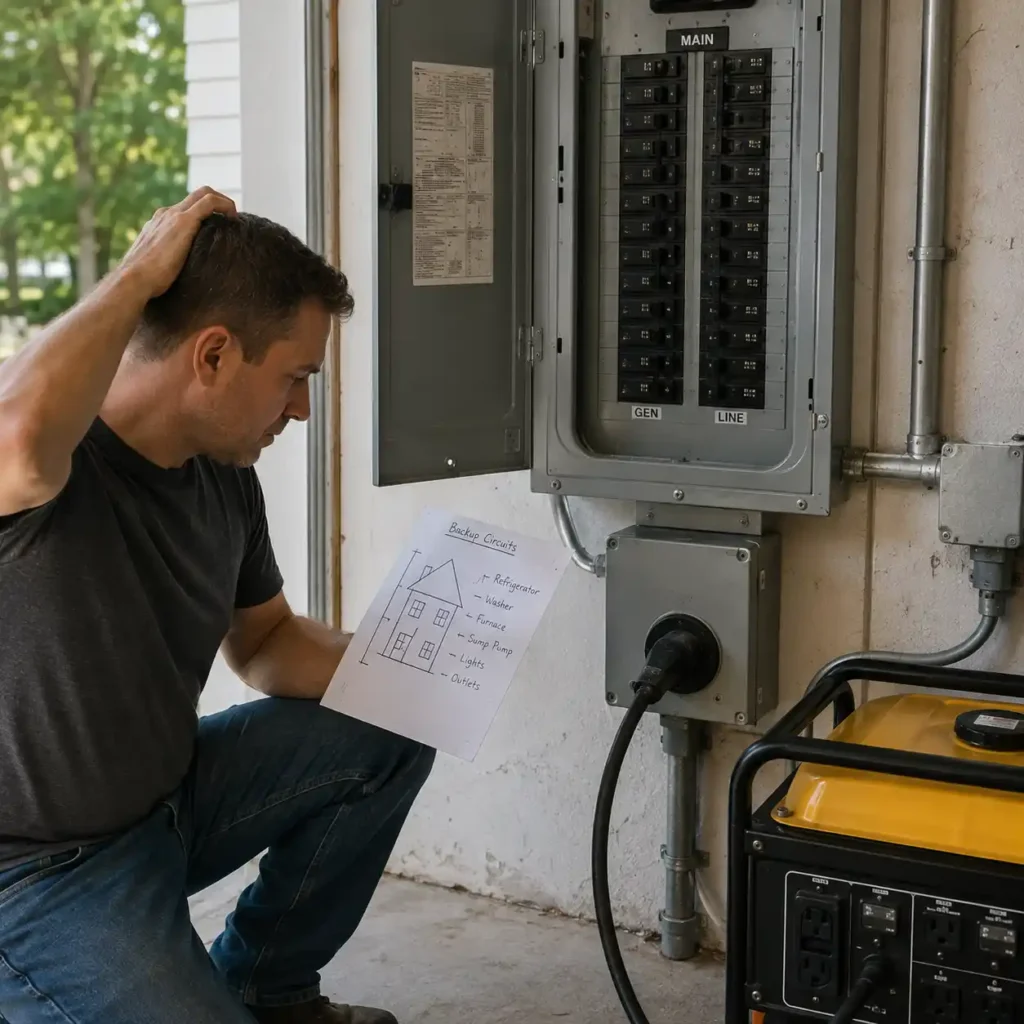
Even high-quality transfer switches can become a poor long-term investment if they are sized incorrectly or chosen without considering how the backup system will actually be used. In our experience, most transfer switch problems are caused by planning mistakes rather than equipment failures.
One of the most common mistakes is buying too few circuits. A homeowner may initially believe that six circuits are enough for refrigeration and lighting, but after the first extended outage they often realize they also want backup power for a garage door opener, home office, security system, networking equipment, or an additional freezer. Upgrading from a 6-circuit switch to a 10-circuit switch later usually costs significantly more than choosing the larger model during the initial installation.
Another frequent problem is mismatching the generator and the transfer switch. A 50A generator connected to a 30A transfer switch will be limited by the smaller component, while a 30A generator paired with a 50A switch may require different wiring, inlet hardware, and breaker protection. Voltage, amperage, connector type, and neutral configuration must all be compatible.
Many homeowners also underestimate future expansion. Backup power needs often grow over time as households add home offices, mini-split HVAC systems, additional refrigeration, battery backup equipment, or solar components. Choosing a transfer switch with slightly more capacity than you need today is often a much better investment than replacing the entire system later.
Finally, some buyers choose a manual transfer switch when their situation really calls for automatic standby backup. Homes with medical equipment, frequent travel, remote work requirements, or recurring long-duration outages may benefit far more from an automatic transfer switch paired with a standby generator, even though the upfront investment is higher.
Quick Transfer Switch Planning Checklist
Before purchasing a transfer switch, it is worth spending a few minutes verifying that the system will meet both your current outage priorities and your likely future backup power needs. This simple checklist can help prevent the most common sizing and compatibility mistakes.
Do you know which appliances and circuits are truly essential during a power outage?
Is your generator’s voltage and amperage fully compatible with the transfer switch you plan to buy?
Have you allowed enough circuits for future additions, not just today’s emergency loads?
Is there adequate space beside the main electrical panel for professional installation?
Have you confirmed local permit, inspection, and electrical code requirements?
Are you choosing manual or automatic operation based on how the system will actually be used in real life?
Have you considered whether your household’s backup power needs may increase over the next 5–10 years?
If you can confidently answer yes to most of these questions, you are much more likely to choose a safe, reliable, and future-friendly generator transfer switch that will continue serving your home effectively for many years.
The goal is not to buy the largest or most expensive transfer switch available. The best choice is the one that matches your generator, supports the household loads that matter most during an outage, leaves room for reasonable future expansion, and allows your backup power system to operate safely and reliably every time utility power is unavailable.
Transfer Switch vs. Interlock Kit
For homeowners researching the best transfer switch for generators, one of the most common questions is whether a dedicated transfer switch is actually necessary or if a generator interlock kit can accomplish the same goal.
Both methods can provide a safe connection between a generator and a home’s electrical system when installed correctly, but they are designed for different types of backup power setups and different levels of user involvement.
A transfer switch is a dedicated device that allows selected circuits—or, in the case of some standby systems, the entire electrical service—to be switched between utility power and generator power. The circuits are clearly identified, operation is straightforward, and the system is specifically designed for generator backup use.
An interlock kit works differently. Instead of transferring selected circuits, it adds a mechanical locking mechanism to the main electrical panel that prevents the main utility breaker and the generator backfeed breaker from being turned on at the same time. This allows the homeowner to energize various circuits in the panel from the generator, but it requires more active load management and a better understanding of the home’s electrical system.
| Feature | Transfer Switch | Interlock Kit |
|---|---|---|
| Ease of Use | Very easy | Moderate |
| Dedicated Circuit Selection | Yes | No |
| Load Management | Simpler | Requires more attention |
| Installation Complexity | Moderate | Panel-specific |
| Best For | Most homeowners | Experienced users with compatible panels |
For most homeowners, a dedicated transfer switch is usually the better choice. It provides clearer operation during an emergency, reduces the risk of accidentally overloading the generator, and makes it easier for any family member to understand which circuits are being powered during an outage.
Interlock kits can be an excellent solution when:
the electrical panel is specifically approved for an interlock kit,
the homeowner wants access to more circuits than a small transfer switch provides,
and they are comfortable actively managing electrical loads while the generator is operating.
However, interlock kits are not universal. They must be designed for the exact panel model, installed according to local electrical codes, and typically require a properly sized generator inlet and backfeed breaker.
For homeowners looking for the best transfer switch for generators with the least amount of confusion during a power outage, a 30A or 50A dedicated transfer switch remains the simplest, safest, and most user-friendly option. Interlock kits are best viewed as a more flexible but slightly more advanced alternative for compatible electrical panels and experienced generator users.
Frequently Asked Questions
What is the safest way to connect a portable generator to a house?
The safest method is to use a properly installed generator transfer switch or a code-approved interlock kit with a generator inlet box. Both options prevent dangerous backfeeding into utility lines and provide a much safer and more organized solution than running multiple extension cords through doors or windows.
Do I need a transfer switch for a portable generator?
If you plan to power permanently installed household circuits such as refrigerators, lighting, furnaces, or sump pumps, a transfer switch is strongly recommended and is often required by electrical code. Extension cords are suitable only for powering a few temporary devices directly from the generator.
What size transfer switch do I need for a 7500-watt generator?
Most 7500W portable generators use a 120/240V 30A L14-30 outlet, so a 30A transfer switch is usually the correct match. A 10-circuit 30A model is typically the most practical choice for a standard single-family home.
Is a 30A transfer switch enough for a whole house?
No. A 30A transfer switch is designed for selected essential circuits, not for powering an entire home simultaneously. Whole-house backup systems normally require a service-rated automatic transfer switch, commonly 200A, paired with a properly sized standby generator.
How many circuits should I put on a generator transfer switch?
For most homes, 8–10 circuits is a good target. Common backup circuits include:
- Refrigerator
- Freezer
- Kitchen lighting
- Furnace or boiler controls
- Sump pump
- Internet and Wi-Fi equipment
- Home office outlets
- Garage door opener
A 10-circuit transfer switch provides significantly more flexibility than a basic six-circuit model.
Can a transfer switch run central air conditioning?
A transfer switch can power central air conditioning only if both the generator and the transfer switch are large enough to handle the HVAC system’s startup and running loads. Most portable-generator-based 30A systems are not intended to run a full central AC system continuously.
What is the difference between a manual and an automatic transfer switch?
A manual transfer switch requires the homeowner to:
- Start the generator,
- Move selected circuits from utility power to generator power,
- Manage electrical loads manually.
An automatic transfer switch (ATS) continuously monitors utility power, starts a compatible standby generator automatically, and restores power within seconds without user intervention.
Can I install a transfer switch myself?
Although some jurisdictions allow homeowner electrical work, transfer switches connect directly to the home’s electrical distribution system. Incorrect installation can create shock hazards, fire risks, and utility backfeeding dangers, so professional installation by a licensed electrician is strongly recommended.
Is a transfer switch better than an interlock kit?
For most homeowners, yes. Transfer switches are generally easier to operate during an outage, provide clearly labeled dedicated backup circuits, and require less active load management. Interlock kits offer greater flexibility but are better suited to experienced users with a compatible electrical panel..
Do I need a permit to install a transfer switch?
In many areas, yes. Installing a transfer switch usually requires:
- An electrical permit,
- Inspection by the local authority,
- Compliance with current electrical code requirements.
Always check with your local building department or licensed electrician before beginning installation.
What happens if I use the wrong transfer switch size?
Using an incorrectly sized transfer switch can lead to:
- Overloaded breakers,
- Voltage drop,
- Inability to power intended appliances,
- Wiring incompatibilities,
- Electrical code violations,
- Reduced safety during generator operation.
The transfer switch should always match the generator’s voltage, amperage, and connector type.
Can a transfer switch be used with an inverter generator?
Yes, as long as the inverter generator provides the correct voltage and outlet configuration for the transfer switch. Many modern inverter generators with 120/240V output and an L14-30 outlet are fully compatible with standard 30A manual transfer switches.
What is the most common transfer switch size for residential backup power?
The most common residential size is a 30A, 10-circuit manual transfer switch. It works well with the majority of portable generators in the 5000W–7500W range and provides enough circuit capacity for refrigeration, lighting, heating equipment, sump pumps, and communication devices during typical power outages.
How long does it take an electrician to install a transfer switch?
A straightforward installation next to an existing electrical panel often takes 3–6 hours, but the total time can increase if the project requires:
- A new generator inlet box,
- Long conduit runs,
- Panel modifications,
- Permit inspections,
- Additional grounding or wiring upgrades.
Complex installations for larger 50A systems or standby generators may require a full day or more.
Will a transfer switch increase my home’s value?
A professionally installed generator transfer switch can improve a home’s emergency preparedness, safety, and convenience, which may make the property more attractive to buyers in areas that experience storms, hurricanes, wildfires, or unreliable utility service. While it is unlikely to increase value as dramatically as a major renovation, it is generally considered a useful electrical infrastructure upgrade rather than a temporary accessory.
Final Verdict
Choosing the best transfer switch for generators is not about buying the largest panel or the most expensive standby system—it is about selecting the solution that provides the right combination of safety, circuit capacity, generator compatibility, ease of operation, and long-term reliability for your home’s actual backup power needs.
A transfer switch is one of the few components in a generator backup system that affects both safety and convenience every time the power goes out. The right model prevents dangerous backfeeding, protects your home’s electrical system, simplifies generator operation during an outage, and makes it much easier to keep essential household circuits running when utility power is unavailable.
For most homeowners, the goal is not to power every appliance in the house. It is to maintain the systems that matter most:
Refrigerators and freezers
Lighting circuits
Heating equipment
Sump pumps
Internet and communication devices
Home office equipment
Basic convenience outlets
That is exactly why we selected winners for different household scenarios instead of recommending a single transfer switch for everyone.
If you want the best overall balance of safety, usability, circuit flexibility, and proven long-term reliability, the Reliance Controls 31410CRK Pro/Tran 2 remains our top recommendation. Its 30A, 10-circuit configuration is large enough for a realistic essential-load backup setup while remaining easier to install and operate than larger 50A or whole-house systems. For the majority of portable-generator homeowners, this is the model we would choose with the fewest reservations.
Homeowners with smaller homes or modest backup requirements should take a close look at the Reliance Controls 31406CRK Pro/Tran 2. It delivers the same dependable Pro/Tran 2 design philosophy in a more compact 6-circuit format, making it an excellent choice for refrigerators, lighting, heating controls, and internet equipment during occasional outages.
For larger homes using high-capacity 120/240V portable generators, the Reliance Controls A510C Pro/Tran2 stands out as the strongest 50A manual transfer switch in this guide. Its additional amperage headroom makes it much better suited to well pumps, larger furnace systems, multiple refrigerators, and higher simultaneous electrical loads than a standard 30A setup.
Buyers looking for a more affordable permanent backup solution should consider the Connecticut Electric EmerGen Transfer Switch Kit. It provides a safe, code-compliant alternative to extension-cord-based generator setups while offering useful 30A, 10-circuit functionality at a more budget-friendly price point.
If your goal is fully automatic whole-house backup power, the clear choice is the Generac RXSW200A3 200A. Unlike the manual transfer switches in this guide, it continuously monitors utility power, automatically starts a compatible standby generator, and restores power to the entire home within seconds of an outage. For households with medical equipment, security systems, home offices, well pumps, HVAC systems, or frequent travel, the convenience and protection of a 200A automatic transfer switch can be well worth the additional investment.
One of the biggest mistakes homeowners make is focusing only on generator wattage while ignoring circuit planning. In real-world outages, circuit count often matters more than maximum generator output. Many homeowners discover after their first extended outage that they need backup power for more circuits than they originally expected, which is why a 10-circuit transfer switch is often the safest long-term choice even when current needs seem modest.
Another important takeaway from our testing is that future flexibility matters. Backup power needs rarely stay the same for the next decade. Homeowners may add a second freezer, a home office, security equipment, mini-split HVAC systems, or other electrical loads that make additional circuit capacity valuable later. Choosing a transfer switch with slightly more capability than you need today is usually a much better investment than replacing the system later.
The good news is that today’s generator transfer switches are more capable, better labeled, and easier to use than ever before. Modern designs provide clear utility/generator switching, durable steel enclosures, improved installation layouts, and better compatibility with the portable generators most homeowners actually use for emergency backup power.
Whether your goal is protecting refrigerated food, keeping your home office online, maintaining heating equipment during winter storms, supporting a well pump during a utility outage, or building a dependable long-term emergency power system, the right transfer switch works quietly in the background so your household can continue functioning with minimal disruption.
At the end of the day, the best transfer switch for generators is not the one with the highest amperage rating or the longest feature list. It is the one that:
Matches your generator’s voltage and amperage
Supports the circuits your household truly depends on
Complies with local electrical codes
Provides room for reasonable future expansion
Can be operated safely and confidently during an emergency
A well-chosen transfer switch can provide years of reliable backup power, simplify generator operation during severe weather, reduce outage-related stress, and significantly improve your home’s overall emergency preparedness.
We hope this guide has made comparing today’s leading generator transfer switches easier and has given you the confidence to choose the right solution for your home. Whatever storms, grid failures, or unexpected outages the future may bring, a properly installed transfer switch is one of the smartest investments you can make in safe, reliable, and organized home backup power.
Our Recommendation
If we had to give just one piece of advice after evaluating every transfer switch in this guide, it would be this: start by understanding your home’s actual backup power priorities instead of shopping for the largest transfer switch available.
Many homeowners assume that a larger amperage rating automatically provides better protection. In reality, the best investment is usually the transfer switch that comfortably supports your essential household circuits today while leaving enough room for reasonable future expansion.
For the majority of homeowners using a portable generator in the 5000W–7500W range, we believe the Reliance Controls 31410CRK Pro/Tran 2 is the safest and most practical place to start. Its 30A, 10-circuit configuration offers an excellent balance of circuit capacity, ease of operation, installation flexibility, and long-term reliability. It is large enough to support refrigeration, lighting, heating equipment, sump pumps, internet equipment, and several convenience circuits without becoming unnecessarily complex for most households.
If your backup needs are very modest, a 6-circuit 30A transfer switch can be a cost-effective option. On the other hand, homes with well pumps, larger HVAC systems, multiple refrigerators or freezers, or higher simultaneous electrical demand should strongly consider moving to a 50A transfer switch rather than trying to stretch a smaller 30A system beyond its intended limits.
We also strongly recommend treating the transfer switch as a long-term electrical infrastructure upgrade, not just a storm-season accessory. A professionally installed, code-compliant transfer switch will often remain in service for 10–20 years or more, and upgrading later is usually much more expensive than choosing the right capacity from the beginning.
When making your final decision, focus on these four factors:
Generator compatibility (30A vs. 50A, 120V vs. 120/240V)
Number of circuits you realistically need during an outage
Installation quality and code compliance
Future expansion flexibility
In our experience, homeowners who prioritize those four factors almost always end up with a safer, more reliable, and more satisfying backup power system than those who focus only on price or maximum amperage ratings.
For most readers of this guide, our final recommendation remains simple: choose a 10-circuit 30A transfer switch unless your generator or electrical loads clearly require a larger 50A or whole-house automatic system. It provides the best overall combination of safety, usability, flexibility, and long-term residential backup value for the widest range of real-world home backup power situations.
Related Guides
Building a reliable generator backup power system involves much more than choosing the right transfer switch. Generator sizing, safe home connection methods, fuel planning, and long-term outage preparedness all play an important role in creating a dependable residential backup solution.
The guides below will help you plan every aspect of your home backup setup while avoiding common installation mistakes and ensuring your generator system is ready whenever the next power outage occurs.
30A vs. 50A Generator Transfer Switch: Which One Do You Need? — Learn how to choose the correct transfer switch size based on your generator’s amperage, household electrical loads, and future expansion plans.
What Size Portable Generator Do I Need for Home Backup? — Calculate the right generator wattage for refrigerators, freezers, lighting, heating equipment, sump pumps, and other essential household appliances.
Best Portable Generators for Home Backup (2026) — Compare the top portable generators for emergency preparedness, storm outages, and residential backup power applications.
Generator Interlock Kit vs. Transfer Switch: Which Is Better? — Understand the safety, installation, and usability differences between dedicated transfer switches and panel interlock kits.
How to Connect a Portable Generator to Your House Safely — Learn the safest code-compliant methods for connecting a portable generator using transfer switches, inlet boxes, and proper grounding practices.
Best Whole House Backup Power Systems (2026) — Explore complete standby generator and battery-based whole-home backup solutions for extended outages and severe weather preparedness.
Home Battery Backup System vs. Gas Generator — Compare battery backup systems and traditional generators to determine which solution best fits your home’s outage duration, noise, maintenance, and fuel-storage requirements.
How to Prepare Your Home for a Power Outage — Discover practical steps to improve emergency readiness before hurricanes, winter storms, wildfires, or unexpected grid failures.