
A portable power station is only as useful as the accessories that go with it. While the power station itself provides the energy, the right accessories determine how efficiently you can recharge it, transport it, protect it, and integrate it into your camping, RV, emergency backup, or off-grid power setup.
The best portable power station accessories do much more than add convenience. A high-quality solar panel can dramatically improve off-grid charging, a reliable solar charging cable ensures efficient power transfer, a compatible adapter expands connection options across different brands, and a durable carrying case protects your investment during transport and outdoor use. Choosing the right accessories can improve charging efficiency, extend the versatility of your power station, and make your entire portable power system easier and safer to use.
For this guide, we researched today’s most useful portable power station accessories based on compatibility, build quality, durability, ease of use, real-world practicality, and overall value. Rather than focusing on one brand, we selected accessories that solve common problems faced by portable power station owners, whether you’re using an EcoFlow, Jackery, BLUETTI, Anker SOLIX, or another compatible power station.
In the sections below, you’ll find our top recommendations for solar panels, carrying cases, solar charging cables, and adapter cables. We’ll explain where each accessory excels, who it’s best suited for, and how it can help you build a more reliable and efficient portable power setup.
As an Amazon Associate, we earn from qualifying purchases.

Table of Contents
Quick Answer
The best portable power station accessories can significantly improve charging efficiency, portability, compatibility, and long-term usability. A high-quality portable solar panel allows reliable off-grid charging, a durable carrying case protects your investment during transport, a dependable solar charging cable ensures efficient power transfer, and the right adapter cable expands compatibility between different solar panels and portable power stations.
For this guide, we selected the most practical accessories for camping, RV travel, emergency backup, and everyday portable power use. Our top recommendations include premium solar panels from EcoFlow and Jackery, a rugged carrying case, a reliable solar charging cable, and a versatile Anderson adapter cable that helps connect a wider range of solar equipment.
The best accessory depends on how you use your portable power station. Campers may prioritize fast solar charging, RV owners often need greater connection flexibility, while home backup users typically benefit from durable storage and dependable charging accessories. The detailed reviews below explain where each accessory performs best, its strengths, and who should consider buying it.
Why You Can Trust Power Ready Guide
At Power Ready Guide, we focus exclusively on portable power, backup energy, solar charging, and off-grid power solutions. Every recommendation is based on extensive product research, manufacturer specifications, compatibility analysis, long-term reliability, real-world usability, and feedback from experienced portable power station users.
For this guide, we evaluated each accessory using the same objective criteria to ensure fair and consistent comparisons. Rather than recommending products simply because they’re popular, we focused on the accessories that genuinely improve the ownership experience of a portable power station.
Our evaluation considered:
- Compatibility with leading portable power station brands
- Build quality and long-term durability
- Ease of use and installation
- Charging efficiency and connection reliability
- Portability and outdoor practicality
- Weather resistance where applicable
- Overall value for money
- Best use cases for camping, RV travel, emergency backup, and everyday portable power
We don’t recommend accessories based solely on brand recognition or price. Instead, we select products that solve real problems, improve reliability, and help users get more from their portable power stations in everyday situations.
Whether you’re building your first portable power setup or expanding an existing system, our goal is to help you invest in accessories that provide lasting value, dependable performance, and greater flexibility wherever reliable portable power is needed.
How We Evaluated the Best Portable Power Station Accessories
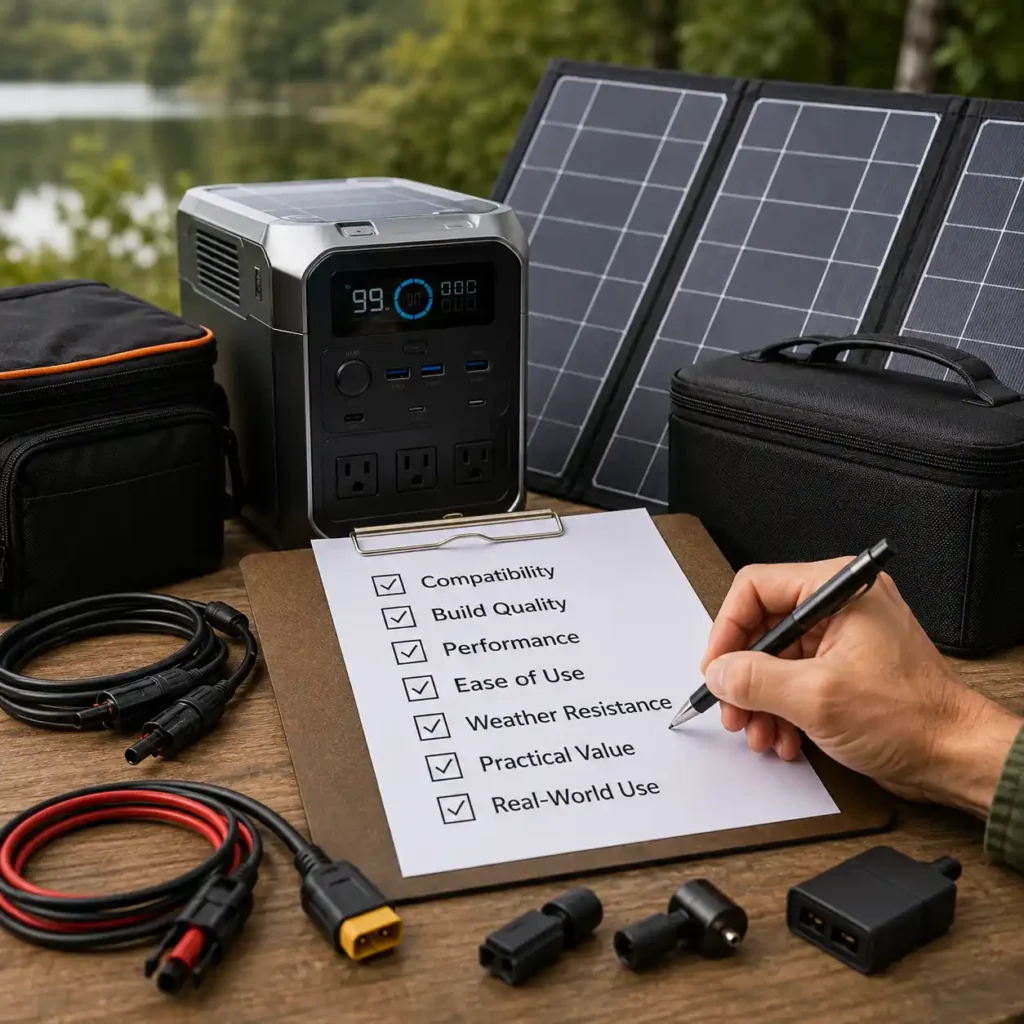
Choosing the best portable power station accessories isn’t simply about buying the most expensive solar panel or the longest charging cable. The right accessory should improve the performance, convenience, and versatility of your portable power station while remaining reliable in real-world conditions.
To ensure fair and objective recommendations, every accessory in this guide was evaluated using the same research framework. Instead of focusing on marketing claims, we considered how each product performs as part of a complete portable power setup for camping, RV travel, emergency preparedness, and everyday outdoor use.
Each accessory was assessed using the following criteria:
- Compatibility with leading portable power station brands and common connector standards.
- Build quality and overall durability for long-term outdoor use.
- Performance, including charging efficiency, power transfer, or protective functionality depending on the accessory type.
- Ease of use, including installation, portability, storage, and everyday convenience.
- Weather resistance, where applicable, for reliable operation in outdoor environments.
- Practical value, balancing features, reliability, and price rather than simply recommending the most expensive option.
- Real-world applications, including camping, overlanding, RV travel, home backup, and off-grid power systems.
Because this guide covers several categories of accessories, we evaluated each product within its intended purpose rather than comparing fundamentally different items against one another. A solar panel, for example, serves a completely different role than a carrying case or an adapter cable, so each recommendation was judged according to the features that matter most for that type of accessory.
Our goal isn’t to recommend the largest collection of accessories. It’s to help you choose the products that genuinely improve your portable power station setup, making it more efficient, more reliable, and better suited to the way you actually use portable power.
Who This Guide Is For
Buying portable power station accessories isn’t about collecting extra gear—it’s about choosing the accessories that improve the way you use your portable power station. The right combination can make charging faster, transportation easier, and your entire power setup more flexible and reliable.
This guide is designed for anyone who wants to get more from their portable power station without wasting money on accessories they may never use.
It’s especially helpful for:
- Campers looking to improve off-grid charging with portable solar panels, reliable cables, and durable carrying solutions.
- RV owners who need greater charging flexibility and better compatibility between solar panels, portable power stations, and existing equipment.
- Overlanders and outdoor adventurers building dependable power systems for extended trips away from traditional electrical hookups.
- Homeowners preparing for emergency power outages and looking for practical accessories that improve backup power readiness.
- First-time portable power station owners who want to understand which accessories are truly worth buying and which can be skipped.
- Buyers comparing accessories for leading brands such as EcoFlow, Jackery, BLUETTI, Anker SOLIX, and other compatible portable power stations.
Whether your priority is faster solar charging, safer transportation, broader compatibility, or building a more efficient portable power system, this guide will help you choose the accessories that provide the greatest real-world value for your specific needs.
Best Portable Power Station Accessories Compared
| Product | Category | Best For | Key Advantage |
|---|---|---|---|
| EF ECOFLOW 220W Portable Solar Panel | Portable Solar Panel | Fast Off-Grid Charging | High power output with excellent conversion efficiency |
| Jackery SolarSaga 100W | Portable Solar Panel | Camping & Travel | Lightweight, compact, and easy to transport |
| Jackery Carrying Case (Large) | Carrying Case | Equipment Protection | Durable construction with convenient storage |
| COMeap Solar Panel Cable | Solar Charging Cable | Reliable Solar Connections | Weather-resistant cable for efficient charging |
| Ansoufien 10AWG Solar Connector to Anderson Adapter Cable | Adapter Cable | Connector Compatibility | Expands compatibility between solar panels and portable power stations |
Quick Summary: Our Top Picks
Not every portable power station accessory solves the same problem. Some help you recharge your power station faster, others improve compatibility between different devices, while others protect your investment during travel or make your off-grid setup easier to use.
The accessories below earned their awards based on compatibility, build quality, durability, ease of use, real-world practicality, long-term reliability, and overall value for camping, RV travel, emergency preparedness, and portable power use.
EF ECOFLOW 220W Portable Solar Panel
Award: Best Overall Portable Solar Panel
Why It Won:
Delivers the best combination of fast solar charging, premium build quality, portability, and long-term reliability, making it our top recommendation for maximizing portable power station performance.
Choose This If:
- You frequently camp off-grid for several days.
- You want faster solar charging.
- You value premium construction and weather resistance.
Best For:
- Camping
- RV travel
- Overlanding
- Emergency backup
Jackery SolarSaga 100W
Award: Best Budget Portable Solar Panel
Why It Won:
Offers dependable solar charging, excellent portability, and outstanding value, making it an ideal choice for weekend campers and first-time portable power station owners.
Choose This If:
- You’re buying your first portable solar panel.
- You want dependable charging without overspending.
- You mostly camp on weekends.
Best For:
- Weekend camping
- Car camping
- Road trips
- Budget-conscious buyers
Jackery Carrying Case (Large)
Award: Best Protective Carrying Case
Why It Won:
Provides excellent protection during transport while making it easier to carry and organize your portable power station and essential accessories.
Choose This If:
- You regularly transport your power station.
- You want to protect your investment.
- You value organized storage.
Best For:
- RV travel
- Camping
- Equipment storage
- Frequent travelers
COMeap Solar Panel Cable
Award: Best Solar Extension Cable
Why It Won:
Adds valuable flexibility by allowing solar panels to stay in full sunlight while keeping your portable power station safely in the shade.
Choose This If:
- You regularly charge with portable solar panels.
- Your campsite often has partial shade.
- You need more flexibility during setup.
Best For:
- Solar charging
- Campgrounds
- RV sites
- Off-grid camping
Ansoufien 10AWG Solar Connector to Anderson Adapter Cable
Award: Best Anderson Adapter Cable
Why It Won:
Expands compatibility between portable solar panels and Anderson-equipped power stations, making it easy to connect equipment from different manufacturers.
Choose This If:
- Your solar panel and power station use different connectors.
- You want to avoid buying proprietary accessories.
- You’re building a more flexible portable power system.
Best For:
- Mixed-brand systems
- RV setups
- Portable solar charging
- Off-grid power
Still not sure which portable power station accessory is right for your setup? The detailed reviews below explain where each accessory performs best, who it’s designed for, and how it can improve your camping, RV, emergency backup, or off-grid power system.
Detailed Reviews of the Best Portable Power Station Accessories
Choosing the right accessory depends on how you use your portable power station. Some accessories help you recharge faster with solar energy, while others improve compatibility, protect your equipment during transport, or make your entire setup more flexible and convenient. Below, you’ll find our detailed reviews of the best portable power station accessories, including what each product does best, where it performs well, and who it’s designed for.
EF ECOFLOW 220W Portable Solar Panel
Best Overall Portable Solar Panel Accessory

Quick Verdict
The EF ECOFLOW 220W Portable Solar Panel earns our Best Overall Portable Solar Panel award because it delivers the best combination of charging performance, portability, durability, and long-term value for portable power station owners. Instead of focusing solely on maximum wattage, it provides a balanced solution that works equally well for camping, RV travel, overlanding, emergency preparedness, and everyday off-grid use.
Its 220W rated output and high-efficiency monocrystalline solar cells help reduce charging times while maintaining reliable energy production in a variety of outdoor conditions. The foldable design makes transportation simple, while the adjustable kickstand allows users to position the panel for improved sunlight exposure throughout the day.
What truly separates the EcoFlow 220W Portable Solar Panel from many competing models is its balance of premium construction, dependable real-world performance, and excellent compatibility with portable power stations. While smaller panels are easier to carry and larger panels can generate more power, few offer such a practical combination of charging speed, portability, and everyday usability.
For users looking to maximize the capabilities of their portable power station with one premium solar accessory, this is the model we recommend first.
Solar Charging Snapshot
| Feature | Details |
|---|---|
| Accessory Type | Foldable Portable Solar Panel |
| Rated Power | 220W |
| Solar Cell Type | Monocrystalline |
| Foldable Design | Yes |
| Weather Resistance | IP68 Rated |
| Weight | 15.4 lbs (7 kg) |
| Best For | Campers, RV owners, and portable power station users who want fast, efficient solar charging with premium durability. |
Why We Chose It
Choosing the best portable solar panel isn’t simply about selecting the highest wattage. The best panel is the one that consistently delivers reliable charging, remains easy to transport, and performs well across the outdoor situations where portable power stations are most often used.
That’s exactly why the EF ECOFLOW 220W Portable Solar Panel earned our top recommendation.
Its 220W output provides an excellent balance between charging speed and portability, allowing users to recharge compatible portable power stations significantly faster than smaller solar panels without becoming excessively bulky. The high-efficiency monocrystalline cells help maximize energy production throughout the day, even when sunlight isn’t perfectly consistent.
We also gave significant weight to everyday usability. The foldable construction makes packing and transportation straightforward, while the integrated kickstand allows users to quickly position the panel for more efficient solar collection without requiring additional accessories or complicated setup.
Perhaps its greatest strength is versatility. Whether powering a weekend camping trip, supporting an RV adventure, or providing renewable charging during emergency situations, the EcoFlow 220W Portable Solar Panel offers dependable performance that adapts to a wide variety of portable power setups.
For buyers looking for one premium solar charging accessory that combines efficiency, durability, portability, and long-term value, it stands out as the strongest overall choice in this guide.
Check the latest price and customer reviews on Amazon.

Living With It at Camp
On a typical camping trip, the EF ECOFLOW 220W Portable Solar Panel quickly becomes one of those accessories you simply expect to work. Setup takes only a couple of minutes: unfold the panel, adjust the kickstand toward the sun, connect it to your portable power station, and charging begins almost immediately.
During clear weather, the 220W output provides enough energy to keep a power station topped up while running essential camping equipment such as portable refrigerators, lighting, laptops, cameras, drones, and mobile devices. Instead of worrying about conserving every watt-hour, you can spend more time enjoying the campsite.
The foldable design makes transportation surprisingly convenient. Although larger than compact 100W panels, it fits easily into an RV, SUV, or car trunk and remains manageable for most campers to carry from the vehicle to the campsite.
The adjustable kickstand also makes a noticeable difference in daily use. Repositioning the panel throughout the day to follow the sun is quick and requires little effort, helping maximize solar production without complicated setup.
For campers who regularly spend multiple days off-grid, the EF ECOFLOW 220W Portable Solar Panel delivers the kind of dependable performance that reduces reliance on generators while providing a quieter, cleaner source of renewable energy. It feels like a long-term investment rather than just another camping accessory.
EF ECOFLOW 220W Portable Solar Panel Evaluation
| Evaluation Category | Editorial Assessment |
|---|---|
| Charging Performance | Delivers fast and efficient solar charging with high-output 220W monocrystalline panels, helping reduce recharge times for compatible portable power stations. |
| Portability | Foldable design with integrated carry handles makes transportation and storage simple despite its higher power output. |
| Build Quality | Premium construction, durable materials, and weather-resistant design inspire confidence during frequent outdoor use. |
| Ease of Use | Adjustable kickstand allows quick setup and optimal positioning for improved solar energy collection throughout the day. |
| Compatibility | Works seamlessly with EcoFlow portable power stations and can connect to many other compatible systems using the appropriate solar charging cables or adapter cables. |
| Overall Rating | Our top overall portable solar panel recommendation thanks to its outstanding balance of charging efficiency, portability, durability, and long-term value. |
Who Should Buy This
The EF ECOFLOW 220W Portable Solar Panel is an excellent choice for users who want dependable, high-performance solar charging for a wide range of outdoor and backup power applications. Its combination of fast charging, durable construction, and portability makes it suitable for both occasional adventures and frequent off-grid use.
This solar panel is ideal for:
- Campers who want to recharge their portable power station faster while spending multiple days off-grid.
- RV owners looking for an efficient portable solar solution that is easy to transport and set up at each destination.
- Overlanders who need reliable renewable energy in remote locations where grid power isn’t available.
- Emergency preparedness users who want a dependable solar charging option during extended power outages.
- Portable power station owners who value premium build quality, long-term durability, and excellent charging performance.
Who Should Skip This
Although the EF ECOFLOW 220W Portable Solar Panel is one of the best portable solar accessories available, it isn’t the perfect solution for every buyer.
You may want to consider another option if you:
- Only need to charge small USB devices rather than a portable power station.
- Prefer the lightest possible solar panel for short camping trips or backpacking.
- Have limited storage space and would benefit from a smaller foldable panel.
- Are shopping primarily on price and don’t require the faster charging speeds offered by a 220W solar panel.
Final Verdict
The EF ECOFLOW 220W Portable Solar Panel earns its place as our Best Overall Portable Solar Panel because it delivers an outstanding balance of charging efficiency, portability, durability, and everyday usability. Rather than excelling in only one area, it performs consistently well across the situations where portable power station owners rely on solar energy most.
Its powerful 220W output helps reduce charging times, while the foldable design and integrated kickstand make transportation and setup simple whether you’re camping, traveling by RV, overlanding, or preparing for emergency backup power.
While smaller panels may be easier to carry and budget models may cost less, few portable solar panels combine premium construction, dependable performance, and long-term value as effectively as the EcoFlow 220W.
If you’re looking for one premium solar accessory that will maximize the capabilities of your portable power station for years to come, the EF ECOFLOW 220W Portable Solar Panel is our top overall recommendation.
Check the latest price and customer reviews on Amazon.
Related Guide: If you’re comparing this panel with other options for portable power stations, our Best Portable Solar Panels guide can help you choose the right wattage, portability, charging performance, and overall fit for your setup.
Jackery SolarSaga 100W Solar Panel
Best Budget Portable Solar Panel

Quick Verdict
The Jackery SolarSaga 100W earns our Best Budget Portable Solar Panel award because it delivers an outstanding combination of affordability, portability, and dependable real-world performance. Rather than chasing maximum power output, it focuses on what many campers actually need—a lightweight, easy-to-use solar panel that reliably keeps a portable power station charged during weekend trips, road adventures, and emergency situations.
Its 100W monocrystalline solar cells provide enough renewable energy to recharge compact and mid-size portable power stations while powering the devices most campers rely on every day. Phones, tablets, cameras, drones, LED lighting, and other essential electronics can all remain charged without requiring campground hookups or noisy fuel-powered generators. For campers who use electricity primarily for convenience rather than running large appliances, the SolarSaga 100W offers more than enough performance.
One of the biggest strengths of the SolarSaga is its portability. Weighing just over 10 pounds, it is considerably easier to carry than larger 200W or 220W solar panels. The foldable design stores neatly in a vehicle, while the integrated kickstand allows users to position the panel toward the sun within minutes. Whether you’re camping beside a lake, spending the weekend in a national park, or traveling by camper van, setup is simple even for first-time users.
While larger solar panels can recharge batteries more quickly, they also cost more, occupy more storage space, and are less convenient to move around camp. The SolarSaga 100W strikes an excellent balance between charging capability and everyday practicality, making it an attractive choice for buyers who value simplicity as much as performance.
If you’re looking for an affordable portable solar panel from a well-established brand that delivers dependable charging, excellent portability, and outstanding overall value, the Jackery SolarSaga 100W is one of the smartest investments you can make for your camping power setup.
Camping Snapshot
| Feature | Details |
|---|---|
| Accessory Type | Foldable Portable Solar Panel |
| Rated Power | 100W |
| Solar Cell Type | Monocrystalline |
| Foldable Design | Yes |
| Weather Resistance | ETFE Laminated Surface |
| Weight | 10.3 lbs (4.7 kg) |
| Best For | Weekend campers, road travelers, and portable power station owners looking for dependable solar charging at an affordable price. |
Why We Chose It
Choosing the best budget portable solar panel isn’t simply about finding the lowest price. A good camping solar panel should still provide dependable charging performance, withstand regular outdoor use, and remain easy to transport between campsites. After comparing today’s leading portable solar panels, the Jackery SolarSaga 100W stood out as the strongest value in its class.
Its 100W monocrystalline solar cells deliver reliable charging for compact and medium-capacity portable power stations, making it an excellent companion for weekend camping, road trips, fishing excursions, and emergency backup power. While it naturally charges more slowly than larger 200W or 220W panels, its performance is more than adequate for campers with moderate daily energy needs.
Another reason the SolarSaga 100W earned this recommendation is its outstanding portability. Weighing just over 10 pounds, it is significantly easier to carry, position, and store than larger solar panels. The foldable design slips easily into a vehicle, while the integrated kickstand allows users to optimize the panel’s angle toward the sun in just a few moments.
Jackery has also built a strong reputation for producing dependable outdoor power equipment, and the SolarSaga 100W reflects that experience. The panel feels well made, the setup process is straightforward, and compatibility with Jackery portable power stations is seamless. For buyers entering the world of portable solar charging, that simplicity can be just as valuable as maximum power output.
For campers who want dependable renewable energy without investing in a premium-priced solar panel, the Jackery SolarSaga 100W offers one of the best combinations of affordability, portability, reliability, and everyday usability available today.
Check the latest price and customer reviews on Amazon.
Living With It at Camp
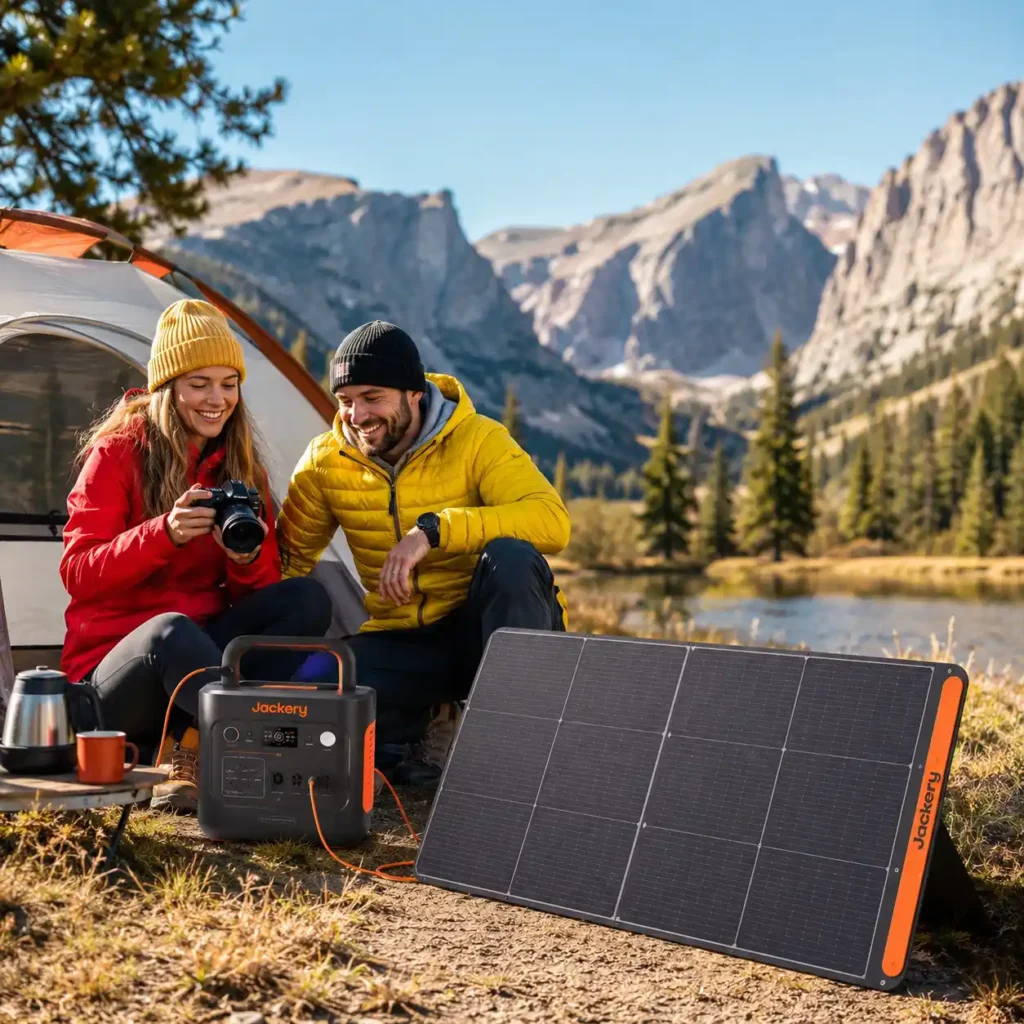
The Jackery SolarSaga 100W is designed for campers who appreciate simplicity. Instead of carrying a large, heavy solar panel, you unfold the SolarSaga beside your tent, adjust the kickstand toward the sun, connect it to your portable power station, and let it quietly do its work throughout the day.
On a typical weekend camping trip, the panel produces enough energy to offset much of your daily power consumption. Phones, cameras, drones, portable speakers, LED lights, and other essential electronics stay charged while the connected power station continues storing energy for the evening. For campers using compact or mid-size power stations, the SolarSaga 100W often provides exactly the level of charging support they need without adding unnecessary weight or bulk.
Its compact folded size also makes everyday use particularly convenient. The panel fits easily into the trunk of a small car, an SUV, or a camper van, making it a practical companion for spontaneous weekend trips where storage space is limited. At just over 10 pounds, carrying it between your vehicle and the campsite is rarely a burden.
The integrated kickstand deserves special mention. It allows quick positioning toward the sun without requiring additional accessories or complicated setup, making it easy to adjust the panel as sunlight changes throughout the day and maximize charging efficiency.
While the SolarSaga 100W won’t recharge large-capacity batteries as quickly as higher-output 200W or 220W panels, it excels at what it was designed to do: providing dependable, affordable, and portable solar charging for campers who value convenience and reliability over maximum power output.
Jackery SolarSaga 100W Evaluation
| Evaluation Category | Editorial Assessment |
|---|---|
| Charging Performance | Provides dependable solar charging for compact and mid-size portable power stations, making it ideal for weekend camping and everyday outdoor use. |
| Portability | Lightweight foldable design makes transportation, storage, and campsite setup exceptionally easy. |
| Build Quality | Solid construction and quality materials provide confidence during regular outdoor use and travel. |
| Ease of Use | The integrated kickstand and simple folding design allow quick setup with minimal effort, even for first-time users. |
| Compatibility | Pairs seamlessly with Jackery portable power stations and works with many compatible systems using the appropriate charging adapters. |
| Overall Rating | Our Best Budget Portable Solar Panel thanks to its excellent balance of affordability, portability, dependable performance, and everyday usability. |
Who Should Buy This
- Campers looking for an affordable entry into portable solar charging.
- Weekend campers using compact or mid-size portable power stations.
- Road trippers, camper van owners, and outdoor enthusiasts with moderate daily energy needs.
- Buyers who prioritize lightweight equipment that is easy to transport and store.
- Anyone seeking dependable solar charging from a trusted outdoor power brand.
Who Should Skip This
- Campers who need the fastest possible solar charging for large-capacity power stations.
- Users who regularly run high-energy appliances for extended periods off-grid.
- Buyers looking for maximum solar output regardless of portability or price.
- Overlanders and RV owners with very high daily energy consumption.
Final Verdict
The Jackery SolarSaga 100W proves that an excellent portable solar panel doesn’t need to be the most powerful or the most expensive. Its lightweight design, dependable charging performance, and user-friendly setup make it one of the best choices for campers who want reliable renewable energy without investing in a premium-priced system.
Although larger solar panels can recharge batteries more quickly, the SolarSaga 100W delivers an outstanding balance of portability, convenience, and value that fits the needs of most weekend campers and outdoor travelers. For buyers entering the world of portable solar charging, it represents one of the smartest and most practical investments available today.
If you’re looking for an affordable, well-built solar panel that performs consistently well across a wide variety of camping scenarios, the Jackery SolarSaga 100W fully deserves its Best Budget Portable Solar Panel award.
Check the latest price and customer reviews on Amazon.
Related Guide: If you’re planning to use solar charging as part of a broader portable power setup, our Best Solar Chargers guide can help you compare charging options for different devices and off-grid situations.
Jackery Carrying Case Large
Best Protective Carrying Case

Quick Verdict
The Jackery Carrying Case Large earns our Best Protective Carrying Case award because it offers one of the most practical ways to protect and transport a portable power station during camping trips, RV travel, road adventures, and emergency preparedness. While many users focus on power stations and solar panels, a high-quality carrying case is one of the accessories that can significantly extend the life of expensive equipment.
Designed specifically for larger Jackery portable power stations, this carrying case provides reliable protection against dust, dirt, scratches, moisture, and the minor bumps that naturally occur when loading and unloading equipment. Whether you’re packing the car for a weekend camping trip or moving your power station between home, the campsite, and storage, the reinforced construction helps keep your investment protected.
One of its biggest advantages is convenience. Instead of carrying a heavy power station with exposed handles and cables, the fitted case keeps everything organized while providing comfortable padded handles and an adjustable shoulder strap for easier transportation. The structured design also makes loading equipment into a vehicle or RV much more manageable.
Although it doesn’t generate electricity or increase battery capacity, the Jackery Carrying Case solves a problem that many portable power station owners quickly discover after a few trips: protecting expensive equipment from everyday wear and accidental damage. For users who regularly travel with their power station, it becomes an accessory that’s appreciated every time camp is packed up or equipment is moved.
If you want to keep your portable power station cleaner, safer, and easier to transport while extending its appearance and long-term durability, the Jackery Carrying Case Large is one of the smartest protective accessories you can add to your camping setup.
Camping Snapshot
| Feature | Details |
|---|---|
| Accessory Type | Protective Carrying Case |
| Compatibility | Large Jackery Portable Power Stations |
| Protection | Dust, scratches, moisture, and minor impacts |
| Carrying Options | Padded handles and adjustable shoulder strap |
| Storage Design | Structured zippered case |
| Material | Durable water-resistant fabric |
| Best For | Campers, RV owners, and travelers who want to protect and transport their portable power station safely. |
Why We Chose It
Choosing the best carrying case isn’t simply about finding a bag that fits a portable power station. The best protective case should make transportation easier while shielding expensive equipment from the bumps, dust, moisture, and everyday wear that come with frequent outdoor travel. That’s exactly why the Jackery Carrying Case Large earned our Best Protective Carrying Case award.
Its structured design is built specifically for Jackery portable power stations, providing a secure fit that helps reduce movement during transport. Reinforced construction, durable water-resistant materials, and thick padding give users greater confidence when carrying their power station between home, the campsite, an RV, or a vehicle. Even routine loading and unloading becomes less stressful when the equipment is properly protected.
We also appreciated the everyday convenience this case provides. Comfortable padded handles and an adjustable shoulder strap make transporting a heavy power station noticeably easier, while the zippered design keeps the unit clean and protected when not in use. Instead of storing an exposed power station in the trunk or garage, users can keep their equipment organized and ready for the next trip.
Although a carrying case doesn’t improve charging performance, it helps preserve the condition of one of the most expensive pieces of camping equipment you’ll own. For campers who frequently travel with their portable power station, the Jackery Carrying Case Large represents a worthwhile investment in long-term protection, convenience, and peace of mind.
Check the latest price and customer reviews on Amazon.

Living With It at Camp
The Jackery Carrying Case Large is one of those accessories that proves its value every time you pack for a camping trip. Before leaving home, the portable power station fits securely inside the case, protecting it from dust and accidental scratches while making the entire setup easier to organize. Instead of carrying a bulky power station on its own, everything feels more manageable from the moment you load the vehicle.
At the campsite, the case continues to serve a practical purpose. If the power station isn’t needed immediately, it stays protected inside the bag rather than sitting exposed on the ground or in the trunk where dirt, moisture, and loose camping gear can quickly take their toll. When it’s time to use the power station, the wide zippered opening provides quick access without making setup feel complicated.
Transporting a heavy power station around camp is also noticeably more comfortable. The padded handles provide a secure grip, while the adjustable shoulder strap helps distribute weight when carrying equipment from the parking area to the campsite or moving it between the tent, picnic table, and vehicle.
After the trip, the carrying case makes storage just as convenient. Instead of placing an exposed power station on a garage shelf where it can collect dust or suffer accidental knocks, the unit remains clean, protected, and ready for the next adventure. For frequent campers, this everyday convenience becomes just as valuable as the physical protection itself.
Jackery Carrying Case Large Evaluation
| Evaluation Category | Editorial Assessment |
|---|---|
| Protection | Provides excellent protection against dust, scratches, moisture, and minor impacts during transport and storage. |
| Portability | Padded handles and an adjustable shoulder strap make carrying a heavy portable power station significantly more comfortable. |
| Build Quality | Durable water-resistant materials and reinforced construction inspire confidence for regular outdoor use. |
| Ease of Use | Wide zippered opening and structured design allow quick access while keeping the power station securely positioned. |
| Compatibility | Designed specifically for larger Jackery portable power stations, providing a secure fit and reliable protection. |
| Overall Rating | Our Best Protective Carrying Case thanks to its excellent combination of durability, convenience, protection, and travel-friendly design. |
Who Should Buy This
- Campers who frequently transport a portable power station between home and the campsite.
- RV owners looking for additional protection during travel and storage.
- Users who want to prevent scratches, dust, and minor damage to expensive equipment.
- Anyone who values organized packing and easier transportation.
- Outdoor enthusiasts who want to extend the lifespan and appearance of their portable power station.
Who Should Skip This
- Users who rarely move their portable power station from a permanent location.
- Buyers looking only for additional storage space rather than equipment protection.
- Campers using power stations that are not compatible with the Large Jackery Carrying Case.
- Anyone who doesn’t need a dedicated transport solution for their power equipment.
Final Verdict
The Jackery Carrying Case Large demonstrates that protecting your portable power station is just as important as choosing the right power station itself. While it doesn’t generate electricity or improve battery performance, it helps preserve one of the most valuable pieces of camping equipment you own by reducing everyday wear during transport, storage, and outdoor use.
Its durable construction, comfortable carrying options, and purpose-built fit make traveling with a portable power station noticeably easier. From loading your vehicle to setting up camp and storing equipment between trips, the case adds convenience at every stage while helping protect your investment for years to come.
For campers, RV owners, and outdoor travelers who regularly take a portable power station on the road, the Jackery Carrying Case Large is a practical accessory that delivers long-term value well beyond its purchase price.
Check the latest price and customer reviews on Amazon.
Related Guide: If you use your portable power station for camping or outdoor travel, our Best Portable Power Stations for Camping (2026) guide can help you choose a setup suited to regular transport, outdoor use, and off-grid power needs.
COMeap Solar Panel Cable
Best Solar Extension Cable
Quick Verdict
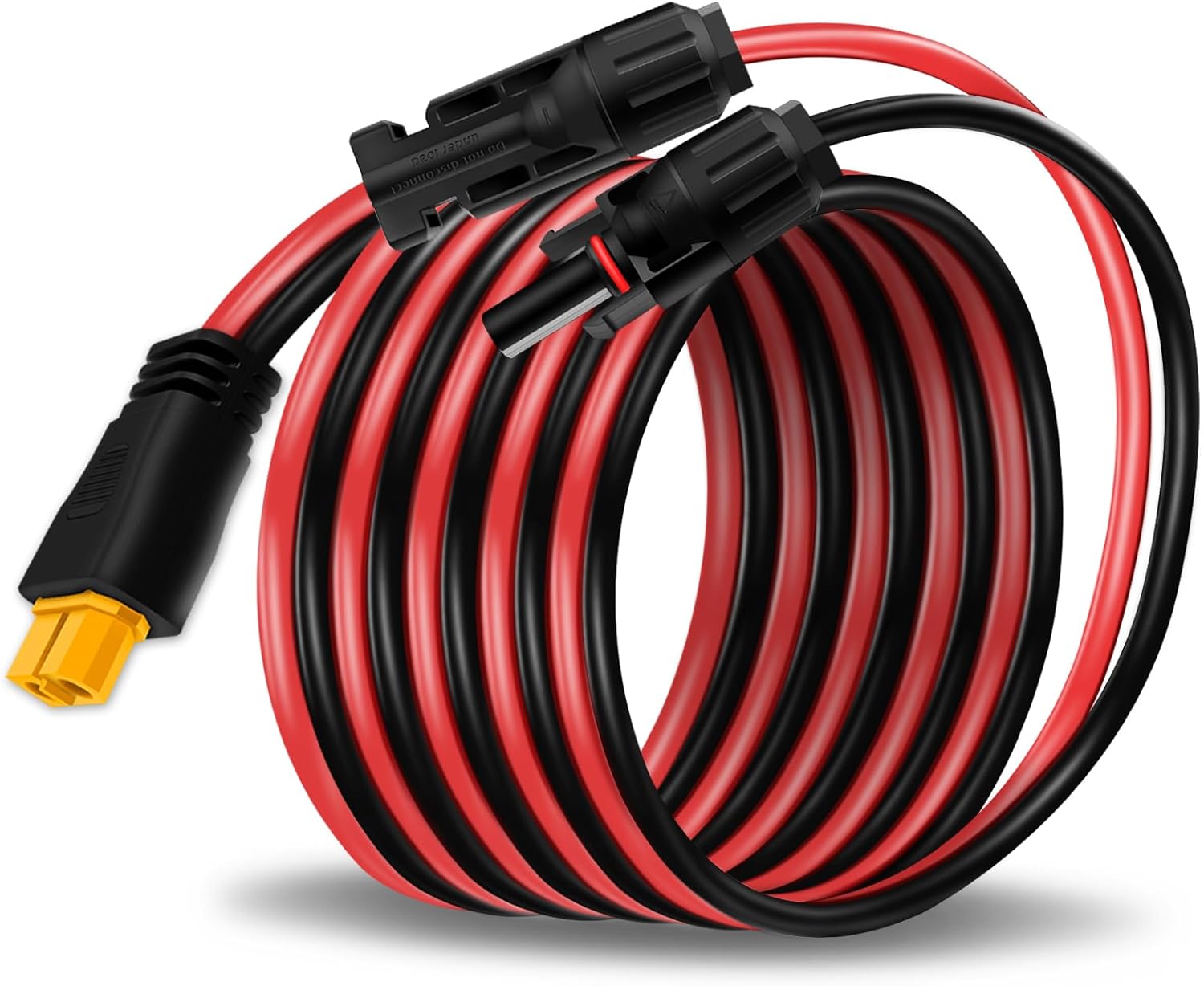
The COMeap Solar Panel Cable earns our Best Solar Extension Cable award because it solves one of the most common frustrations campers encounter when using portable solar panels: limited placement flexibility. Even the most efficient solar panel can’t perform at its best if it’s forced to sit in the shade simply because the factory cable isn’t long enough to reach your portable power station.
This extension cable gives campers far more freedom when setting up their solar charging system. Instead of positioning the power station wherever the solar panel reaches, you can leave your power station safely inside a tent, camper van, or under an awning while placing the solar panel several feet away in direct sunlight. That seemingly simple improvement often results in significantly better solar charging throughout the day.
The cable itself feels purpose-built for outdoor use. Heavy-duty conductors, durable insulation, and weather-resistant connectors inspire confidence whether you’re camping in a forest, traveling by RV, or spending several days off-grid. The connections feel secure, and the cable remains flexible enough to coil and pack without becoming difficult to manage after repeated use.
While extension cables rarely receive the same attention as portable power stations or solar panels, they’re often the missing component that allows an entire solar charging setup to work efficiently. Without sufficient cable length, users frequently have to compromise on panel placement, reducing charging performance simply because the equipment can’t reach the brightest location.
For campers who rely on solar energy, the COMeap Solar Panel Cable is a surprisingly valuable accessory that improves flexibility, simplifies campsite setup, and helps portable solar panels deliver the performance they were designed to provide.
Camping Snapshot
| Feature | Details |
|---|---|
| Accessory Type | Solar Extension Cable |
| Connector Type | MC4 Compatible |
| Cable Construction | Heavy-duty copper conductors |
| Weather Resistance | Designed for outdoor solar applications |
| Flexibility | Allows greater distance between the solar panel and power station |
| Installation | Plug-and-play connection |
| Best For | Campers who need more flexibility when positioning portable solar panels for maximum sunlight. |
Why We Chose It
One lesson becomes clear after spending time camping with portable solar panels: the best place for your solar panel is rarely the best place for your portable power station. Campsites often have uneven terrain, partial shade, picnic shelters, trees, or tents that force compromises during setup. That’s exactly where the COMeap Solar Panel Cable makes a meaningful difference.
Rather than moving your entire power station into direct sunlight, this extension cable allows you to place the solar panel where sunlight is strongest while keeping your power station protected in a cooler, more convenient location. Besides improving charging efficiency, this also helps reduce unnecessary exposure of electronic equipment to heat, dust, and changing weather conditions.
We selected the COMeap cable because it combines durability with practical everyday usability. The heavy-duty construction is designed for repeated outdoor use, while the secure MC4-compatible connectors create reliable electrical connections that remain stable throughout long charging sessions. The cable is flexible enough to pack neatly after use without feeling flimsy or prone to damage.
Another advantage is versatility. Whether you’re charging a portable power station beside a tent, on an RV campsite, at a remote cabin, or during an emergency power outage at home, additional cable length gives you far more options for positioning your equipment efficiently. It’s a simple accessory that can noticeably improve the performance and convenience of an entire solar charging system.
For anyone building a dependable off-grid power setup, the COMeap Solar Panel Cable is one of those inexpensive upgrades that quickly proves its value every time the sun isn’t exactly where your equipment needs it to be.
Check the latest price and customer reviews on Amazon.
Living With It at Camp
The real value of the COMeap Solar Panel Cable often becomes obvious the first time your campsite doesn’t cooperate with your solar setup.
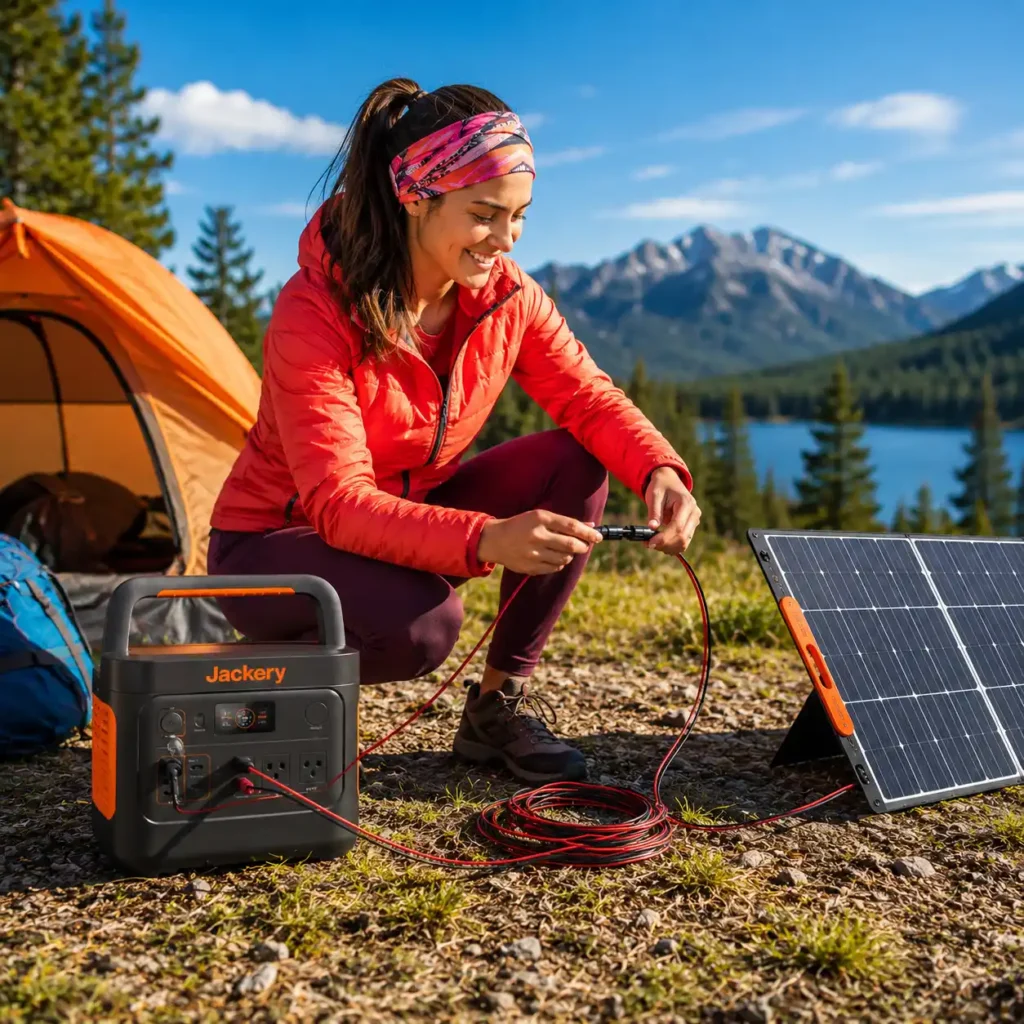
Imagine arriving at a beautiful forest campsite late in the afternoon. The picnic table and tent are surrounded by tall pine trees that provide welcome shade for relaxing, but they also block much of the sunlight your solar panel needs. A small clearing sits twenty feet away, fully exposed to the sun, while your portable power station is safely tucked beneath the awning beside the rest of your camping equipment.
Without an extension cable, you would have to choose between placing the solar panel in partial shade and accepting slower charging or leaving your expensive power station sitting out in direct sunlight. Neither option is ideal.
The COMeap Solar Panel Cable eliminates that compromise. The extra cable length allows the solar panel to remain in the brightest available location while the power station stays protected under shelter, away from excessive heat, dust, and foot traffic around camp. Throughout the day, you can simply reposition the panel as the sun moves across the sky without relocating your entire power system.
The cable is also easy to handle during everyday use. It coils neatly after charging, stores without taking up much space, and feels durable enough to withstand repeated setup and packing throughout an entire camping season. It may seem like a simple accessory, but after a few trips, many campers realize they wouldn’t want to build a solar charging system without it.
COMeap Solar Panel Cable Evaluation
| Evaluation Category | Editorial Assessment |
|---|---|
| Charging Flexibility | Allows solar panels to be positioned in optimal sunlight while keeping the portable power station safely under shade or shelter. |
| Build Quality | Heavy-duty cable construction with durable insulation designed for repeated outdoor use. |
| Ease of Use | Plug-and-play installation with secure MC4-compatible connectors makes setup fast and straightforward. |
| Outdoor Durability | Designed to withstand regular camping conditions, including exposure to sunlight, dirt, and frequent handling. |
| Compatibility | Compatible with many portable solar panels and power stations that use standard MC4 solar connections. |
| Overall Rating | Our Best Solar Extension Cable thanks to its durability, dependable performance, and ability to improve solar charging flexibility at almost any campsite. |
Who Should Buy This
- Campers who regularly use portable solar panels with a portable power station.
- RV owners who need greater flexibility when positioning solar panels.
- Overlanders camping in wooded or partially shaded locations.
- Users who want to keep their power station protected while maximizing solar charging efficiency.
- Anyone building a more versatile and reliable off-grid solar charging system.
Who Should Skip This
- Campers who never use solar panels.
- Users whose existing solar cables already provide sufficient length.
- Buyers looking for an adapter rather than an extension cable.
- People with permanently installed solar systems that don’t require portable cable extensions.
Final Verdict
The COMeap Solar Panel Cable proves that small accessories can have a surprisingly large impact on the overall performance of an off-grid power system. While it doesn’t generate electricity itself, it allows your solar panel to work under better conditions by giving you the freedom to place it where sunlight is strongest instead of where cable length forces it to be.
Its durable construction, dependable connectors, and simple plug-and-play installation make it an easy recommendation for anyone who regularly camps with portable solar equipment. By separating the location of the solar panel from the location of the power station, it improves convenience, protects valuable electronics from unnecessary heat exposure, and helps maximize charging efficiency throughout the day.
For campers who want a more flexible and effective solar charging setup, the COMeap Solar Panel Cable is one of the most useful and affordable upgrades you can add to your collection of portable power station accessories.
Check the latest price and customer reviews on Amazon.
Related Guide: If you’re building a complete solar charging setup for your portable power station, our Best Solar Charge Controllers (2026) guide can help you understand the role of charge control and choose equipment for a more reliable off-grid system.
Ansoufien 10AWG Solar Connector to Anderson Adapter Cable
Best Anderson Adapter Cable

Quick Verdict
The Ansoufien 10AWG Solar Connector to Anderson Adapter Cable earns our Best Anderson Adapter Cable award because it bridges one of the most common compatibility gaps in portable solar power systems. Many campers invest in high-quality solar panels and portable power stations only to discover that their connectors don’t match. Instead of replacing perfectly good equipment, the right adapter cable provides a simple, reliable solution.
This adapter is designed to connect standard MC4 solar panel connectors to Anderson-style power inputs found on many portable power stations and solar generators. By eliminating connector incompatibility, it allows users to build a more flexible solar charging system without purchasing additional panels or expensive proprietary accessories.
One of the biggest strengths of the Ansoufien cable is its heavy-duty 10AWG copper wiring. Thicker conductors help reduce power loss during charging while providing dependable performance over extended outdoor use. Combined with durable insulation and secure connectors, the cable feels well suited for camping, RV travel, overlanding, and emergency backup applications where reliability matters.
Another advantage is its simplicity. There are no complicated settings, electronics, or installation procedures. Users simply connect the MC4 ends to the solar panel, plug the Anderson connector into the compatible power station, and begin charging. This straightforward plug-and-play design makes the adapter accessible even for first-time portable power station owners.
Compatibility accessories often receive less attention than batteries or solar panels, but they frequently determine whether an off-grid charging system works at all. The Ansoufien 10AWG Solar Connector to Anderson Adapter Cable removes that obstacle by allowing equipment from different manufacturers to work together efficiently, making it an essential accessory for anyone building a versatile portable power setup.
Camping Snapshot
| Feature | Details |
|---|---|
| Accessory Type | Solar Connector to Anderson Adapter Cable |
| Input Connector | MC4 Solar Connectors |
| Output Connector | Anderson Connector |
| Cable Gauge | 10AWG Heavy-Duty Copper Wire |
| Installation | Plug-and-play connection |
| Primary Benefit | Expands compatibility between portable solar panels and Anderson-equipped power stations. |
| Best For | Campers, RV owners, and off-grid users who need a reliable MC4-to-Anderson adapter for portable solar charging. |
Why We Chose It
One of the biggest challenges when assembling a portable solar charging system isn’t generating power—it’s making sure every component can actually connect. Solar panels, extension cables, and portable power stations often use different connector standards, leaving many users frustrated when brand-new equipment won’t work together. That’s exactly why the Ansoufien 10AWG Solar Connector to Anderson Adapter Cable earned its place in our guide.
Rather than limiting users to one manufacturer’s ecosystem, this adapter expands compatibility by connecting standard MC4 solar panel connectors to Anderson-equipped portable power stations. For campers who already own solar panels or who plan to upgrade their equipment over time, that flexibility can save both money and unnecessary frustration.
We were particularly impressed by the use of 10AWG copper conductors, which provide a low-resistance path for solar charging while supporting dependable power transfer. The robust insulation, weather-resistant construction, and solid connector fit give the cable a reassuring level of durability for repeated outdoor use. Whether it’s packed into a camping trailer, stored inside an RV, or carried to remote campsites, it feels like an accessory built to withstand years of regular service.
Another reason we selected this model is that it solves a real-world problem without adding complexity. There are no converters, controllers, or electronic components to configure. Users simply connect the MC4 ends to the solar panel, attach the Anderson connector to a compatible power station, and begin charging. It’s an uncomplicated solution that allows different pieces of equipment to work together exactly as intended.
For anyone building a flexible off-grid power system, the Ansoufien 10AWG Solar Connector to Anderson Adapter Cable is a small investment that can dramatically increase compatibility while helping users get the most from their existing portable solar equipment.
Check the latest price and customer reviews on Amazon.
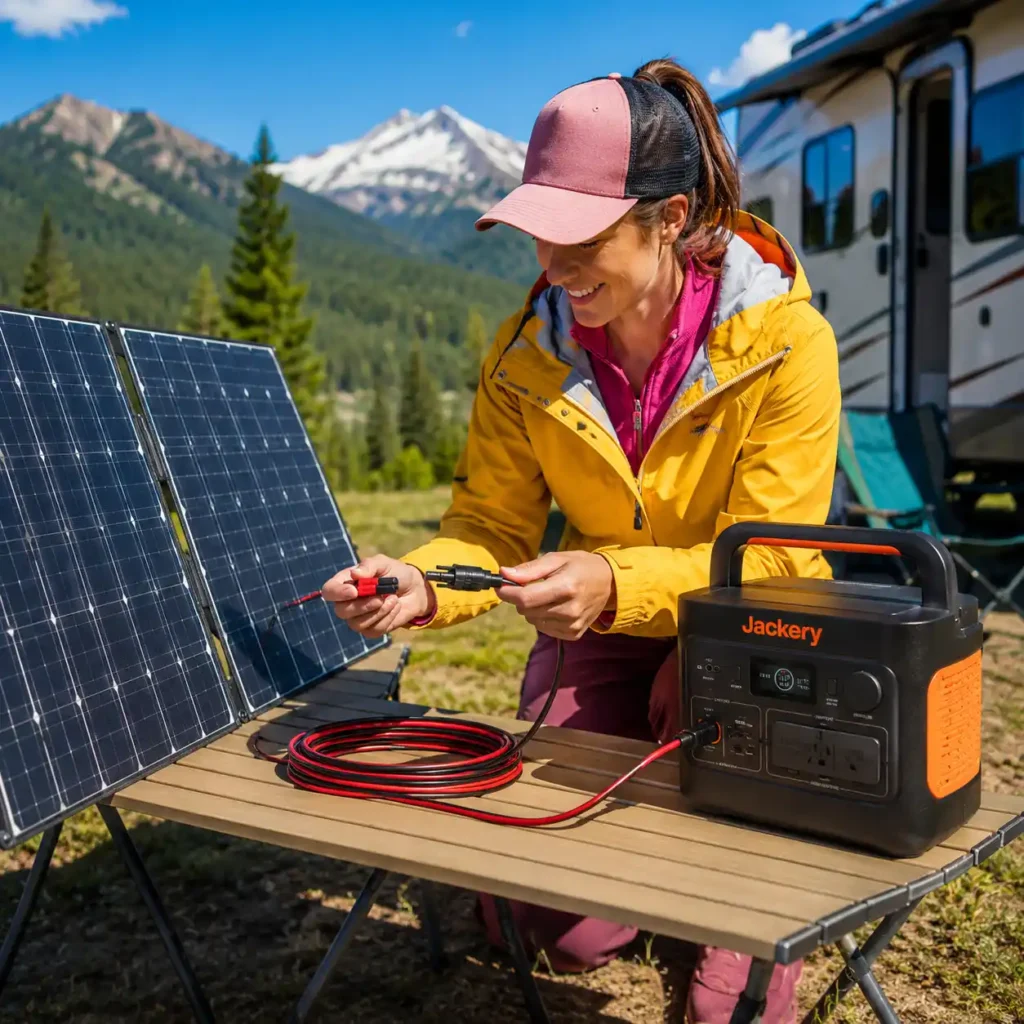
Living With It at Camp
The Ansoufien 10AWG Solar Connector to Anderson Adapter Cable tends to prove its value long before the first watt of solar power reaches your portable power station.
Imagine arriving at a remote campsite after a long drive. Your portable solar panel is unfolded, the portable power station is ready to charge, and the weather couldn’t be better. Then you notice something frustrating: the connectors don’t match. The solar panel uses standard MC4 connectors, while your portable power station accepts an Anderson input. Everything you need is sitting in front of you—but nothing connects.
This is exactly the kind of problem the Ansoufien adapter cable is designed to solve.
Instead of searching for proprietary accessories or replacing perfectly functional equipment, you simply connect the MC4 connectors from the solar panel to the adapter and plug the Anderson connector into the portable power station. Within seconds, the charging system is ready to work.
During longer camping trips, the adapter quickly becomes one of those accessories that simply stays packed with your solar equipment. It takes up very little space, coils neatly after use, and requires virtually no maintenance. Because there are no electronic components inside, there’s very little that can go wrong, making it a dependable addition to any off-grid power kit.
Perhaps its biggest advantage is flexibility. As campers gradually upgrade or replace solar panels and portable power stations over the years, connector standards often change between manufacturers. Rather than limiting future equipment choices, this adapter allows existing gear to remain useful, making it easier to build a solar charging system that evolves over time instead of being locked into a single ecosystem.
Ansoufien 10AWG Solar Connector to Anderson Adapter Cable Evaluation
| Evaluation Category | Editorial Assessment |
|---|---|
| Compatibility | Successfully bridges MC4 solar connectors and Anderson-equipped portable power stations, greatly expanding equipment compatibility. |
| Build Quality | Heavy-duty 10AWG copper cable with durable insulation designed for reliable outdoor performance. |
| Power Transfer | Low-resistance wiring supports efficient charging with minimal power loss during solar operation. |
| Ease of Use | Simple plug-and-play installation requires no tools, programming, or additional setup. |
| Outdoor Reliability | Secure connectors and rugged construction provide dependable performance for camping, RV travel, and emergency backup. |
| Overall Rating | Our Best Anderson Adapter Cable thanks to its excellent compatibility, durable construction, and dependable charging performance. |
Who Should Buy This
- Campers using portable solar panels with Anderson-compatible portable power stations.
- RV owners building a flexible off-grid solar charging system.
- Users combining equipment from different manufacturers.
- Anyone looking for a dependable MC4-to-Anderson adapter built with heavy-duty 10AWG wiring.
- Outdoor enthusiasts who want to maximize compatibility without replacing existing equipment.
Who Should Skip This
- Users whose portable power station already uses standard MC4 solar inputs.
- Campers who don’t use portable solar panels.
- Buyers looking for a simple extension cable rather than a connector adapter.
- Anyone using connector types other than Anderson on their portable power station.
Final Verdict
The Ansoufien 10AWG Solar Connector to Anderson Adapter Cable demonstrates how a small, inexpensive accessory can eliminate one of the most frustrating obstacles in portable solar charging: incompatible connectors. Rather than forcing users to purchase proprietary accessories or replace existing equipment, it creates a dependable connection between MC4 solar panels and Anderson-equipped portable power stations.
Its heavy-duty 10AWG copper construction, secure connectors, and straightforward plug-and-play design make it a reliable addition to any portable solar setup. More importantly, it gives campers the flexibility to mix equipment from different manufacturers while preserving efficient solar charging performance.
For anyone assembling a versatile off-grid power system, the Ansoufien 10AWG Solar Connector to Anderson Adapter Cable is a practical investment that improves compatibility today while making future equipment upgrades much easier.
Check the latest price and customer reviews on Amazon.
Related Guide: If you’re comparing different solar connection options for portable power systems, our Best Solar Chargers (2026) guide can help you choose the right charging solution for your equipment and off-grid setup.
How to Choose the Best Portable Power Station Accessories
Buying a portable power station is only the first step toward building a dependable off-grid power system. The accessories you choose can have just as much impact on your overall experience as the power station itself. A well-matched combination of solar panels, cables, adapters, and protective gear makes charging more efficient, transportation easier, and your entire setup more reliable.
Many first-time buyers assume that accessories are optional extras they’ll purchase later if needed. In reality, the right accessories often solve practical problems that appear during your very first camping trip. A longer solar cable can help you place your panel in direct sunlight while keeping the power station in the shade. A carrying case protects an expensive investment during transport. A simple adapter cable can make equipment from different manufacturers work together without requiring additional purchases.
The key isn’t buying every accessory available. It’s selecting the ones that match the way you actually use your portable power station. Weekend campers, RV travelers, emergency preparedness users, photographers, and overlanders all benefit from different accessories because their power requirements and environments vary considerably.
The following sections explain which accessories deserve priority, how to avoid unnecessary purchases, and how to build a portable power setup that remains practical, flexible, and ready for years of outdoor adventures.
One principle applies almost every time: buy accessories that solve real problems you’ll encounter—not accessories that simply look useful on a product page. That approach almost always leads to a more capable, better organized, and longer-lasting portable power system.
Start With the Accessories You'll Actually Use
One of the biggest mistakes new portable power station owners make is buying accessories simply because they’re recommended online. While it’s tempting to purchase every compatible add-on at once, many accessories won’t match the way you actually use your power station.
Instead, begin by thinking about your typical situation rather than your most ambitious adventure.
If you mainly enjoy weekend camping, a foldable solar panel and a durable carrying case will probably provide far more value than a collection of specialty cables you’ll rarely use. RV owners, on the other hand, often benefit from extension cables and adapter cables that make it easier to position solar panels or connect equipment from different manufacturers. Home emergency users may prioritize accessories that improve storage, organization, and quick deployment during a power outage.
A useful way to evaluate any accessory is to ask one simple question:
“What problem will this solve during my next trip?”
If the answer is immediately obvious, it’s probably a worthwhile purchase. If you’re struggling to imagine when you’ll actually use it, that accessory can usually wait until your needs change.
This approach not only saves money but also helps keep your portable power system simple, organized, and easy to transport. Instead of carrying unnecessary equipment, you’ll have a collection of accessories that each serve a clear purpose whenever you head outdoors.
Ultimately, the best accessory kit isn’t the largest one—it’s the one that makes your portable power station easier, safer, and more enjoyable to use.
Portable Solar Panels Should Be Your First Upgrade
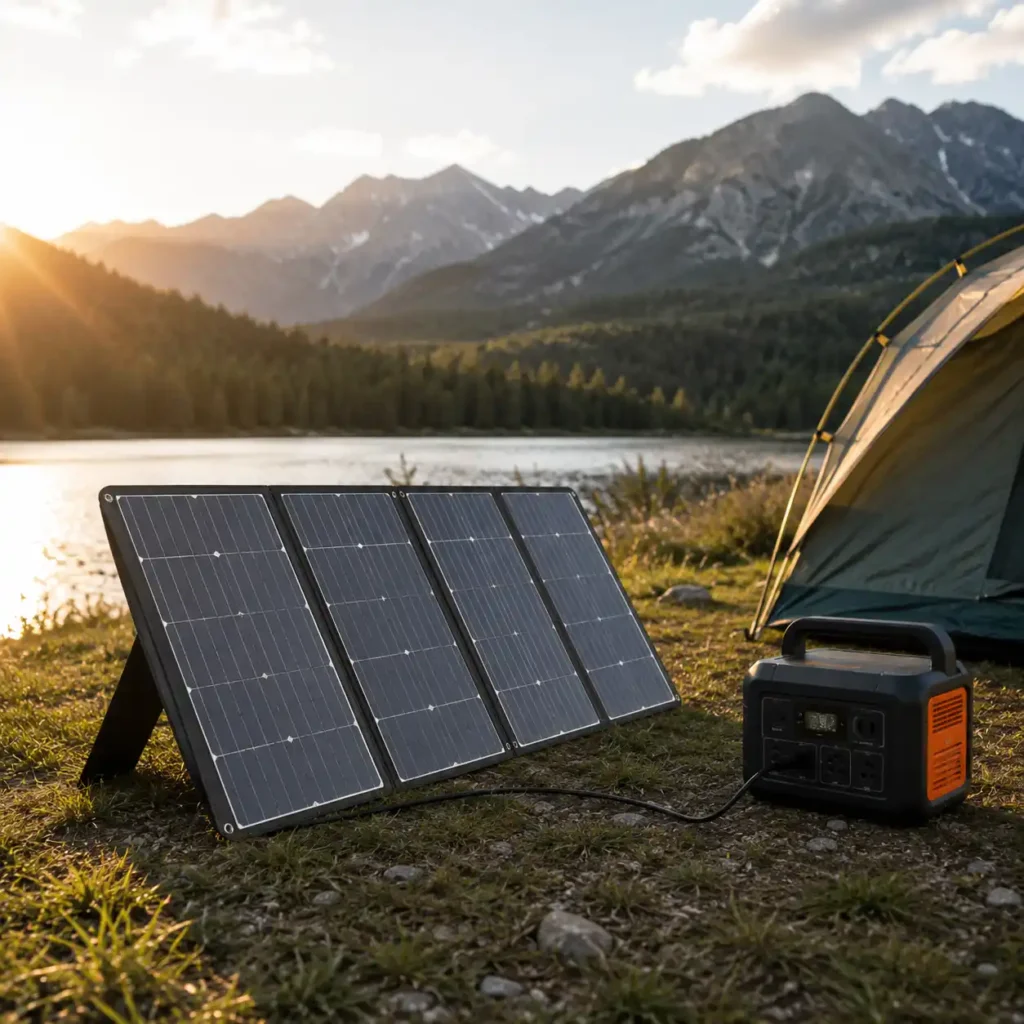
If you plan to use your portable power station away from electrical outlets for more than a day or two, a portable solar panel is often the single most valuable accessory you can buy.
Unlike many optional accessories, solar panels don’t simply improve convenience—they increase your independence. Instead of relying entirely on the battery capacity you brought from home, you can harvest renewable energy throughout the day and continue powering essential devices for much longer.
For occasional weekend camping, a compact 100W foldable solar panel is usually enough to top up smaller power stations while charging phones, cameras, lights, and other low-power electronics. Campers using portable refrigerators, CPAP machines, laptops, or larger portable power stations often benefit from higher-output panels in the 200W to 220W range, which can replenish battery capacity much more quickly under favorable weather conditions.
However, choosing a solar panel involves more than comparing wattage alone. Charging performance depends on several real-world factors, including sunlight intensity, seasonal conditions, panel orientation, temperature, and shade. Even premium solar panels rarely deliver their advertised maximum output throughout an entire day, which is why experienced campers view solar charging as a way to extend battery life rather than instantly recharge a depleted power station.
It’s also important to verify compatibility before purchasing. Most portable solar panels use industry-standard MC4 connectors, but the maximum input voltage, supported charging current, and connector requirements vary between portable power stations. Checking these specifications before buying helps avoid unnecessary adapters and ensures the solar panel operates at its full potential.
For many outdoor enthusiasts, a quality portable solar panel quickly becomes an essential part of every trip. Whether you’re camping for a weekend, traveling in an RV, or preparing for emergency power outages at home, it provides the freedom to stay powered almost anywhere the sun is shining.
If you’re purchasing only one accessory beyond the portable power station itself, a reliable foldable solar panel is usually the smartest long-term investment. It expands the usefulness of your entire power system and allows you to spend more time off-grid with greater confidence.
Don't Overlook Cables and Adapter Compatibility
One of the most frustrating situations for any portable power station owner is discovering that two perfectly good pieces of equipment simply won’t connect to each other.
It happens more often than many first-time buyers expect. A portable solar panel may use standard MC4 connectors, while the portable power station requires an Anderson input. An extension cable may use a different connector type than the one supplied with your solar panel. Even products from well-known manufacturers aren’t always designed to work together without the correct cable or adapter.
Fortunately, these compatibility issues are usually easy—and inexpensive—to solve.
Before purchasing any cable or adapter, verify three key specifications:
- the connector type used by both devices;
- the supported voltage and current;
- the cable gauge, especially for higher-power solar charging systems.
Choosing the correct wire size is just as important as selecting the right connector. Heavy-duty cables, such as 10AWG models, reduce electrical resistance and help minimize power loss over longer distances. While shorter cables generally provide the most efficient energy transfer, extension cables become invaluable when your solar panels need to be positioned in full sunlight while the portable power station remains safely inside a tent, under an awning, or inside an RV.
Adapter cables also provide valuable flexibility when building a portable power system over time. Rather than replacing a perfectly functional solar panel because you’ve upgraded to a new portable power station, the correct adapter often allows both products to continue working together seamlessly. This not only saves money but also gives you greater freedom to mix equipment from different manufacturers as your setup evolves.
For most users, cables aren’t the most exciting accessories to buy—but they’re often the accessories that prevent the biggest problems. Spending a few minutes confirming connector compatibility before placing an order can save hours of frustration once you’re outdoors and relying on your portable power system.
A well-chosen cable or adapter may never receive much attention during your camping trip, but when everything connects smoothly and charging begins immediately, you’ll appreciate just how important these small accessories really are.
Protect Your Investment With a Carrying Case
A portable power station is designed for travel, but frequent transportation also exposes it to bumps, dust, moisture, and accidental impacts. Whether you’re loading equipment into a vehicle, storing it in an RV, or carrying it across a campsite, a quality carrying case is one of the simplest ways to protect your investment.
Many users assume a carrying case is purely cosmetic. In reality, it helps prevent the everyday wear that naturally occurs whenever expensive equipment is moved from one location to another. Scratches, scuffed corners, dust entering ventilation openings, and accidental contact with other camping gear can all affect the appearance—and sometimes the long-term condition—of your portable power station.
A well-designed carrying case provides more than just padded protection. Look for features such as reinforced handles, durable zippers, water-resistant materials, and dedicated storage compartments for charging cables, adapters, and other small accessories. Keeping everything together in one organized case not only makes packing easier but also reduces the chance of leaving essential components behind before a trip.
For RV owners and overlanders, a carrying case also helps organize limited storage space. Instead of loose cables shifting around during travel, your portable power station and its accessories remain securely packed together, making setup faster whenever you arrive at your destination.
It’s important to remember that most carrying cases are designed to protect against dirt, light rain, and minor impacts—not to make a portable power station waterproof. Even when using a protective case, always follow the manufacturer’s recommendations regarding ventilation during operation and avoid exposing the unit to prolonged moisture or standing water.
Although a carrying case doesn’t increase battery capacity or charging speed, it plays an important role in preserving the condition of your equipment. Considering that a quality portable power station represents a significant investment, protecting it during transport is often one of the smartest accessory purchases you can make.
Build Your Accessory Kit Over Time
One of the advantages of owning a portable power station is that your setup doesn’t have to be complete from day one. Unlike many outdoor products that require purchasing an entire system at once, portable power station accessories can be added gradually as your needs evolve.
For most people, it makes sense to begin with the essentials. A portable solar panel extends your available power during off-grid trips, while a carrying case protects your equipment during transport and storage. These accessories provide immediate value for almost every portable power station owner.
As you gain more experience, you’ll begin to identify situations where additional accessories can improve your setup. Perhaps you discover that your solar panel needs a longer extension cable to reach direct sunlight, or you upgrade to a new portable power station that requires a different connector type. These are practical reasons to expand your accessory collection because each new purchase solves a specific problem you’ve already encountered.
This gradual approach also makes it easier to invest in higher-quality accessories. Instead of purchasing a large bundle of inexpensive products that may never be used, you can focus on durable components that deliver reliable performance for many years. Well-made solar panels, heavy-duty cables, and quality carrying cases often outlast multiple generations of portable power stations, making them worthwhile long-term investments.
Another benefit of building your accessory kit over time is flexibility. Technology continues to evolve, and new portable power stations frequently introduce faster charging capabilities, higher solar input limits, or updated connector standards. Waiting until you genuinely need an additional accessory gives you the opportunity to choose products that are compatible with your current equipment rather than buying items that may become unnecessary before they’re ever used.
The goal isn’t to own the largest collection of accessories—it’s to assemble a system where every component has a clear purpose. A carefully selected kit is easier to organize, simpler to transport, and far more enjoyable to use than one filled with equipment that rarely leaves the storage box.
By focusing on practical upgrades instead of impulse purchases, you’ll build a portable power system that grows naturally alongside your camping, RV, or emergency preparedness needs while avoiding unnecessary expense along the way.
Common Connector Types for Portable Power Stations
One of the biggest reasons accessories don’t work as expected has nothing to do with their quality—it’s simply a matter of connector compatibility. Two high-quality products can be completely incompatible if they use different connector types.
Portable solar panels, charging cables, extension cables, and portable power stations don’t all share the same connection standard. While many manufacturers support industry-standard connectors, others use proprietary inputs or different DC connector sizes. Before purchasing any accessory, always confirm that the connector type matches your portable power station or that a compatible adapter is available.
The table below highlights some of the most common connector types you’ll encounter when shopping for portable power station accessories.
| Connector Type | Common Use | Commonly Found On | Adapter Often Required? |
|---|---|---|---|
| MC4 | Portable solar panels | Most foldable solar panels | Sometimes |
| XT60 | Solar charging input | Many EcoFlow, Anker SOLIX, and BLUETTI models | Sometimes |
| Anderson | Solar charging input | Many portable power stations and solar generators | Often |
| DC7909 | Solar charging input | Selected Jackery and other compatible power stations | Sometimes |
| DC8020 | Solar charging input | Selected EcoFlow, BLUETTI, and other compatible models | Sometimes |
Connector type is only one part of compatibility. Before purchasing a cable or adapter, also verify the supported input voltage, maximum charging current, and cable gauge. A connector that physically fits isn’t always electrically compatible. Spending a few minutes checking your portable power station’s specifications can help avoid unnecessary adapters, poor charging performance, or equipment that simply won’t work together.
For users planning to expand their portable power setup over time, understanding these common connector standards makes it much easier to combine equipment from different manufacturers while maintaining safe and reliable charging performance.
Common Mistakes When Buying Portable Power Station Accessories

Choosing the right accessories isn’t about buying as many products as possible—it’s about buying the right products for your equipment and the way you actually use it. Most purchasing mistakes happen because buyers focus on specifications or marketing claims instead of real-world compatibility and practical needs.
One of the most common mistakes is purchasing accessories before confirming they’re compatible with your portable power station. Connector types, supported input voltages, charging standards, and cable specifications vary between manufacturers. A solar panel or adapter that works perfectly with one power station may require additional accessories—or may not work at all—with another model.
Another frequent mistake is prioritizing the lowest price over long-term reliability. Budget cables made with thinner conductors may increase electrical resistance and reduce charging efficiency, particularly when used with higher-power solar panels or longer cable runs. Likewise, poorly constructed connectors may loosen over time after repeated outdoor use.
Many buyers also overestimate how many accessories they actually need. It’s easy to assume every available cable, adapter, or organizer will eventually become useful, but most portable power station owners rely on only a small number of accessories during regular camping trips. Purchasing equipment that solves today’s needs usually provides far better value than buying products for situations that may never occur.
Ignoring portability is another surprisingly common oversight. Every additional accessory adds weight and takes up valuable storage space inside a vehicle, camper, or RV. A compact, well-organized accessory kit is often far more practical than carrying numerous items that are rarely used.
Finally, many people overlook the importance of proper storage and transportation. Leaving cables tangled inside a storage box, exposing connectors to dirt and moisture, or transporting a portable power station without adequate protection can shorten the lifespan of equipment that was designed to last for many years.
The best accessory purchases are rarely the most expensive ones. They’re the products that improve reliability, simplify your setup, and make every camping trip easier without adding unnecessary complexity. Taking a few extra minutes to verify compatibility and think about how each accessory fits into your overall system can prevent costly mistakes and result in a far more dependable portable power setup.
Our Expert Buying Tips
After evaluating dozens of portable power station accessories, one recommendation stands out above all others: buy accessories that improve how you use your portable power station—not accessories that simply expand your collection.
Many buyers focus on adding as many compatible products as possible, believing that a larger accessory kit automatically creates a better off-grid power system. In practice, the opposite is often true. The most efficient setups are usually built around a handful of carefully selected accessories that solve specific problems and work reliably every time they’re needed.
If you’re just getting started, prioritize a high-quality portable solar panel. No other accessory does more to extend the usefulness of your portable power station by allowing you to generate renewable energy almost anywhere. For most campers, this single upgrade delivers the greatest long-term value.
Next, invest in quality rather than quantity. Durable cables with the correct wire gauge, reliable connectors, and a well-made carrying case may cost slightly more upfront, but they often provide years of dependable service through countless camping trips, RV adventures, and emergency situations. Cheap accessories that fail in the field rarely save money in the long run.
Compatibility should always be verified before placing an order. Even accessories that appear nearly identical can differ in connector standards, supported voltage ranges, or charging specifications. Spending a few minutes checking your portable power station’s technical requirements can prevent unnecessary returns and ensure every component works together as intended.
It’s also worth thinking beyond your immediate needs. If you expect to upgrade your portable power station or portable solar panel in the future, choosing accessories based on widely adopted standards—such as MC4 solar connectors and heavy-duty 10AWG cables—can make future upgrades simpler and more affordable.
Finally, remember that the best accessory kit is the one that quietly supports your adventures without demanding attention. Well-chosen accessories make charging easier, transportation safer, and your entire portable power system more flexible, allowing you to focus less on equipment and more on enjoying your time outdoors.
Build your setup gradually, choose quality whenever possible, and let real-world experience guide future purchases. That’s the approach that consistently delivers the best long-term value for campers, RV travelers, and anyone who depends on portable power away from home.
Portable Power Station Runtime Examples
Understanding portable power station accessories becomes much easier when you see how they influence real-world camping situations. While accessories don’t increase battery capacity on their own, they can dramatically improve how efficiently you generate, transfer, and manage energy throughout a trip.
The examples below illustrate how common accessories support typical camping devices when paired with a portable power station. Actual performance will vary depending on battery capacity, weather conditions, charging efficiency, cable quality, and the power requirements of your equipment, but these examples provide a practical starting point for planning your accessory kit.
Rather than thinking about accessories as optional add-ons, consider how each one contributes to your overall camping setup. A foldable solar panel can extend battery runtime during multi-day trips, while the correct adapter cable allows equipment from different manufacturers to work together without interruption. Even a simple carrying case helps protect your investment and keeps essential accessories organized and ready whenever they’re needed.
The examples in the table below demonstrate how the right accessories support common camping equipment and help create a more reliable, efficient, and flexible portable power system for outdoor adventures.
| Accessory | Primary Benefit | Best For | Why It Matters |
|---|---|---|---|
| Portable Solar Panel (100W–220W) | Extends battery runtime | Camping, RVs, overlanding | Generates renewable energy during the day, allowing longer off-grid trips without relying on grid power. |
| Solar Extension Cable | Flexible panel placement | Campgrounds, shaded campsites | Lets you position solar panels in full sunlight while keeping the power station safely in the shade. |
| MC4 Adapter Cable | Improves compatibility | Mixed-brand setups | Connects portable solar panels and power stations that use different connector standards. |
| 10AWG Solar Cable | Reduces power loss | Higher-power solar charging | Provides more efficient energy transfer, especially over longer cable runs. |
| Carrying Case | Protects equipment | Camping, RV travel, storage | Helps prevent scratches, dust, and minor impacts while keeping accessories organized during transport. |
Common Camping Devices You Can Power
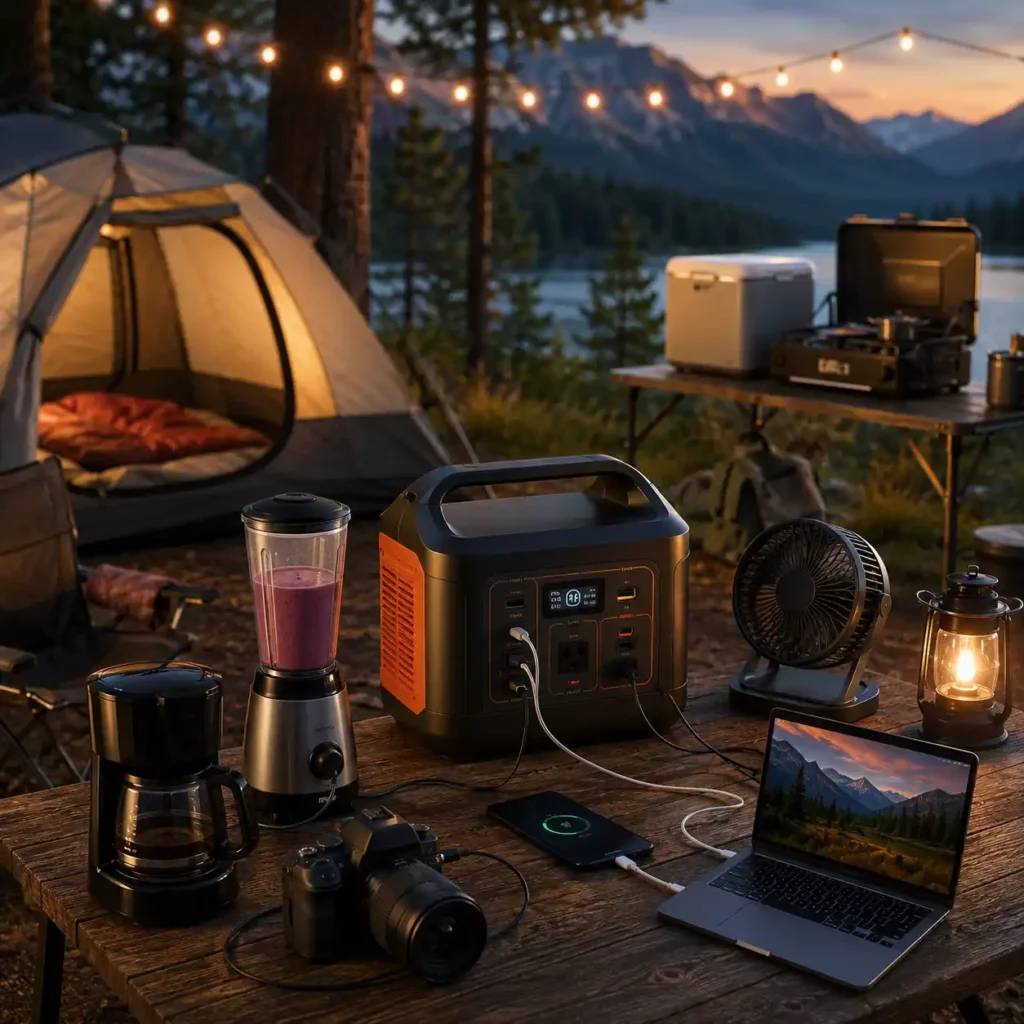
Common Portable Power Station Accessories You Should Consider
Not every portable power station accessory serves the same purpose. Some accessories generate renewable energy, others improve compatibility between different devices, while some simply make transporting and protecting your equipment much easier. Understanding what each accessory actually does helps you build a kit that matches the way you camp instead of buying items you’ll rarely use.
Portable Solar Panels
For most campers, a portable solar panel is the single most valuable accessory you can buy for a portable power station. Instead of relying entirely on a fully charged battery before leaving home, solar panels allow you to generate renewable energy throughout the day, helping extend runtime during longer camping trips.
Foldable solar panels are particularly useful for overlanding, RV travel, and remote campsites where electrical hookups aren’t available. While weather conditions always influence charging performance, even several hours of good sunlight can provide meaningful additional energy for charging phones, running a portable refrigerator, or powering other essential camping equipment.
When choosing a solar panel, make sure its connector type, operating voltage, and maximum output are compatible with your portable power station. Matching these specifications is just as important as selecting the panel’s wattage.
For many campers, a foldable solar panel is the first accessory worth adding because it extends battery runtime during multi-day trips without relying on campground electricity. Adapter cables become important when combining equipment from different manufacturers, while carrying cases protect expensive gear during transport and keep everything organized at the campsite.
The sections below explain the most useful portable power station accessories, how they work, and which camping situations benefit from them the most.
Carrying Cases
A carrying case may not generate electricity or improve charging performance, but it plays an important role in protecting your portable power station and its accessories. Whether you’re traveling to a campground, loading gear into an RV, or storing equipment between trips, a quality carrying case helps prevent unnecessary wear while keeping everything organized.
Portable power stations are often transported alongside camping chairs, coolers, cooking equipment, and other heavy gear. Without proper protection, bumps, scratches, dust, and moisture can gradually affect both the power station and its accessories. A dedicated carrying case reduces this risk while making it easier to transport cables, adapters, and other essential items in one place.
When choosing a carrying case, look for durable materials, reinforced handles, and enough interior space for your specific power station and the accessories you regularly carry. Some cases also include padded compartments or internal pockets that help separate charging cables, solar connectors, and adapter cables, preventing damage during transport.
For campers who frequently travel, store equipment in their vehicle, or move between campsites, a carrying case is one of the simplest upgrades that helps keep an entire portable power setup protected, organized, and ready for the next adventure.
Adapter Cables
Adapter cables are small accessories, but they often solve one of the most frustrating problems campers encounter: connecting equipment that uses different connector types. Even when a portable power station and a solar panel are technically compatible, mismatched connectors can prevent them from working together without the proper adapter.
This situation is especially common when combining products from different manufacturers. While many foldable solar panels use standard MC4 connectors, some portable power stations require proprietary inputs or alternative connector types. The right adapter cable bridges this gap, allowing you to use existing equipment instead of purchasing new accessories simply to achieve compatibility.
When selecting an adapter cable, always verify that it matches the connector types used by both your power station and your accessory. It’s also important to choose cables designed for the appropriate voltage and current, as using an incompatible adapter can reduce charging performance or prevent charging altogether.
For campers who plan to expand their portable power setup over time, a reliable adapter cable is often one of the most practical and cost-effective accessories to keep in their gear bag.
Extension Cables
Extension cables are often overlooked, but they can make a noticeable difference when using portable solar panels at a campsite. Their primary purpose isn’t to increase charging speed—it’s to give you more flexibility when positioning your equipment.
One of the most common camping situations occurs when the best place for your solar panel isn’t the best place for your portable power station. Your campsite may offer full sunlight several meters away, while the power station is better kept inside a tent, under an awning, or in the shade beside your vehicle. A quality extension cable allows you to separate the two without sacrificing convenience.
This added flexibility can also improve solar charging throughout the day. Instead of moving your entire power station as the sun changes position, you can simply reposition the solar panel while keeping the battery safely protected. Keeping the power station out of direct sunlight may also help maintain more suitable operating temperatures during hot summer camping trips.
When choosing an extension cable, make sure it uses compatible connectors and an appropriate wire gauge for the power levels involved. Longer cables naturally introduce a small amount of voltage drop, so selecting a well-made cable with the correct specifications helps maintain efficient charging performance.
For campers who regularly use portable solar panels, an extension cable is a simple accessory that makes solar charging more flexible, practical, and convenient in real-world outdoor conditions.
As these examples show, portable power station accessories do much more than add convenience. The right combination of solar panels, carrying cases, adapter cables, and extension cables helps create a more efficient, organized, and reliable power setup for camping, RV travel, and other off-grid adventures.
Rather than buying every accessory available, focus on the ones that solve real challenges in your own camping routine. A well-planned accessory kit will usually provide greater long-term value than purchasing items you’ll rarely use. By choosing accessories that match your equipment and the way you travel, you can build a portable power system that performs reliably whenever your next adventure begins.
Recommended Accessories by Use Case
Not every portable power station owner needs the same accessories. The best combination depends on how and where you use your power station. The recommendations below can help you prioritize the accessories that provide the greatest value for your specific needs.
| Use Case | Recommended Accessories |
|---|---|
| Camping | Portable solar panel, carrying case, extension cable |
| RV Travel | Solar panel, adapter cables, extension cable |
| Home Backup | Storage case, charging cable, adapter cable |
| Remote Work | USB-C cable, carrying case, charging cable |
| Emergency Kit | Car charger, charging cable, storage case |
Portable Power Station Accessories vs. DIY Alternatives

For many campers, the accessories included with a portable power station are enough for the first few trips. A charging cable, an AC adapter, and perhaps a basic carrying bag may seem sufficient when you’re only charging a phone or running a few lights for a weekend. As your camping setup becomes more advanced, however, you’ll quickly discover that the right accessories can make your portable power station more versatile, more convenient, and often more efficient to use.
That doesn’t mean every accessory sold by a manufacturer is essential. Some campers can build a reliable setup using high-quality third-party cables or compatible replacement parts, while others prefer official accessories designed specifically for their power station. The right choice depends on your equipment, how often you camp, and how important maximum compatibility and convenience are to your overall setup.
When DIY Alternatives Make Sense
DIY alternatives can be a practical choice in certain situations, particularly for users who understand basic electrical specifications and equipment compatibility. A sturdy storage bin may provide adequate protection for occasional transport, while a well-made third-party extension cable can perform just as reliably as a branded option when it uses the correct connector type, wire gauge, and electrical ratings.
The key is choosing accessories based on performance rather than branding alone. Whether you buy an official accessory or a compatible third-party alternative, it should meet your portable power station’s voltage, current, and connector requirements. Well-chosen DIY solutions can reduce costs without sacrificing reliability, but cutting corners on electrical specifications or build quality often leads to poor charging performance, compatibility issues, or a shorter service life.
For example, a dedicated carrying case offers better protection than transporting your power station in a plastic storage bin or wrapping it in blankets inside your vehicle. Likewise, purpose-built solar extension cables allow you to place portable solar panels in direct sunlight while keeping the power station safely in the shade. Adapter cables also eliminate compatibility issues when connecting products from different manufacturers, making it possible to use existing equipment instead of replacing otherwise functional accessories.
Generic alternatives can often reduce upfront costs, but they should never compromise safety or performance. When selecting third-party accessories, it’s important to verify connector compatibility, supported voltage, maximum current, and overall build quality. A poorly made cable or low-quality adapter may introduce unnecessary resistance, reduce charging efficiency, or simply fail when used regularly in outdoor environments.
For campers who travel frequently or rely on their portable power station for extended off-grid adventures, investing in well-designed accessories often provides greater long-term value than choosing the least expensive option available. Reliable cables, durable carrying solutions, and compatible adapters help create a portable power system that’s easier to transport, quicker to set up, and more dependable throughout every camping trip.
| Feature | Dedicated Accessories | DIY or Generic Alternatives |
|---|---|---|
| Compatibility | Designed for specific connector types and power stations. | May require adapters or may not support all equipment. |
| Charging Efficiency | Optimized for reliable power transfer with minimal energy loss. | Performance varies depending on cable quality and specifications. |
| Ease of Setup | Quick and straightforward to connect during camping trips. | May require additional adapters or troubleshooting. |
| Durability | Typically built for repeated outdoor use and frequent transport. | Quality varies widely between manufacturers. |
| Protection | Carrying cases help protect equipment from dust, scratches, and minor impacts. | General storage solutions usually provide less protection and organization. |
| Long-Term Value | Designed to integrate with your portable power setup as it grows. | Often lower initial cost but may need replacement sooner. |
Dedicated accessories aren’t always necessary, but they often provide meaningful advantages in convenience, compatibility, and long-term reliability. While high-quality generic alternatives can work well in certain situations, purpose-built accessories are designed to integrate more seamlessly with portable power stations and the demands of outdoor use.
The best choice ultimately depends on your camping style, the equipment you already own, and how often you rely on your portable power station. Investing in the accessories you truly need can simplify every trip, protect your equipment, and help you get the most from your portable power setup for years to come.
Frequently Asked Questions
What accessories do I need for a portable power station?
The most useful accessories depend on how you use your portable power station. For camping and off-grid travel, portable solar panels, carrying cases, adapter cables, and extension cables are among the most practical additions. These accessories improve charging flexibility, protect your equipment, and make it easier to use your power station in different environments.
Are official accessories better than third-party alternatives?
Official accessories are designed specifically for your power station, making compatibility straightforward. However, many high-quality third-party accessories perform equally well when they match the required connector type, voltage, current rating, and cable specifications. Always verify compatibility before purchasing.
Can I use any solar panel with my portable power station?
Not always. Many portable power stations support third-party solar panels, but the panel must meet the station’s input voltage and current limits. In many cases, you’ll also need a compatible adapter cable to connect different connector types safely
Do extension cables reduce solar charging performance?
A properly sized extension cable has only a minimal effect on charging efficiency. Extremely long or undersized cables, however, can increase voltage drop and reduce charging performance. Choosing the correct cable gauge helps minimize energy loss during solar charging.
Is a carrying case worth buying?
Yes, especially if you regularly transport your portable power station. A quality carrying case helps protect the unit from dust, scratches, minor impacts, and moisture while also making transportation and storage more convenient.
Can I leave my portable power station inside the tent while using solar panels?
Yes. This is actually one of the biggest advantages of using solar extension cables. They allow you to place the solar panel in direct sunlight while keeping the power station safely inside your tent, RV, or under an awning where temperatures are lower.
Which adapter cable do I need for my portable power station?
That depends on both your power station and your solar panel. Different manufacturers use connectors such as MC4, XT60, Anderson, DC7909, or DC8020. Before purchasing an adapter, verify that both the connector type and the electrical specifications are compatible with your equipment.
Can I replace a lost charging cable?
Yes. Most manufacturers sell replacement charging cables and accessories separately through their official stores or authorized retailers. When replacing a cable, make sure you purchase the correct model for your specific power station.
Can I use multiple solar panels with one portable power station?
Many portable power stations support connecting multiple solar panels, but the maximum number depends on the station’s solar input specifications. Some models require Y-cables or parallel connectors, while others need dedicated adapter modules. Always stay within the maximum supported voltage and current limits.
What is the most useful accessory for camping?
For most campers, a portable solar panel is the single most valuable accessory because it allows the power station to recharge away from electrical outlets. After that, carrying cases, extension cables, and adapter cables provide the greatest improvements in convenience, flexibility, and overall usability during outdoor trips
Final Verdict
Choosing the right portable power station accessories isn’t about buying as many add-ons as possible—it’s about selecting the equipment that genuinely improves the way you use your portable power station. The best accessories increase convenience, expand compatibility, protect your investment, and make off-grid power more practical whether you’re camping for a weekend or spending extended time away from traditional electricity.
For most users, portable solar panels are the first accessory worth considering. They allow you to recharge your power station almost anywhere there’s sufficient sunlight, making longer camping trips and remote adventures far more practical. Carrying cases help protect expensive equipment during transport, while extension cables provide greater flexibility when positioning solar panels for maximum sun exposure. Adapter cables, meanwhile, make it easier to connect equipment from different manufacturers, eliminating compatibility issues that many users encounter after purchasing additional solar panels or accessories.
It’s equally important to focus on quality rather than quantity. Well-built cables, durable storage solutions, and properly matched connectors are more valuable than purchasing numerous inexpensive accessories that may not meet the required electrical specifications. Choosing accessories that are compatible with your power station helps ensure safe operation, reliable charging performance, and years of dependable service.
Not every camper needs every accessory. If you primarily camp at serviced campsites, a carrying case and a reliable charging cable may be all you need. If you frequently travel off-grid, rely on solar charging, or use your portable power station as part of a larger camping or RV setup, investing in additional accessories can significantly improve both convenience and overall performance.
Ultimately, the best portable power station accessories are the ones that match your own style of travel and power needs. By investing in a few carefully chosen, high-quality accessories, you can build a more flexible, reliable, and efficient portable power system—one that’s ready for camping trips, RV travel, emergency backup, and everyday outdoor adventures alike.