
Renogy has become a familiar name in the DIY solar and off-grid power market, but its product range is broader than any single category suggests.
The brand is known for solar panels, LiFePO4 batteries, charge controllers, inverters, portable power stations, vehicle charging equipment, monitoring hardware, and packaged energy systems. Rather than focusing exclusively on one type of power product, Renogy has built a portfolio around the different components needed to generate, store, convert, and manage electricity.
That makes Renogy different from brands whose primary proposition is an all-in-one portable power station.
For buyers, this distinction matters. Choosing Renogy is often less about finding one impressive specification and more about deciding whether the brand’s modular approach to solar and energy storage fits the system you want to build.
This guide looks at Renogy from that broader perspective: its history, product ecosystem, major technology platforms, target users, strengths, limitations, and the situations in which its approach makes sense.

Table of Contents
Quick Answer
Renogy is a DIY-oriented solar and off-grid power brand built around a broad ecosystem of generation, storage, charging, power conversion, and monitoring products.
Its portfolio includes solar panels, LiFePO4 batteries, MPPT charge controllers, inverters, DC-DC chargers, portable power stations, monitoring equipment, and integrated systems.
The brand is particularly relevant to people building or expanding power systems for RVs, vans, boats, cabins, workshops, and other off-grid applications.
The key thing to understand is that Renogy is not simply a portable power station manufacturer. Its broader value proposition is the ability to combine multiple components into a configurable energy system.
That modularity can be useful for DIY users who want to expand a system over time, but it also means that compatibility, sizing, installation requirements, and regional warranty terms deserve careful attention.
Renogy at a Glance
| Category | Renogy |
|---|---|
| Brand focus | DIY solar and energy independence |
| Core applications | RV, van, marine, cabins, off-grid and backup power |
| Main product areas | Solar, batteries, charging, inverters, portable power and monitoring |
| System approach | Modular and ecosystem-based |
| Typical user | DIY solar and off-grid system builder |
Renogy’s portfolio is easiest to understand when viewed as a collection of connected system layers rather than as a list of unrelated products.
Solar panels generate energy.
Charge controllers manage solar charging.
Batteries store energy.
Inverters convert stored DC power into AC electricity.
DC-DC chargers can add vehicle-based charging.
Monitoring hardware brings information from compatible components together.
Portable power stations package several of these functions into a single product.
This structure explains much of Renogy’s position in the market.
About Renogy
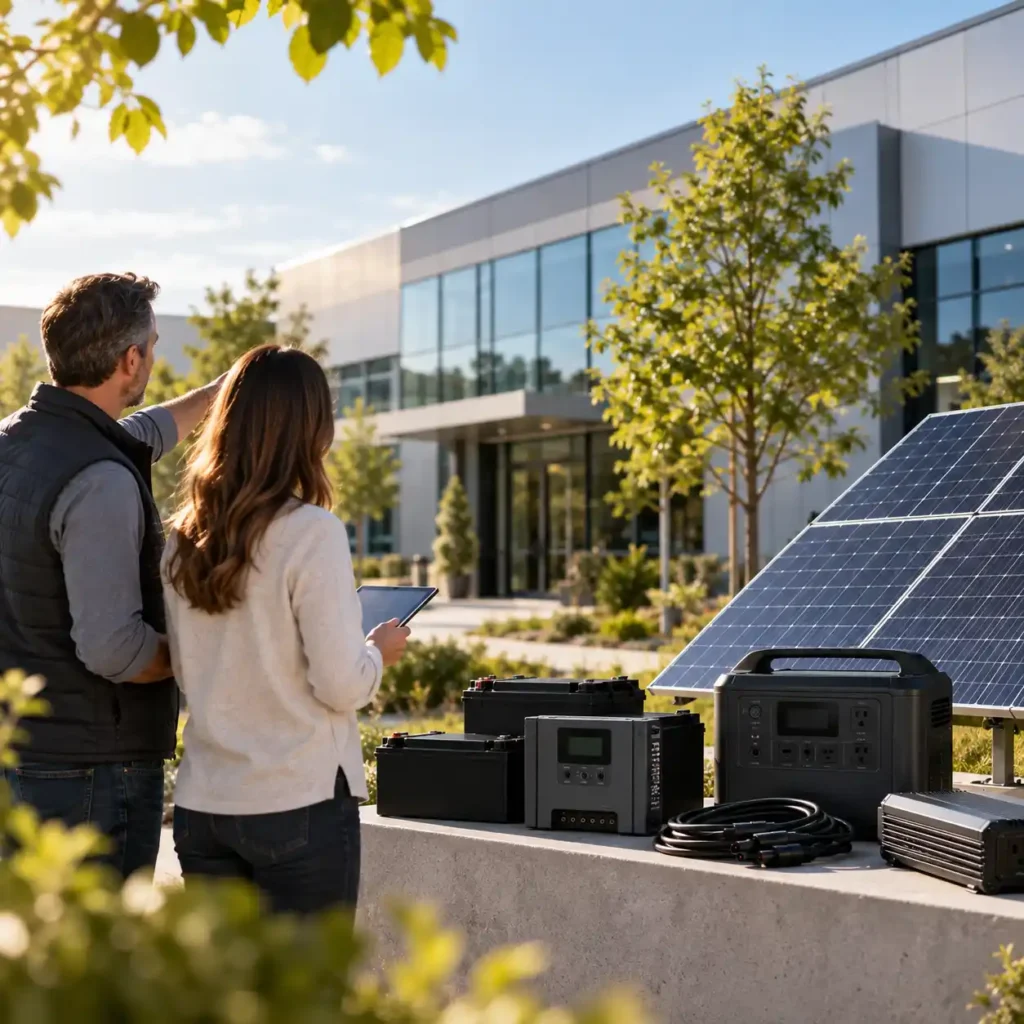
Renogy describes its origins as a renewable-energy project associated with students at Louisiana State University. The company says its broader mission is to make renewable energy and energy independence more accessible through DIY-friendly products.
That original DIY orientation remains important to understanding the brand today.
Instead of building its entire business around a single finished appliance, Renogy developed products covering multiple stages of the energy cycle.
This approach allows a user to start relatively small and build toward a more complete system.
For example, an RV owner might begin with solar panels and a battery, then add an MPPT controller, inverter, DC-DC charger, additional storage, and system monitoring as energy requirements increase.
That is fundamentally different from buying a self-contained portable power station and treating it as the entire system.
It also explains why Renogy appears across several different parts of the solar and backup-power market.
What Is Renogy Known For?
Renogy is best known for DIY solar, mobile power, and off-grid energy systems.
The brand has a particularly strong presence in applications where users need more than one power component working together.
DIY Solar Systems
Renogy provides many of the basic building blocks required for a solar-plus-storage system.
This includes the generation, charging, storage, and conversion components that allow users to design a system around their own requirements.
RV and Van Power
Mobile applications are an important part of Renogy’s ecosystem.
RV and van users may need solar charging, battery storage, alternator charging, AC power, DC loads, and monitoring within the same installation.
Renogy’s broad product portfolio is designed to address several of those requirements within one ecosystem.
Off-Grid Energy
Cabins, workshops, boats, remote properties, and other applications without dependable grid access can also benefit from a modular system approach.
The system can be configured around the available solar resource, battery capacity, expected loads, and required AC output.
Portable Power
Renogy also participates in the portable power station market.
The PowerStation 2000, for example, combines a 2,048Wh LiFePO4 battery with a 2,400W AC inverter and multiple charging options.
But this product should be understood as one expression of Renogy’s broader portfolio rather than as the definition of the brand itself.
That distinction is central to this guide.
Renogy Product Categories
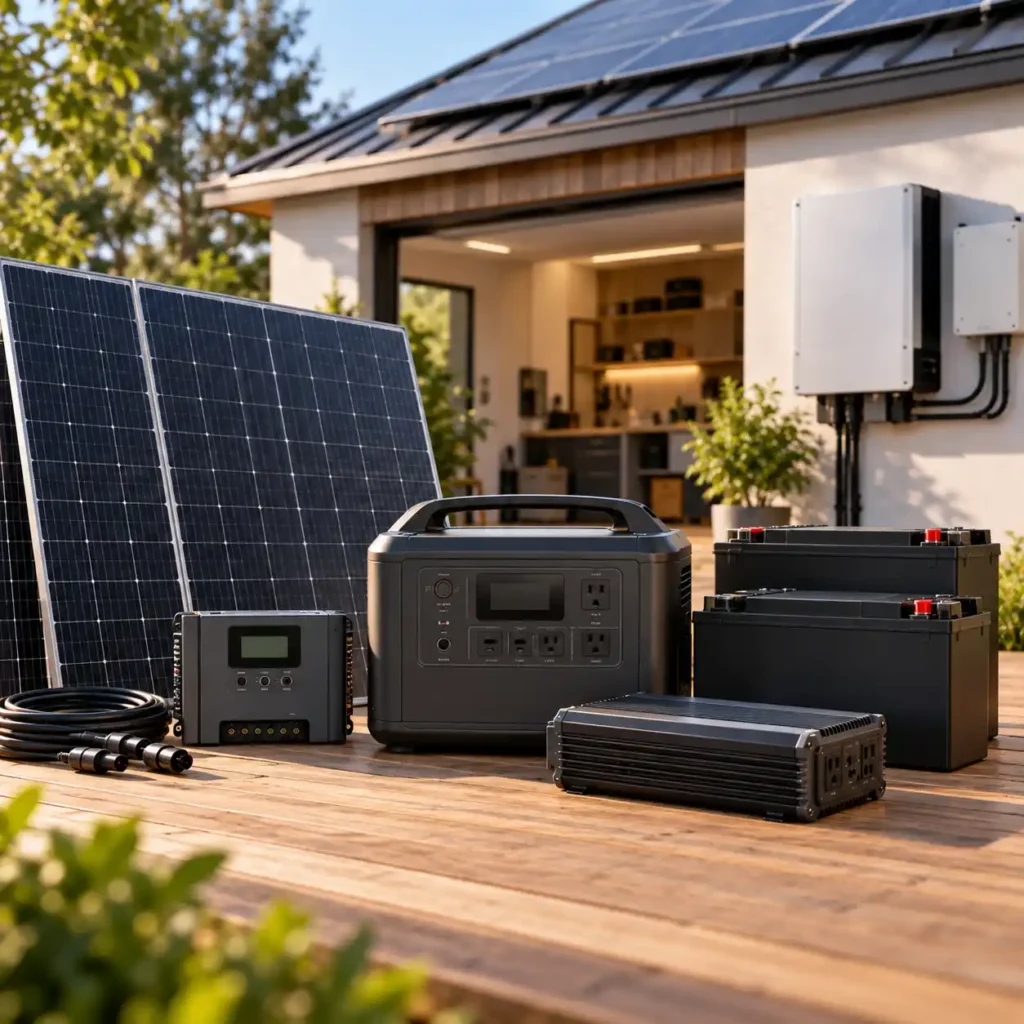
Renogy Product Lines
Renogy’s product ecosystem can be divided into several major functional categories.
Solar Panels
Solar panels are the generation layer of the ecosystem.
Renogy offers different panel formats designed for applications ranging from fixed installations to portable solar charging.
The portfolio includes conventional rigid panels as well as portable solutions and newer panel technologies intended to improve performance in practical installation conditions.
For readers specifically comparing portable solar panels, the detailed category analysis belongs in our Best Portable Solar Panels guide rather than being duplicated here.
The purpose of the Renogy page is to explain where solar generation fits within the brand’s overall system architecture.
LiFePO4 Batteries
Battery storage is another major part of Renogy’s portfolio.
The brand offers LiFePO4 batteries in multiple capacities and configurations, allowing users to build anything from relatively small mobile systems to larger battery banks.
Some Renogy battery families also include features such as integrated battery management systems, low-temperature protection, self-heating, Bluetooth connectivity, and series/parallel expansion, depending on the model.
Again, the important brand-level point is not that one battery should automatically be considered the best.
It is that Renogy offers storage as a modular component of a larger power system. For readers evaluating larger residential battery-storage systems, our Best Solar Batteries for Home Backup (2026) guide covers standalone LiFePO4 battery solutions, system compatibility, scalability, monitoring, and home-backup use.
Detailed battery sizing and category comparisons remain separate PWRG topics.
Inverters
Renogy’s inverter range provides the AC conversion layer for systems built around battery storage.
The portfolio includes pure sine wave inverters in different power levels and configurations.
This category is particularly relevant when the user is building a system rather than simply buying a self-contained portable power station.
An inverter has to match the battery voltage, continuous load, surge requirements, wiring, and overall system design. For a broader comparison of standalone inverter technologies and their role in battery-based residential backup systems, see our Best Power Inverters for Home Backup (2026) guide.
MPPT Charge Controllers
Charge controllers are one of the clearest examples of Renogy’s traditional DIY-solar positioning.
MPPT controllers sit between solar panels and the battery system, managing the charging process and adapting solar input to the battery system.
If you are comparing MPPT and PWM technologies or sizing a controller for a solar installation, see our Best Solar Charge Controllers (2026) guide for a broader look at available options.
Renogy’s Rover family includes controllers designed for different system voltages and solar-array configurations.
For an ecosystem-oriented brand such as Renogy, the charge controller is not an isolated accessory. It is one of the core components connecting solar generation with energy storage.
That is why MPPT controllers remain important when evaluating Renogy as a solar-system brand.
DC-DC Chargers
DC-DC charging adds another important layer for mobile systems.
For RV and van owners, a DC-DC charger can allow the vehicle’s electrical system or alternator to contribute to the auxiliary battery bank.
This makes the charging architecture more flexible.
Instead of relying solely on solar, a mobile system can potentially combine:
- solar charging;
- vehicle charging;
- shore power;
- and stored battery energy.
This multi-source approach is one reason Renogy’s ecosystem is particularly relevant to mobile power applications.
Portable Power Stations
Portable power stations represent the more integrated side of Renogy’s portfolio.
Instead of requiring separate panels, batteries, charge controllers, and inverters, a portable power station combines several functions into one enclosure.
Renogy’s PowerStation 2000 is an example of this approach.
It provides a 2,048Wh LiFePO4 battery, 2,400W AC output, 3,600W surge capability, and up to 1,200W DC input.
For PWRG, however, the key distinction is that **portable power is one Renogy category, not the entire Renogy story**.
Readers who are specifically choosing a portable power station should move to our dedicated portable-power guides. If you are considering a Renogy portable power station, our How to Choose a Portable Power Station guide explains how to match battery capacity, AC output, charging options, runtime, and other specifications to your actual needs.
Complete Solar and Off-Grid Systems
At the broadest level, Renogy also packages multiple components into more complete system solutions.
These can combine batteries, solar generation, power conversion, charge management, monitoring, and other components into a more structured system.
This category is particularly important because it demonstrates the central idea behind the brand:
Renogy is trying to cover the energy system, not just one device inside it.
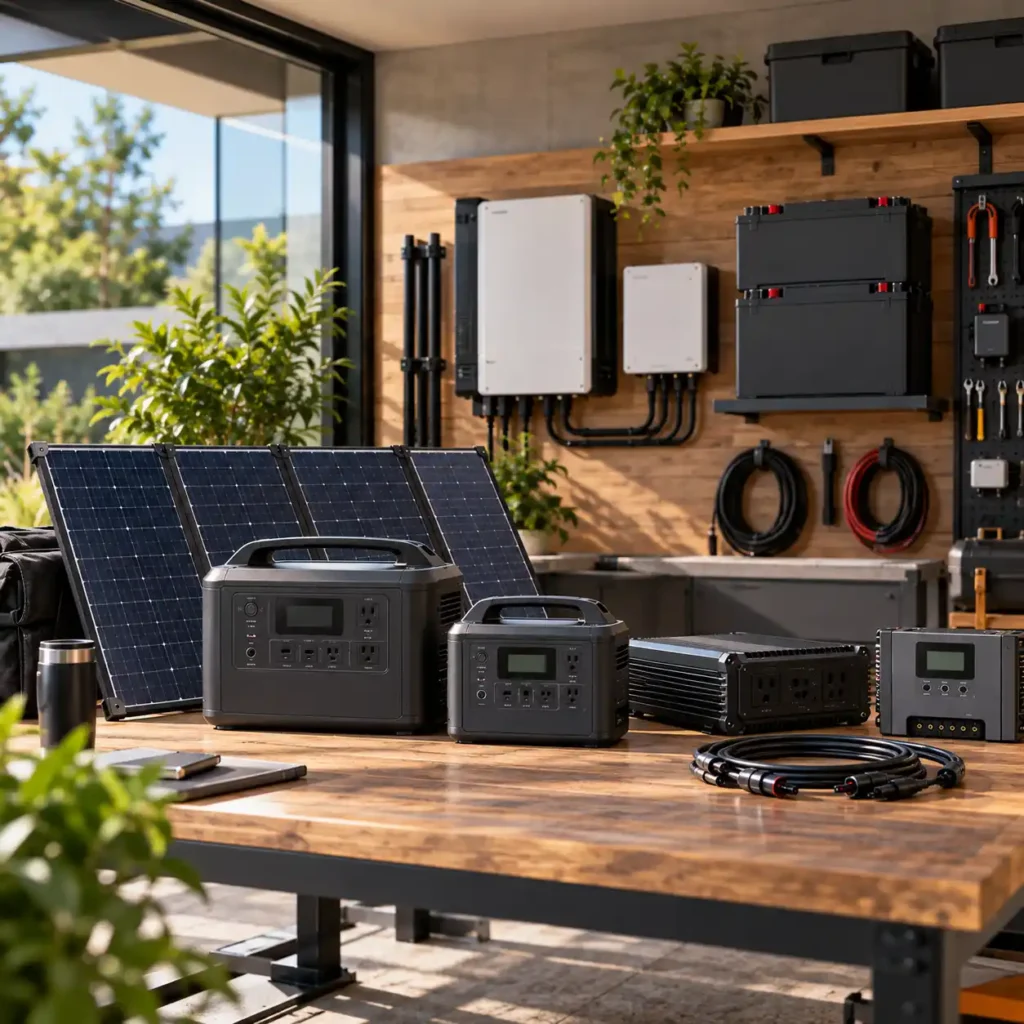
Rather than viewing Renogy as a list of individual products, it is more useful to organize its portfolio by function within an energy system.
Solar Generation
Solar panels provide the energy input for the system.
Energy Storage
LiFePO4 batteries store electricity for later use.
Charge Management
MPPT charge controllers manage energy flowing from solar panels into the battery system.
Power Conversion
Inverters convert battery-stored DC power into AC electricity for compatible appliances and equipment.
Vehicle Charging
DC-DC chargers allow mobile systems to use vehicle-based charging alongside solar and other charging sources.
Portable Energy
Portable power stations combine battery storage, power conversion, and charging functions into a single mobile unit.
Monitoring and Control
Compatible monitoring products help users view system information and manage connected equipment.
Integrated Systems
Packaged solutions combine multiple layers of the Renogy ecosystem into a more complete power system.
This functional structure makes Renogy easier to understand than a long list of individual model numbers. It also highlights the brand’s central approach: building a configurable power system from interconnected components rather than relying on a single product category.
Renogy Technology & Ecosystem
Renogy’s ecosystem is also evolving beyond individual components. In 2026, the company introduced EverPower as an overarching energy experience designed to connect solar generation, storage, charging, power management, and compatible devices within a more unified system architecture.
The ecosystem becomes particularly interesting when multiple Renogy components are used together.
Renogy ONE is designed as a central monitoring and control interface for compatible devices. Depending on the equipment, Renogy’s ecosystem can use communication technologies such as Bluetooth, RS485, RV-C, and Zigbee.
The DC Home app provides another layer for monitoring and managing compatible equipment.
This ecosystem approach can reduce the need to treat every component as a completely independent device.
For a small standalone installation, that may not matter much.
For a larger RV or off-grid system containing several Renogy components, however, centralized monitoring can become considerably more useful.
The important qualification is compatibility.
Not every Renogy product necessarily supports every ecosystem feature, communication method, or control function. Buyers should therefore check the compatibility information for the exact components they plan to combine rather than assuming that all Renogy products automatically operate as one unified system.
Who Is Renogy Best For?
Renogy’s product ecosystem is most relevant to people who want to build, customize, or expand a power system rather than simply purchase a single appliance.
The brand’s modular approach can be useful when the system has several energy sources, multiple battery-powered loads, or needs to grow over time.
RV and Van Owners
RV and van users are one of the clearest fits for Renogy’s ecosystem.
A mobile power system may combine solar panels, a battery bank, an MPPT controller, an inverter, alternator charging, and monitoring. Renogy offers products across these different layers, making it possible to build a system around the vehicle rather than relying on one standalone power device.
This is also an area where system compatibility matters. Renogy’s current compatibility documentation distinguishes between different generations and communication methods, so users should verify the exact products they plan to combine.
DIY Off-Grid Users
Renogy is also suited to users building power systems for cabins, workshops, boats, sheds, and other off-grid applications.
The attraction is the ability to select individual components instead of committing to one preconfigured system.
That flexibility can be useful when the power requirement is expected to change over time.
A user may begin with solar generation and battery storage, then add additional capacity or power-conversion equipment later.
Users Building Around 12V and Mobile Power Systems
Renogy has a strong presence in low-voltage and mobile applications.
Its portfolio includes batteries, solar charging equipment, inverters, DC-DC chargers, and accessories designed around common RV, van, marine, and off-grid architectures.
That makes the brand particularly relevant when the electrical system itself is part of the project.
Buyers Who Want a Single-Brand Ecosystem
Some users prefer to keep major components within one manufacturer’s ecosystem.
The advantage is not that every component automatically becomes interchangeable. Rather, a single-brand approach can make product selection, monitoring, documentation, and troubleshooting more straightforward when the specific components are officially compatible.
Renogy’s monitoring ecosystem illustrates this approach. Current Renogy ONE products support different communication methods and authorized devices, while Renogy explicitly warns that compatibility with third-party Zigbee devices cannot be guaranteed.
Who May Want to Consider Other Brands?

Renogy’s ecosystem-oriented approach is not necessarily the best fit for every buyer.
Buyers Who Want Maximum Simplicity
If the goal is simply to purchase one battery-powered unit, connect a few devices, and avoid designing a system, a highly integrated portable power station may be easier to use.
In that scenario, Renogy’s broader component ecosystem may offer more flexibility than the user actually needs.
Users Who Do Not Want to Manage System Compatibility
A modular system requires more attention to:
- battery voltage;
- inverter requirements;
- solar input limits;
- controller compatibility;
- communication protocols;
- wiring;
- charging sources;
- and installation requirements.
That is part of the trade-off for having a configurable system.
Buyers Focused Primarily on Large Residential Solar Installations
Renogy’s core identity is closely associated with DIY, mobile, and off-grid applications.
Someone planning a professionally designed grid-connected residential solar installation may have different priorities, including installer networks, utility requirements, permitting, local service, and long-term system integration.
In that situation, the most appropriate brand ecosystem may depend heavily on the installer and local market rather than on the consumer DIY product range.
Buyers Who Need Completely Open Third-Party Integration
Renogy provides multiple communication interfaces and ecosystem integrations, but compatibility is not universal.
For example, Renogy states that it cannot guarantee compatibility between Renogy ONE and third-party Zigbee 3.0 devices and recommends authorized accessories for those functions.
That makes compatibility checking important before designing a mixed-brand system.
Renogy Strengths and Limitations
Looking at Renogy as a brand rather than as a collection of individual products reveals a fairly clear set of strengths and trade-offs.
Strengths
Broad DIY Power Ecosystem
Renogy covers many of the components required to build a solar-plus-storage or mobile power system.
That includes generation, storage, charging, power conversion, vehicle charging, monitoring, and accessories.
Strong Mobile and Off-Grid Focus
The brand’s portfolio is particularly relevant to RVs, vans, boats, cabins, and other applications where independent energy systems are useful.
Modular System Design
Users can purchase individual components and expand a system as their requirements change.
This can be an advantage over a closed, single-device approach.
Multiple Charging Sources
Depending on the configuration, Renogy systems can combine solar charging with other energy sources such as vehicle charging or AC charging.
This is especially useful for mobile systems where solar availability varies.
Expanding Smart-Energy Layer
Renogy ONE and related monitoring products add a system-management layer on top of the physical components.
Current Renogy ONE Core documentation shows support for both 2.4 GHz and 5 GHz Wi-Fi, local data storage, and Zigbee-based smart accessories, although third-party Zigbee compatibility remains limited by Renogy’s stated compatibility policy.
Limitations
The Product Range Can Be Complex
Renogy has a large and changing portfolio, and product generations are not always interchangeable.
This is particularly important when older listings remain available through retailers or marketplaces.
The current 2026 portable-power market illustrates the issue: recent coverage notes that older Phoenix models continue to appear in search results even though Renogy’s current U.S. collection is centered on the PowerStation 2000.
For that reason, buyers should confirm the exact model, generation, SKU, and current regional listing rather than relying on an old product name.
DIY Flexibility Requires More Technical Attention
The modular approach is useful precisely because the buyer has more control.
But that also means the buyer needs to verify electrical compatibility and system requirements.
A larger battery does not automatically make an inverter or charge controller appropriate, and a higher-wattage solar array is not automatically compatible with every controller.
Ecosystem Compatibility Is Not Universal
Renogy products can communicate through different technologies, including Bluetooth, RS485, CAN, RV-C, and Zigbee depending on the product.
However, support varies by device and generation. Renogy’s own compatibility resources advise users to check the exact product combination.
Warranty Terms Vary by Product
There is no single warranty period that accurately describes every Renogy product.
The applicable warranty should be checked on the specific product page and warranty documentation for the relevant market. Renogy’s EU support page explicitly directs customers to the individual product documentation for the applicable warranty terms.
Warranty & Customer Support
Warranty is one area where a brand-level statement can easily become misleading.
Renogy’s warranty coverage varies by product category and model. The company’s EU support documentation instructs customers to check the product page or warranty documentation supplied with the product to determine the applicable coverage.
Renogy also states that warranty registration can be completed through its warranty-registration system, including for products purchased through third-party platforms or dealers with customer-support assistance when necessary.
Another important point is that proper installation and operation matter.
Renogy’s warranty documentation states that failure to properly install or operate a battery can affect warranty coverage.
For buyers outside the United States, we recommend checking the regional Renogy website and the exact product documentation before purchase. Product availability, warranty terms, electrical standards, and support arrangements can differ between markets.
Popular Renogy Products
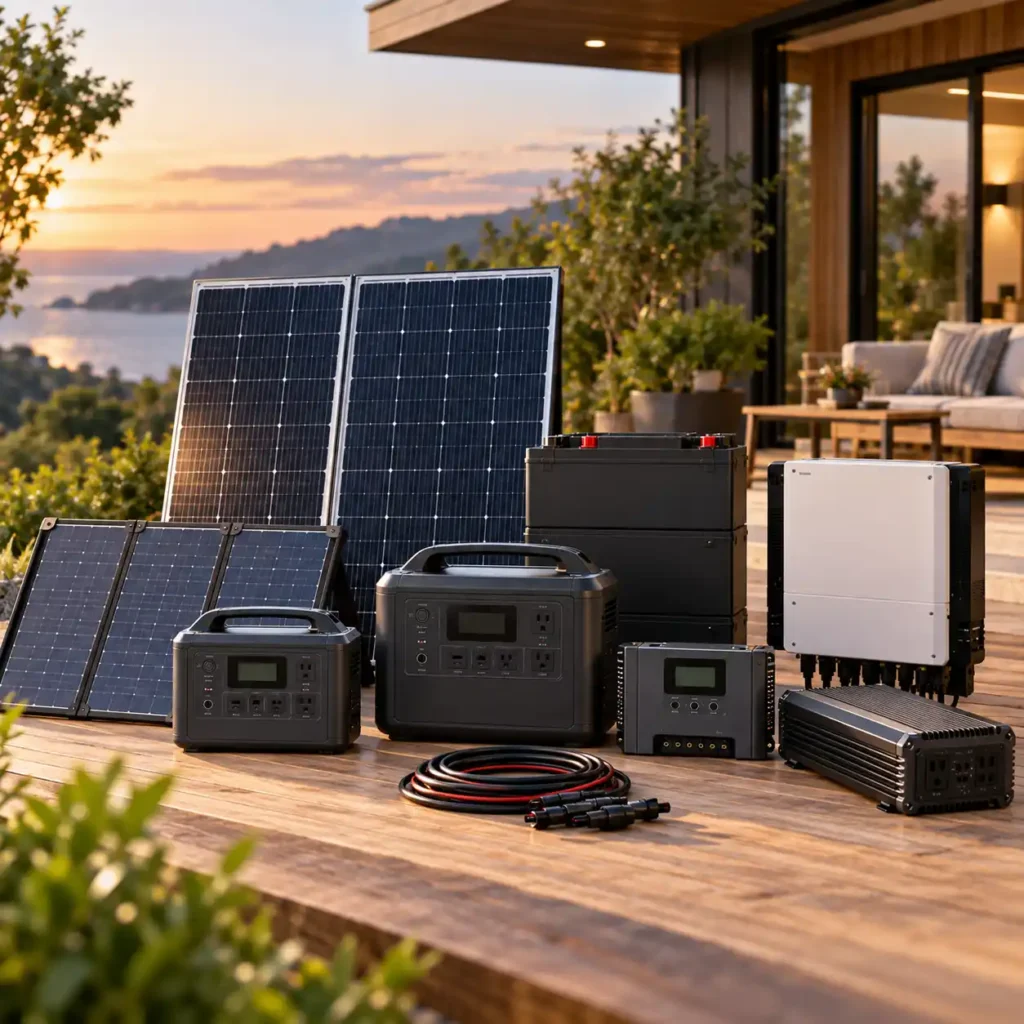
Rather than ranking individual models on this brand page, it is more useful to identify products that represent the main layers of Renogy’s ecosystem.
PowerStation 2000
The PowerStation 2000 represents Renogy’s current portable-power direction.
The current U.S. product page lists a 2,048Wh LiFePO4 battery, 2,400W AC output, 3,600W surge capacity, a built-in TT-30 RV outlet, and up to 1,200W DC input. Renogy also lists pass-through charging and multiple charging methods.
Importantly, Renogy’s current page also shows the product as temporarily backordered, which is another reason we should avoid presenting availability as permanent in an evergreen article.
Core LiFePO4 Batteries
Renogy’s Core battery families represent the modular storage side of the ecosystem.
These products are designed for users who want a battery bank rather than a self-contained portable power station.
Rover MPPT Controllers
The Rover family represents the solar-charge-management layer of the Renogy ecosystem.
This is one of the product categories most closely associated with the brand’s traditional DIY solar identity.
Pure Sine Wave Inverters
Renogy’s inverter range provides AC power from battery-based DC systems.
The available configurations vary by market and product generation, so the exact voltage and output requirements should be checked before purchase. For example, Renogy’s current 3,000W model is specifically a 12V inverter and is not compatible with a 24V battery system.
Renogy ONE
Renogy ONE represents the monitoring and system-management layer.
The current ecosystem includes newer ONE Core hardware as well as different generations of Renogy ONE products, so compatibility should be checked against the exact equipment being installed.
These products are included here because they illustrate Renogy’s ecosystem, not because this page is intended to rank them against competing products.
Renogy Guides, Reviews & Comparisons
The role of this page is to explain Renogy as a brand.
When the question becomes product-specific, PWRG’s dedicated category guides should take over.
For example:
- Best Portable Power Stations for Home Backup — for choosing portable battery systems for household emergency power.
- Best Portable Power Stations for RV — for RV-specific portable power requirements.
- Best Portable Solar Panels — for portable solar generation.
- Best Solar Charge Controllers — for MPPT and charge-controller selection.
- Best Solar Batteries for Home Backup — for stationary battery-storage comparisons.
- Best Power Inverters for Home Backup — for inverter selection.
- How to Choose a Portable Power Station — for broader portable-power buying criteria.
- Power Station Size Calculator — for estimating the output and capacity required for a portable power station.
This separation is intentional.
The Renogy page answers: What is Renogy, how does its ecosystem work, and who is that ecosystem designed for?
The category pages answer: Which product is appropriate for this particular power application?
Keeping those questions separate protects the topical ownership of each PWRG URL.
FAQ: Renogy in 2026
Is Renogy still a good solar brand in 2026?
Renogy remains a broad DIY solar and off-grid power brand with products spanning solar generation, batteries, charge controllers, inverters, vehicle charging, portable power, and monitoring.
Its current product strategy is broader than solar panels alone, with the PowerStation 2000 representing a newer portable-power direction while batteries, controllers, inverters, and system-monitoring products remain central to the ecosystem.
Whether Renogy is the right choice depends on the type of system being built, the required level of DIY involvement, compatibility requirements, and the support available in the buyer’s region.
What happened to Renogy Phoenix power stations in 2026?
Renogy’s portable-power lineup has changed, and older Phoenix models continue to appear in search results and marketplace listings.
Recent 2026 coverage reports that Renogy’s current U.S. portable-power collection is centered on the PowerStation 2000 rather than the older Phoenix naming scheme.
Because older listings can remain online, buyers should verify the exact model and current Renogy product page before purchasing.
Is Renogy PowerStation 2000 the current Renogy power station?
Renogy’s current U.S. product page lists the PowerStation 2000 as a current product and identifies it as a 2,048Wh LiFePO4 portable power station with 2,400W AC output.
Availability can change, however. At the time of our September 2026 review, Renogy’s U.S. page indicated that the PowerStation 2000 was backordered.
Can Renogy batteries work with non-Renogy inverters?
Compatibility depends on the exact battery and inverter specifications rather than simply on the brands.
Voltage, current limits, battery-management communication, charging parameters, and connector requirements all need to be checked.
Renogy states that its Pure Sine Wave Inverters are compatible with lithium batteries, but the manufacturer also directs users to the specific product manual for details
Does Renogy ONE work with third-party devices?
Renogy ONE supports multiple communication methods and can work with compatible Renogy equipment, but Renogy states that it cannot guarantee compatibility with third-party Zigbee 3.0 smart-home devices. The company recommends authorized accessories for those functions.
This makes the exact compatibility list more important than simply seeing the word “Zigbee” or “Bluetooth” in a product specification.
Does Renogy ONE work without the internet?
Some local functions can continue to work without an internet connection.
Renogy states that configured smart scenes on Renogy ONE can continue operating locally through Zigbee even when the system is offline. Remote monitoring and cloud-based functions, however, require the appropriate network connection.
Is Renogy made in China?
Renogy has stated in product Q&A material that its products are manufactured in China, while quality inspection and preparation are handled at its Ontario, California headquarters.
The manufacturing origin can vary by product and may change over time, so buyers concerned about country of manufacture should check the documentation for the specific product.
Does Renogy make LiFePO4 batteries?
Yes.
LiFePO4 batteries are a major part of Renogy’s current energy-storage portfolio, including Core-series batteries and different configurations intended for mobile and off-grid systems. Renogy’s current product ecosystem also promotes larger expandable battery configurations
Does Renogy make complete solar power systems?
Yes.
Renogy offers individual components as well as packaged system solutions designed to combine solar generation, storage, charging, power conversion, and monitoring.
This system-oriented approach is one of the main characteristics that distinguishes Renogy from brands focused primarily on one type of finished power appliance.
Is Renogy good for an RV solar system?
Renogy is particularly relevant to RV and van applications because its ecosystem includes solar panels, batteries, charge controllers, inverters, DC-DC charging, portable power, and monitoring.
The important consideration is compatibility: the exact components should be selected as a system rather than assuming that every Renogy product is automatically interchangeable.
Does Renogy offer different warranty periods for different products?
Yes.
Warranty terms vary by product and region. Renogy’s EU support documentation directs customers to the applicable product page and warranty documentation rather than providing one universal warranty period for the entire brand.
Is Renogy better for DIY systems or plug-and-play power?
Renogy has a strong DIY-system identity, although its portfolio now includes more integrated products such as the PowerStation 2000.
Users who want to select individual batteries, panels, controllers, inverters, and charging equipment may find the modular ecosystem particularly relevant. Users who want minimal system configuration may prefer a more appliance-like portable power solution.
Our Take
Renogy is best understood as a power-system brand rather than a single-product brand.
Its portfolio connects several layers of an energy system: solar generation, battery storage, charge management, power conversion, vehicle charging, portable power, and monitoring.
That breadth is the central reason to consider Renogy.
It gives DIY users the option to build a system around their application instead of forcing every use case into the same hardware format.
The trade-off is that greater flexibility also brings greater responsibility. Compatibility, system voltage, charging limits, communications, installation, and warranty terms all become part of the buying decision.
Renogy’s 2026 portfolio also shows why current product verification matters. The portable-power lineup has evolved, older Phoenix listings remain visible online, and newer products such as the PowerStation 2000 have changed how the brand fits into the portable-power category.
For an RV owner, van builder, cabin owner, or DIY off-grid user, the most useful way to evaluate Renogy is therefore not to ask which individual product has the biggest specification.
Instead, ask:
Can Renogy provide the combination of generation, storage, charging, conversion, and monitoring that my particular power system requires?
That is where the brand’s broader ecosystem becomes more important than any single model.
Continue Exploring Power Ready Guide
Renogy covers a broad range of solar, battery, charging, and portable power equipment. If you want to explore specific parts of a power system in more detail, these Power Ready Guide resources can help you continue your research:
- Best Portable Solar Panels (2026) — Explore portable solar panel options for mobile, off-grid, and backup power applications.
- Best Solar Charge Controllers (2026) — Learn how to compare solar charge controllers and understand the role of MPPT technology in a solar power system.
- How to Choose a Portable Power Station — Understand the key factors that determine which portable power station fits your capacity, output, and charging needs.
These guides provide more detailed category-level information while this Renogy profile remains focused on the brand, its product ecosystem, and how its different product categories fit together.