
Jackery is a power and energy company founded in 2012 with roots in Silicon Valley and a product strategy built around portable power, solar generation, and increasingly capable home energy systems. The company initially focused on outdoor users, developing portable lithium power stations and later pairing them with its SolarSaga portable solar panels.
That original outdoor focus remains important to the brand, but Jackery’s portfolio has expanded considerably. Its current lineup spans compact portable power stations, larger expandable systems, portable solar panels, solar generators, and home-backup solutions designed for longer outages and higher electrical loads.
This makes Jackery more than a single portable power station brand. It is increasingly positioned as a broader clean-energy ecosystem, although its product portfolio still has a particularly strong connection to portable and off-grid power.
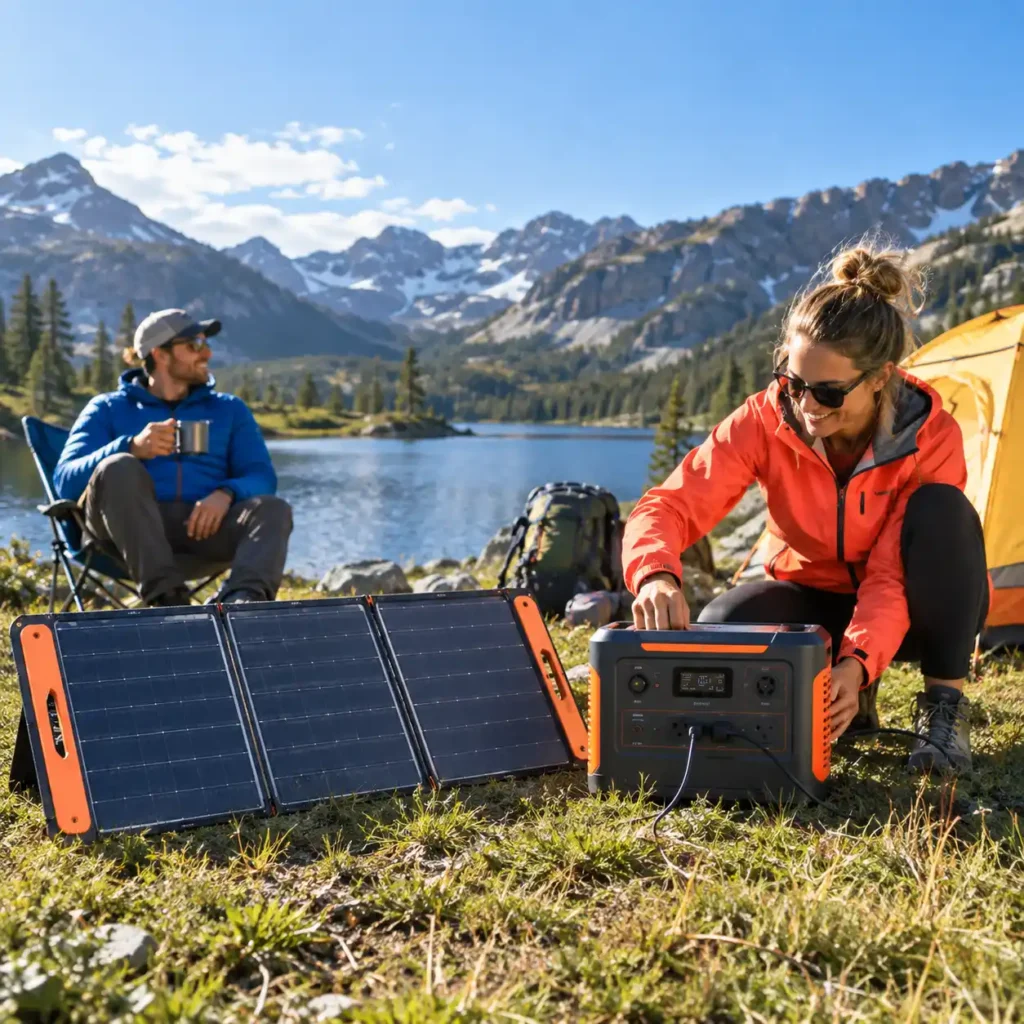
Table of Contents
Jackery in Brief
Founded in 2012, Jackery built its strongest heritage around portable power and solar energy. The Explorer line represents the brand’s portable power offering, while HomePower focuses on home backup and SolarSaga covers its solar panel range. Today, Jackery is expanding beyond portable power toward a broader home-energy ecosystem.
Jackery at a Glance
| Category | Jackery | What It Means |
|---|---|---|
| Founded | 2012 | Founded in Silicon Valley, California |
| Core focus | Portable and solar power | Outdoor, off-grid, emergency, and home energy applications |
| Portable power | Explorer and related series | Portable battery power across multiple capacity classes |
| Solar | SolarSaga and newer solar products | Portable and larger-format solar charging |
| Home energy | HomePower and larger systems | Essential through whole-home backup applications |
Jackery's current portfolio shows a clear expansion from portable power toward home energy. Its official product navigation now separates products by capacity, portability, expandability, home-backup role, RV/off-grid use, and camping rather than treating every power station as the same type of product.
About Jackery
Jackery was founded in 2012 by battery-technology innovators with the goal of making renewable energy more accessible for outdoor users and, increasingly, homes. The company says it was founded in Silicon Valley, California.
The brand’s early identity was strongly tied to portable power.
In 2015, Jackery launched its first lithium portable power stations under the Explorer name. Three years later, it introduced its first portable solar panel, the SolarSaga series. This created the basic product combination that still defines much of Jackery’s business today: battery storage + portable solar generation.
The company subsequently expanded into larger-capacity power stations, solar generators, and home energy products.
Jackery describes itself as a company that designs, manufactures, and sells its products directly to customers and says it oversees the customer experience from research and development through manufacturing, sales, and service.
Jackery’s own current corporate materials report more than 7 million users worldwide and more than 150,000 five-star reviews. Those figures are company-reported rather than independent market-share measurements, so they are best understood as indicators of the brand’s stated scale rather than objective market rankings.
What Is Jackery Known For?

Portable Solar Generators
The phrase solar generator is central to Jackery’s product strategy.
In practical terms, Jackery’s solar generators combine a battery power station with solar panels so that electricity can be generated, stored, and used later. Unlike conventional fuel generators, the system does not burn gasoline or propane while producing electricity.
Jackery’s current solar-generator portfolio covers outdoor recreation, RV and road travel, emergency power, and home backup.
Explorer Portable Power Stations
Explorer is the product family most closely associated with Jackery’s portable-power heritage.
The range extends from compact models designed for personal electronics and short trips to substantially larger systems intended for higher electrical loads and longer backup periods.
The important point is that Explorer is no longer a single-use product family. Current models occupy several different capacity and output classes, so buyers need to evaluate the individual model rather than assuming every Explorer serves the same role.
SolarSaga Portable Solar Panels
SolarSaga is Jackery’s solar-panel family.
The current portfolio includes different panel formats and power levels, including lightweight portable models and larger panels intended to provide more charging capacity. Jackery currently lists products such as SolarSaga 40 Air, 100 Air, 100 Prime, 200W, and 500 X.
This is strategically important because Jackery does not treat solar panels merely as accessories. Solar generation is integrated into the company’s broader solar-generator and home-backup proposition.
Jackery Product Categories
Jackery’s portfolio can be understood more clearly by function than by model number.
Portable Power Stations
Portable power stations are the foundation of Jackery’s product ecosystem.
They store electrical energy in a battery and provide AC, USB, and DC outputs for electronics and appliances. Depending on the model, they can be charged from a wall outlet, vehicle, or solar panels.
The Explorer family occupies much of this category, but newer HomePower products increasingly overlap with higher-capacity portable and semi-portable applications.
For readers comparing this category across multiple manufacturers, our Best Portable Power Stations for Home Backup guide serves a different purpose: it compares the broader market rather than explaining Jackery’s portfolio specifically.
Portable Solar Panels
SolarSaga panels are designed to recharge compatible Jackery power stations and solar-generator systems.
The current portfolio includes compact travel-oriented panels as well as higher-output products such as the SolarSaga 200W and 500 X.
Solar Generators
Jackery uses the term solar generator for integrated power solutions combining solar panels and a battery power station.
This category bridges outdoor power and emergency preparedness. It also gives consumers a more complete system rather than requiring them to assemble a battery and solar charging solution independently.
Home Backup Systems
Jackery has expanded substantially into home backup.
The current portfolio includes HomePower systems and larger Explorer-based solutions intended for essential home backup and, at the higher end, whole-home applications. Jackery’s current website explicitly groups products into essential home backup and whole-home backup categories.
Solar and Home Energy Products
Beyond portable generators, Jackery’s broader portfolio now includes larger solar and home-energy products.
This expansion is significant because it changes the way the brand should be understood: Jackery is no longer limited to the traditional camping-oriented portable power category.
Jackery Product Lines Explained
Explorer Series
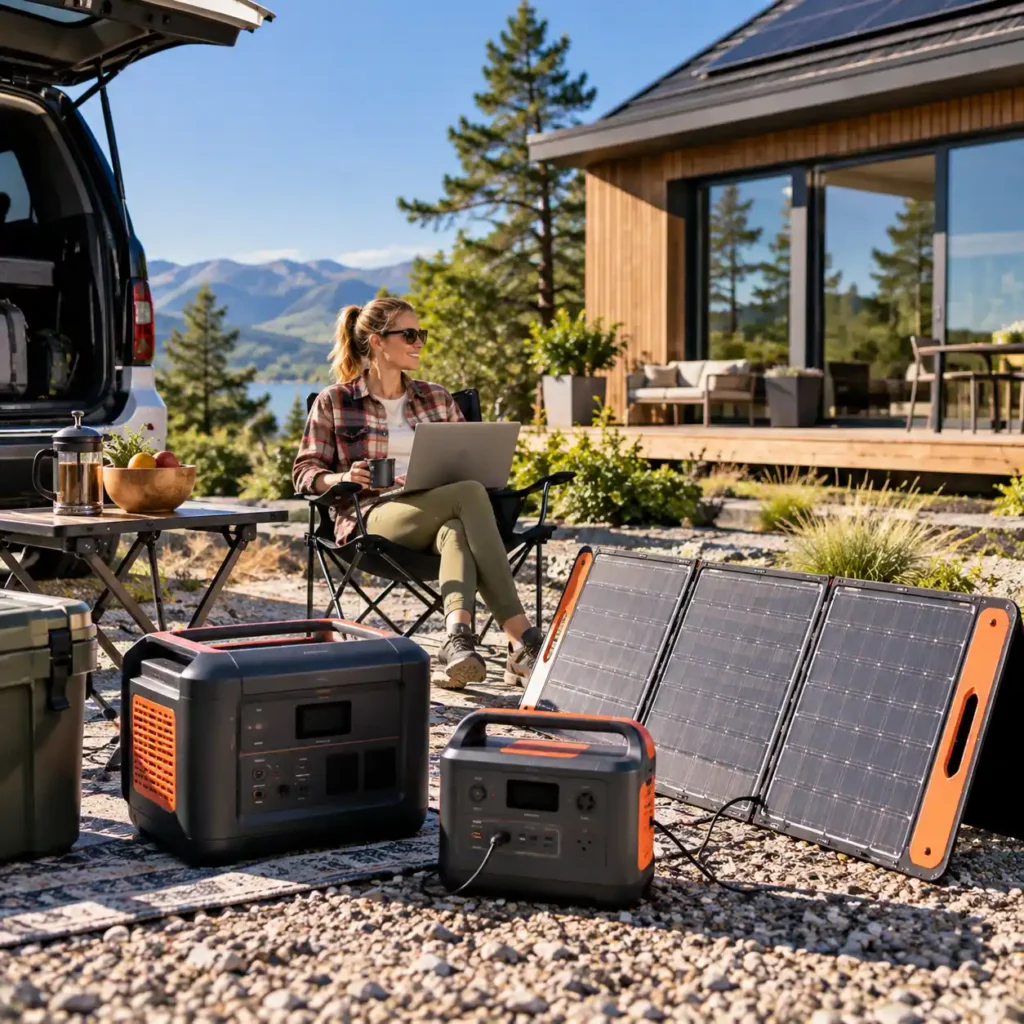
The Explorer family is Jackery’s best-known portable power platform.
It includes multiple generations and capacity classes, from compact units such as the Explorer 240 v2 and Explorer 600 v2 to larger systems such as the Explorer 1000 v2, 1500 v2, 2000 v2, and higher-capacity models.
The range therefore serves several different scenarios:
- personal electronics;
- camping;
- road trips;
- RV use;
- remote work;
- emergency backup;
- higher-load portable power.
The Explorer name alone should not be treated as a performance specification. Battery chemistry, capacity, inverter output, charging capabilities, expansion support, connectivity, and environmental protection can differ substantially between models.
Plus Designation
The Plus designation is used across multiple parts of Jackery’s portfolio rather than representing a single standalone product family. Plus models generally emphasize expandable capacity, higher output, and newer-generation features.
The company introduced updated 300 Plus, 700 Plus, and 1000 Plus models in 2026, describing the Plus line as a new generation of portable solar generators.
Other Plus products now extend into substantially larger capacities, including HomePower Plus systems and larger expandable configurations.
This makes Plus less useful as a simple size indicator and more useful as a signal that the product belongs to a newer or expandable part of Jackery’s portfolio.
HomePower Series
HomePower represents Jackery’s move toward dedicated home energy and backup.
Current products include the HomePower 1000 v2, HomePower 2000 Plus v2, HomePower 3000, and HomePower 3600 Plus, among other regional or newly introduced configurations.
The emphasis is increasingly on:
– essential home backup;
– larger battery capacity;
– expansion;
– longer outage coverage;
– integration with solar;
– higher-power household loads.
This is a meaningful distinction from the more travel-oriented Explorer positioning.
Jackery’s current home-energy lineup also includes newer configurations such as the HomePower 3600 Pro Max and FridgeGuard, alongside established HomePower models.
SolarSaga Series
SolarSaga is Jackery’s dedicated solar-panel family.
Current products range from compact panels intended for portability to larger 500W-class panels for higher-energy systems.
Different SolarSaga models are designed for different installation and portability scenarios, so the family should not be treated as a single generic solar-panel product. Jackery itself currently differentiates SolarSaga models by portability, installation environment, and intended use.
Jackery Technology & Energy Ecosystem
Jackery’s technology strategy is built around a relatively straightforward concept: generate, store, manage, and use electricity across different environments.
At the portable end, this means a battery power station can be charged from the grid, vehicle, or solar panels and then used to operate electronics and appliances.
At the larger end, the architecture becomes more system-oriented, with expandable battery capacity, higher power output, solar generation, and home-backup equipment.
Battery Technology
Jackery has moved many newer power stations toward LiFePO4 battery chemistry.
For example, the Explorer 240 v2 uses a LiFePO4 battery and is specified at 4,000 cycles to at least 70% capacity.
However, battery chemistry should not be generalized across every Jackery product. Older and current models can use different battery technologies, so buyers should verify the specifications of the exact model rather than assuming the entire brand uses one chemistry.
Safety and Power Management
Jackery products incorporate battery-management and protection systems, but the exact protection architecture varies by product.
Current models can include protections against issues such as over-temperature, over-current, short circuit, and other operating conditions. Product-specific documentation remains the appropriate source for exact protection specifications.
Expandable Energy Storage
Expansion is increasingly important in Jackery’s higher-capacity systems.
Products such as HomePower 3600 Plus and Explorer 5000 Plus are positioned around expandable energy storage rather than functioning only as standalone portable batteries.
This is one of the clearest areas where Jackery’s portfolio has moved beyond its original outdoor-power identity.
Jackery App & Smart Features
Smart connectivity is available on selected Jackery models rather than universally across the portfolio.
Supported products can connect to the Jackery app using Bluetooth and/or Wi-Fi, allowing users to monitor and control compatible power stations remotely. Jackery’s current support documentation covers functions including battery-saving settings, charging modes, firmware updates, device sharing, and remote control.
There are important model-level differences.
For example, the Explorer 240 v2 supports Bluetooth and Wi-Fi app control, while Jackery’s support documentation shows that the Explorer 600 v2 does not offer Wi-Fi/Bluetooth connectivity.
That distinction matters because Jackery should not be described as a universally app-controlled ecosystem. Smart features depend on the specific product.
Jackery Solar Charging
The basic system is straightforward:
Solar panel → power station → stored energy → connected devices
Jackery’s SolarSaga panels are designed to work with compatible power stations, allowing users to replenish stored energy without relying exclusively on the electrical grid.
The company currently offers SolarSaga products ranging from smaller portable panels to the 500 X, which is positioned for higher-output solar generation.
For outdoor users, this creates a practical off-grid power loop. For home users, solar charging can extend the useful duration of a battery backup system during a prolonged outage, provided the available solar generation and system inputs are sufficient.
That does not mean a solar generator can provide unlimited energy. Actual solar production depends on panel capacity, sunlight, orientation, temperature, shading, system limits, and other conditions.
Jackery Home Backup Solutions
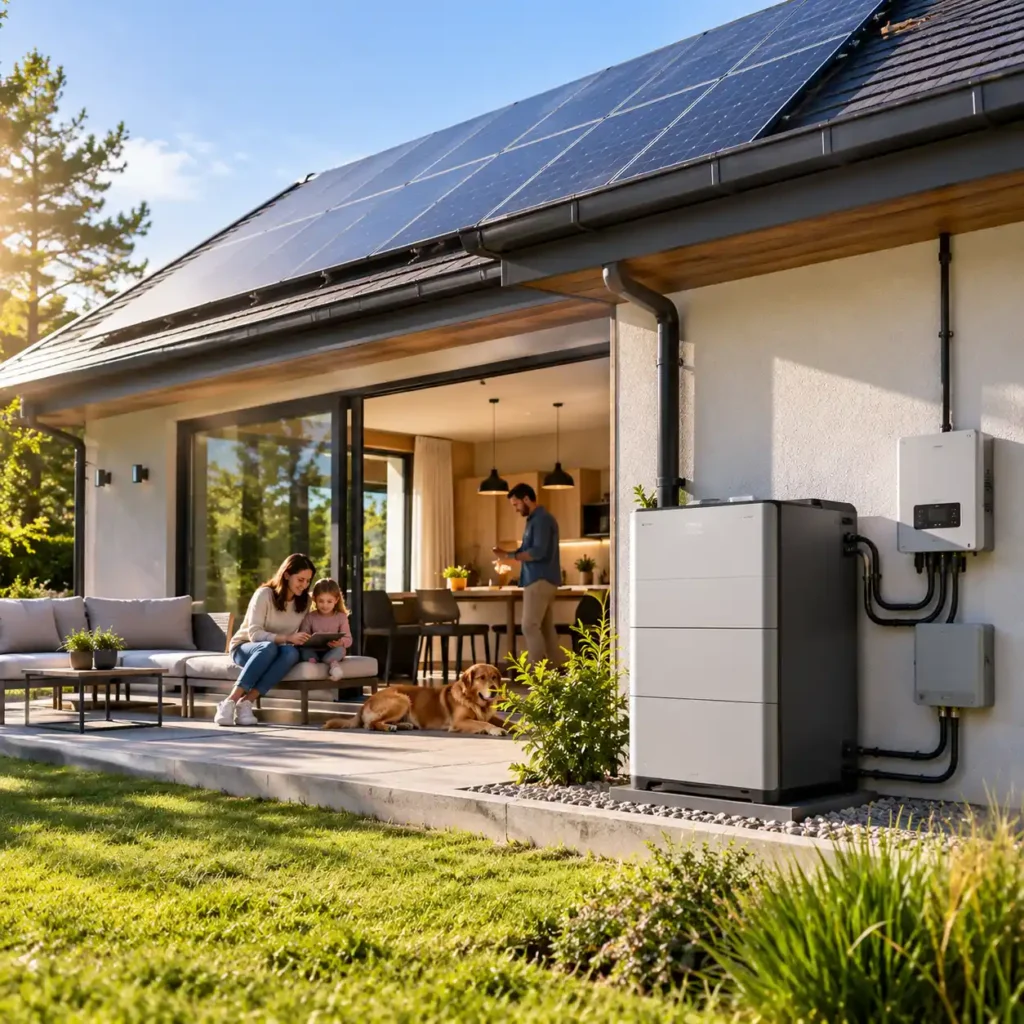
Home backup is now a major part of Jackery’s strategy.
The company currently positions products such as HomePower 3000, HomePower 3600 Plus, and Explorer 5000 Plus for increasingly demanding backup scenarios.
The progression is important:
– smaller systems can protect essential electronics and selected appliances;
– larger systems can provide more capacity and higher output;
– expandable systems can increase stored energy;
– larger home configurations can integrate solar generation and transfer equipment.
Jackery’s current website also markets complete home-backup packages combining power stations, battery packs, solar panels, and transfer equipment.
Jackery’s newer home-energy portfolio also extends beyond traditional portable power stations. HomePower models are increasingly positioned for automatic, always-ready backup of essential household loads, while FridgeGuard provides dedicated refrigerator and freezer protection with automatic UPS-style switchover. Larger residential configurations further expand Jackery’s role from portable emergency power toward more structured home backup.
This means consumers should distinguish between portable emergency power and a structured home backup system .These solutions may use similar battery technology, but the installation, capacity, electrical integration, and intended operating role can be very different.
For a broader market comparison, readers can use our existing Best Home Battery Backup Systems and Best Whole House Backup Power Systems resources rather than treating this Brand Profile as a home-backup buying guide.
Who Is Jackery For?
Jackery is particularly relevant to consumers who want a relatively simple path into battery-based portable or backup power.
Outdoor Users
Camping, road trips, remote work, photography, and other outdoor activities remain natural use cases for the brand.
Compact and mid-sized power stations can provide electricity without gasoline, engine noise, or fuel storage.
RV and Off-Grid Users
Larger portable power stations can provide energy for appliances, electronics, lighting, and other RV equipment.
The appropriate Jackery model depends heavily on the electrical loads and desired runtime.
Emergency Preparedness
Jackery is also relevant to homeowners who want battery backup for essential devices during short or moderate outages.
A portable system can be particularly useful for keeping communications, networking equipment, lighting, refrigeration, and selected electronics operating.
Homeowners Wanting Expandable Backup
Jackery’s newer HomePower and larger systems are more relevant when the goal is a longer-duration or expandable home backup solution.
Who May Want Another Brand?
Jackery is not automatically the best fit for every buyer.
You may want to consider other manufacturers if your primary requirement is:
- a highly specialized whole-home electrical installation;
- a permanently installed battery system designed around a specific solar inverter ecosystem;
- deep integration with an existing smart-home or home-energy platform;
- highly specialized professional or industrial power requirements;
- a specific combination of ports, expansion architecture, or electrical standards unavailable in the Jackery model you are considering.
There is also an important distinction between brand strength and product fit.
Jackery’s broad lineup means there are many possible configurations, but the correct product still depends on your required wattage, battery capacity, charging method, and intended use.
Jackery Strengths & Limitations
Strengths
Strong portable-power heritage.
Jackery has been developing lithium portable power stations since 2015 and has built substantial experience around portable solar generation.
Broad product range.
The current portfolio covers compact portable stations, mid-size systems, larger expandable units, solar panels, and home-backup solutions.
Integrated solar ecosystem.
SolarSaga panels and Jackery power stations are designed as complementary components rather than unrelated products.
Expansion into home energy.
The HomePower and larger expandable systems give Jackery a path beyond traditional camping-oriented power stations.
Recognizable product architecture.
Explorer, Plus, HomePower, and SolarSaga provide recognizable families, although buyers still need to check model-specific specifications.
Limitations
The lineup can be confusing.
Multiple generations and similarly numbered models can make comparisons difficult.
Features vary significantly by model.
App connectivity, battery chemistry, expansion, charging options, and environmental protection are not universal.
Some products are increasingly system-oriented.
As Jackery moves into larger home backup solutions, installation and electrical integration become more important than simple portability.
Regional differences matter.
Electrical specifications, plugs, warranty terms, and product availability can vary between markets. Buyers should verify the local product page before purchase.
Jackery Warranty
Jackery’s warranty structure varies by product family and region.
The current U.S. warranty policy lists different coverage periods, including 3+2 years for several Plus and Pro series and 2+1 years for several standard series. Jackery’s current policy also lists a five-year warranty for the Explorer 5000 Plus.
The European policy differs in important ways and includes separate terms for certain home-energy and solar products.
This is therefore an area where readers should not rely on a single brand-wide warranty statement.
The exact product page and regional warranty policy should be checked before purchase.
Jackery states that its warranty generally covers defects in materials and workmanship under normal consumer use, while exclusions include accidental damage, unauthorized repairs or modifications, and certain forms of misuse.
Key Jackery Product Families
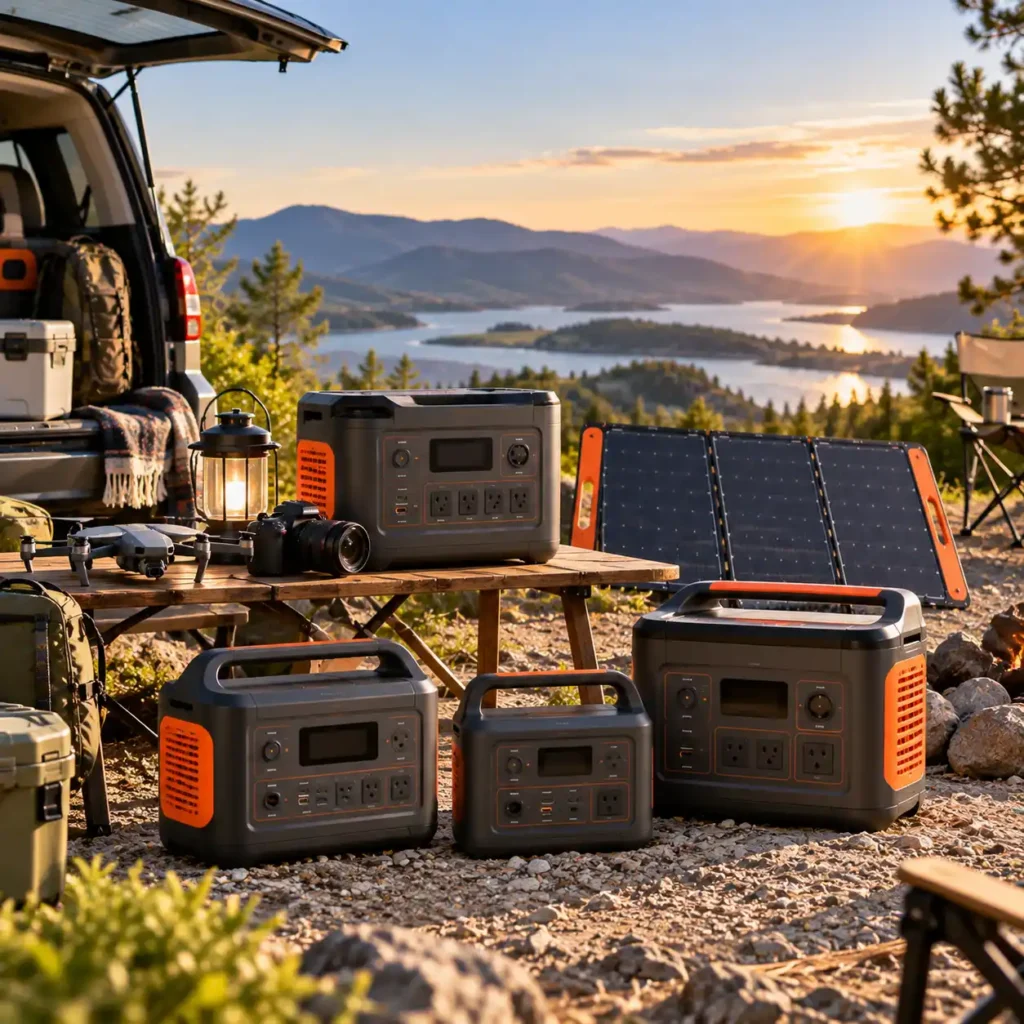
This section is intended as navigation, not a ranking.
Explorer Power Stations
Jackery’s Explorer family represents the company’s core portable power platform, covering compact through high-capacity models.
HomePower Systems
The HomePower family represents Jackery’s newer focus on home backup and expandable energy storage.
SolarSaga Panels
SolarSaga is Jackery’s portable and higher-output solar-panel family for charging compatible power stations and solar-generator systems.
Larger Expandable Systems
Products such as the Explorer 5000 Plus illustrate the upper end of Jackery’s expandable energy-storage strategy.
These products illustrate Jackery’s portfolio structure; they are not ranked here.
Jackery Guides, Reviews & Comparisons
For users researching Jackery, the most useful next step depends on what they are trying to accomplish.
A reader comparing portable power stations across brands should use our broader Best Portable Power Stations for Home Backup, Best Portable Power Stations for RV, and Best Portable Power Stations for Camping resources where appropriate.
For readers who need to determine the right capacity rather than choose a brand, our How to Choose a Portable Power Station and How Much Power Do You Really Need? guides address the broader sizing decision.
And when the question is numerical, the Power Station Size Calculator can help translate required loads into a more appropriate power-station size.
This separation is intentional: the Jackery Brand Profile explains the brand and its portfolio, while the other pages handle broader category-selection questions.
Frequently Asked Questions About Jackery
What is Jackery best known for?
Jackery is best known for its portable power stations, solar generators, and SolarSaga portable solar panels. The company has expanded from outdoor and off-grid power into larger home backup and energy-storage systems.
Is Jackery a good brand for portable power?
Jackery is an established portable-power brand with a broad range of power stations covering compact personal power through higher-capacity emergency and home-backup applications. However, the right Jackery depends on the required battery capacity, AC output, portability, charging options, and intended use.
What is the difference between Jackery Explorer and HomePower?
Explorer products are primarily associated with portable power, while HomePower systems place greater emphasis on home backup, higher capacity, and expandable energy storage. The distinction is becoming less absolute as Jackery’s portfolio expands, so the specifications and intended use of the individual model should always be checked.
Do Jackery power stations use LiFePO4 batteries?
Many newer Jackery power stations use LiFePO4 batteries, but not every Jackery model uses the same battery chemistry. For example, the current Explorer 1000 v2 uses LiFePO4, while older Explorer 1000 and 1000 Pro models use NMC batteries.
How long do Jackery power stations last?
Battery lifespan depends on the model, battery chemistry, usage, and maintenance. Jackery’s current LiFePO4 models can be rated for thousands of charge cycles; for example, the Explorer 1000 v2 is specified at 4,000 cycles while retaining at least 70% capacity.
How long can a Jackery power station hold a charge?
A Jackery power station can retain a charge for months when properly stored. Jackery currently states that typical storage retention is around three to six months, depending on the model and conditions. Some newer systems, such as the HomePower 3000, use ZeroDrain technology to reduce long-term battery loss.
Can Jackery power stations be charged with solar panels?
Yes. Jackery power stations can be paired with compatible SolarSaga panels and other supported solar inputs. Actual charging speed depends on the power station’s solar-input limits, panel output, sunlight conditions, and configuration.
Can a Jackery solar panel charge a power station from another brand?
In some cases, yes. Jackery states that a SolarSaga panel can charge a third-party power station when the receiving station supports solar charging and the relevant voltage, connector, and electrical requirements are compatible. Compatibility must be checked for the specific products.
Do Jackery power stations support app control?
Selected Jackery power stations support the Jackery app through Bluetooth and/or Wi-Fi. The app can provide functions such as monitoring, remote control, charging settings, and firmware updates, but connectivity and available features vary by model.
Does Jackery offer home backup systems?
Yes. Jackery’s portfolio now includes dedicated HomePower systems and larger expandable solutions designed for home backup. These products move beyond the company’s traditional portable-power focus and can provide substantially more capacity and output for longer or more demanding backup scenarios.
Our Take on Jackery
Jackery’s most important strength is not one particular power station. It is the breadth and evolution of its product ecosystem.
The company started with a clear portable-power proposition: compact battery storage paired with portable solar generation. That identity remains visible in Explorer and SolarSaga, and it continues to make Jackery relevant for camping, RV travel, outdoor work, and emergency preparedness.
What has changed is the upper end of the portfolio.
HomePower systems, expandable battery configurations, larger solar products, and whole-home backup packages show that Jackery is increasingly competing in the broader home-energy market rather than only in portable power.
The main challenge for consumers is therefore not a lack of choice but too much choice across overlapping generations and product families.
The best way to evaluate Jackery is to start with the required use case, power output, capacity, portability, charging method, and expansion needs, then select the product family that matches those requirements.
For portable power, Explorer remains the central reference point. For more structured home backup, HomePower and the larger expandable systems deserve closer attention.
That makes Jackery a particularly relevant brand for buyers who want to move from a simple portable battery toward a more complete solar-and-storage setup without immediately building a conventional permanently installed energy system.
Final Navigation
Learn about Jackery’s product architecture:
Start with the brand profile above, then move to dedicated guides for individual Jackery product families and technologies as they are published.
Compare portable power stations across brands:
Use our Best Portable Power Stations for Home Backup, Best Portable Power Stations for RV, or Best Portable Power Stations for Camping guides when the goal is a category-wide comparison.
Work out how much power you need:
Use our How to Choose a Portable Power Station guide or Power Station Size Calculator rather than relying on brand names alone.
Sources & Factual Basis
This Brand Profile uses Jackery’s current official corporate, product, support, and warranty documentation as the primary factual basis. Product availability, specifications, warranty terms, and regional offerings can change, so model-specific claims should be checked against the applicable regional Jackery product page before publication or purchase.
Key factual sources include: