
Choosing among the best 3000Wh portable power stations is not as simple as comparing battery capacity. While these units offer substantial energy storage, their actual usefulness depends on AC output, usable energy, charging speed, expandability, and the devices you need to power. Two stations with similar capacities can deliver very different results in real-world backup situations.
This guide evaluates five portable power stations available on the U.S. market, comparing their specifications, practical capabilities, charging options, and key limitations. Rather than ranking models by capacity alone, we focus on how each one performs for different power needs, from essential home backup to off-grid use. Our goal is to help you identify which 3000Wh power station offers the right balance of output, runtime, flexibility, and value for your specific requirements.
As an Amazon Associate, I earn from qualifying purchases.
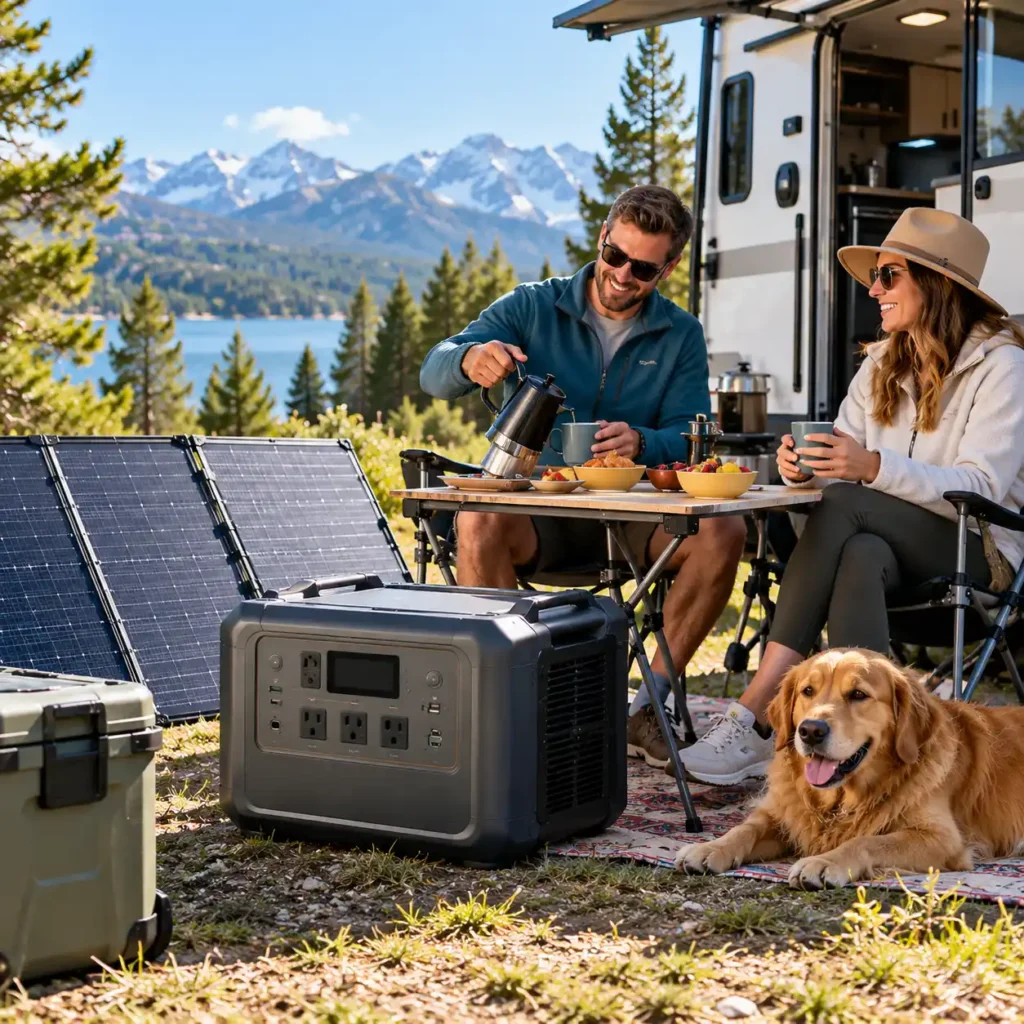
Table of Contents
Quick Answer
If you’re comparing the best 3000Wh portable power stations, the right choice depends on how you plan to use the available capacity. The Anker SOLIX F3000 is worth considering for expandable home backup, while the BLUETTI Elite 300 stands out for RV use thanks to its dedicated 30A RV outlet and more portable design. Both offer different advantages within this capacity class.
The Pecron E3600LFP is another option to consider if fast recharging and high AC output are priorities. The VTOMAN FlashSpeed Pro 3600 may appeal to buyers interested in expandable capacity, while the Jackery HomePower 3000 offers an alternative from an established portable power brand. Each model has trade-offs involving weight, charging options, expansion, or other practical considerations.
Before choosing, compare more than the advertised watt-hour rating. Continuous AC output, usable energy, charging flexibility, expansion options, and the devices you need to run will determine whether a 3000Wh power station is a practical fit for your backup or off-grid needs.
Our Evidence & Evaluation Method
Our evaluation of the best 3000Wh portable power stations focuses on specifications, practical performance considerations, and the evidence available for each model. We compare manufacturer documentation, independent testing where available, and calculated runtime estimates to identify meaningful differences between the five selected power stations.
| Factor | What We Examine |
|---|---|
| Capacity | Rated battery capacity in Wh and estimated usable AC energy (Manufacturer specifications, independent testing where available, and transparent calculations) |
| Output | Continuous AC output, surge capability, and outlet-level limitations (Manufacturer specifications and independent measurements where available) |
| Charging | AC, solar, and vehicle charging options, including input limits and charging times (Technical documentation and independent testing where available) |
| Portability | Weight, dimensions, handles, and practical transport considerations (Manufacturer specifications and product documentation) |
| Runtime | Estimated operating time for representative household and off-grid loads (Calculated estimates based on usable energy, load requirements, and conversion assumptions) |
| Reliability | Battery chemistry, cycle-life claims, warranty terms, and documented reliability concerns (Manufacturer documentation and independent reports where available) |
We do not claim proprietary laboratory testing or hands-on performance measurements. Manufacturer claims are distinguished from independently measured results, while runtime figures are presented as estimates rather than guaranteed operating times. This approach helps readers compare the five models using consistent criteria without overstating the available evidence.
Who This Guide Is For
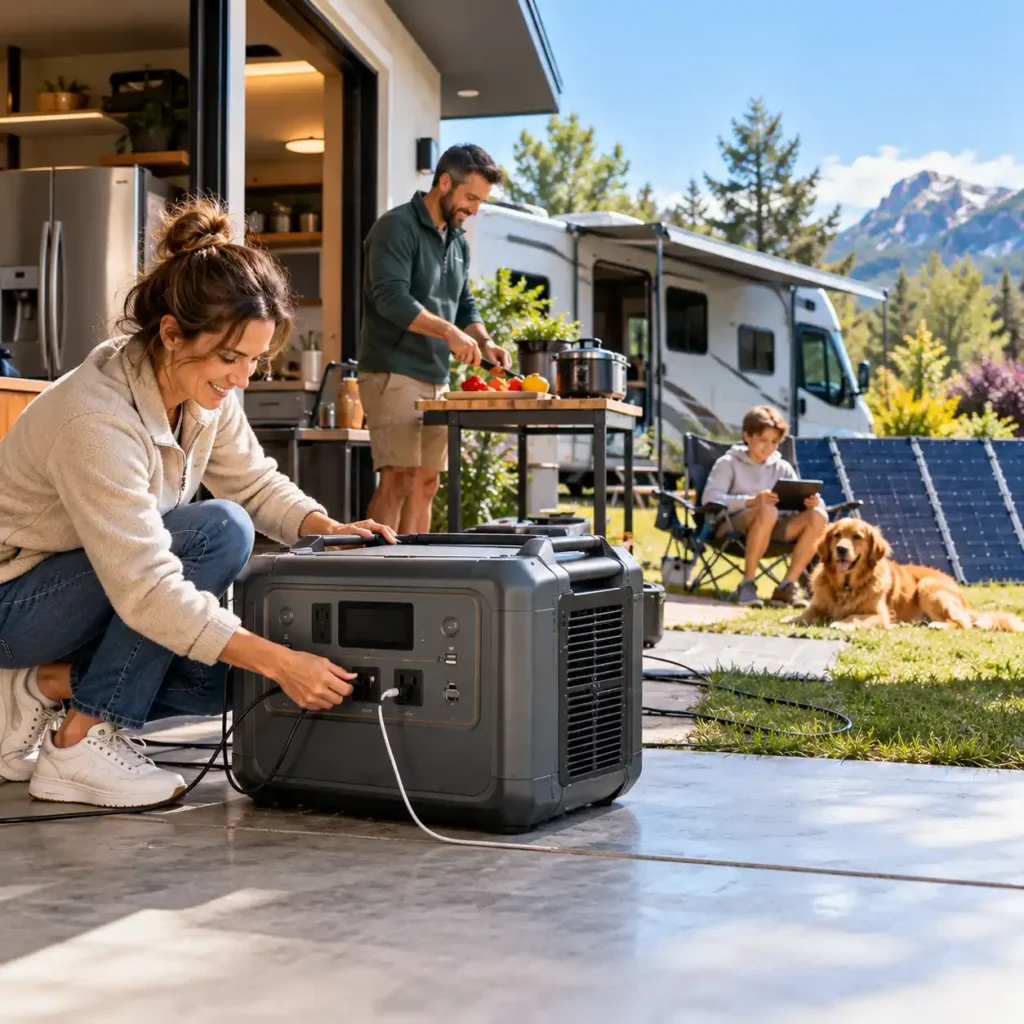
This guide is for buyers considering a portable power station with approximately 3000Wh of battery capacity. It is especially useful if you need substantial stored energy for essential home backup, RV trips, extended off-grid use, or running multiple devices without relying on a fuel-powered generator.
Who Should Read This
Buyers comparing high-capacity portable power stations in the 2800–3300Wh range.
Homeowners who need stored energy for selected appliances and essential devices during outages.
RV and off-grid users who want to compare output, charging flexibility, portability, and expansion options.
Shoppers deciding whether a 3000Wh-class power station offers a better balance of capacity and practicality than a smaller or larger unit.
Who Should Use Another Guide
If you need a complete home backup solution, see our Best Portable Power Stations for Home Backup guide.
If your main priority is powering an RV, explore Best Portable Power Stations for RV.
If you are comparing smaller-capacity options, read Best 2000Wh Portable Power Stations.
If you need to calculate the right battery capacity for your appliances, use our Power Station Size Calculator.
Quick Summary: Our Top Picks
BLUETTI Elite 300
Award: Best for Dedicated RV Power Connections
Best For: RV owners and off-grid users who need substantial battery capacity, a dedicated RV outlet, and a relatively manageable unit for transport.
Why It Stands Out: Its 3,014.4Wh battery, 2,400W continuous AC output, and dedicated 30A TT-30 outlet make it a practical option for compatible RV appliances and essential off-grid equipment. At approximately 58 lb, it is also relatively easy to handle compared with heavier models in this lineup.
Main Limitation: Its 2,400W continuous output is lower than the 3,600W offered by several competing models, and its battery capacity is not expandable.
Anker SOLIX F3000
Award: Best for High-Output Expandable Home Backup
Best For: Homeowners who need substantial backup power, higher AC output, and the flexibility to increase battery capacity for longer outages.
Why It Stands Out: Its 3,072Wh LFP battery and 3,600W AC output provide substantial power for essential household loads. Its expandable design offers a path to greater energy storage, making it suitable for buyers planning a larger backup system over time.
Main Limitation: At approximately 91.5 lb, it is relatively heavy for frequent transport. Additional batteries also increase the total system cost.
Pecron E3600LFP
Award: Best for High-Wattage AC Recharging
Best For: Users who prioritize fast battery recovery and high AC output, especially when a compatible high-current power source is available.
Why It Stands Out: Its 3,072Wh battery and 3,600W continuous AC output are complemented by AC charging input of up to 3,200W with a compatible 30A connection. This makes it a strong option for users who need to recharge quickly between outages or periods of off-grid use.
Main Limitation: Reaching the maximum charging rate requires a suitable 30A connection and compatible cable. Charging from a standard 15A outlet is slower. Its approximately 79 lb weight also limits portability.
VTOMAN FlashSpeed Pro 3600
Award: Best for Expandable Mid-Range Battery Capacity
Best For: Buyers who want to extend a 3,000Wh-class power station’s runtime without immediately moving to a much larger backup system.
Why It Stands Out: Its 3,096Wh battery and 3,600W continuous output provide substantial power, while its expandable design allows total capacity to increase to approximately 5,912Wh. This gives buyers a way to extend runtime as their energy requirements grow.
Main Limitation: Its maximum solar input of 800W is lower than that of several competitors. Buyers should also confirm current U.S. availability and compatible expansion options before purchase.
Jackery HomePower 3000
Award: Best for High-Output, Non-Expandable Backup Power
Best For: Buyers who need substantial backup capacity and high AC output in a straightforward power station for home emergencies, essential appliances, and off-grid use.
Why It Stands Out: The HomePower 3000 combines a 3,072Wh LiFePO₄ battery with 3,600W of continuous AC output and a 7,200W surge rating. Its dedicated 120V, 30A AC outlet supports compatible higher-demand equipment, while its approximately 59.5 lb weight makes it manageable for occasional repositioning. With up to 1,000W of solar input, it also offers an option for replenishing its battery when suitable solar panels and conditions are available.
Main Limitation: Its battery capacity is not expandable. Buyers who need to extend runtime during prolonged outages should compare it with expandable alternatives such as the Anker SOLIX F3000 or VTOMAN FlashSpeed Pro 3600.
Best 3000Wh Portable Power Stations: Comparison Table
| Model | Capacity | AC Output | Weight | Best For |
|---|---|---|---|---|
| BLUETTI Elite 300 | 3,014.4Wh | 2,400W | 58 lb | Dedicated RV power connections |
| Anker SOLIX F3000 | 3,072Wh | 3,600W | 91.5 lb | High-output expandable home backup |
| Pecron E3600LFP | 3,072Wh | 3,600W | 79 lb | High-wattage AC recharging |
| VTOMAN FlashSpeed Pro 3600 | 3,096Wh | 3,600W | 83.8 lb | Expandable mid-range battery capacity |
| Jackery HomePower 3000 | 3,072Wh* | 3,600W* | Approx. 59.5 lb* | Compact 3000Wh-class energy reserve |
How We Evaluated the Best 3000Wh Portable Power Stations
A battery capacity of around 3,000Wh is only one part of what makes a portable power station useful. Two models with similar energy storage can differ significantly in usable AC energy, inverter capability, charging speed, portability, and expansion options.
To evaluate the best 3000Wh portable power stations, we use a consistent framework built around ten criteria. Our analysis considers manufacturer specifications, available independent testing, technical documentation, and practical use-case requirements. We focus on the differences that matter when choosing a high-capacity power station for home backup, RV use, and off-grid applications.
Energy Capacity
We compare the rated battery capacity of each power station, measured in watt-hours (Wh). This establishes how much energy the battery is designed to store and provides a baseline for comparing models within the 3000Wh class.
Capacity alone does not determine runtime, but it helps identify differences in the total energy reserve available for appliances, electronics, and other connected equipment.
Usable Energy
Rated battery capacity is not the same as the energy delivered to connected AC devices. Conversion losses in the inverter and other system components reduce the amount of energy available at the outlets.
For consistent planning, we use an 85% usable AC energy assumption as an estimate rather than a measured result. This provides a practical comparison baseline while recognizing that actual efficiency varies with the power station, load level, operating conditions, and conversion system.
Inverter Capability
We compare continuous AC output, surge capability, and relevant outlet-level power limitations. These specifications help determine which devices a power station can operate and whether it can handle the initial startup demand of equipment with motors or compressors.
A higher advertised inverter rating does not automatically mean every outlet can deliver that full output. We also consider connection-specific limitations and distinguish between continuous output and temporary peak ratings.
Charging Speed
Recharge time affects how quickly a power station can recover after use and how practical it is during repeated outages or short charging windows.
We examine supported AC charging input, solar charging limits, available charging methods, and manufacturer-stated recharge times. Where charging performance depends on a particular connection, cable, or input configuration, we take those conditions into account rather than treating the maximum charging rate as universally available.
Portability
High-capacity power stations are often heavy, making portability an important practical consideration even when they are designed to be moved rather than carried regularly.
We compare weight, dimensions, handles, and overall form factor. We also consider how these factors affect transport between a home, vehicle, campsite, or storage location. A lighter unit may be easier to reposition, while a heavier model may offer higher output or more expansion flexibility.
Solar Compatibility
Solar charging can reduce dependence on grid power and provide an alternative way to recharge during extended off-grid use or prolonged outages.
We compare maximum solar input, supported charging configurations, and relevant connection requirements. We also consider whether the stated solar input limit is practical for the battery capacity and intended use. Maximum input ratings are not guarantees of continuous solar production, which depends on panel configuration, sunlight, temperature, and other conditions.
Expandability
Some power stations support additional battery units, allowing users to increase total stored energy beyond the base capacity.
We examine supported expansion options, maximum system capacity, compatibility requirements, and the practical implications of adding extra batteries. Expandability is particularly relevant for buyers who may need longer backup runtime in the future. However, an expandable system is not automatically the best choice if its additional cost, weight, or setup requirements outweigh the benefits.
Warranty and Ecosystem
Warranty coverage and the broader product ecosystem influence the long-term ownership experience.
We review published warranty terms, battery-life claims, compatible accessories, and the availability of supported expansion products. We also consider whether a manufacturer’s product range offers useful options for building a larger or more specialized power system.
Warranty duration alone is not a complete measure of reliability. Coverage conditions, exclusions, and the manufacturer’s published support information also matter.
Value
We assess value by considering the capabilities a power station offers relative to its purchase price. Relevant factors include battery capacity, continuous AC output, charging performance, solar input, expansion options, and included functionality.
Because prices and promotions change, value is not treated as a fixed ranking based on a single price snapshot. Instead, we consider whether a model’s advantages justify its position relative to comparable alternatives. A lower-priced unit may offer better value for a specific use case, while a more expensive model may make sense for buyers who need its additional capabilities.
Use-Case Fit
Finally, we evaluate how well each model matches the needs of different buyers. A power station designed for higher-output home backup may not be the most practical choice for an RV owner who prioritizes a dedicated RV connection and easier transport.
We consider several common scenarios, including essential home backup, RV use, extended off-grid power, and situations where fast recharging or future capacity expansion matters. This helps distinguish models with similar headline specifications but different practical strengths.
Our Evaluation Approach
We use these ten criteria to identify meaningful differences between the five selected power stations rather than assigning an arbitrary winner based on one specification.
Our evaluation is based on manufacturer documentation, available independent testing, and technical analysis. We do not claim proprietary laboratory testing or hands-on performance measurements. Calculated figures, including usable energy and runtime estimates, are clearly treated as estimates, while manufacturer specifications and independent measurements are distinguished wherever evidence allows.
This approach is designed to help buyers understand not only what each power station offers, but also which trade-offs matter most for their particular backup or off-grid requirements.
Our Top 3000Wh Portable Power Station Reviews
BLUETTI Elite 300 Portable Power Station
Best for Dedicated RV Power Connections
Quick Verdict
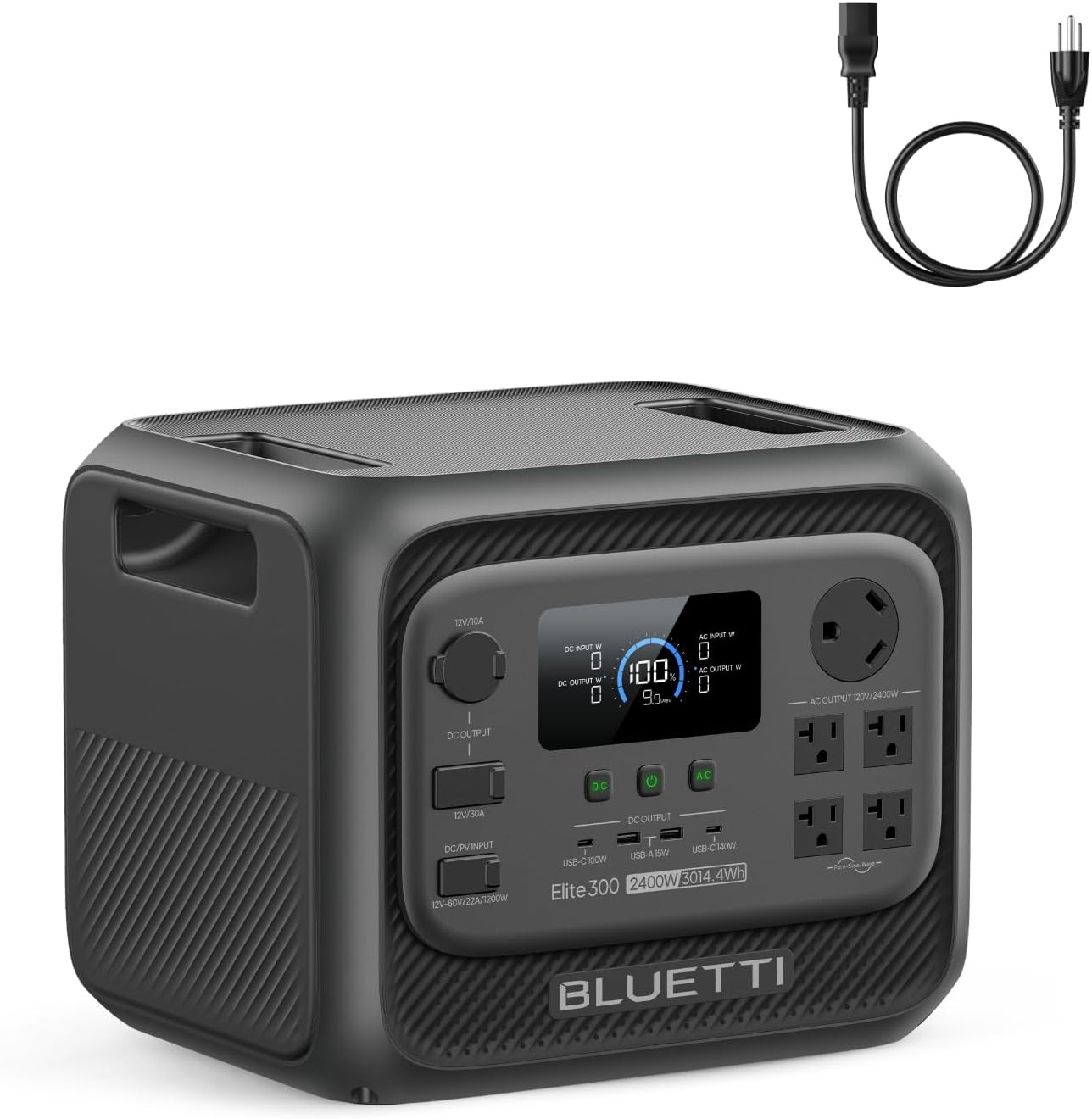
The BLUETTI Elite 300 Portable Power Station is a 3,014.4Wh power station built around a relatively compact form factor, a dedicated 30A RV connection, and a 2,400W continuous inverter. Its combination of battery capacity and RV-oriented outputs gives it a distinct role among 3000Wh-class models. Rather than maximizing AC output or supporting extensive battery expansion, it prioritizes a practical balance of stored energy, direct RV connectivity, and manageable dimensions.
This model is particularly relevant for RV owners, camper users, and off-grid buyers who need to power compatible 120V equipment, 12V appliances, and everyday electronics from one portable unit. It can also serve as a backup source for selected household essentials. However, buyers who need 3,600W of continuous AC output, a larger expandable battery system, or the fastest possible AC recharging should compare it with more powerful alternatives.
Snapshot
| Specification | Details |
|---|---|
| Battery Capacity | 3,014.4Wh |
| Continuous AC Output | 2,400W |
| Peak/Surge Output | 4,800W |
| AC Voltage | 120V |
| Weight | 57.98 lb |
| Battery Chemistry | LiFePO4 |
| Expandability | No supported expansion battery listed |
| AC Outlets | Includes a NEMA TT-30 outlet |
| AC Charging Input | Up to 1,800W |
| Solar Input | Up to 1,200W |
| UPS Transfer Time | ≤10ms |
| Warranty | 5 years |
Why We Chose It
The BLUETTI Elite 300 earns the Best for Dedicated RV Power Connections award because it includes a built-in NEMA TT-30 outlet, giving compatible RVs a direct connection option without relying on a separate adapter-based setup. That makes it particularly relevant for buyers who prioritize RV compatibility over maximum output or expandable capacity.
The Anker SOLIX F3000 offers higher continuous output and a more extensive expansion path for home backup, while the Pecron E3600LFP stands out for its high-wattage AC recharging capability. The VTOMAN FlashSpeed Pro 3600 emphasizes expandable battery capacity, and the Jackery HomePower 3000 may appeal to buyers looking for a portable high-capacity option. The BLUETTI’s distinction is more specific: its RV-oriented connection is built into the unit rather than being a secondary consideration.
This does not make the Elite 300 the most powerful or versatile station in the group. Its 2,400W continuous output and lack of confirmed battery expansion are meaningful trade-offs. However, for RV owners whose equipment is compatible with a TT-30 connection, that dedicated outlet is a practical advantage that the other models do not share in the same way.
Check the latest price and customer reviews on Amazon.

Living With It
At 14.41 × 12.01 × 11.71 inches, the BLUETTI Elite 300 has a compact, almost cube-shaped footprint for a power station with just over 3,000Wh of capacity. Its dimensions make it easier to fit into an RV storage area, a utility room, or a designated spot in a home backup setup than a bulkier unit with a similar energy reserve.
Placement is relatively straightforward, but this is still a substantial piece of equipment. At 57.98 lb, the Elite 300 is manageable to move between locations, yet carrying it over long distances or lifting it into a vehicle can be tiring. Its built-in handles help with repositioning, but it is better suited to occasional moves than frequent carrying.
In a practical RV scenario, the built-in NEMA TT-30 outlet is a notable convenience. Owners of compatible RVs can connect directly to the station and power selected onboard appliances and systems without making an adapter the center of the setup. At home, the same capacity can support essential devices during an outage, provided their combined power demand stays within the station’s 2,400W continuous output.
The main everyday limitation is that the Elite 300 combines a relatively compact body with a fixed battery capacity and a lower continuous output than some 3,600W competitors. It is not designed to grow with additional expansion batteries, so buyers who expect to increase their backup capacity later may find its setup less flexible. Its 58-pound weight also means that compact dimensions should not be mistaken for effortless portability.
Evaluation
| Evaluation Factor | This Model | How It Compares | Buyer Implication |
|---|---|---|---|
| RV Connectivity | Built-in NEMA TT-30 outlet | Offers a dedicated RV connection, while the other models are differentiated more by output, charging, or expansion features | A practical advantage for compatible RV setups that need a direct TT-30 connection |
| Continuous AC Output | 2,400W | Lower than the 3,600W output of the Anker SOLIX F3000, Pecron E3600LFP, and VTOMAN FlashSpeed Pro 3600 | Better suited to selected appliances and essential loads than multiple high-demand devices running simultaneously |
| Battery Capacity | 3,014.4Wh | Slightly below the 3,072Wh Anker SOLIX F3000 and Pecron E3600LFP, and close to the other models in this capacity class | Provides substantial stored energy, but capacity differences alone are unlikely to determine the best choice |
| Portability | 57.98 lb | Lighter than the Anker SOLIX F3000, Pecron E3600LFP, and VTOMAN FlashSpeed Pro 3600, based on the currently listed weights | Easier to reposition or load into a vehicle, although still heavy for frequent carrying |
| Battery Expansion | No supported expansion battery listed | Less flexible than models with documented expansion options, such as the Anker SOLIX F3000 and VTOMAN FlashSpeed Pro 3600 | A better fit for buyers who expect to use the built-in capacity rather than expand their system later |
| Solar Input | Up to 1,200W | Below the listed 2,400W maximum of the Anker SOLIX F3000 and Pecron E3600LFP | Supports solar recharging, but offers less maximum solar input than those two competitors |
| UPS Transfer | ≤10ms | A fast transfer specification for backup use; compare only with verified transfer figures for the other models | Relevant for selected sensitive electronics, but not the main reason to choose this model for RV use |
Who Should Buy This
The BLUETTI Elite 300 makes sense for a U.S. buyer who:
owns an RV with equipment compatible with a NEMA TT-30 connection and wants a dedicated outlet built into the power station;
needs a 3,014.4Wh battery capacity for selected appliances, electronics, or RV power needs;
prefers a relatively lighter option than several competing 3,000Wh-class power stations;
wants to run essential home backup loads that stay within its 2,400W continuous AC output;
values a compact footprint for placement in an RV, utility area, or designated backup-power space;
does not need a higher-output inverter or additional battery capacity in the future.
Who Should Skip This
The BLUETTI Elite 300 is a less suitable choice for a buyer who:
needs 3,600W of continuous AC output for multiple high-demand appliances;
wants to expand the system with additional battery capacity as backup needs grow;
prioritizes the highest available solar input and faster potential solar replenishment;
expects to carry the power station frequently over long distances or lift it regularly;
needs a more flexible long-term home backup setup rather than a relatively fixed-capacity power station.
Final Verdict
The BLUETTI Elite 300 earns its place among these five power stations through a specific practical advantage: its built-in NEMA TT-30 outlet makes it especially convenient for compatible RV connections. That is a more meaningful reason to choose it than a small difference in battery capacity.
Its main trade-off is flexibility. The 2,400W continuous output is lower than that of several competitors, and the lack of documented battery expansion limits its ability to grow into a larger backup system. If your priority is a direct RV connection and a substantial but fixed energy reserve, the Elite 300 is a well-targeted choice. If you need greater output or a system that can expand over time, one of the higher-output or expandable alternatives is likely to serve you better.
Check the latest price and customer reviews on Amazon.
Related Guide: Learn more about choosing a portable power station for RV use in our guide to Best Portable Power Stations for RV Use.
Anker SOLIX F3000 Portable Power Station
Best for High-Output Expandable Home Backup

Quick Verdict
The Anker SOLIX F3000 Portable Power Station combines a 3,072Wh LiFePO4 battery with 3,600W of continuous AC output, giving it more power headroom than the BLUETTI Elite 300. Its expandable design also allows users to add compatible battery capacity as their backup needs grow. Rather than serving as a fixed-capacity power source, the F3000 is designed for buyers who want the flexibility to build a larger portable or home backup system over time.
This model makes the most sense for U.S. homeowners preparing for extended outages, households that need to run several essential appliances within the station’s output limits, and users who value the option to expand their energy reserve. Its higher inverter output and expansion capability make it a stronger fit for demanding backup scenarios than a compact, fixed-capacity unit. However, its substantially heavier 91.5 lb body makes it less convenient to move frequently, and buyers who need only a modest backup setup may not benefit enough from its additional capabilities.
Snapshot
| Specification | Details |
|---|---|
| Battery Capacity | 3,072Wh |
| Continuous AC Output | 3,600W |
| Peak/Surge Output | 7,200W |
| AC Voltage | 120V |
| Weight | 91.5 lb |
| Battery Chemistry | LiFePO4 |
| Expandability | Supports Anker SOLIX BP3000 expansion batteries (3,072Wh each) |
Why We Chose It
The Anker SOLIX F3000 earns the Best for High-Output Expandable Home Backup award for combining 3,600W of continuous AC output with support for BP3000 expansion batteries. Its 2,400W maximum solar input further strengthens its appeal for homeowners planning a backup system that can grow beyond the station’s built-in capacity.
Compared with the BLUETTI Elite 300, the Anker offers higher continuous output and battery expansion, while the BLUETTI is lighter. The Pecron E3600LFP matches its AC output and maximum solar input but offers an advantage in AC recharging. The VTOMAN FlashSpeed Pro 3600 also supports expansion, while the Jackery HomePower 3000 provides an alternative for buyers who may prioritize a different balance of portability and backup capability. The Anker’s strongest reason to stand out is its combination of high output and expansion flexibility, although its base capacity is not substantially larger than those of the competing models.
Check the latest price and customer reviews on Amazon.
Living With It
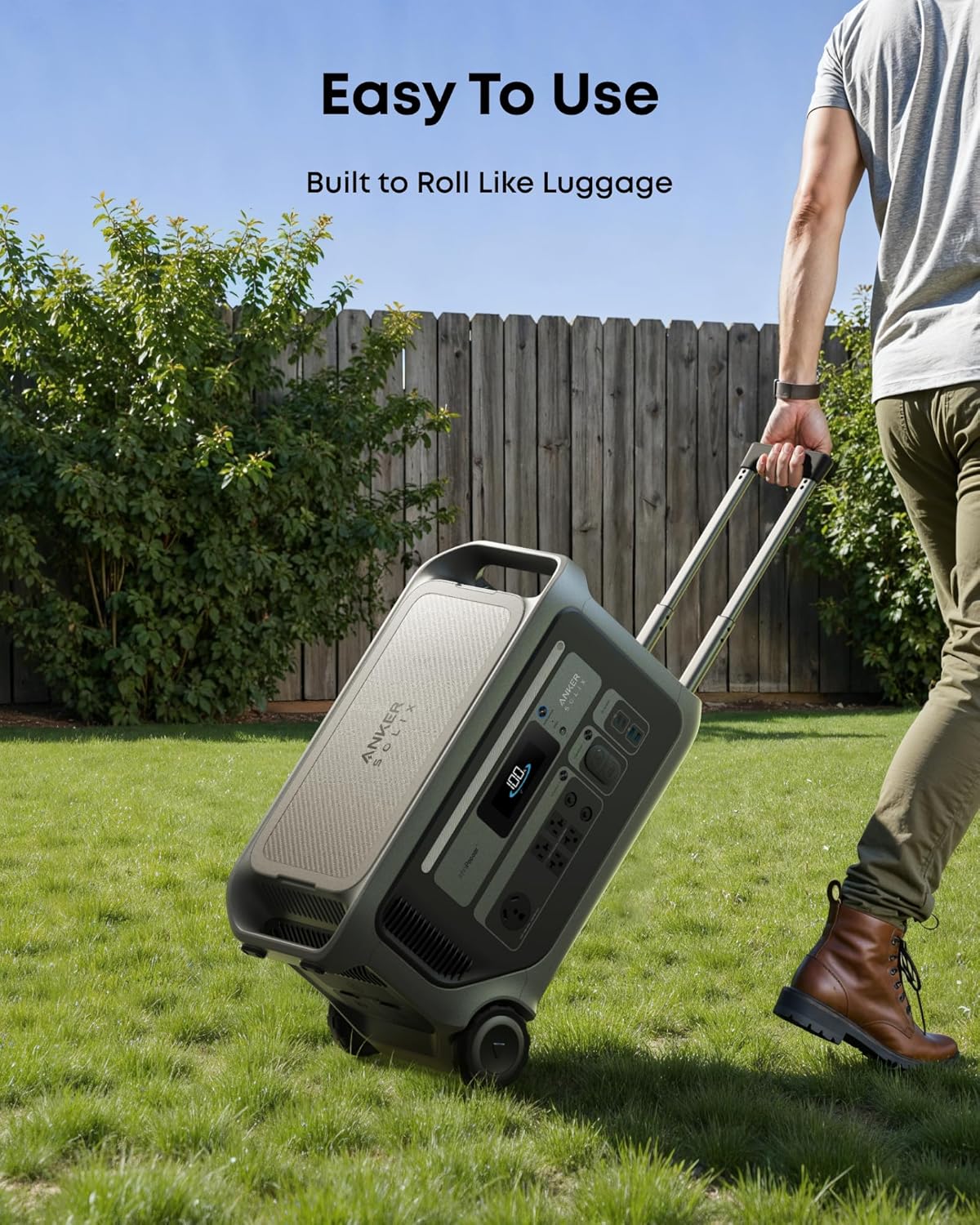
The Anker SOLIX F3000 is best suited to a designated home backup area, such as a garage or utility room. Its 25.6 × 11.8 × 14.8-inch footprint requires planning, particularly in spaces where storage is limited or the station needs to remain accessible during an outage.
At 91.5 lb, the F3000 is not convenient to move frequently. It can be relocated when necessary, but moving it between rooms or loading it into a vehicle is a substantial task. Choosing a suitable location in advance makes more sense than treating it as a power station for spontaneous trips or regular transport.
During a power outage, the F3000 can support several essential household appliances at once, provided their combined running wattage and startup surges remain within its limits. This makes it practical as a central backup unit for selected household loads rather than a solution that automatically powers an entire home.
For longer outages, the ability to add compatible expansion batteries and recharge through solar input can help extend its usefulness. However, the station’s physical size and weight remain important trade-offs. The F3000 works best when its high output and expandable capacity serve a planned home backup setup, rather than a use case where easy portability is a priority.
Evaluation
| Evaluation Factor | This Model | How It Compares | Buyer Implication |
|---|---|---|---|
| AC Output | 3,600W continuous | Matches Pecron and VTOMAN; exceeds BLUETTI's 2,400W | Provides more headroom for demanding home backup loads |
| Battery Expansion | Supports BP3000 expansion batteries | Offers a documented expansion path, while BLUETTI has no supported expansion battery listed; VTOMAN also supports expansion | Allows buyers to increase stored energy as backup needs grow |
| Solar Input | Up to 2,400W | Matches Pecron's listed maximum and exceeds BLUETTI and VTOMAN | Supports substantial solar recharging with a compatible setup |
| Portability | 91.5 lb | Heavier than BLUETTI, Pecron, and VTOMAN based on listed weights | Better suited to a dedicated home backup location than frequent transport |
Who Should Buy This
The Anker SOLIX F3000 makes sense for a U.S. buyer who:
needs high AC output to run several demanding appliances during a power outage;
wants a large, expandable battery system for longer backup periods;
plans to build a more capable home backup setup over time;
values the flexibility to add BP3000 expansion batteries rather than replace the original power station;
has a suitable place to keep a large, heavy unit.
Who Should Skip This
The Anker SOLIX F3000 is less appropriate if your priority is:
easy portability for frequent transport or moving between rooms;
a compact power station that fits into limited storage space;
basic backup for a few low-power devices without the need for expansion;
a simpler, lighter solution that does not require a larger home backup setup.
In these situations, a smaller or more portable model may be a better match.
Final Verdict
The Anker SOLIX F3000 is a strong choice for buyers who want substantial output today and the flexibility to build a larger backup system later. Its main compromise is the weight and space required to accommodate that capability. If expandable home backup matters more than portability, the F3000 deserves serious consideration.
Check the latest price and customer reviews on Amazon.
Related Guide: Best Portable Power Stations for Home Backup (2026) — Explore other high-capacity portable power stations for home backup and compare their output, battery capacity, and expansion options.
Pecron E3600LFP
Best for High-Wattage AC Recharging

Quick Verdict
The Pecron E3600LFP is a high-output portable power station designed for buyers who need substantial backup capacity and want to minimize downtime between uses. Its standout feature is fast AC recharging, with up to 3,200W of input when using a compatible 30A charging cable.
With 3,072Wh of built-in capacity, 3,600W of continuous AC output, and support for additional battery modules, the E3600LFP can serve as a flexible home backup option. Its relatively high weight makes it better suited to a planned backup location than frequent transport.
Snapshot
| Specification | Details |
|---|---|
| Battery Capacity | 3,072Wh |
| Continuous AC Output | 3,600W |
| Peak/Surge Output | 7,000W |
| AC Voltage | 120V |
| Weight | 79 lb |
| Battery Chemistry | LiFePO4 |
| Expandability | Up to 18,432Wh with compatible EP3800-48V expansion batteries |
Why We Chose It
The Pecron E3600LFP earns the Best for High-Wattage AC Recharging award for combining up to 3,200W of AC charging input with 3,072Wh of battery capacity and 3,600W of continuous output. This gives buyers a high-capacity station that can recover a substantial amount of stored energy quickly when a suitable AC power source is available.
The Pecron offers a higher AC charging input than the BLUETTI Elite 300 and several other options in this comparison, while matching the Anker SOLIX F3000 and VTOMAN FlashSpeed Pro 3600 in continuous output. However, the Anker supports up to 3,600W of AC charging in compatible configurations, so it has the edge in maximum charging input. The Pecron’s appeal is its combination of fast recharging, high output, and a lighter design than the Anker, rather than absolute leadership in every charging or performance metric.
Check the latest price and customer reviews on Amazon.

Living With It
The Pecron E3600LFP is a large, heavy unit, so it is best placed on a stable surface with enough clearance to access its outlets and controls. A dedicated spot in a garage, utility room, or another suitable area is more practical than keeping it in a frequently used living space.
At around 79 lb, moving it is a two-person task for many users, particularly when carrying it over stairs or uneven surfaces. It is not designed for effortless everyday relocation.
In a home backup setup, the station can remain in one place and supply power to selected appliances during an outage. Its main everyday drawback is the space and effort needed to accommodate and move it.
Evaluation
| Evaluation Factor | This Model | How It Compares | Buyer Implication |
|---|---|---|---|
| AC Recharging | Up to 3,200W | Below the Anker SOLIX F3000’s 3,600W maximum in compatible configurations | Fast replenishment, but not the highest charging input in this group |
| Continuous AC Output | 3,600W | Matches the Anker SOLIX F3000 and VTOMAN FlashSpeed Pro 3600 | Suitable for demanding loads, subject to startup and combined power requirements |
| Battery Expansion | Up to 18,432Wh with compatible EP3800-48V batteries | Offers substantial expansion; the practical comparison depends on confirmed compatibility and the expansion limits of the other models | A potential fit for buyers who may need considerably more stored energy later |
| Portability | Approximately 79 lb | Lighter than the Anker SOLIX F3000, but still a heavy unit | More manageable than the heaviest option, though better suited to stationary backup than frequent transport |
Who Should Buy This
The Pecron E3600LFP makes sense for a U.S. buyer who:
wants a high-output portable power station for household backup and demanding essential loads;
values fast AC recharging and can use a compatible 30A charging cable with a suitable power source;
needs 3,072Wh of built-in battery capacity for a substantial energy reserve;
wants the option to expand storage with compatible batteries as backup requirements grow;
prefers a power station that can remain in a dedicated location rather than one designed for frequent transport;
needs up to 3,600W of continuous AC output for several compatible appliances operating simultaneously.
Who Should Skip This
The Pecron E3600LFP is less appropriate if your priority is:
frequent transport or easy movement between locations;
the highest AC charging input among the models in this guide;
a compact backup unit that takes up little storage space;
a straightforward setup that does not depend on compatible high-current charging equipment;
a power station for which you do not need substantial output or the option to expand battery capacity.
In these situations, a lighter or simpler model—or one with a higher maximum AC charging input—may offer a better balance for your needs.
Final Verdict
The Pecron E3600LFP is a strong choice when fast AC recharging and the option to expand storage matter more than portability. Its main limitation is the practical effort involved in accommodating a heavy unit and accessing its maximum charging rate. If your backup station will stay in one place and you have the right charging setup, the Pecron deserves consideration. If you expect to move it often or want the fastest charging available in this comparison, another model may be a better fit.
Check the latest price and customer reviews on Amazon.
Related Guide: If you’re comparing the Pecron E3600LFP with other high-capacity power stations for extended backup, our Best 2000Wh Portable Power Stations (2026) guide helps you evaluate battery capacity, power output, and features to determine how much energy storage you actually need for longer outages.
VTOMAN FlashSpeed Pro 3600
Best for Expandable Mid-Range Battery Capacity
Quick Verdict
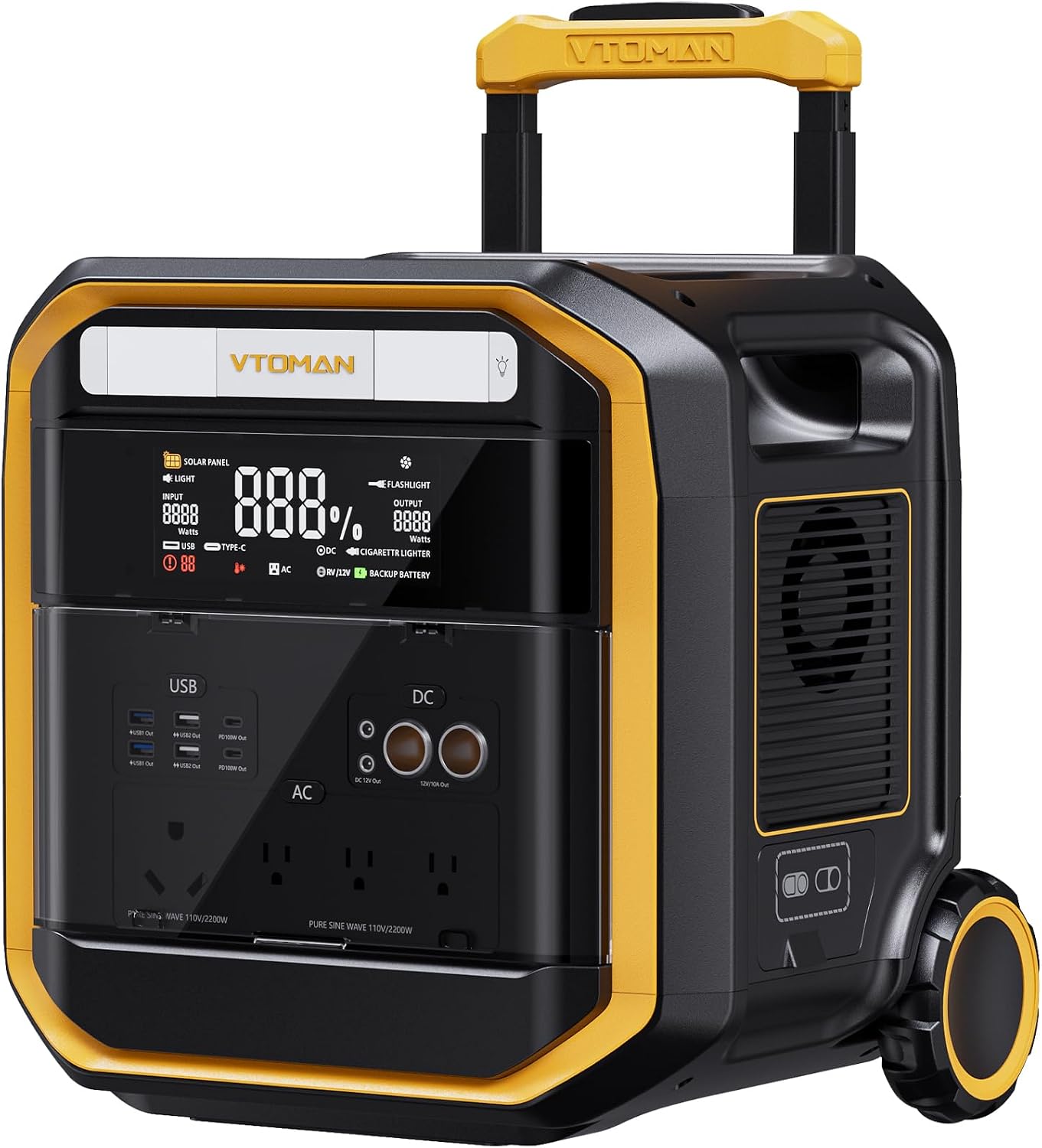
The VTOMAN FlashSpeed Pro 3600 is a high-capacity portable power station designed for home backup and other situations where substantial power output and mobility matter. Its wheeled design with a telescoping handle makes it easier to move than similarly heavy stations that must be carried.
With a large built-in battery and support for additional capacity, the FlashSpeed Pro 3600 is suited to buyers who need a flexible backup source for essential household equipment, workspaces, or power needs around a property. It is particularly relevant for users who want the option to reposition a high-capacity station without lifting it every time, although its size still makes it less convenient for frequent travel.
Snapshot
| Specification | Details |
|---|---|
| Battery Capacity | 3,096Wh |
| Continuous AC Output | 3,600W |
| Peak/Surge Output | 6,000W |
| AC Voltage | 120V |
| Weight | 83.8 lb |
| Battery Chemistry | LiFePO4 |
| Expandability | Up to 5,912Wh with a compatible 2,816Wh expansion battery |
Why We Chose It
The VTOMAN FlashSpeed Pro 3600 earns the Best for Wheeled Portability in a High-Capacity Power Station award for making a large backup unit easier to reposition. Its built-in wheels and telescoping handle offer a practical advantage over heavier stations that must be lifted whenever they need to be moved.
Compared with the BLUETTI Elite 300, Pecron E3600LFP, and Jackery HomePower 3000 the VTOMAN’s wheeled design is a more distinctive mobility feature for moving a high-capacity station around a home or property. The Anker SOLIX F3000 is also a substantial unit, but the VTOMAN’s integrated rolling design makes it especially convenient for users who need to reposition their station on suitable, level surfaces.
This award is about moving a high-capacity power station with less lifting, not about making it lightweight or travel-friendly. At approximately 83.8 lb, the VTOMAN remains a large unit, and its wheels offer little help on stairs or uneven terrain
Check the latest price and customer reviews on Amazon.

Living With It
At 14.9 × 16.4 × 22.9 inches, the VTOMAN FlashSpeed Pro 3600 has a substantial footprint. It is best placed in a garage, utility area, or another dry, well-ventilated location with enough clearance to access its outlets and controls. Allow space around the unit rather than fitting it tightly into a cabinet or enclosed storage space.
Its built-in wheels and telescoping handle make repositioning easier than lifting the 83.8 lb unit. You can roll it across a level floor between storage and a backup location, although stairs, thresholds, and uneven ground still require extra effort.
During a home outage, the station can be positioned near the equipment you want to keep running. For example, you could connect a refrigerator, router, several lights, and a laptop, then prioritize those loads according to their importance and expected runtime. Check the combined power demand and account for appliances with higher startup requirements before connecting everything.
The main practical limitation is its size: the station needs a dedicated place and a clear route for moving it. Its wheeled design helps with relocation, but it does not make the unit compact or convenient to carry.
Evaluation
| Evaluation Factor | This Model | How It Compares | Buyer Implication |
|---|---|---|---|
| Mobility | Built-in wheels and telescoping handle | Offers a rolling design for repositioning a heavy unit; the Anker SOLIX F3000 is also a large station, so the advantage is mainly in the integrated rolling setup | Easier to move across level floors without repeatedly lifting the station |
| Continuous AC Output | 3,600W | Matches the Anker SOLIX F3000 and Pecron E3600LFP | Supports demanding household loads, subject to combined power demand and startup requirements |
| Built-in Capacity | 3,096Wh | Slightly exceeds the BLUETTI Elite 300 and Jackery HomePower 3000 , while remaining close to the Pecron and Anker | Provides a substantial built-in energy reserve without requiring expansion for every use case |
| Battery Expansion | Up to 5,912Wh, according to the stated configuration | Offers less maximum expansion than the previously cited Pecron configuration | Suitable for buyers who want some additional storage, but not a very large expandable home backup system |
Who Should Buy This
The VTOMAN FlashSpeed Pro 3600 makes sense for a U.S. buyer who:
wants a high-capacity power station with built-in wheels and a telescoping handle for easier movement around a home or property;
needs a substantial backup source for several essential household appliances;
values 3,600W of continuous AC output for supporting higher-demand equipment;
wants the option to increase battery storage beyond the built-in capacity;
plans to keep the station in a designated backup location but may need to reposition it occasionally;
prefers rolling a heavy unit across level floors rather than repeatedly lifting it.
Who Should Skip This
The VTOMAN FlashSpeed Pro 3600 is less appropriate if your priority is:
a lightweight power station for frequent travel, camping, or carrying between locations;
moving a backup unit over stairs, rough ground, or other surfaces where wheels offer little advantage;
a much larger expandable battery reserve for prolonged outages;
a compact station that can fit easily into limited storage space;
the simplest possible setup without additional expansion equipment.
In those situations, a lighter model or a station with greater expansion potential may be a better match.
Final Verdict
The VTOMAN FlashSpeed Pro 3600 stands out for buyers who need substantial backup power but also want to move the station around without repeatedly lifting it. Its wheeled design is especially useful in a home or property where the unit may need to move between storage and the equipment it supports.
The main trade-off is that wheels improve repositioning but do not make a heavy power station truly portable. Its size still requires dedicated storage, and its mobility advantage is limited on stairs and uneven surfaces. Choose the VTOMAN when easier movement around a property is a meaningful part of your backup setup—not simply because you want a portable power station with a high output.
Check the latest price and customer reviews on Amazon.
Related Guide: If you’re planning to use the VTOMAN FlashSpeed Pro 3600 for extended trips or off-grid living, our Best Portable Power Stations for Van Life (2026) guide helps you compare power stations for mobile setups, evaluate battery capacity and output, and choose a suitable source of electricity for appliances and everyday needs when traveling without access to the grid.
Jackery HomePower 3000
Best for High-Output, Non-Expandable Backup Power

Quick Verdict
The Jackery HomePower 3000 is a high-capacity portable power station built for home backup and other situations where a substantial amount of stored energy is needed. Its 3,072Wh LiFePO4 battery and 3,600W continuous AC output place it in the 3,000Wh class while providing enough power for a range of essential household appliances and electronics.
Its main appeal is the combination of high output and a relatively compact, self-contained design. For buyers who want a substantial energy reserve without building an expandable battery system, the HomePower 3000 is worth considering. The trade-off is its fixed capacity: buyers need to determine whether its built-in storage will meet their needs during an outage or off-grid use.
Snapshot
| Specification | Details |
|---|---|
| Battery Capacity | 3,072Wh |
| Continuous AC Output | 3,600W |
| Peak / Surge Output | 7,200W |
| AC Voltage | 120V |
| Weight | 59.52 lb |
| Battery Chemistry | LiFePO4 |
| Expandability | Not expandable |
Why We Chose It
The Jackery HomePower 3000 earns its Best for a Compact 3,000Wh-Class Energy Reserve designation by pairing a 3,072Wh battery with 3,600W of continuous AC output in a self-contained portable power station. At approximately 59.5 lb and 16.4 × 12.8 × 12 inches, it offers substantial stored energy in a form that can be repositioned around a property when needed.
Its 3,600W continuous output is a notable advantage over the BLUETTI Elite 300, which is rated at 2,400W. This gives the Jackery more output headroom for compatible appliances, although actual use still depends on each device’s running demand and startup surge.
Capacity is broadly comparable with the other stations in this roundup. The HomePower 3000 provides 3,072Wh, close to the 3,096Wh listed for the VTOMAN FlashSpeed Pro 3600 and the capacity figures of other models in this class. Its distinction is not a clear capacity advantage, but the balance of battery size, output, and physical design.
The main limitation is its fixed battery capacity. Unlike expandable alternatives in this comparison, the HomePower 3000 cannot be paired with additional battery storage to extend its energy reserve. That makes it a better fit for buyers whose backup needs are relatively well defined than for households planning to increase their storage over time.
Check the latest price and customer reviews on Amazon.

Living With It
The HomePower 3000 is designed to serve as a substantial backup power source without requiring a permanent installation. Its 16.4 × 12.8 × 12-inch footprint makes it practical to store in a garage, utility area, or another dry, well-ventilated location. Leave enough clearance around the unit for access to its ports and controls, and follow the manufacturer’s operating and storage guidance.
At approximately 59.5 lb, it is portable in the sense that it can be moved when necessary, but it is not a lightweight station for frequent carrying. Moving it between rooms or repositioning it around a property is more realistic than regularly transporting it over long distances or up and down stairs.
For outage preparation, the most useful approach is to identify essential loads in advance. A refrigerator, internet router, selected lights, and charging devices may be more practical priorities than trying to power every appliance at once. Check each device’s running wattage and startup requirements before connecting it. The HomePower 3000’s total output rating does not mean every AC outlet can independently deliver 3,600W: its four standard AC outlets provide up to 2,400W combined, while the separate 30A outlet is rated for up to 3,600W.
The station is best treated as a source of stored energy for selected appliances rather than an automatic whole-home backup solution. How long it can support those loads depends on their combined power demand, conversion losses, and the amount of usable battery energy. For longer outages, plan which devices need to run continuously and which can be switched on only when needed.
Evaluation
| Evaluation Factor | This Model | How It Compares | Buyer Implication |
|---|---|---|---|
| Battery Capacity | 3,072Wh | Close to the 3,096Wh capacity of the VTOMAN FlashSpeed Pro 3600 and broadly comparable to other models in this roundup. | Provides a substantial built-in energy reserve for essential appliances and electronics, but actual runtime depends on the connected load. |
| AC Output | 3,600W total; 2,400W across four standard AC outlets | Higher than the BLUETTI Elite 300's 2,400W continuous output; comparable to other high-output models in this roundup. | Offers more output headroom than the BLUETTI for compatible loads. Buyers must account for the limits of individual outlets and startup surges. |
| Portability | 59.52 lb; 16.4 × 12.8 × 12 in | Its weight and dimensions need to be compared with verified specifications for the other models before establishing a portability advantage. | Suitable for occasional repositioning, but relatively heavy for frequent carrying or regular transport. |
| Battery Expansion | Not expandable | Less flexible than expandable alternatives such as the Anker SOLIX F3000, Pecron E3600LFP, and VTOMAN FlashSpeed Pro 3600. | A good fit when the built-in capacity meets the buyer's needs; less suitable if additional storage may be needed later. |
| Recharging | AC charging in about 2.2 hours; up to 1,000W solar input | Offers both wall and solar charging; comparative charging speed depends on the verified input specifications and charging conditions of the other models. | Supports relatively fast AC recharging and solar replenishment, giving buyers more than one way to restore capacity. |
Who Should Buy This
The Jackery HomePower 3000 is a good fit for buyers who want a high-capacity, self-contained power station for defined backup needs.
Homeowners preparing for power outages: A 3,072Wh battery and high total AC output can support selected essential appliances, provided their power requirements are compatible with the station’s outlets.
Buyers who prefer a fixed-capacity system: Its built-in battery may be sufficient for households that do not need to add storage later.
Users who need occasional repositioning: Its dimensions make it practical to keep in a designated storage area and move when necessary, although its weight limits frequent carrying.
Who Should Skip This
The HomePower 3000 may not be the right choice for buyers whose needs call for greater flexibility or a different type of portability.
Households planning to expand storage: The battery capacity is fixed, so buyers expecting longer backup periods or increased energy needs should look at expandable alternatives.
People who frequently transport their power station: At nearly 60 lb, it is better suited to occasional repositioning than regular travel or frequent lifting.
Buyers seeking whole-home backup without load planning: Its total output and stored energy do not eliminate the need to prioritize appliances, check outlet limits, and estimate runtime. A larger or integrated backup system may be more suitable for broader household coverage.
Final Verdict
The Jackery HomePower 3000 combines a 3,072Wh LiFePO4 battery with 3,600W of total AC output in a compact, self-contained design. Its strongest appeal is the balance of stored energy and output for buyers who want to power selected essential loads without committing to an expandable battery system.
The main trade-off is its fixed capacity. If 3,072Wh is enough for the appliances and runtime you have planned, the HomePower 3000 is a practical option to consider. If your backup needs may grow, an expandable model offers more flexibility.
Check the latest price and customer reviews on Amazon.
Related Guide: If you’re considering the Jackery HomePower 3000 for camping or off-grid use, our Best Portable Power Stations for Camping (2026) guide helps you compare high-capacity power stations for extended trips, assess battery capacity and output, and choose a suitable power source for appliances and everyday devices when camping away from the grid.
How Much Power Do You Need?
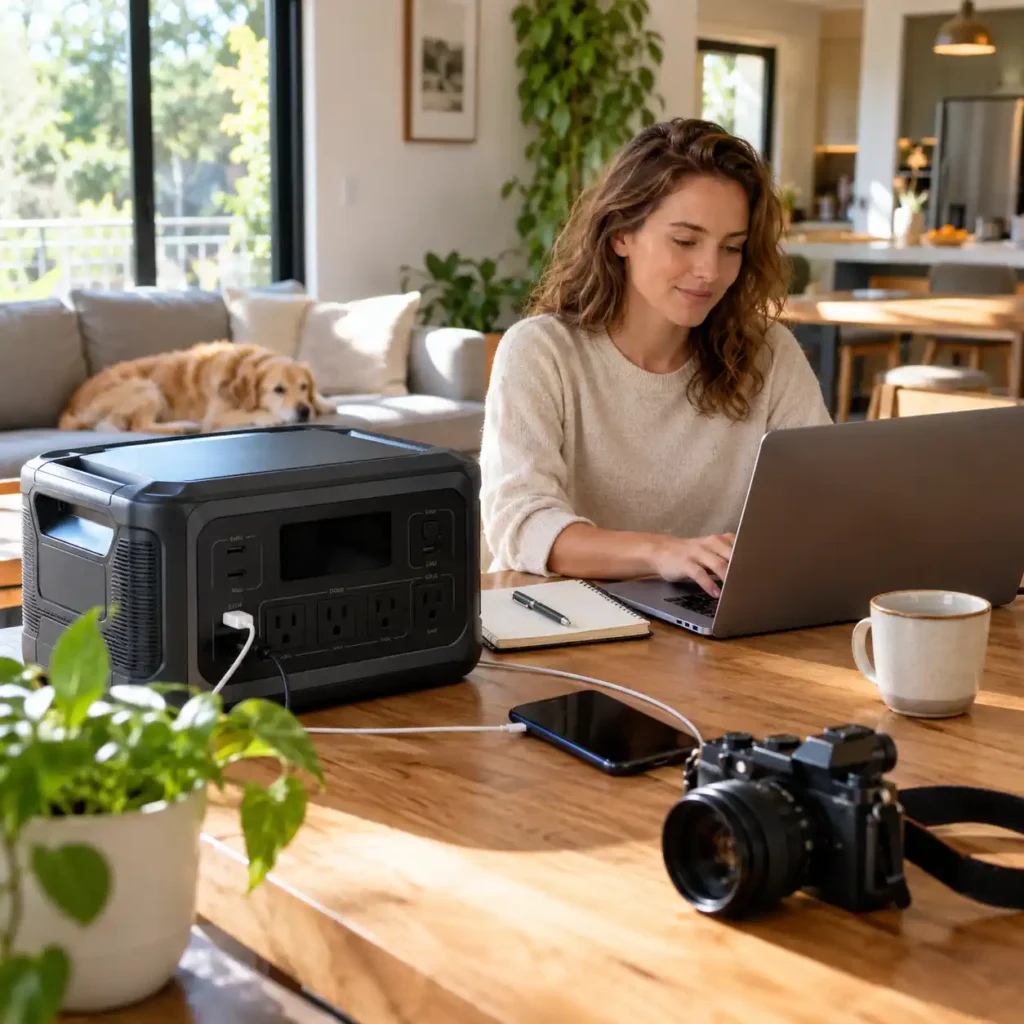
A portable power station in the 3,000Wh class provides a substantial amount of stored energy for backup power, but understanding what that capacity means in practice is essential when comparing models. The watt-hour (Wh) rating represents the battery’s nominal energy capacity. It does not indicate how much electricity will actually be available to AC-powered devices.
When a power station supplies AC electricity, some stored energy is lost during the conversion process and through the unit’s own operating requirements. For consistent planning across the models in this guide, we use an 85% usable AC energy assumption. This provides a practical estimate for comparing battery capacity without presenting calculated values as measured runtime.
Nominal Capacity vs. Usable AC Energy
Applying the 85% planning assumption to a nominal battery capacity of 3,000Wh gives approximately 2,550Wh of usable AC energy.
The five selected power stations have slightly different nominal capacities, but all fall within the same general class.
| Model | Nominal Battery Capacity | Estimated Usable AC Energy (85%) |
|---|---|---|
| BLUETTI Elite 300 | 3,014Wh | 2,562Wh |
| Anker SOLIX F3000 | 3,072Wh | 2,611Wh |
| Pecron E3600LFP | 3,072Wh | 2,611Wh |
| VTOMAN FlashSpeed Pro 3600 | 3,096Wh | 2,632Wh |
| Jackery HomePower 3000 | 3,072Wh | 2,611Wh |
The differences in estimated usable energy are relatively small. For this group, the more meaningful distinctions are not a few dozen watt-hours of battery capacity, but factors such as continuous AC output, expansion options, charging capability, physical size, and available connections.
How to Estimate Usable Energy
For initial planning, use this calculation:
Estimated usable AC energy = Nominal battery capacity × 0.85
For example, a 3,072Wh power station provides an estimated 2,611Wh of usable AC energy under this assumption.
This figure can then be compared with the combined energy consumption of the devices you intend to power.
If you need to estimate your appliances’ energy use before choosing a power station, see our How to Calculate Power Consumption guide for a step-by-step approach.
A load drawing 500W continuously would use approximately 500Wh per hour. Dividing 2,611Wh by 500W gives a theoretical runtime of about 5.2 hours.
Actual runtime may differ because of inverter efficiency, variations in device power consumption, operating conditions, and the power station’s own energy use. The 85% figure is a planning assumption for consistent comparison, not a guaranteed efficiency rating for every model.
When Is the 3,000Wh Class the Right Size?
The 3,000Wh class occupies a useful middle ground between smaller power stations designed primarily for electronics and larger systems intended for extended or more demanding backup needs.
It can be appropriate when you need a substantial energy reserve for several essential devices or appliances, but do not necessarily require a larger expandable battery system. However, the right capacity depends on both the combined power demand of your equipment and how long you need it to operate.
For a more detailed estimate based on your planned devices and backup needs, use our Battery Capacity Calculator.
A 2,000Wh-class station may be sufficient for a smaller load or shorter backup period. Moving to a higher-capacity or expandable system becomes more relevant when you need to support more devices simultaneously, extend runtime, or increase stored energy as your requirements change.
The key distinction is that battery capacity determines the amount of energy available, while output power determines which loads the station can support at the same time. Both specifications matter when deciding whether a power station in the 3,000Wh class is appropriate for your needs.
Estimated Runtime Examples
A portable power station in the 3,000Wh class can support anything from low-wattage electronics for a full day or longer to several high-demand appliances for a much shorter period. The key variable is the total power draw over time, not battery capacity alone.
The estimates below use approximately 2,611Wh of usable AC energy, based on a 3,072Wh battery and the 85% planning assumption explained in the previous section. They illustrate how runtime changes as the load increases.
| Continuous AC Load | Estimated Runtime | Typical Use |
|---|---|---|
| 100W | 26 hours | Router, LED lighting, phones, and small electronics |
| 300W | 8.7 hours | Several electronics and lights operating together |
| 500W | 5.2 hours | A moderate continuous load, such as a combination of household essentials |
| 800W | 3.3 hours | A higher-demand appliance or several devices running simultaneously |
| 1,000W | 2.6 hours | A 1,000W appliance operating continuously |
| 1,500W | 1.7 hours | A high-power appliance or a substantial combined load |
| 2,000W | 1.3 hours | A heavy continuous load approaching the output limits of some models |
These figures are calculated by dividing estimated usable energy by the stated load. They are useful for comparing demand levels, but actual runtime will vary with inverter efficiency, power-station overhead, operating conditions, and changes in appliance consumption. A load that switches on and off will behave differently from one that draws power continuously.
What Runtime Looks Like in Everyday Backup Scenarios
Keeping essential electronics running: A combined 100W load from a router, LED lights, phone charging, and a laptop would theoretically run for about 26 hours. In practice, the total depends on how many devices are connected and how often they are used. This is one of the more energy-efficient ways to use a 3,000Wh-class power station during an outage.
Supporting several household essentials: A combined load averaging 300W could run for approximately 8.7 hours. This might represent a refrigerator cycling on and off alongside a router and occasional lighting, provided the refrigerator’s average consumption stays within that overall load.To estimate how long a specific refrigerator may run on battery power, use our Refrigerator Runtime Calculator.
Its compressor’s startup demand must also be within the power station’s surge capability.
Running a sustained 500W load: At 500W, the estimated runtime is around 5.2 hours. This provides a useful reference for a group of appliances or equipment drawing a moderate amount of power continuously. If the combined load rises to 800W, the estimate falls to about 3.3 hours.
Using a high-demand appliance: A device drawing 1,500W continuously would use the estimated AC energy in roughly 1.7 hours. This illustrates why a large battery does not automatically provide long runtime when powering energy-intensive appliances. It is also important to check the station’s continuous output rating: a power station may have enough stored energy for a load but still be unable to supply the required wattage.
Why Actual Runtime Can Differ
The same 3,000Wh-class station can deliver very different results depending on the connected equipment.
Cycling appliances: Refrigerators and freezers do not necessarily draw their rated running power continuously. Their average consumption over time is more useful for estimating runtime, while compressor startup demand matters when checking output compatibility.
Variable loads: Devices such as refrigerators, pumps, and some power tools change their consumption during operation. A single wattage figure cannot fully describe their energy use.
Inverter overhead: The power station itself consumes some energy while supplying AC power. Low-power loads can be especially sensitive to this overhead.
Simultaneous operation: Several appliances may be within the station’s total energy budget but exceed its continuous output limit when operating together.
Operating conditions: Temperature, battery condition, and the station’s control systems can affect the energy available in real use.
For a more dependable estimate, use the average wattage of the appliances you expect to run and calculate their combined energy use over the intended backup period. For example, a 150W average load running for 10 hours requires about 1,500Wh before accounting for conversion losses and other system overhead.
The practical takeaway is that a 3,000Wh-class power station is most useful when its energy reserve and output rating match the actual backup plan. Low and moderate loads can run for many hours, while sustained high-power use can deplete the battery much faster. If your priority is extending runtime through a long outage, reducing the load or choosing an expandable system may matter more than selecting a model with a slightly higher nominal capacity.
Common Devices You Can Run with a 3,000Wh Portable Power Station
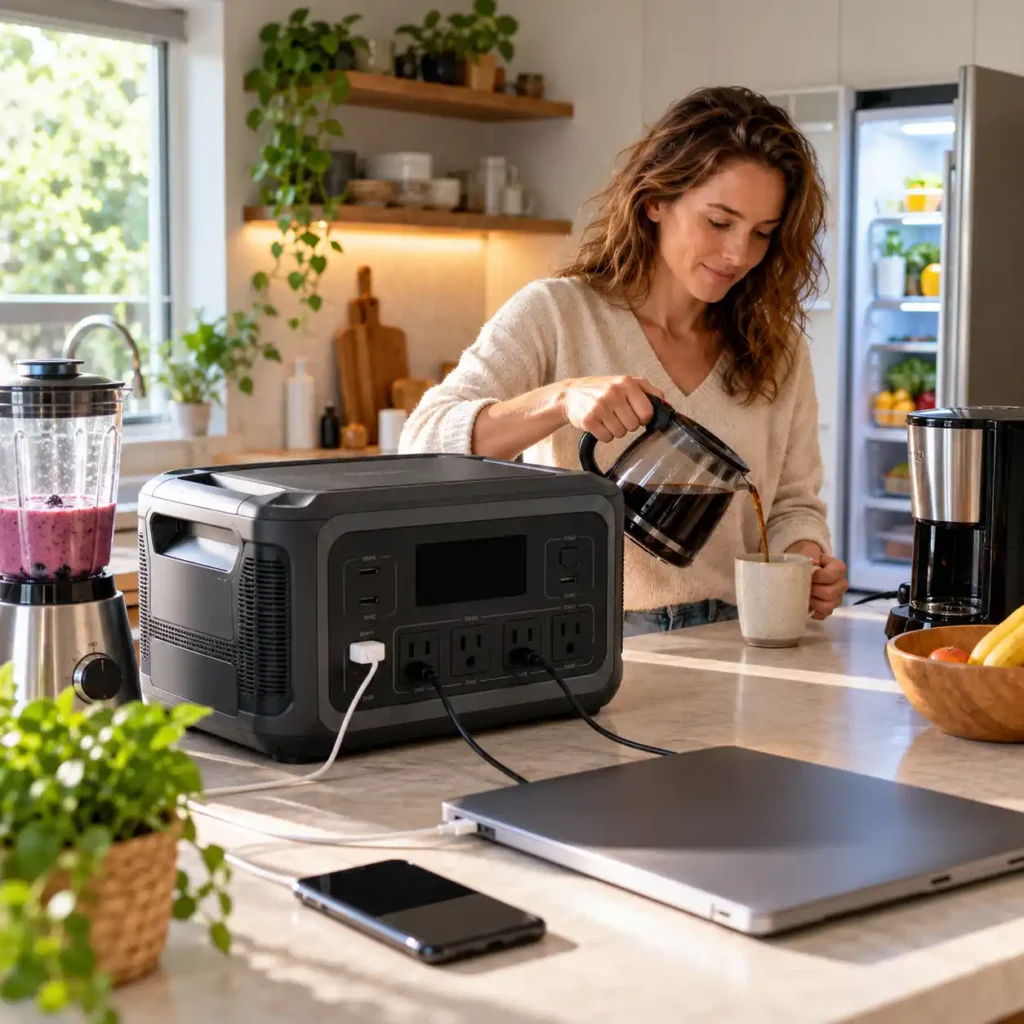
A 3,000Wh-class portable power station can support a wide range of household essentials, electronics, and selected high-wattage appliances during an outage. However, battery capacity tells you how much energy is stored, while the inverter’s continuous output determines how much power the station can supply at one time.
The five models in this guide offer different output capabilities, so the same combination of appliances may be suitable for one unit but exceed another’s limits. Before connecting multiple devices, check both their running wattage and any additional startup demand.
Common Household Devices and Typical Power Requirements
The table below provides broad illustrative wattage ranges. Actual consumption varies by appliance size, model, operating mode, and age. Use the rating label or manufacturer’s specifications for your own equipment whenever possible.
| Device | Typical Running Power | What to Consider |
|---|---|---|
| Wi-Fi router | 5–20W | Low demand, suitable for extended backup |
| LED lights | 5–15W per bulb | Several lights can run together with modest energy use |
| Laptop | 30–100W | Consumption depends on workload and charging |
| Television | 50–150W | Screen size and display technology affect demand |
| Refrigerator | 100–300W while running | Cycles on and off; compressor startup can require more power |
| Chest freezer | 80–200W while running | Actual average consumption depends on insulation and cycling |
| CPAP machine | 30–90W | Humidification and heated tubing can increase demand |
| Microwave | 800–1,500W | High draw while operating; check input wattage, not cooking output |
| Coffee maker | 600–1,200W | Heating elements create a substantial load |
| Electric kettle | 1,000–1,800W | High power demand, though usually for short periods |
| Portable fan | 20–100W | Often an energy-efficient way to maintain airflow |
| Space heater | 750–1,500W | Can drain a large battery quickly during continuous use |
These ranges are not runtime guarantees. They help identify which devices are relatively energy-efficient and which can consume a substantial portion of the available battery energy in a short time.
Combining Devices During a Power Outage
For many households, the most useful setup is not running one large appliance continuously but supporting several essential devices together.
For example, a refrigerator drawing 150W while its compressor is running, a 15W router, two 10W LED lights, and a 60W laptop would create a combined running load of approximately 245W while all are operating. The actual average load may be lower if the refrigerator cycles off, but its startup demand still needs to be considered.
A different combination can create a much heavier load. A 1,200W coffee maker, a 100W television, and 60W of lighting and electronics would draw around 1,360W while operating together. That may be within the continuous output rating of all five models discussed here, but it would use energy far more quickly than a low-power backup setup.
High-demand appliances also require more careful planning. Running a microwave, kettle, or space heater alongside a refrigerator and other devices can push the combined load toward the inverter’s limit. If the total demand exceeds the station’s continuous output, the unit may shut down its AC output to protect itself.
Check Startup Demand, Not Just Running Wattage
Some appliances briefly draw more power when they start. Refrigerators, freezers, pumps, and certain motor-driven tools are common examples. This surge may last only a short time, but it can determine whether a power station can start the appliance successfully.
Check the station’s surge rating as well as its continuous output, and remember that a published peak figure does not mean the unit can sustain that wattage. If several appliances start at the same time, their combined startup demand may also matter.
For essential equipment, test the intended combination before an outage whenever it is safe and practical to do so. This is particularly important for refrigerators, medical equipment, and devices that are difficult to restart or configure after a power interruption.
Match the Load to Your Backup Priorities
A 3,000Wh-class station is most effective when you prioritize the appliances that matter most and avoid unnecessary high-power use. Routers, lighting, phones, laptops, and selected medical or household equipment can often be supported together without creating an excessive load. Heating appliances, kettles, and other high-wattage devices require more deliberate use because they can consume stored energy quickly.
If your backup plan includes several large appliances running simultaneously, compare their combined running and startup demands with each model’s output specifications. If your priority is keeping essential devices operating for a longer period, reducing consumption may be more effective than choosing a station with a marginally larger battery.
Charging: How Quickly Can You Recharge a 3,000Wh Power Station?
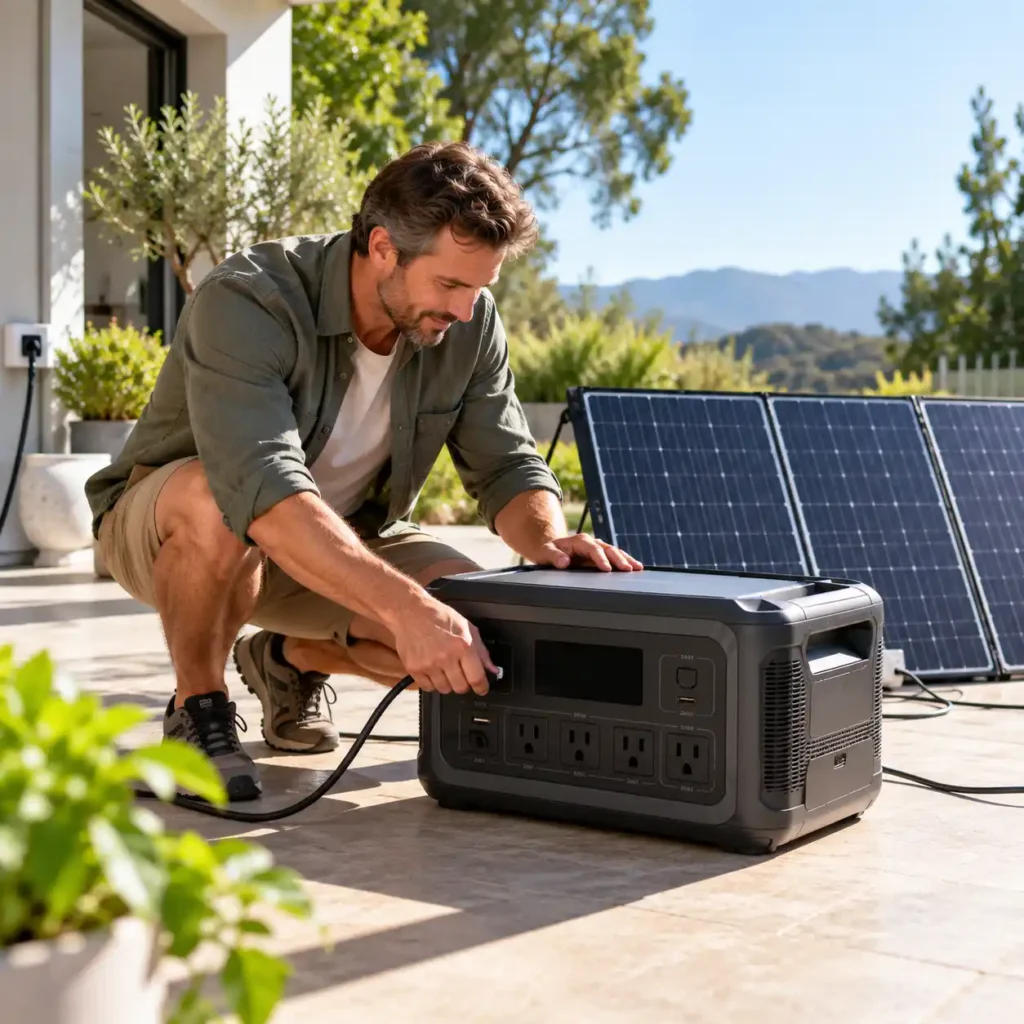
A 3,000Wh-class power station stores a substantial amount of energy, but that capacity also makes recharge speed an important part of the buying decision. After an extended outage or a day of heavy use, the ability to restore the battery quickly can determine how prepared the unit is for the next period without grid power.
The five models in this guide support different charging configurations and power inputs. Their advertised maximum charging rates should not be treated as guaranteed everyday performance: actual charging time depends on the input source, available power, battery state, temperature, and the station’s charging controls.
AC Charging: The Most Convenient Option at Home
AC wall charging is usually the simplest way to recharge a portable power station when grid electricity is available. It is particularly useful after an outage, when the station can be replenished between backup periods.
Charging speed depends on the maximum AC input supported by the model and the available household circuit. A higher input rating can shorten recharge time, but it does not mean the station will draw that power continuously throughout the entire charging cycle. Charging may slow as the battery approaches full capacity.
For a 3,000Wh-class battery, the difference between a moderate and a high AC charging rate can be significant. Buyers who expect to use their power station frequently should compare both the maximum input rating and the manufacturer’s stated recharge time. They should also check whether a model requires a particular charging mode or configuration to reach its fastest advertised rate.
Solar Charging: Useful for Extended Outages and Off-Grid Use
Solar charging can help restore battery capacity when grid power is unavailable. It is especially valuable during multi-day outages, camping trips, and other situations where access to a wall outlet is limited.
However, the maximum solar input rating is only one part of the equation. Actual energy production depends on panel wattage, sunlight intensity, panel orientation, shading, temperature, and the station’s solar input limits. A solar array rated for a particular wattage will not necessarily deliver that amount throughout the day.
Before choosing a model for solar charging, compare:
Maximum solar input: The amount of solar power the station can accept.
Input voltage and current limits: These determine which panel configurations are compatible.
Connector requirements: Confirm whether the panels can connect directly or require an adapter.
Available charging time: Consider the number of useful sunlight hours at your intended location.
Solar expansion options: Check whether the station can accept additional panels within its electrical limits.
A higher solar input can be an advantage for buyers who have enough panel capacity and sunlight to use it. For occasional emergency backup, however, a large solar charging capability may be less important than AC charging convenience and battery capacity.
Car Charging and Other Charging Options
Charging from a vehicle can be useful during road trips or when other power sources are unavailable. It is generally a slower way to replenish a large battery than high-power AC charging, so it is better suited to gradual charging during travel than to quickly restoring a depleted 3,000Wh-class station.
Compatibility and charging speed vary by model and input method. Check the manufacturer’s specifications for supported vehicle charging, required cables, and any limitations. Do not assume that every power station supports the same charging accessories or input configurations.
Some models also support alternative charging arrangements or combinations of input sources. These features can provide additional flexibility, but their availability and maximum combined charging rates must be confirmed for the exact model and configuration.
What Matters Most When Comparing the Five Models
For this group, charging should be evaluated in the context of how each station will be used rather than by maximum wattage alone.
| Charging Consideration | Why It Matters | What to Compare |
|---|---|---|
| AC charging rate | Determines how quickly the battery can be restored from a wall outlet | Maximum AC input and stated recharge time |
| Solar input | Affects how much energy can be collected from panels | Maximum solar wattage, voltage, and current limits |
| Vehicle charging | Provides an alternative source while traveling | Supported input method, accessories, and charging rate |
| Charging flexibility | Helps adapt to different power sources and situations | Supported input combinations and operating requirements |
| Charging controls | Affects convenience and battery management | Available charging modes and manufacturer guidance |
A station with a high maximum charging rate may be the better choice for frequent, high-consumption use when rapid recharging is available. A model with lower charging power can still be a practical option if it is usually charged overnight or replenished gradually with solar panels.
The best charging setup is the one that fits your access to electricity and your expected usage pattern. For occasional home backup, straightforward AC charging may be sufficient. For longer outages or off-grid use, solar compatibility and the ability to replenish energy without a wall outlet become more important.
To plan a solar recharge window around your battery capacity and available input, try our Solar Charging Time Calculator.
Before making a final choice, verify the charging specifications for the exact U.S. version and configuration you plan to buy. Advertised maximum input, compatible accessories, and recharge-time claims can differ between models and product versions.
Safety: How to Use a 3,000Wh Portable Power Station Safely
A 3,000Wh-class portable power station stores a substantial amount of energy and can deliver high AC output. Although models in this category commonly use lithium iron phosphate (LiFePO4) batteries, their chemistry does not eliminate the need for careful handling, proper ventilation, and safe electrical connections.
Following the manufacturer’s instructions is essential, particularly when charging the unit, connecting high-demand appliances, or using it as backup power during an outage.
Choose a Suitable Location
Place the power station on a stable, dry surface in a well-ventilated area. Keep its air intakes and exhaust vents unobstructed, and avoid placing it next to heat sources or in direct sunlight for extended periods.
During home backup, a convenient location might be a utility room or another accessible indoor area that meets the manufacturer’s operating requirements. Do not place the unit in a confined cabinet or cover it with blankets or other materials while it is operating.
Keep the station away from water, excessive moisture, and areas where it could be knocked over. If you use it outdoors, protect it from rain and direct exposure to the elements unless the manufacturer explicitly specifies an appropriate level of environmental protection.
Respect Output and Startup Limits
A large battery does not guarantee that every appliance can be powered safely. Check the station’s continuous AC output rating and compare it with the combined running wattage of the devices you intend to connect.
Motor-driven appliances, refrigerators, freezers, and pumps can draw additional power when starting. Their startup demand must remain within the station’s surge capability. Avoid connecting too many high-wattage appliances at once, and do not repeatedly overload the unit in an attempt to keep equipment running.
If the station shuts down because of an overload, disconnect some devices and follow the manufacturer’s instructions before restarting it.
Use Safe Charging Practices
Charge the station only with compatible cables, adapters, and charging sources. Keep charging connections dry and inspect cables and connectors for visible damage before use.
Do not exceed the specified AC or solar input limits. When connecting solar panels, verify the array’s voltage and current against the station’s permitted input range. Incorrect panel configurations can damage the equipment or create an electrical hazard.
During charging, leave sufficient space around the unit for ventilation. If the power station becomes unusually hot, emits an unusual odor, makes unexpected noises, or shows signs of physical damage, stop using it and follow the manufacturer’s safety guidance.
Understand the Limits of Home Backup
Portable power stations can provide useful emergency electricity, but they are not automatically a substitute for a permanently installed home backup system.
Never connect a power station to a household wall outlet in an attempt to energize the home’s wiring. This can create dangerous backfeeding conditions and expose utility workers or occupants to electrical hazards.
If you want to power selected household circuits, use an appropriately designed transfer switch or other approved connection method installed according to applicable electrical requirements. Consult a qualified electrician to determine whether a particular setup is suitable.
Also consider the limitations of portable backup. A 3,000Wh-class station can support selected essential loads, but its runtime and output capacity may not be sufficient for whole-home backup, especially when heating, cooling, electric cooking, or other high-demand equipment is involved.
Store and Transport the Unit Carefully
Follow the manufacturer’s recommendations for storage temperature, battery charge level, and periodic maintenance. Avoid storing the station in extreme heat or cold, and check its condition before relying on it after a long period without use.
These units can be heavy. Use built-in handles or wheels where provided, keep the load stable while moving it, and avoid lifting beyond your physical capacity. If a unit is damaged after a fall or impact, do not continue using it until its condition has been assessed according to the manufacturer’s instructions.
For transport, secure the power station so it cannot slide or tip over. Follow any applicable requirements for transporting lithium batteries, particularly when traveling by air or shipping the unit.
Keep the Manufacturer’s Guidance Accessible
Safety features and operating procedures differ between models. Review the manual for the exact power station you own, including instructions for overload protection, temperature limits, charging, storage, and emergency shutdown.
A few basic precautions make a meaningful difference: use compatible equipment, stay within electrical limits, keep the unit ventilated and dry, and never improvise a connection to household wiring. These practices help ensure that a high-capacity portable power station remains a reliable backup resource rather than an avoidable source of risk.
Common Buying Mistakes When Choosing a 3,000Wh Portable Power Station
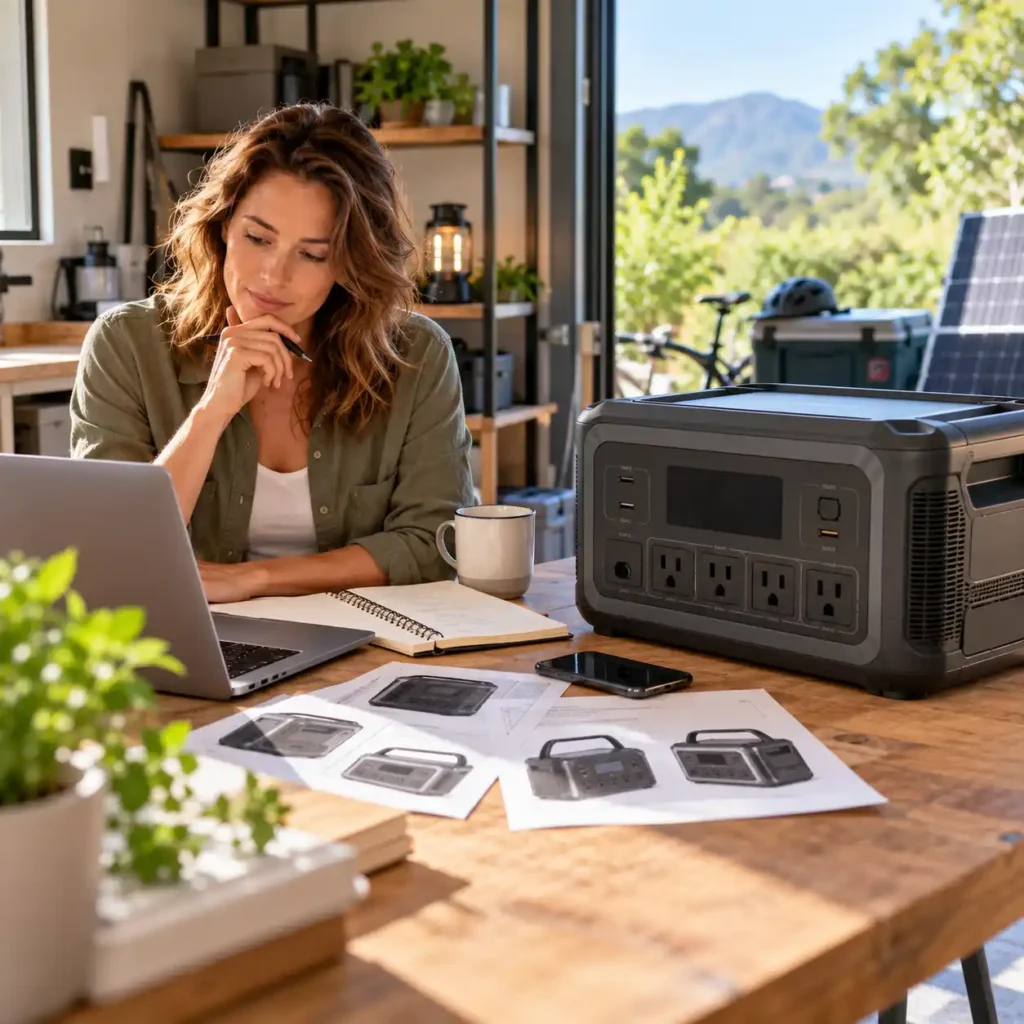
A 3,000Wh-class portable power station offers substantial energy storage, but a larger battery does not automatically make a model the right choice. Differences in output power, charging speed, expandability, weight, and practical usability can matter just as much as nominal capacity.
Avoiding these common buying mistakes can help you choose a power station that fits your backup needs without paying for features or capacity you are unlikely to use.
Choosing by Battery Capacity Alone
A battery capacity of approximately 3,000Wh may look impressive, but it does not tell you whether a power station can run your intended appliances or for how long.
Two models with similar nominal capacity can differ in continuous AC output, surge capability, charging options, and available expansion. A unit with a lower output rating may struggle with a combination of high-demand appliances even when its battery has plenty of stored energy.
Start by identifying the appliances you want to power, their combined running wattage, and any startup requirements. Then compare the models’ output limits and usable energy estimates rather than treating their advertised Wh ratings as the only deciding factor.
Overestimating How Long the Battery Will Last
A 3,000Wh battery does not provide 3,000Wh of usable AC energy at the outlets. In this guide, the 85% planning assumption gives approximately 2,550–2,630Wh of estimated usable energy across the five models.
Runtime also depends on the load. A router, a few LED lights, and a laptop can use energy relatively slowly, while a space heater, kettle, or other high-wattage appliance can deplete the battery much faster.
Avoid relying on a single advertised runtime figure without checking the conditions behind it. Estimate the average power demand of your own equipment and consider how long you need it to operate. For longer outages, reducing consumption or choosing an expandable system may be more effective than focusing on small differences in nominal capacity.
Ignoring Continuous Output and Surge Requirements
Battery capacity and inverter output solve different problems. Capacity determines the energy reserve; output determines how much power the station can deliver at a given moment.
A power station may have enough stored energy to operate a refrigerator, microwave, and other household devices over time, but that does not mean it can run all of them simultaneously. Their combined demand may exceed the station’s continuous output rating.
Startup surges create another potential problem. Refrigerators, freezers, pumps, and motor-driven appliances may briefly require more power when starting. Check both continuous and surge ratings, and consider which devices might start at the same time.
Paying for Expandability You Do Not Need
Expandable battery capacity can be valuable when you expect longer outages or want to increase your energy reserve over time. However, expansion is not automatically worth the additional cost.
If your main goal is to keep essential electronics and a few household devices running through shorter interruptions, a self-contained 3,000Wh-class station may already provide enough capacity. Paying extra for expansion capability and compatible batteries may not deliver meaningful value if you rarely need more stored energy.
On the other hand, buyers preparing for multi-day outages should consider expansion more carefully. Compare the cost and capacity of compatible batteries, the maximum supported system size, and any additional equipment required. The most useful expandable system is one that can realistically grow with your backup needs.
Underestimating Weight and Physical Handling
High-capacity power stations are substantial pieces of equipment. Their weight can affect where you store them, how easily you can reposition them, and whether they are practical for travel.
The five models in this guide vary considerably in portability. A lighter unit may be easier to move between rooms or load into a vehicle, while a heavier model may offer different advantages in output or expansion.
Think about your actual usage environment. If the station will remain in one accessible location during home outages, weight may be a secondary consideration. If you expect to move it frequently, carry it up stairs, or use it at different outdoor locations, handling and mobility deserve more attention. Built-in wheels can help with repositioning, but they do not eliminate the difficulty of lifting a heavy unit into a vehicle or over uneven ground.
Comparing Maximum Charging Rates Without Checking the Full Setup
A high advertised charging rate can be attractive, especially if you expect to recharge frequently between outages. However, maximum input figures do not guarantee that the station will charge at that rate throughout the entire cycle.
Actual charging speed depends on the available power source, charging configuration, battery state, and the station’s charging controls. Solar charging introduces additional variables, including sunlight, panel placement, and input limits.
Compare manufacturer-stated recharge times and input specifications for the exact configurations you are considering. Also consider whether your home circuit, solar array, or vehicle charging setup can actually supply the power required to take advantage of the advertised maximum.
Assuming a Portable Power Station Can Back Up an Entire Home
A 3,000Wh-class power station can be a useful source of emergency electricity, but it should not be confused with a whole-home backup system.
Its available energy and output may be sufficient for selected essentials such as refrigeration, communications, lighting, and electronics. Running electric heating, central air conditioning, electric cooking, and several other high-demand appliances can quickly exceed practical energy or output limits.
Plan around prioritized loads rather than assuming that every appliance in your home can remain available during an outage. If you need to power household circuits, verify the required connection method and consult a qualified electrician. Never connect a portable power station directly to a household wall outlet to energize home wiring.
Overlooking the Difference Between Similar Models
The five stations in this guide occupy a similar capacity range, but they are not interchangeable. Their differences in continuous output, expansion options, weight, charging capabilities, and overall design can change which model is the better purchase.
A lighter, self-contained unit may be more convenient for occasional backup and repositioning. A heavier model with expansion support may be more appropriate for buyers planning for longer outages. A unit with higher output may suit a household that needs to operate more demanding appliances simultaneously.
Instead of choosing the model with the largest headline specification or the most features, identify the trade-offs that matter most to your situation. A meaningful comparison should explain not just what each power station offers, but what you gain or give up by choosing it.
The Better Approach: Start with Your Backup Plan
Before buying, write down the appliances you consider essential, estimate their power requirements, and decide how long you want to operate them without grid electricity. Then compare the five models using the same criteria: usable energy, continuous output, surge capability, charging options, expansion potential, and portability.
This approach helps distinguish between a power station that is impressive on paper and one that is genuinely suitable for your intended use. In the 3,000Wh class, the best choice is not necessarily the model with the most capacity or the highest output. It is the one that provides the right balance of energy, power, flexibility, and practical convenience for your backup priorities.
Frequently Asked Questions
How Long Will a 3,000Wh Power Station Run a Refrigerator?
A 3,000Wh-class power station can typically run a household refrigerator for around 1–2 days, depending on the refrigerator’s energy consumption, compressor cycling, and the station’s usable AC energy. A refrigerator using approximately 1.2–1.5kWh per day may run for roughly 1.5–2 days on a battery with about 2.6kWh of usable energy under favorable conditions.
For a more accurate estimate, check the refrigerator’s EnergyGuide label or measured daily consumption. Also verify the power station’s surge capability to ensure it can handle compressor startup.
Is a 3,000Wh Power Station Enough to Run a House?
A 3,000Wh-class power station can support selected essential household loads, such as a refrigerator, lights, a Wi-Fi router, laptops, and some medical equipment. However, it is generally not enough to power an entire home for an extended period, especially if you rely on electric heating, central air conditioning, or other energy-intensive appliances.
For most buyers, the more practical approach is to prioritize critical loads and calculate their combined energy requirements. Whole-home backup typically requires a larger or expandable system and an appropriate electrical installation.
What Is the Difference Between a 3,000Wh and a 3,000W Power Station?
Wh (watt-hours) measures stored energy and helps determine how long a power station can run appliances. W (watts) measures power output and determines which appliances it can operate simultaneously.
For example, a 3,000Wh power station with a 1,500W inverter may store enough energy for several hours of use but cannot continuously supply a 2,000W appliance. A 3,000W inverter can deliver more power at once, but its runtime still depends on battery capacity and the connected load.
Always compare both specifications when choosing a portable power station.
Can You Recharge a 3,000Wh Power Station with Solar Panels?
Yes. The models in this guide support solar charging, but their maximum solar input limits and compatible panel configurations differ. Actual charging performance depends on panel wattage, sunlight, orientation, shading, and the station’s input specifications.
A solar array with sufficient output can replenish a meaningful portion of the battery during a sunny day. However, do not assume that a station will reach its advertised maximum solar input throughout the day or that a particular number of panels will fully recharge it under all conditions.
Check the exact model’s voltage, current, and wattage limits before purchasing panels.
Do Solar Panels Come Included with a 3,000Wh Portable Power Station?
Not necessarily. Many portable power stations are sold as standalone units, while solar panels are offered separately or as part of specific bundles. The contents can vary by retailer, product configuration, and promotion.
Check the exact U.S. listing and package contents before purchasing. If you intend to use solar charging during extended outages, include the cost of compatible panels and any necessary cables or adapters in your total budget.
Is It Safe to Use a 3,000Wh Portable Power Station Indoors?
Battery-powered portable power stations do not burn fuel during normal operation and do not produce exhaust gases or carbon monoxide like fuel-powered generators. They can generally be used indoors when operated according to the manufacturer’s instructions.
Place the unit on a stable, dry surface with sufficient ventilation. Keep its cooling vents unobstructed, avoid excessive heat and moisture, and use compatible charging equipment. Never connect a power station directly to a household wall outlet to energize home wiring. If you need to supply household circuits, use an approved connection method installed by a qualified electrician.
Final Verdict
The five power stations in this guide serve different priorities rather than competing as interchangeable products. They offer broadly similar battery capacities, but differ in AC output, charging capabilities, expandability, portability, and connection options.
The BLUETTI Elite 300 stands out for its dedicated RV connection, while the Anker SOLIX F3000 offers a combination of high AC output and expandable storage for larger backup needs. The Pecron E3600LFP emphasizes high-wattage AC recharging, and the VTOMAN FlashSpeed Pro 3600 provides another expandable option with a different capacity ceiling. The Jackery HomePower 3000 takes a simpler, non-expandable approach with substantial output and a relatively manageable form factor.
Ultimately, the right choice depends on which capabilities matter most. Battery capacity alone does not determine how well a power station will perform in a particular backup, RV, or off-grid setup.
Our Recommendation
Choose the model that best matches your intended use:
For RV power connections: Choose the BLUETTI Elite 300 if its dedicated 30A TT-30 outlet and 2,400W continuous output meet your RV’s requirements.
For expandable home backup: Choose the Anker SOLIX F3000 if you want 3,600W of continuous AC output and the option to increase battery capacity as your backup needs grow.
For fast AC recharging: Consider the Pecron E3600LFP if rapid battery recovery is a priority and you have access to a compatible 30A power connection and cable.
For expandable mid-range storage: Consider the VTOMAN FlashSpeed Pro 3600 if its expansion capability up to approximately 5,912Wh matches your expected energy needs without requiring a substantially larger system.
For straightforward, fixed-capacity backup: Choose the Jackery HomePower 3000 if you prefer a non-expandable setup with 3,600W of continuous AC output and up to 1,000W of solar input.
Before purchasing, compare the power requirements of your appliances with the station’s continuous output, surge capability, and individual outlet limits. For extended outages, also consider how you will recharge the battery and whether the available capacity is sufficient for your expected runtime.
Related Guides
Choosing a 3,000Wh-class power station is only one part of planning a reliable backup setup. These guides can help you compare different capacity levels and find a model suited to your specific needs.
Best 2000Wh Portable Power Stations (2026) — Compare lower-capacity options if a 3,000Wh unit offers more energy storage than you actually need for your essential appliances and electronics.
Best Portable Power Stations for Refrigerator Backup (2026) — Explore power stations suited to keeping a refrigerator running during an outage, with a focus on usable energy, output capacity, and realistic runtime.
Best Portable Power Stations for Camping (2026) — Compare portable power solutions for outdoor trips, where capacity, weight, charging options, and ease of transport all matter.
Best Portable Power Stations for Van Life (2026) — Evaluate power stations for mobile living, including battery capacity, output, and the practical demands of running appliances away from the grid.
Power Ready Guide Commitment
At Power Ready Guide, our goal is to help you make informed decisions about backup power—not simply point you toward the most expensive or highest-rated product.
We evaluate power stations through the specifications and features that matter in real-world use, including usable capacity, power output, charging flexibility, portability, and long-term value. Our recommendations are based on manufacturer documentation, available independent testing, owner feedback, and technical analysis. We distinguish verified specifications from estimates and never present analysis as hands-on testing.
Because the right power station depends on your appliances, backup priorities, and budget, we focus on explaining the trade-offs—not declaring one model the best for everyone.
Our commitment is simple: clear comparisons, practical guidance, and recommendations you can understand and trust.