
Adding an expansion battery can significantly extend a portable power station’s runtime, but choosing the right one is more complicated than simply buying the largest battery available. Compatibility is model-specific, capacity varies widely, and an expansion battery adds stored energy without necessarily increasing the power station’s inverter output. That makes the decision especially important when comparing different battery ecosystems and generations.
This guide evaluates the best expansion batteries for portable power stations based on capacity, compatibility, expansion potential, charging options, battery chemistry, portability, value, and practical system capabilities. We also examine the differences that matter when choosing between expansion and replacing the power station itself. Unlike broad accessory roundups, this guide focuses specifically on expansion batteries and the exact systems they support, helping U.S. buyers choose the right battery for their existing or planned setup.
As an Amazon Associate, I earn from qualifying purchases.

Table of Contents
Quick Answer
If you are looking for the best expansion batteries for portable power stations, start with the power station you already own, because compatibility is the first constraint. The BLUETTI B500K is the strongest choice when maximum added capacity is the priority, with 5,120Wh per battery. The Jackery Battery Pack 2000 Plus is the better fit for Explorer 2000 Plus owners who want a strong balance of capacity, portability, value, and flexible charging.
For EcoFlow users, the DELTA Pro 3 Extra Battery is the dedicated choice for substantially increasing storage on a DELTA Pro 3 system, while the DELTA 3 Series Smart Extra Battery is better suited to smaller compatible systems where a 1,024Wh increase is enough. The Anker SOLIX BP3800 stands out for high-output home-backup systems built around the F3800 platform, combining 3,840Wh of added storage with a large system expansion ceiling.
The main limitation across this category is that an expansion battery adds energy capacity, not automatically more inverter output. You also need to verify exact model and generation compatibility before buying. Because Amazon offers can change, check the current U.S. listing and seller availability before purchase.
Our Evidence & Evaluation Method
We evaluate expansion batteries using the factors that most directly affect the buying decision: how much additional energy they provide, which power stations they support, how they can be charged, how practical they are to move, and how well they fit different backup-power needs.
| Factor | What We Examine | Evidence |
|---|---|---|
| Capacity | Rated Wh and, where available, usable energy | Manufacturer specifications and technical documentation |
| Compatibility | Supported power station models, generations, and expansion limits | Manufacturer documentation and current U.S. product listings |
| Charging | AC, solar, car, and other supported charging methods | Manufacturer specifications and technical documentation |
| Portability | Weight, dimensions, and practical handling | Manufacturer product specifications |
| Runtime | Estimated runtime with representative loads | Calculated estimates based on rated capacity and typical power consumption |
| Reliability | Battery chemistry, cycle-life claims, warranty, and documented protections | Manufacturer documentation and independent reports where available |
We do not treat manufacturer claims as independent laboratory measurements. When independent testing or measurements are available, they can provide additional context; otherwise, manufacturer specifications are identified as such. Runtime figures are estimates rather than guaranteed operating times because actual performance depends on load, inverter efficiency, battery-management limits, temperature, and other operating conditions.
For this guide, compatibility receives particular weight because expansion batteries are not universal accessories. A battery can have excellent capacity and value but still be the wrong purchase if it does not support the exact power station and generation you own. We therefore verify the intended host system before evaluating the battery’s other advantages.
Who This Guide Is For
Who Should Read This
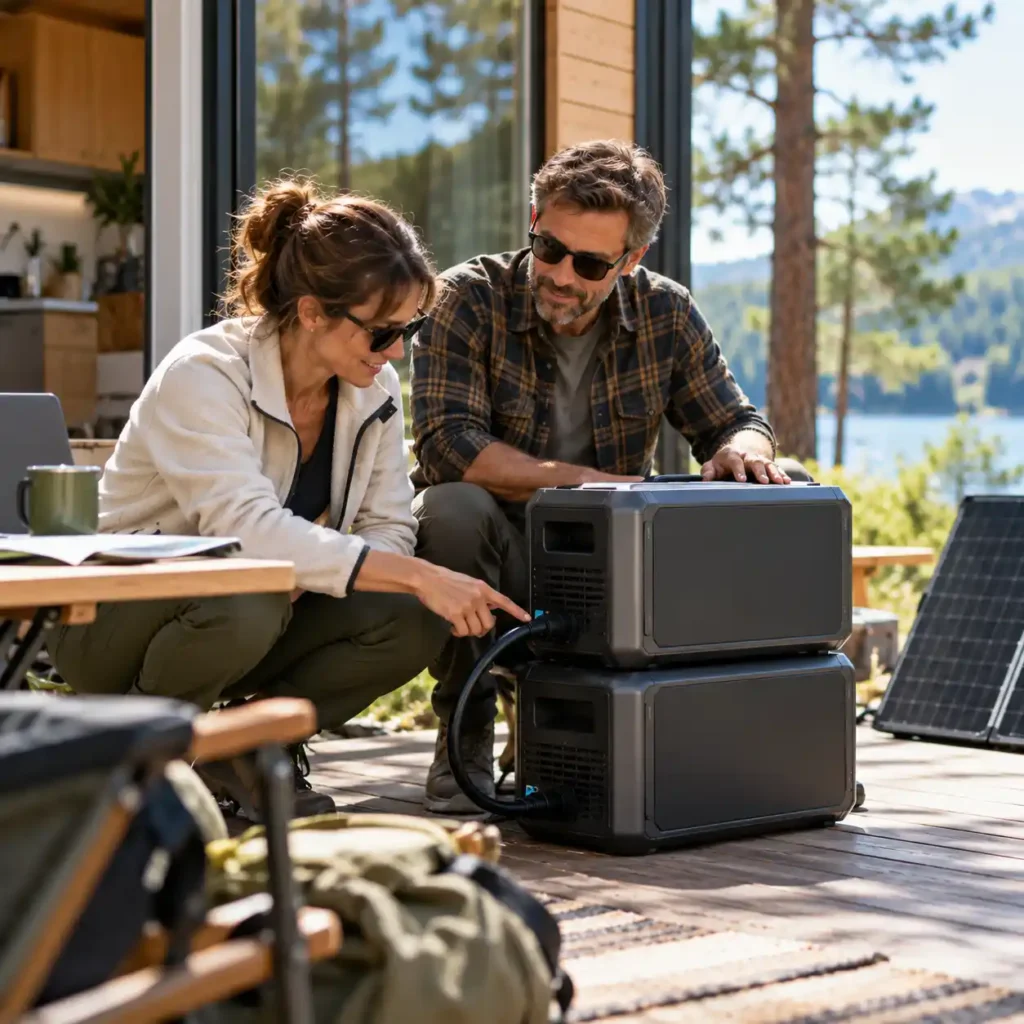
This guide is for U.S. buyers who already own, or are planning to buy, a compatible portable power station and want to add battery capacity for longer runtime. It is especially useful if you are comparing expansion batteries based on compatibility, capacity, charging options, portability, and long-term system expansion.
Who Should Use Another Guide
If you are choosing a portable power station itself, start with our guides to the best portable power stations or how to choose the right power station. If you need to determine how many watts or watt-hours you need, use our sizing and calculator guides instead. For a broader overview of cables, solar panels, cases, and other accessories, see our Essential Portable Power Station Accessories guide.
Quick Summary: Our Top Picks
The five expansion batteries in this guide serve different power station platforms and priorities. Rather than treating battery capacity as the only measure of value, we selected each model for a specific combination of added capacity, compatibility, expansion potential, charging flexibility, portability, and system capabilities. Each pick also has a clear limitation, because the best expansion battery for one power station may be the wrong choice for another.
BLUETTI B500K
Award: Best High-Capacity Expansion Battery
Best For: Buyers who need the largest possible increase in stored energy from a single expansion battery.
Key Reason: Its 5,120Wh LiFePO₄ capacity is the highest of the five models in this guide, making it the strongest choice when maximizing additional storage is the primary goal.
Main Limitation: At about 99.2 pounds, it is by far the heaviest option in this group, and compatibility depends on the exact BLUETTI power station and, for some systems, the required expansion cable.
Jackery Battery Pack 2000 Plus
Award: Best Balanced Expansion Battery
Best For: Explorer 2000 Plus owners who want a substantial capacity increase with manageable weight and flexible charging options.
Key Reason: Its 2,042.8Wh LiFePO4 capacity, approximately 41.9-pound weight, and ability to be charged independently from solar or a vehicle give it a strong balance of capacity, portability, and flexibility.
Main Limitation: It is designed for the Explorer 2000 Plus and is not compatible with the HomePower 2000 Plus v2, so its usefulness is limited to a specific Jackery platform.
EF EcoFlow DELTA Pro 3 Extra Battery
Award: Best Dedicated Expansion Battery for EF EcoFlow DELTA Pro 3
Best For: DELTA Pro 3 owners who want to add substantial storage without replacing their existing power station.
Key Reason: It adds 4,096Wh of LFP capacity and is purpose-built to integrate with the DELTA Pro 3, providing a major increase in stored energy within the same system.
Main Limitation: Compatibility is highly specific to the DELTA Pro 3, making it unsuitable for buyers who use a different EcoFlow power station.
EF EcoFlow DELTA 3 Series Smart Extra Battery
Award: Best Compact Expansion Battery
Best For: Users of compatible DELTA 2 and DELTA 3-series systems who need a moderate capacity increase without adding a large, heavy battery.
Key Reason: Its 1,024Wh LFP capacity provides a practical storage increase in a considerably more compact format than the larger expansion batteries in this guide, with plug-and-play integration and app monitoring.
Main Limitation: Its 1,024Wh capacity is much lower than the larger options, and compatibility is generation-specific, so it does not work with every DELTA 3 model.
Anker SOLIX BP3800
Award: Best Expansion Battery for High-Output Home Backup
Best For: F3800 and F3800 Plus owners building a high-capacity home backup system with substantial expansion potential.
Key Reason: It adds 3,840Wh of LFP storage and supports up to six batteries per F3800, allowing the system to scale significantly as backup-power needs grow.
Main Limitation: The BP3800 cannot operate as a standalone power station and must remain connected to a compatible F3800-series system for charging, discharging, and monitoring.
Comparison Table
| Model | Capacity | Expansion Potential | Weight | Best For |
|---|---|---|---|---|
| BLUETTI B500K | 5,120Wh | Up to 6 batteries per Apex 300 | 99.2 lb | Maximum added capacity |
| Jackery Battery Pack 2000 Plus | 2,042.8Wh | Up to 5 packs per Explorer 2000 Plus | ~41.9 lb | Best balanced |
| EF EcoFlow DELTA Pro 3 Extra Battery | 4,096Wh | Dedicated DELTA Pro 3 expansion | 72.8 lb | DELTA Pro 3 expansion |
| EF EcoFlow DELTA 3 Series Smart Extra Battery | 1,024Wh | Compatible DELTA 2/3-series systems | ~21.2 lb | Compact expansion |
| Anker SOLIX BP3800 | 3,840Wh | Up to 6 batteries per F3800 | ~51 lb | High-output home backup |
How We Evaluated the Best Expansion Batteries for Portable Power Stations
We evaluated each expansion battery based on the factors that determine how well it actually works within a portable power station system—not simply on its advertised capacity or price. Because expansion batteries are ecosystem-specific, compatibility with the host power station is considered alongside performance, scalability, practicality, and value.
Energy Capacity
We compare the rated watt-hours (Wh) each battery adds to the host power station. Higher capacity can provide longer runtime, but a larger battery is not automatically the better choice if the additional storage is unnecessary for the intended use.
Usable Energy
Rated capacity does not always equal the amount of energy available to connected devices. Where reliable information is available, we consider usable energy and battery-management limitations rather than treating the full rated capacity as directly available to the load.
Inverter Capability
An expansion battery does not normally add its own AC inverter output. We therefore evaluate the inverter capability of the compatible host power station and make a clear distinction between added battery capacity and system output capability. This prevents host-system wattage from being incorrectly attributed to the expansion battery itself.
Charging Speed
We consider how the expansion battery can be recharged, including supported AC, solar, vehicle, or other charging methods where applicable. Charging performance matters because a large battery can be less practical if it takes too long to replenish.
Portability
Weight and physical size affect whether an expansion battery is practical to move, transport, or install alongside the host power station. We consider portability in relation to the amount of additional capacity provided rather than treating low weight as an advantage by itself.
Solar Compatibility
Where supported, we evaluate whether the battery can participate in solar charging and how solar input is handled within the compatible power station system. Solar compatibility can materially affect the usefulness of an expanded system for off-grid, camping, and backup applications.
Expandability
We examine how many expansion batteries the compatible system can support and how far the overall system can scale. A battery with slightly less capacity may be more useful for some buyers if its host ecosystem provides substantially greater expansion potential.
Warranty and Ecosystem
We consider the manufacturer’s warranty, battery chemistry, documented cycle-life information, system integration, monitoring features, and the maturity of the surrounding ecosystem. A strong expansion battery should work as part of a coherent system rather than simply provide additional Wh.
Value
We consider overall value in the context of the complete system, including added capacity, compatibility, charging flexibility, expansion potential, portability, and the capabilities of the host power station. Cost per added Wh is a useful price-efficiency benchmark, but it does not determine the best choice on its own.
Use-Case Fit
Finally, we evaluate how well each battery fits the needs of its intended buyer. A high-capacity battery may be ideal for extended home backup, while a lighter 1,000Wh-class battery may make more sense for users who need moderate additional runtime without significantly increasing system size.
Our Evaluation Principle
No single specification determines the best expansion battery. We prioritize compatibility first, then evaluate the amount of useful energy added, system capabilities, charging and expansion options, practicality, and overall value. This approach helps distinguish a battery that looks impressive on a specification sheet from one that is actually the right upgrade for a specific portable power station. An expansion battery is ultimately a system-level purchase, so the host power station, compatibility, charging limits, and expansion ceiling matter as much as the battery itself.
Best Expansion Batteries for Portable Power Stations: Product Reviews
BLUETTI B500K
Best High-Capacity Expansion Battery

Quick Verdict
The BLUETTI B500K is a high-capacity expansion battery designed for buyers who need to add a substantial amount of stored energy to a compatible BLUETTI power station. With 5,120Wh of LiFePO₄ capacity, it provides the largest single-battery capacity among the five expansion batteries in this guide, making it particularly well suited to extended backup and high-capacity energy storage.
This is the strongest choice for buyers whose priority is maximum added capacity from one battery, especially when building a larger BLUETTI backup system over time. The B500K supports multiple BLUETTI platforms, including the AC200L, AC200MAX, AC300, AC500, and Apex 300, but compatibility and the required connection cable depend on the host system.
Snapshot
| Specification | BLUETTI B500K |
|---|---|
| Capacity | 5,120Wh |
| Battery Chemistry | LiFePO₄ |
| Continuous AC Output | N/A — expansion battery |
| Peak / Surge Output | N/A — expansion battery |
| Weight | 99.2 lb |
| Expansion | Up to 6 B500K batteries per Apex 300 |
Why We Chose It
The BLUETTI B500K earned Best High-Capacity Expansion Battery because it provides the highest rated capacity of the five models in this guide. At 5,120Wh per battery, it adds more stored energy in a single expansion unit than the EF EcoFlow DELTA Pro 3 Extra Battery (4,096Wh), Anker SOLIX BP3800 (3,840Wh), Jackery Battery Pack 2000 Plus (2,042.8Wh), or EcoFlow DELTA 3 Series Smart Extra Battery (1,024Wh).
That difference matters for buyers who specifically want to maximize the amount of additional energy their existing system can store without adding multiple smaller expansion batteries. The B500K also supports large-scale BLUETTI configurations, including up to six B500K batteries with an Apex 300, giving it a particularly strong position for buyers whose priority is maximum expandable storage rather than minimum weight or compactness.
Check the latest price and customer reviews on Amazon.

Living With It
At 520 × 327 × 308.5 mm, the B500K has a substantial footprint and is designed more for a fixed or semi-permanent setup than for frequent carrying. Its size is manageable when positioned beside a compatible power station, but it needs a dedicated amount of floor or storage space rather than being something most users would move around casually.
At 99.2 pounds, portability is the main practical trade-off. Moving the battery into position is much easier as a planned setup than as a frequent task, so it makes the most sense for home backup or another location where the expansion battery can remain connected for extended periods. For buyers who regularly move their power system between rooms, vehicles, or campsites, the weight can become a significant inconvenience.
The everyday limitation is therefore straightforward: the B500K is a large, heavy expansion battery rather than a portable accessory. Its physical size and weight make it better suited to a stationary backup setup than to users who prioritize easy transport.
Evaluation
| Evaluation Factor | This Model | How It Compares | Buyer Implication |
|---|---|---|---|
| Added Capacity | 5,120Wh | Highest rated capacity among the five models. | Best suited to buyers who want the largest single increase in stored energy. |
| System Compatibility | Supports AC200L, AC200MAX, AC300, AC500, and Apex 300 | Broader host-system compatibility than the model-specific Jackery and EcoFlow options. | More useful if you already own or plan to build within a BLUETTI ecosystem. |
| Expansion Potential | Up to 6 B500K batteries with an Apex 300 | Supports large multi-battery configurations. | Strong choice for buyers planning substantial long-term capacity expansion. |
| Portability | 99.2 lb | Heaviest expansion battery in this comparison. | Better for stationary or semi-permanent backup setups than frequent transport. |
Who Should Buy This
The BLUETTI B500K is a good choice for buyers who:
Already own a compatible BLUETTI power station and want to add substantial stored energy without replacing the main unit.
Need significantly longer runtime and are willing to prioritize capacity over portability.
Are building a larger home backup system over time and want the option to add multiple expansion batteries.
Need a high-capacity expansion battery per unit, rather than several smaller batteries to achieve the required storage.
Have sufficient dedicated space for a heavy expansion battery and do not expect to move the battery frequently.
Prioritize maximum added capacity and long-duration backup over keeping the overall system lightweight and easy to transport.
Who Should Skip This
The BLUETTI B500K is not the best choice for buyers who:
Need to move or transport the expansion battery regularly — at about 99.2 pounds, it is substantially heavier than the other options in this guide and less practical for frequent camping, vehicle-based use, or moving between locations.
Own a power station that is not compatible with the B500K — this battery is designed for specific BLUETTI systems, so compatibility is a prerequisite.
Only need a smaller capacity increase of around 1,000–2,000Wh and would prefer a more compact expansion battery.
Need a standalone power source rather than additional stored energy for an existing compatible BLUETTI system.
Final Verdict
The BLUETTI B500K is the right expansion battery when your priority is adding as much storage as possible with a single battery and you are building around a compatible BLUETTI power station. Its large capacity also makes it well suited to systems that may need to grow beyond a single expansion battery over time.
The trade-off is the physical commitment that comes with that capacity. At 99.2 pounds, the B500K is better treated as part of a stationary or semi-permanent backup setup than as a battery you regularly carry or transport. If maximum added capacity matters more than portability, it is the strongest fit; if mobility is a priority, a smaller expansion battery is the more practical choice.
Check the latest price and customer reviews on Amazon.
Related Guide: If you are planning to use a portable power station for household outages, see our guide to Best Portable Power Stations for Home Backup. It explores backup options for essential appliances and longer power interruptions.
Jackery Battery Pack 2000 Plus
Best Balanced Expansion Battery

Quick Verdict
The Jackery Battery Pack 2000 Plus is a dedicated expansion battery for the Explorer 2000 Plus, adding 2,042.8Wh of LiFePO₄ storage to the system. At about 41.9 pounds, it provides a substantial increase in capacity without the extreme weight of the BLUETTI B500K or the larger-capacity expansion batteries in this comparison.
This battery is best suited to Explorer 2000 Plus owners who want a practical balance of added capacity, portability, and charging flexibility rather than the maximum possible storage from one battery. The Battery Pack 2000 Plus can also be charged independently using solar or vehicle power, which gives the system more flexibility when grid power is unavailable.
Snapshot
| Specification | Jackery Battery Pack 2000 Plus |
|---|---|
| Capacity | 2,042.8Wh |
| Battery Chemistry | LiFePO₄ |
| Continuous AC Output | N/A — expansion battery |
| Peak / Surge Output | N/A — expansion battery |
| Weight | ~41.9 lb |
| Expansion | Up to 5 battery packs per Explorer 2000 Plus |
Why We Chose It
The Jackery Battery Pack 2000 Plus earned Best Balanced Expansion Battery because it offers one of the strongest overall balances between added capacity, weight, and practical flexibility among the five models. Its 2,042.8Wh capacity is substantially higher than the 1,024Wh EcoFlow DELTA 3 Series Smart Extra Battery, while its roughly 41.9-pound weight is considerably lower than the 72.8-pound EF EcoFlow DELTA Pro 3 Extra Battery and 99.2-pound BLUETTI B500K.
Its charging flexibility further strengthens that balance. The Battery Pack 2000 Plus can be charged independently from solar or a vehicle, giving owners another way to replenish the expansion battery when grid power is unavailable. The combination of substantial added storage, more manageable weight, and independent charging makes it a more balanced choice than the models that prioritize either maximum capacity or a more specialized system role.
Check the latest price and customer reviews on Amazon.

Living With It
The Jackery Battery Pack 2000 Plus is relatively manageable for a 2,000Wh-class expansion battery. At about 41.9 pounds, it is substantial enough to require deliberate placement but considerably easier to move than the larger expansion batteries in this group. It can be positioned alongside the compatible Explorer 2000 Plus without requiring the kind of permanent, heavy-duty setup associated with the B500K.
Its size and weight make it practical for home backup as well as occasional vehicle-based or off-grid use, particularly for buyers who want to add capacity without turning the system into a difficult-to-move setup. The ability to charge the battery independently from solar or a vehicle also gives it more practical flexibility when the system is being used away from the grid.
The main everyday limitation is that the Battery Pack 2000 Plus is still a dedicated expansion unit rather than a small portable battery. More importantly, its usefulness depends on having the Explorer 2000 Plus as the compatible host system, so buyers cannot treat it as a general-purpose battery that can be moved between different Jackery platforms.
Evaluation
| Evaluation Factor | This Model | How It Compares | Buyer Implication |
|---|---|---|---|
| Capacity-to-Weight Balance | 2,042.8Wh at about 41.9 lb | Lighter than the 4,096Wh EcoFlow DELTA Pro 3 Extra Battery, 3,840Wh Anker SOLIX BP3800, and 5,120Wh BLUETTI B500K. | A practical middle ground for buyers who want substantial added storage without a very heavy expansion battery. |
| Charging Flexibility | Supports independent solar and vehicle charging | More flexible than expansion batteries that rely primarily on the host system for charging. | Useful for off-grid or backup situations where grid charging is unavailable. |
| System Compatibility | Designed for the Explorer 2000 Plus | More platform-specific than expansion batteries supporting multiple host families. | A strong fit if you already own the Explorer 2000 Plus, but not a general-purpose Jackery expansion option. |
| Expansion Potential | Up to 5 battery packs per Explorer 2000 Plus | Allows substantial system growth, although the overall capacity ceiling depends on the host configuration. | Gives Explorer 2000 Plus owners a clear path to increase storage as their backup needs grow. |
Who Should Buy This
The Jackery Battery Pack 2000 Plus is a good choice for buyers who:
Already own an Explorer 2000 Plus and need additional runtime without adding an exceptionally heavy expansion battery.
Need around 2,000Wh of additional storage and want a balance between capacity and portability.
Plan to use the expanded system away from the grid, where independent solar or vehicle charging can be useful.
Need flexible charging options for extended outages, off-grid use, or situations where conventional wall power is unavailable.
Want to expand the Explorer 2000 Plus system progressively rather than maximize capacity with a single expansion battery.
Who Should Skip This
The Jackery Battery Pack 2000 Plus is not the best choice for buyers who:
Do not own or plan to use an Explorer 2000 Plus — its platform-specific compatibility makes it unsuitable for other Jackery power station families.
Need the maximum capacity from a single expansion battery — the BLUETTI B500K, EF ECOFLOW DELTA 3 Series Smart Extra Battery and Anker SOLIX BP3800 all provide more stored energy per unit.
Want the smallest and lightest possible capacity increase — the EF ECOFLOW Delta 3 Series Smart Extra Battery is a better fit when minimizing expansion size and weight matters more than adding roughly 2,000Wh.
Final Verdict
The Jackery Battery Pack 2000 Plus makes the most sense for Explorer 2000 Plus owners who want a substantial capacity increase without moving into the weight and size of the largest expansion batteries. Its combination of added storage, manageable weight, and independent charging gives it a particularly practical role for flexible backup and off-grid use.
The key limitation is its platform-specific design. If you do not use an Explorer 2000 Plus, or if you need more than about 2,000Wh from a single expansion battery, another model in this comparison will be a better fit.
Check the latest price and customer reviews on Amazon.
Related Guide: If you are planning to use a portable power station for RV travel, see our guide to Best Portable Power Stations for RV (2026). It compares power station options for RV appliances, off-grid use, and longer periods away from shore power.
EF EcoFlow DELTA Pro 3 Extra Battery
Best Dedicated Expansion Battery for EF EcoFlow DELTA Pro 3

Quick Verdict
The EF EcoFlow DELTA Pro 3 Extra Battery is a dedicated expansion battery for the DELTA Pro 3, adding 4,096Wh of LFP storage to the system. It is designed to work specifically with the DELTA Pro 3 and connects through the included expansion cable, giving owners a straightforward way to increase stored energy without replacing the main power station. us.ecoflow.com
This battery is best suited to DELTA Pro 3 owners who need substantially more storage for extended home backup, off-grid use, or other high-capacity applications. A single DELTA Pro 3 can support up to two of these extra batteries, taking the system to about 12kWh of capacity, while EcoFlow also supports larger configurations across multiple DELTA Pro 3 units.
Snapshot
| Specification | EF EcoFlow DELTA Pro 3 Extra Battery |
|---|---|
| Capacity | 4,096Wh |
| Battery Chemistry | LFP |
| Continuous AC Output | N/A — expansion battery |
| Peak / Surge Output | N/A — expansion battery |
| Weight | 72.8 lb |
| Expansion | Up to 2 extra batteries per DELTA Pro 3 |
Why We Chose It
The EF EcoFlow DELTA Pro 3 Extra Battery earned Best Dedicated Expansion Battery for EF EcoFlow DELTA Pro 3 because it is purpose-built around a single host platform while still providing a substantial 4,096Wh capacity increase. Among the five models, it offers the clearest dedicated expansion path for buyers who already use the DELTA Pro 3 and want to increase that system’s stored energy.
The other batteries serve broader or different decision criteria: the BLUETTI B500K wins on maximum single-battery capacity, the Jackery Battery Pack 2000 Plus on overall value, the DELTA 3 Series Smart Extra Battery on compactness, and the Anker SOLIX BP3800 on high-output home backup. The DELTA Pro 3 Extra Battery therefore earns its place by specialized system fit, not by claiming the highest capacity, lowest weight, or broadest compatibility.
Check the latest price and customer reviews on Amazon.

Living With It
At 694 × 295 × 215 mm, the DELTA Pro 3 Extra Battery has a long, substantial form factor that works best when placed directly alongside the DELTA Pro 3 or in a dedicated storage position. It is not designed to be carried around casually, but its relatively low-profile shape makes it easier to accommodate in a planned home or off-grid setup than its weight alone might suggest.
At 72.8 pounds, moving it is a deliberate task rather than an everyday convenience. In practice, it makes the most sense for home backup, extended outages, or a semi-permanent off-grid setup where the battery can remain connected to the DELTA Pro 3 instead of being repeatedly transported.
The main everyday limitation is the combination of high weight and dedicated system role. Once positioned, it works well as an extension of the DELTA Pro 3, but it is not a practical choice for buyers who frequently move their power equipment between locations.
Evaluation
| Evaluation Factor | This Model | How It Compares | Buyer Implication |
|---|---|---|---|
| Dedicated System Fit | Designed specifically for the DELTA Pro 3 | More specialized than the other expansion batteries in this comparison. | The clearest choice if you already use a DELTA Pro 3 and want an integrated capacity upgrade. |
| Added Capacity | 4,096Wh | Second-highest capacity in the group, behind the 5,120Wh B500K. | Provides a substantial increase in stored energy without requiring multiple smaller expansion units. |
| System Expansion | Up to 2 extra batteries per DELTA Pro 3 | Supports less battery scaling on a single host than some larger expandable ecosystems. | Well suited to buyers whose expansion plans fit within the DELTA Pro 3 system's limits. |
| Physical Practicality | 72.8 lb and 694 × 295 × 215 mm | Heavier and larger than the Jackery and DELTA 3 Series batteries, but lighter than the B500K. | Better for a planned home or semi-permanent setup than frequent transport. |
Who Should Buy This
The EF ECOFLOW DELTA Pro 3 Extra Battery is a good choice for buyers who:
Already own a DELTA Pro 3 and need substantially more stored energy without replacing the main power station.
Need longer runtime for home backup or extended off-grid use and can keep the expansion battery connected as part of the system.
Want a dedicated expansion path for the DELTA Pro 3 rather than a battery designed to support multiple power station platforms.
Prefer to expand an existing system when its current power output already meets their needs and the priority is additional stored energy.
Who Should Skip This
The EF ECOFLOW DELTA Pro 3 Extra Battery is not the best choice for buyers who:
Do not own or plan to build around a DELTA Pro 3 — its dedicated compatibility makes it unsuitable for other power station platforms.
Prioritize portability and frequent transport — at 72.8 pounds, it is substantially heavier than the Jackery Battery Pack 2000 Plus and EF ECOFLOW Delta 3 Series Smart Extra Battery.
Need the maximum capacity from a single expansion battery — the BLUETTI B500K provides more stored energy per unit.
Want a smaller capacity increase and would prefer a more compact expansion battery for a lighter overall setup.
Final Verdict
The EF EcoFlow DELTA Pro 3 Extra Battery is the logical choice when you already have a DELTA Pro 3 and want a substantial increase in stored energy without changing your core system. Its dedicated integration makes the expansion straightforward for that specific platform.
The main limitation is the commitment to the DELTA Pro 3 ecosystem. If your power station is different, or if you expect to move between systems, prioritize portability, or need a different expansion strategy, another battery in this comparison will be a better fit.
Check the latest price and customer reviews on Amazon.
Related Guide: If you want to explore the broader EcoFlow ecosystem and see how its portable power, solar, battery, and home-energy products fit together, see our guide to EcoFlow: Portable Power, Solar & Home Energy. It provides an overview of EcoFlow’s product families, technology, and different energy applications.
EF ECOFLOW Delta 3 Series Smart Extra Battery
Best Compact Expansion Battery

Quick Verdict
The EF ECOFLOW Delta 3 Series Smart Extra Battery is a compact 1,024Wh LiFePO₄ expansion battery designed to add stored energy to compatible EcoFlow power stations. It supports the DELTA 2, DELTA 3, DELTA 3 Plus, and DELTA 3 1500, giving owners a straightforward way to extend runtime without replacing the main power station. The battery uses a plug-and-play connection and can be monitored through the EcoFlow app.
This battery is best suited to EcoFlow owners who need a moderate capacity increase while keeping their overall setup compact and easy to manage. Its smaller physical design is particularly useful when storage space matters, and EcoFlow says it can be securely stacked on top of a compatible power station. It can also be recharged through the connected power station using AC power, portable solar panels, or an EcoFlow Smart Generator.
Snapshot
| Specification | EF ECOFLOW Delta 3 Series Smart Extra Battery |
|---|---|
| Capacity | 1,024Wh |
| Battery Chemistry | LiFePO₄ |
| Continuous AC Output | N/A — expansion battery |
| Peak / Surge Output | N/A — expansion battery |
| Weight | ~21.2 lb |
| Expansion | Adds 1,024Wh to compatible DELTA 2/3-series systems |
Why We Chose It
The EF ECOFLOW Delta 3 Series Smart Extra Battery earned Best Compact Expansion Battery because it adds 1,024Wh of LFP storage while occupying less physical space than the larger expansion batteries in this comparison. EcoFlow positions the DELTA 3 Smart Extra Battery as a more compact design, with a footprint approximately one-third smaller than its DELTA 2 counterpart, while retaining plug-and-play integration with compatible DELTA systems.
Its role is therefore different from the other four models. The BLUETTI B500K, EF EcoFlow DELTA Pro 3 Extra Battery, and Anker SOLIX BP3800 all prioritize substantially larger capacity per battery, while the Jackery Battery Pack 2000 Plus adds roughly twice as much energy. The DELTA 3 Smart Extra Battery is the better fit when 1,024Wh is sufficient and the buyer wants to increase system capacity without moving to a substantially larger expansion battery.

Living With It
The EF ECOFLOW Delta 3 Series Smart Extra Battery is small enough to be stored with the main DELTA power station rather than requiring a separate dedicated area. Its design also allows it to be stacked with a compatible DELTA unit, which can be useful when the system needs to stay organized in a limited storage area.
For everyday use, the battery is practical to reposition when necessary. At approximately 21.2 pounds, it is substantially easier to handle than the larger expansion batteries in this comparison, although it is still heavy enough that most owners will move it deliberately rather than carry it as part of their regular gear.
A typical use case is extending a compatible DELTA system during a power outage without adding a large second battery to the setup. An owner might connect the extra battery before an outage, keep the system in a utility area, and use the additional stored energy for essential electronics or selected appliances when grid power is unavailable.
The main everyday limitation is how much energy the battery actually adds. At 1,024Wh, it is useful when a moderate increase in runtime is enough, but buyers facing long outages or substantially higher loads may need multiple compatible batteries or a higher-capacity expansion model.
Evaluation
| Evaluation Factor | This Model | How It Compares | Buyer Implication |
|---|---|---|---|
| Added Capacity | 1,024Wh | Lowest rated capacity among the five expansion batteries. | A good fit when a moderate increase in stored energy is enough. |
| System Compatibility | Compatible with DELTA 2, DELTA 3, DELTA 3 Plus, and DELTA 3 1500 | Supports several EcoFlow DELTA platforms, rather than being limited to one host model. | Useful for owners within the supported DELTA ecosystem. |
| Physical Size | Compact expansion design | Smaller than the larger-capacity expansion batteries in this comparison. | Easier to accommodate where storage space is limited. |
| Expansion Role | Adds 1,024Wh to a compatible DELTA system | Provides a smaller capacity step than the 2,042.8Wh–5,120Wh alternatives. | Better suited to incremental capacity increases than large-scale backup expansion. |
Who Should Buy This
The EF ECOFLOW Delta 3 Series Smart Extra Battery is a good choice for buyers who:
Already own a compatible EcoFlow DELTA system — specifically the DELTA 2, DELTA 3, DELTA 3 Plus, or DELTA 3 1500.
Need a moderate increase in stored energy rather than a large-capacity expansion battery.
Have limited storage space and want an expansion battery that is easier to accommodate alongside the main power station.
Want to extend runtime without replacing their existing power station when the current system otherwise meets their power-output needs.
Prefer to stay within the EcoFlow ecosystem, with charging through the connected system and monitoring through the EcoFlow app.
Who Should Skip This
The EF ECOFLOW Delta 3 Series Smart Extra Battery is not the best choice for buyers who:
Need the largest possible capacity per expansion battery — the 1,024Wh capacity is significantly lower than the 2,042.8Wh to 5,120Wh options in this comparison.
Need to support long outages with high energy demand and require substantially more stored energy than a single 1,024Wh expansion can provide.
Own a power station outside the supported DELTA 2/3-series systems — compatibility should be confirmed before purchase.
Want to maximize capacity with fewer physical battery units — a higher-capacity expansion battery may be more practical for that purpose.
Need a higher-output system rather than additional stored energy — an expansion battery adds battery capacity and does not replace the need for a power station with sufficient inverter output.
Final Verdict
The EF ECOFLOW Delta 3 Series Smart Extra Battery makes the most sense for EcoFlow owners who need a measured increase in stored energy without moving to a much larger expansion battery. Its strongest advantage is that it adds capacity while fitting naturally into supported DELTA 2 and DELTA 3-series systems.
The trade-off is its 1,024Wh capacity, which is modest compared with the larger expansion batteries in this guide. If your priority is extending runtime through long outages or maximizing the amount of energy added per battery, a higher-capacity model is the better choice. But when the existing DELTA system is otherwise sufficient and the goal is a smaller, incremental capacity upgrade, this battery is the more appropriate fit.
Check the latest price and customer reviews on Amazon.
Related Guide: If you are planning to extend a portable power station for uninterrupted backup of sensitive electronics, see our guide to Best Portable Power Stations for UPS Backup (2026). It compares power station options for keeping essential electronics running during power interruptions.
Anker SOLIX BP3800
Best Expansion Battery for High-Output Home Backup

Quick Verdict
The Anker SOLIX BP3800 is a 3,840Wh LFP expansion battery designed to add substantial energy storage to the Anker SOLIX F3800 and F3800 Plus. It connects directly to the compatible power station and cannot operate independently for charging or discharging. One F3800 can support up to six BP3800 expansion batteries, creating a total capacity of up to 26,880Wh.
This battery is best suited to buyers building a high-capacity home backup system around the Anker SOLIX F3800 platform, particularly when longer runtime matters alongside the F3800’s high-output capability. The BP3800 itself adds stored energy rather than AC inverter output, so its value is greatest for F3800 owners who already have the power output they need and want to extend how long the system can run during an outage.
Snapshot
| Specification | Anker SOLIX BP3800 |
|---|---|
| Capacity | 3,840Wh |
| Battery Chemistry | LFP |
| Continuous AC Output | N/A — expansion battery |
| Peak / Surge Output | N/A — expansion battery |
| Weight | ~51 lb |
| Expansion | Up to 6 BP3800 batteries per F3800 |
Why We Chose It
The Anker SOLIX BP3800 earned Best Expansion Battery for High-Output Home Backup because it is the strongest match in this group for building a large-capacity backup system around a high-output power station. Its 3,840Wh of added storage is substantial without reaching the 5,120Wh size of the BLUETTI B500K, while the F3800 platform can support up to six BP3800 expansion batteries, allowing the system to scale to 26,880Wh of battery capacity.
That makes the BP3800 different from the other picks in this comparison. The Jackery Battery Pack 2000 Plus and EF ECOFLOW Delta 3 Series Smart Extra Battery are better suited to smaller capacity increases, while the EF ECOFLOW DELTA Pro 3 Extra Battery is dedicated specifically to the DELTA Pro 3 platform. The BP3800 instead fits buyers who are expanding an F3800-based home backup system and want substantial additional storage without changing the underlying power station platform.
Check the latest price and customer reviews on Amazon.

Living With It
The Anker SOLIX BP3800 is a substantial expansion battery at roughly 51 pounds, so it is better treated as a stationary part of a home backup setup than as something to move frequently. Its size and weight are manageable for deliberate repositioning, but a multi-battery F3800 system quickly becomes a dedicated installation rather than a portable setup.
For home use, the battery is best placed alongside the compatible F3800 where the system can remain connected and ready for an outage. Adding multiple BP3800 units also requires enough floor space to accommodate the expanded system and keep the batteries accessible for connection and maintenance.
A practical scenario is preparing an F3800 system to provide longer backup during a prolonged grid outage. Additional BP3800 batteries can supply more stored energy for the same host system, allowing the setup to remain in place while it continues supporting essential household loads.
The main everyday limitation is the physical commitment of a large-capacity expansion system. One BP3800 is already substantial, and adding several batteries increases both the space required and the amount of equipment that must be positioned together. For buyers who prioritize frequent transport or a compact setup, a smaller expansion battery is easier to live with.
Evaluation
| Evaluation Factor | This Model | How It Compares | Buyer Implication |
|---|---|---|---|
| Added Capacity | 3,840Wh | More than the Jackery and DELTA 3 expansion batteries, but less than the BLUETTI B500K. | A strong middle ground for buyers who need substantial additional storage. |
| System Scalability | Up to 6 BP3800 batteries with an F3800 | Offers a much larger expansion path than the smaller systems in this comparison. | Better suited to backup setups that may need significantly more stored energy over time. |
| Platform Fit | Designed for the Anker SOLIX F3800 platform | More specialized than expansion batteries supporting several host models. | Makes the most sense when the F3800 is already the chosen home-backup platform. |
| Backup Role | Adds stored energy to a high-output power station system | Unlike the smaller expansion options, it is designed around a system capable of supporting demanding home-backup loads. | Best for extending runtime when the host system already provides the required inverter output. |
Who Should Buy This
The Anker SOLIX BP3800 is a good choice for buyers who:
Already own or are building around an Anker SOLIX F3800 and want to expand its stored energy rather than replace the main power station.
Need longer runtime during extended home power outages, particularly when the system will remain in one location.
Want a scalable backup system that can grow beyond the capacity of a single expansion battery.
Have higher energy-storage requirements than the smaller 1,024Wh or 2,042.8Wh expansion options can provide.
Already have sufficient inverter output from the F3800 and need additional stored energy rather than a higher-output power station.
Who Should Skip This
The Anker SOLIX BP3800 is not the best choice for buyers who:
Do not own or plan to use an Anker SOLIX F3800-compatible system and therefore need an expansion battery for a different power station platform.
Need a lightweight expansion battery for frequent transport, such as moving equipment between locations or taking it on regular trips.
Only need a modest increase in runtime and would not benefit from the BP3800’s larger capacity.
Have limited space for a dedicated home backup setup, particularly if multiple expansion batteries may be added later.
Need a higher inverter output rather than more stored energy — adding a BP3800 does not turn an expansion battery into an independent AC power source.
Final Verdict
The Anker SOLIX BP3800 is the right choice when the goal is to turn an Anker SOLIX F3800-based system into a larger home energy reserve rather than simply add a small amount of extra runtime. Its main advantage is the ability to add substantial storage while retaining the same F3800 platform, making it well suited to longer backup requirements.
The trade-off is that this approach only makes sense when the buyer is committed to the F3800 ecosystem and has the space for a substantial backup setup. If the need is occasional transport, limited additional capacity, or compatibility with another power station, a smaller or less specialized expansion battery will be the better purchase.
Check the latest price and customer reviews on Amazon.
Related Guide: If you are planning a high-capacity home backup system for longer or more demanding outages, see our guide to Best Whole House Backup Power Systems (2026). It compares whole-home backup approaches and the systems designed to keep more household loads running during extended power interruptions.
When an Expansion Battery Is Better Than Buying Another Power Station
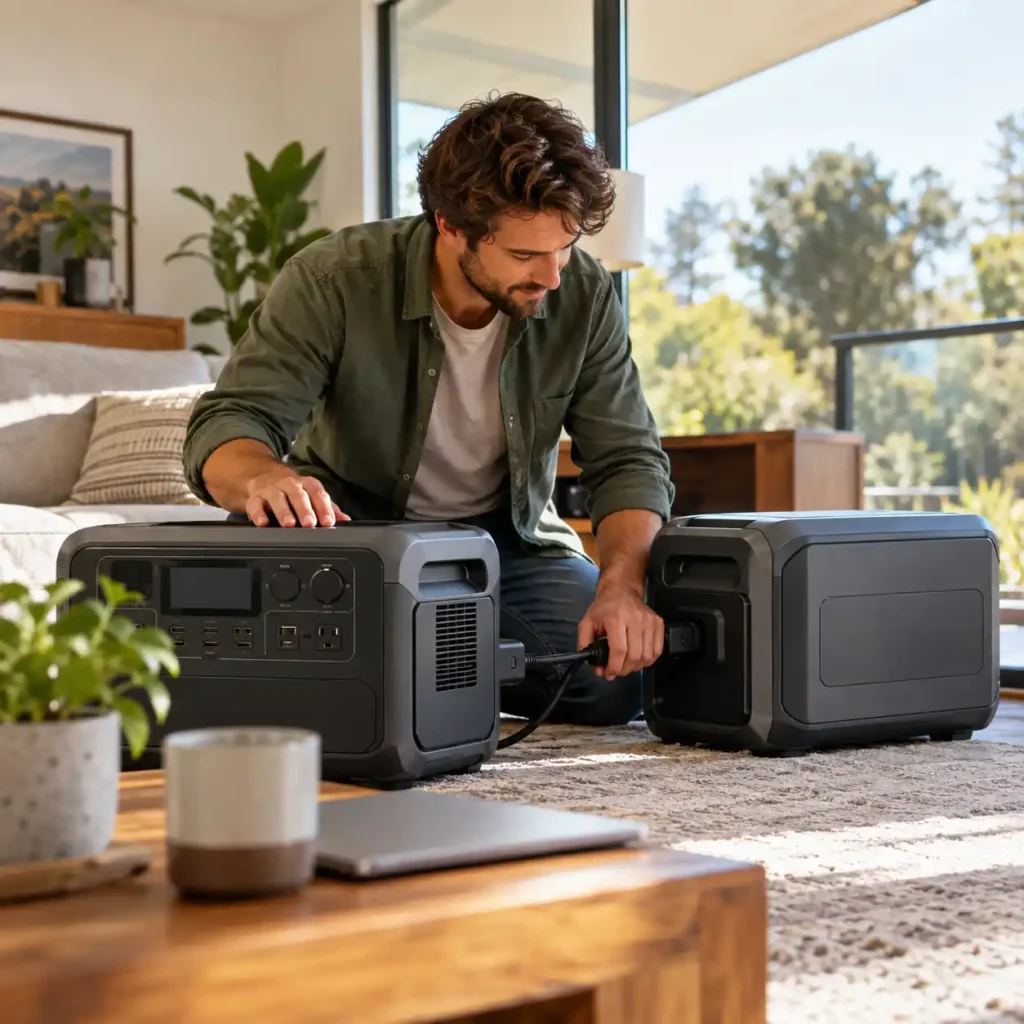
An expansion battery is usually the better choice when your existing power station already provides enough AC output for the appliances you need to run, but its stored energy capacity is not enough for the required runtime. In that situation, adding compatible battery capacity can extend how long the same system operates without changing the power station itself.
A new power station makes more sense when the limitation is not runtime but power capability or system independence. If your existing unit cannot provide enough continuous or surge output for a particular load, adding an expansion battery generally does not solve that problem. A second or larger power station can also be preferable when you need a separate backup source rather than a larger battery reserve for the same system. If you decide that a new power station makes more sense than expanding your current system, see our How to Choose a Portable Power Station guide for the broader buying decision.
| Situation | Better Choice | Why |
|---|---|---|
| Your power station has enough output but runs out of energy too quickly | Expansion battery | Adds stored energy and can extend runtime. |
| You need to run a higher-wattage appliance than the current inverter can support | New or larger power station | More battery capacity does not automatically increase inverter output. |
| You want to keep using the same compatible system | Expansion battery | Extends the existing platform instead of replacing it. |
| You need an independent backup source | Second power station | Provides a separate power system rather than additional storage for the first one. |
| You expect your energy-storage needs to grow within the same ecosystem | Expansion battery | A compatible system may support multiple expansion batteries. |
| You need maximum portability or frequently move your equipment | Depends on the system | An additional battery can add substantial weight, while a second station may offer more flexibility but also adds another large unit. |
Before choosing an expansion battery, check the exact power station model and generation, the supported battery models, and the maximum number of batteries that can be connected. Compatibility is not determined simply by the brand name, and an expansion battery that fits one generation may not work with another.
The key question is therefore simple: Do you need more watts, or more watt-hours? If you need more runtime from a system that already has sufficient output, an expansion battery can be the more targeted purchase. If you need more power capability or an independent source, buying another power station is usually the better solution.
How Much Additional Capacity Do You Need?
The amount of expansion capacity you need depends on how much energy your existing power station can store, how long you want it to run, and how much additional energy your loads require. The goal is not to choose the largest expansion battery available, but to add enough capacity to close the gap between your current system and the runtime you need.
If you are not sure how much total battery capacity your setup actually requires, use our Battery Capacity Calculator before choosing an expansion battery.
A simple way to estimate the required expansion is: Additional Capacity Needed = Target System Capacity − Existing Power Station Capacity
For example, if your current power station has 2,048Wh of capacity and you want a system with approximately 4,096Wh, you need about 2,048Wh of additional storage. A 1,024Wh expansion battery would only take the system to approximately 3,072Wh, while a 2,048Wh expansion would reach the target in one step, provided the power station supports that battery.
Added Capacity vs. Total System Capacity
Expansion batteries should always be evaluated in two separate numbers:
Added capacity — the energy storage provided by the expansion battery itself.
Total system capacity — the capacity of the original power station plus all compatible expansion batteries.
This distinction matters because a product advertised as a 4,096Wh expansion battery does not mean that the complete system has 4,096Wh. The battery adds 4,096Wh to the capacity of the compatible host system.
| Existing Power Station | Expansion Added | Approximate Total Capacity |
|---|---|---|
| 1,024Wh | 1,024Wh | 2,048Wh |
| 2,048Wh | 1,024Wh | 3,072Wh |
| 2,048Wh | 2,048Wh | 4,096Wh |
| 2,048Wh | 4,096Wh | 6,144Wh |
These examples illustrate the calculation rather than specific product configurations. Actual expansion limits depend on the exact power station model and generation.
Match the Battery to the Capacity Gap
If your estimated capacity gap is relatively small, a smaller expansion battery may be the more practical choice. Adding substantially more capacity than you need can increase the system’s cost, weight, and physical footprint without providing a meaningful benefit for your intended use.
For larger capacity gaps, however, a higher-capacity expansion battery can be more efficient. One larger battery may provide the required storage with fewer individual units, although its greater weight and size can make the overall system less convenient to handle.
When calculating your target, remember that rated watt-hours are not the same as guaranteed usable energy at the AC outlets. Actual runtime depends on the load, conversion losses, battery-management limits, and operating conditions. For more detailed power-station sizing, use our Power Station Size Calculator rather than treating this expansion-battery calculation as a complete system-sizing method.
Does an Expansion Battery Increase Runtime or Power Output?
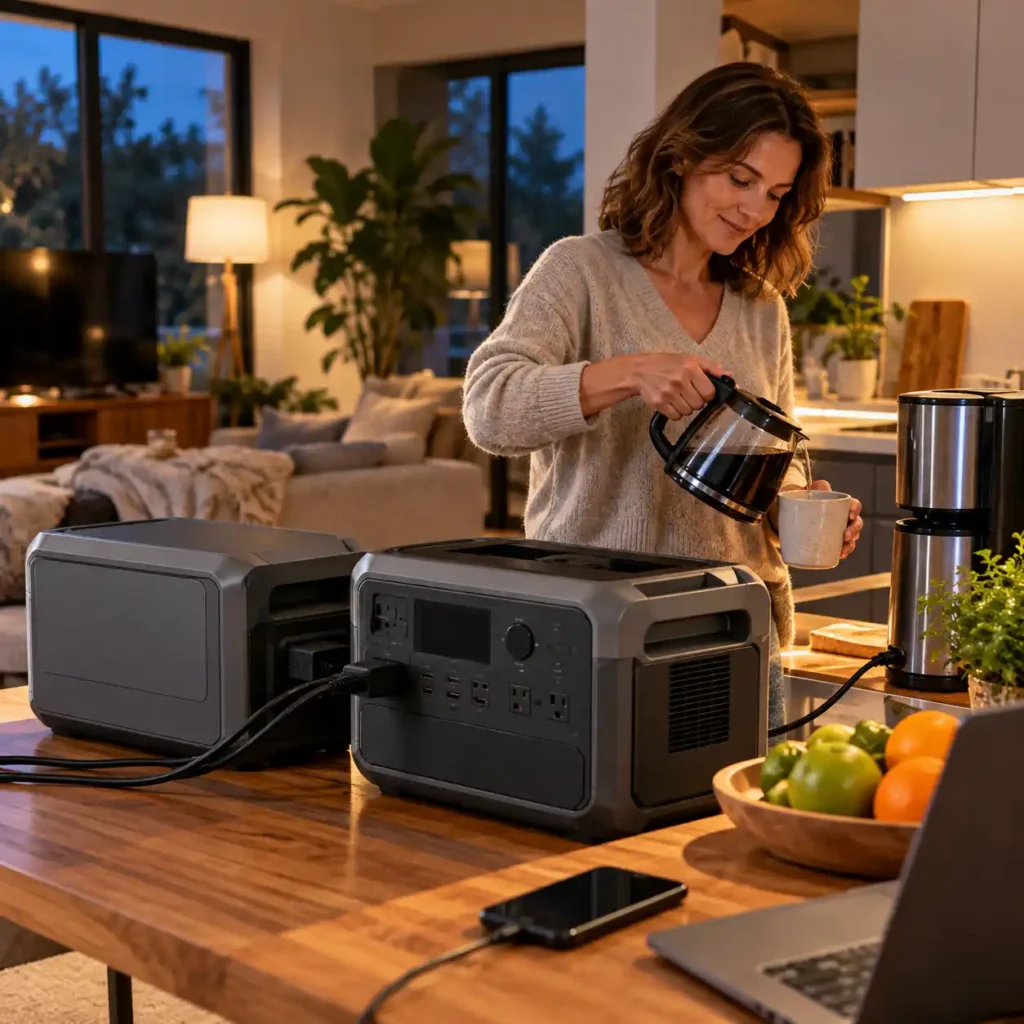
An expansion battery primarily increases stored energy, measured in watt-hours (Wh). That additional energy can allow a compatible power station to operate its existing loads for longer, but it does not automatically increase the power station’s AC inverter output, measured in watts (W).
The distinction is important. Watt-hours determine how much energy the system stores, while watts determine how much power the system can deliver at a given moment. If a power station can already handle a 1,000W appliance but runs out of energy sooner than you need, additional battery capacity can help extend runtime. If the power station cannot supply enough output for a 2,000W appliance, adding an expansion battery does not necessarily make that appliance compatible with the system.
When More Wh Helps
An expansion battery can be useful when the main limitation is runtime. For example, adding battery capacity can allow a compatible power station to keep lower- or moderate-power loads operating for longer during a power outage or off-grid use.
The approximate relationship is: Runtime ≈ Available Energy (Wh) ÷ Load (W)
Actual runtime will be lower than a simple calculation may suggest because of inverter losses, battery-management limits, load fluctuations, and other operating conditions. For a more detailed estimate of how long a given battery capacity can support your load, use our Battery Runtime Calculator.
When More Wh Does Not Solve the Problem
If the issue is insufficient inverter output, an expansion battery may not be the right solution. A battery can add stored energy without changing the host power station’s rated AC output.
For example, if a power station is not rated to run a particular high-wattage appliance, adding an expansion battery should not be assumed to make that appliance usable. In that situation, you may need a power station with a higher continuous or surge output instead.
| Your Limitation | What You Need | Likely Solution |
|---|---|---|
| The system runs out of energy too quickly | More Wh | Expansion battery |
| You need longer runtime for the same loads | More Wh | Expansion battery |
| The inverter cannot support the appliance's running wattage | More W | Higher-output power station |
| The appliance exceeds available surge capability | More surge output | A power station with sufficient surge rating |
| You want a completely separate backup source | Independent system | Another power station |
The safest buying rule is simple: buy an expansion battery when your problem is insufficient energy capacity, not insufficient power output. Before purchasing, check both the host power station’s rated output and the energy capacity you actually need.
How Many Expansion Batteries Can You Actually Add?
The maximum number of expansion batteries you can connect depends on the exact power station model and generation. There is no universal expansion limit, and a battery that works with one model in a manufacturer’s lineup may not be compatible with another. Always verify the supported host models and maximum battery count before buying.
For the systems covered in this guide, the expansion limits vary considerably:
| Power Station System | Expansion Battery | Maximum Expansion | Potential Added Capacity |
|---|---|---|---|
| BLUETTI Apex 300 | BLUETTI B500K | Up to 6 batteries | Up to 30,720Wh |
| Jackery Explorer 2000 Plus | Battery Pack 2000 Plus | Up to 5 packs | Up to 10,214Wh |
| EcoFlow DELTA Pro 3 | DELTA Pro 3 Extra Battery | Dedicated DELTA Pro 3 expansion | 4,096Wh per battery |
| Compatible EcoFlow DELTA 2/3-series systems | DELTA 3 Series Smart Extra Battery | Depends on the host system | 1,024Wh per battery |
| Anker SOLIX F3800 | BP3800 | Up to 6 batteries | Up to 23,040Wh |
These figures describe expansion capacity, not the final capacity of the complete power station system. To determine total system capacity, add the host power station’s rated capacity to the capacity provided by its compatible expansion batteries.
For example, six 5,120Wh BLUETTI B500K batteries add 30,720Wh of storage to a compatible Apex 300 system. Likewise, six 3,840Wh Anker SOLIX BP3800 batteries add 23,040Wh to an F3800 system. The number of batteries therefore matters just as much as the capacity of each individual battery when comparing expansion platforms.
Check the Exact Model Before Buying
Do not assume that compatibility follows the brand family. Expansion support can change between generations and between models with similar names. The correct check is:
Exact power station model → supported expansion battery → maximum battery count → resulting system capacity
This is particularly important when shopping on Amazon, where product titles may mention several compatible products or use broader family terminology. Confirm the compatibility information for the exact host model rather than relying on the brand name or a similar-looking product.
If you need only a small increase in capacity, the maximum expansion limit may not matter. For buyers planning long-duration home backup, however, the ability to connect multiple batteries can become a major part of the system’s long-term value.
Can You Charge an Expansion Battery Independently?
Not every expansion battery can be charged independently of its host power station. Some batteries rely on the connected power station for charging, while others support additional charging methods such as solar or vehicle charging. This difference can matter when you use the system away from the grid or want to prepare the battery separately before an outage.
For example, the Jackery Battery Pack 2000 Plus can be charged independently from the Explorer 2000 Plus using compatible solar or vehicle charging. Wall charging is different: charging both the power station and battery from a wall outlet requires the battery to be connected to the Explorer 2000 Plus.
Other expansion batteries are more dependent on their host system. The EF ECOFLOW Delta 3 Series Smart Extra Battery, for example, can be recharged through the connected DELTA system using AC power, portable solar panels, or an EcoFlow Smart Generator. This makes the battery part of the overall charging system rather than a completely separate power source.
However, independent charging should not be confused with independent operation. An expansion battery can sometimes accept charge through its own supported inputs while still requiring a compatible host power station to deliver AC power to appliances.
A larger battery bank is only useful if the host system can recharge it at a practical rate. When planning multi-battery expansion for off-grid use, compare total stored capacity with the host power station’s solar input limit and expected daily solar production.
Why Independent Charging Matters
Independent charging can be useful when you want to:
Recharge away from the grid using solar or a vehicle.
Prepare additional battery capacity separately before an expected outage.
Use available charging sources more flexibly when conventional AC power is unavailable.
Manage a larger system more conveniently when the expansion battery does not need to remain connected for every charging method.
However, independent charging should not be confused with independent operation. An expansion battery can sometimes accept charge through its own supported inputs while still requiring a compatible host power station to deliver AC power to appliances.
| Charging Capability | What It Means | Why It Matters |
|---|---|---|
| Host-only charging | The expansion battery relies on the connected power station for charging. | Simpler setup, but less flexible away from the host. |
| Independent solar charging | The battery can accept compatible solar input directly. | Useful for off-grid and extended outage scenarios. |
| Independent vehicle charging | The battery can be charged from a compatible vehicle source. | Adds another charging option when AC power is unavailable. |
| Multiple charging methods | The battery supports more than one charging path. | Gives you more flexibility when preparing or operating the system. |
Always check the charging method for the exact expansion battery and host system you are buying. Compatibility, input requirements, and supported charging methods can differ even between batteries from the same manufacturer. The ability to charge independently is therefore a feature to verify before purchase, not an assumption to make from the battery’s capacity or brand.
How Much Does an Expansion Battery Cost per Wh?

The price of an expansion battery is easier to compare when you look at cost per watt-hour ($/Wh) rather than the battery’s sticker price alone. A larger battery will normally cost more, but its higher capacity may provide better value for each additional watt-hour of stored energy.
Use this formula: Cost per Wh = Expansion Battery Price ÷ Added Capacity in Wh
For example, if a 2,000Wh expansion battery costs $1,000, its capacity cost is:$1,000 ÷ 2,000Wh = $0.50/Wh
You can also express the result as cost per kilowatt-hour: $0.50/Wh × 1,000 = $500/kWh
Compare Added Capacity, Not Total System Capacity
When evaluating an expansion battery, divide the purchase price by the capacity added by the battery itself, not the capacity of the complete power station system.
For example, a 4,096Wh expansion battery should be evaluated as: Battery Price ÷ 4,096Wh
You should not divide the battery price by the combined capacity of the host power station plus the expansion battery. Doing so would make the battery appear cheaper than it actually is as an individual expansion purchase.
| What to Compare | Correct Approach | Why It Matters |
|---|---|---|
| Battery price | Current U.S. purchase price | Prices and promotions can change. |
| Added capacity | Rated Wh of the expansion battery | Measures the energy you are actually buying. |
| Cost per Wh | Price ÷ added Wh | Makes different battery sizes easier to compare. |
| Cost per kWh | Cost per Wh × 1,000 | Provides a more familiar energy-cost comparison. |
| Compatibility | Exact host model and generation | A low $/Wh is irrelevant if the battery does not fit your system. |
$/Wh Is Useful, but It Is Not the Whole Decision
The lowest cost per Wh does not automatically make an expansion battery the best purchase. Compatibility comes first. An inexpensive battery that cannot connect to your power station has no practical value.
You should also consider the maximum number of batteries supported by the host system, charging flexibility, weight, and the total capacity you actually need. A higher-capacity battery may have a competitive $/Wh but be unnecessarily heavy if you only need a modest increase in runtime.
This is particularly important when comparing an expansion battery with buying another power station. A second station may provide its own inverter, outlets, and independent backup capability, while an expansion battery primarily adds stored energy to the existing system. The lower $/Wh option is therefore not necessarily the lower-cost solution for the complete backup system you are trying to build.
Check the Current Price Before Comparing Value
Expansion-battery pricing can change substantially with promotions, seller offers, and availability. For that reason, $ / Wh should be calculated using the current U.S. selling price at the time of purchase, rather than a historical MSRP or an outdated deal price.
For the same reason, Power Ready Guide does not treat a single advertised price as a permanent value rating. The capacity specification is relatively stable; the purchase price is not.
The best value is therefore the battery that combines a competitive cost per added Wh with the exact compatibility, expansion capacity, charging flexibility, and physical practicality required by your system.
Common Expansion Battery Buying Mistakes
Choosing an expansion battery is not simply a matter of finding the largest battery or the lowest price. The most expensive mistakes usually happen when buyers overlook how the battery fits into the existing power station system.
Buying by Brand Instead of Exact Model
A common mistake is assuming that an expansion battery will work with any power station from the same manufacturer. Compatibility is often tied to a specific model or generation, so a battery that works with one DELTA, Explorer, BLUETTI, or Anker SOLIX system may not work with another.
Why it matters: A battery with excellent capacity or value is useless if it cannot connect to the exact power station you own.
Comparing Batteries by Sticker Price Alone
A lower purchase price does not necessarily mean better value. Two batteries with different capacities can have very different costs per watt-hour, while a more expensive battery may provide substantially more storage per dollar.
Why it matters: Compare the current purchase price with the capacity added, then consider compatibility and system limits before deciding which battery offers better value.
Choosing More Capacity Than You Actually Need
The largest expansion battery is not automatically the best choice. Extra capacity can mean higher cost, more weight, and a larger physical footprint when a smaller increase would already provide the runtime you need.
Why it matters: Match the added capacity to the actual gap in your system instead of paying for storage you are unlikely to use.
Assuming More Wh Means More Watts
Another common mistake is buying an expansion battery because the existing power station cannot run a particular high-wattage appliance. Additional battery capacity can extend runtime, but it does not automatically increase the host inverter’s AC output.
Why it matters: If the problem is insufficient output rather than insufficient runtime, an expansion battery may not solve it.
Ignoring the Maximum Expansion Limit
Some systems support multiple expansion batteries, while others have a more limited expansion path. Looking only at the capacity of one battery can therefore give an incomplete picture of how far the system can actually scale.
Why it matters: Check the maximum number of supported batteries and calculate the resulting total system capacity before choosing a platform for long-term backup.
Overlooking Weight and Physical Setup
Expansion batteries can be considerably heavier than buyers expect. Adding several units may turn a system that is technically portable into equipment that is more practical to keep in one location.
Why it matters: Capacity gains come with a physical trade-off. Consider where the batteries will be stored and how often they realistically need to be moved.
Assuming Every Expansion Battery Charges the Same Way
Charging capabilities vary between models. Some batteries support additional charging methods, while others depend more heavily on the connected power station.
Why it matters: If you plan to use solar, vehicle charging, or off-grid operation, verify the supported charging method for the exact battery rather than assuming that all expansion batteries offer the same flexibility.
Buying an Expansion Battery When a Second Power Station Makes More Sense
An expansion battery keeps you within the same power station system, but it does not provide the same functionality as a completely independent power station. If you need a separate backup source, different output capabilities, or greater flexibility between locations, another power station may be the more useful investment.
Why it matters: The cheapest way to add watt-hours is not always the best way to build the backup system you actually need.
The Better Buying Process
Before purchasing an expansion battery, work through the decision in this order:
Exact host model → compatible battery → additional Wh required → maximum expansion → charging options → weight and placement → cost per Wh → expansion battery vs. another power station.
This order prevents the most common category mistake: choosing the battery first and checking whether it actually solves your system’s problem afterward. For expansion batteries, compatibility and system fit should determine the shortlist before price or capacity becomes the deciding factor.
Frequently Asked Questions
Can I use an expansion battery with any power station from the same brand?
No. Expansion batteries are generally model- and generation-specific, so the same brand name does not guarantee compatibility. Check the exact host power station model, supported battery model, and any generation-specific requirements before buying. Manufacturer documentation should take priority over a marketplace listing or a similar product name.
Can I mix different expansion battery models on the same power station?
Usually not. Expansion systems are designed around specific battery types, connectors, and battery-management requirements. Even when batteries come from the same manufacturer, different models or generations may not be interchangeable. Use only combinations that the manufacturer explicitly supports for the exact host system.
Can an expansion battery be used by itself?
It depends on the model, but many expansion batteries are not standalone power sources. They may have no AC inverter or usable AC outlets and are designed to work as additional storage for a compatible host power station. Some battery packs do provide their own outputs, so check the specific model rather than assuming all expansion batteries work the same way.
Can I add an expansion battery later, or do I have to buy it with the power station?
For systems designed to support expansion, the battery can generally be added later rather than purchased at the same time as the host power station. This is one of the main advantages of a modular system: you can start with the capacity you need today and add storage when your requirements increase. The important limitation is that the later purchase must still be compatible with the exact host model and generation.
Will using an expansion battery affect my power station's warranty?
Using a manufacturer-approved expansion battery and connection method is different from modifying the system or using an unsupported battery. Warranty terms vary by manufacturer and product, so check the warranty documentation for both the host power station and expansion battery before purchasing. Do not assume that a third-party or incorrectly matched battery has the same warranty coverage.
Is an expansion battery still useful if I only need a small amount of extra runtime?
It can be, but the economics and physical size matter. If your existing system already meets your power-output requirements and you regularly fall just short of the runtime you need, a smaller compatible expansion battery can be a targeted solution. If the added capacity is rarely needed, however, the cost and weight of an expansion battery may not justify the upgrade.
Does an expansion battery make a portable power station less portable?
It can. Expansion batteries add both weight and physical volume, and the effect becomes more significant when multiple batteries are connected. A system that is easy to move as a standalone power station may become much less practical to transport once several expansion batteries are added. This trade-off is particularly important for camping, RV, and other mobile use.
Can I add an expansion battery later, or do I need to buy it with the power station?
Yes. In many systems, you can add a compatible expansion battery after purchasing the power station, provided the power station supports that battery and the manufacturer allows expansion on that specific model and generation. You do not normally need to buy the battery at the same time as the power station. Before purchasing later, check the exact host model, supported expansion battery, maximum battery count, and any generation-specific compatibility requirements.
Final Verdict
The best expansion battery is not simply the one with the most capacity. The right choice depends on exact compatibility, the amount of additional energy you need, system expansion limits, charging flexibility, and whether your actual need is more runtime or more power output.
Our Recommendation
Choose the BLUETTI B500K if your priority is maximum added capacity and long-duration backup, and you have a compatible BLUETTI system with enough space for a large expansion battery.
Choose the Jackery Battery Pack 2000 Plus if your priority is a strong balance of added capacity, portability, and flexible charging for an Explorer 2000 Plus system.
Choose the EF ECOFLOW DELTA Pro 3 Extra Battery if you already own a DELTA Pro 3 and want a dedicated expansion path with a substantial increase in stored energy.
Choose the EF ECOFLOW Delta 3 Series Smart Extra Battery if your priority is a more compact capacity increase for a compatible DELTA 2 or DELTA 3-series system.
Choose the Anker SOLIX BP3800 if you are building around an Anker SOLIX F3800 and your priority is substantial additional storage for a scalable home backup system.
If you are still unsure, start with the capability you need most—additional runtime, maximum capacity, portability, charging flexibility, or system compatibility—rather than starting with the battery’s price or capacity alone.
Related Guides
If you want to narrow your decision further, these guides cover the next step in choosing and using a portable power system:
Best 2000Wh Portable Power Stations (2026) — if you are considering whether a larger-capacity power station would be a better starting point than adding an expansion battery.
Battery Capacity Calculator — if you need to estimate how much total battery capacity your system requires for your expected loads and runtime.
Portable Power Station Runtime Calculator — if you want to estimate runtime for specific loads and determine whether additional battery capacity may be useful.
How to Choose a Portable Power Station — if you decide that choosing a different or larger power station makes more sense than expanding your current system.
Best Portable Power Stations for Home Backup (2026) — if your primary goal is longer backup coverage for essential household loads.
Power Ready Guide Commitment
At Power Ready Guide, our goal is not to tell you to buy the biggest battery. It is to help you understand which expansion option actually fits the system you have and the problem you are trying to solve.
We compare expansion batteries based on the factors that matter to the real buying decision—exact compatibility, added capacity, system expansion limits, charging flexibility, portability, value, and the difference between more stored energy and more power output. We also make the limitations clear, because an expansion battery is not always the right solution.
Our commitment is simple: help you expand your power system with confidence, not simply add more battery capacity.