
DJI is best known for technology that supports creators, professionals, and other demanding users, but the company has also expanded into portable energy with its DJI Power Series. For Power Ready Guide, the relevant question is not DJI’s entire technology portfolio, but what the brand offers in portable power, solar charging, and backup energy.
The DJI Power ecosystem is built around portable power stations, multiple charging methods, expansion options, and accessories designed to make stored energy useful in outdoor, mobile, work, and backup scenarios. The current range includes several capacity and power classes rather than a single universal solution.
This guide explains how DJI approaches portable energy, how its Power portfolio is organized, where solar and backup fit into the ecosystem, and what type of user may find the brand relevant. It is a brand profile, not a ranking of DJI products.
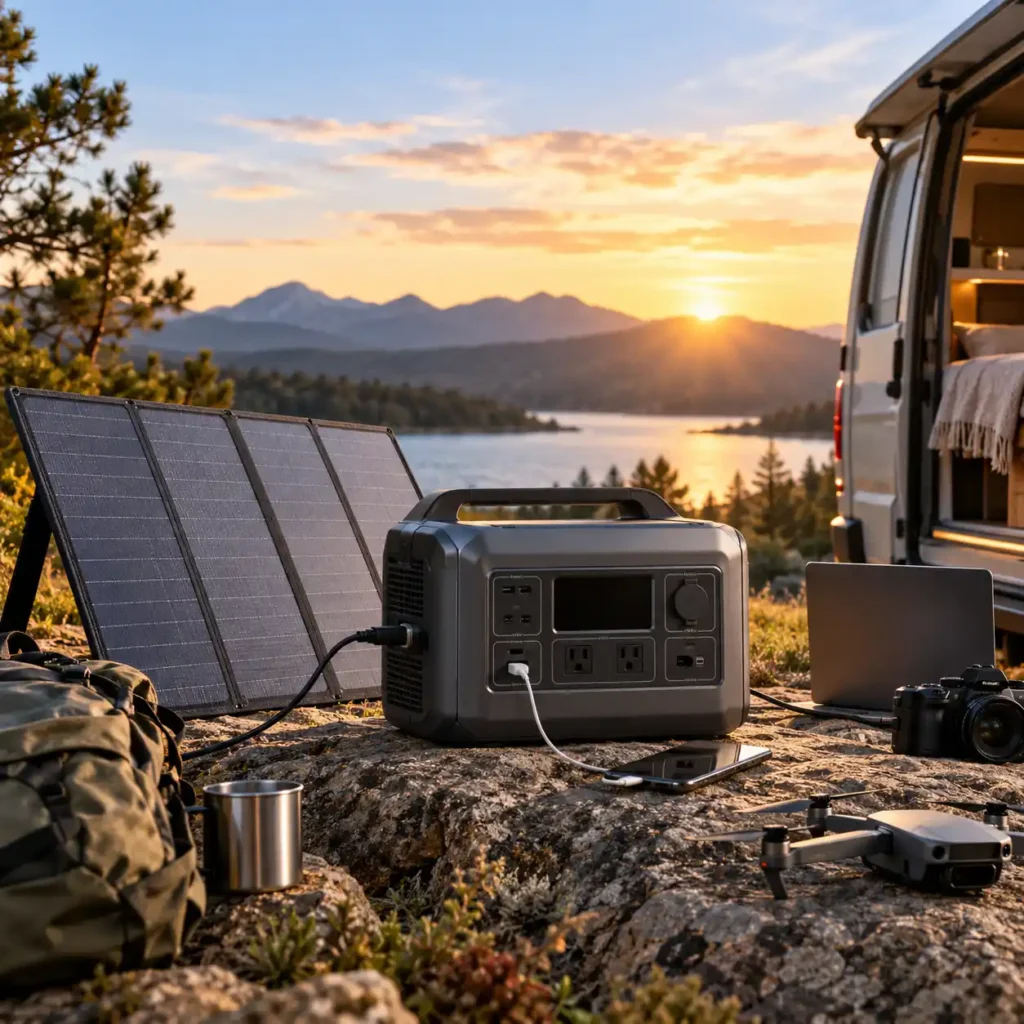
Table of Contents
DJI at a Glance
DJI is a privately owned technology company headquartered in Shenzhen, China. The company says it was founded in 2006 and has developed technology for creative, commercial, and other professional applications. Its current business is broader than portable energy, but the DJI Power Series represents a distinct expansion into portable power and backup applications.
For Power Ready Guide, DJI is most relevant as a portable power and energy ecosystem, rather than as a general technology brand.
| Category | DJI's Position |
|---|---|
| Brand type | Technology company with a dedicated portable power product line |
| Energy category | Portable power stations and related charging solutions |
| Charging | Grid, solar, vehicle and other supported charging methods depending on the product |
| Backup use | Portable backup power, with some models supporting UPS functionality |
| Portfolio structure | Multiple power and capacity classes within the DJI Power Series |
| Primary positioning | Portable energy for outdoor, mobile, work and backup scenarios |
The current DJI Power portfolio includes multiple capacity and power classes, from compact portable units to larger systems designed for more demanding backup and off-grid applications. This shows how DJI’s energy portfolio has developed beyond its original launch into a broader family of portable power solutions.
About DJI
DJI describes itself as a technology company focused on turning complex technology into practical tools. Its stated areas of activity extend across creative, commercial, agricultural, infrastructure, and other professional applications. The company is headquartered in Shenzhen and operates internationally.
Portable energy became a separate part of this wider technology portfolio with the introduction of the DJI Power Series in 2024. The original DJI Power 1000 and Power 500 were positioned around portable electricity for outdoor use, common household devices, and backup scenarios. DJI also emphasized its previous battery research and development as part of the foundation for the new series.
The important distinction for consumers is that DJI Power is not simply a conventional generator category under a different name. The series is built around rechargeable battery storage, multiple recharge options, and electronically controlled power delivery. That places it within the portable power station segment covered by Power Ready Guide.
The Power 2000, introduced in 2025, was explicitly positioned for applications including home backup, road trips, camping, and professional production environments.
Readers comparing portable systems specifically for outage protection can also see our Best Portable Power Stations for Home Backup guide.
Today, DJI Power has developed into a broader portable-energy ecosystem covering different power levels and use cases, rather than a single portable power station concept.
What Is DJI Known For in Power & Energy?

Within the energy category, DJI’s identity is centered on portable power rather than permanently installed residential energy systems.
The DJI Power Series combines battery storage with several ways of putting that stored energy to practical use. Depending on the model and accessories, the ecosystem supports AC power, solar charging, vehicle-based charging, USB-C charging, expansion batteries, and specialized power accessories.
Three characteristics are particularly important when understanding DJI’s position.
Portable Energy as the Core
The central product category is the portable power station. These systems store electrical energy in a rechargeable battery and provide outputs for electronics, appliances, tools, and other compatible loads.
This makes DJI relevant to several situations that sit between everyday portable electricity and emergency preparedness:
- camping and outdoor travel;
- road trips and mobile work;
- temporary power at remote locations;
- backup for selected household equipment;
- professional field and production work;
- solar-assisted off-grid use.
The brand’s own Power Series materials explicitly position the range across outdoor, work, creation, and home-backup scenarios.
For readers who are comparing different portable power categories, the more useful question is therefore not simply whether DJI makes a power station, but how its power ecosystem is structured and which role each capacity class is intended to serve.
Fast and Flexible Recharging
Another recurring theme across DJI Power products is recharge flexibility.
Depending on the model, DJI supports combinations of grid charging, solar charging, vehicle charging, and USB-C charging. The Power 1000 V2, for example, supports grid, solar, and vehicle-based charging options, while the Power 500 also supports AC, USB-C, solar, and vehicle charging with the appropriate equipment.
This is significant because a portable power station becomes more useful when it can be replenished in different environments. Grid charging is practical at home, solar charging can support longer off-grid use, and vehicle charging can be useful while travelling.
The exact charging configuration should always be checked against the individual model and required accessories rather than assumed across the entire DJI Power range.
Battery-Centered Backup
DJI’s energy products are also designed to function as backup power sources rather than only as outdoor equipment.
Some DJI Power models support UPS functionality, allowing connected equipment to continue receiving power when grid electricity is interrupted. DJI’s documentation for the Power 2000 specifically describes its UPS mode for maintaining power to connected devices during an outage.
That does not make every DJI Power station a replacement for a permanently installed whole-house backup system. Portable battery backup and installed home energy storage solve different problems.
For larger residential requirements, readers should instead compare the appropriate system category through our guide to Best Home Battery Backup Systems rather than treating every portable power station as a whole-home solution.
DJI Product Categories
The DJI Power ecosystem can be understood through four closely connected categories: portable power stations, solar charging, backup power, and accessories or expansion equipment.
This functional structure is more useful than simply listing every current SKU because DJI’s models change over time while the underlying roles remain relatively stable.
Portable Power Stations
Portable power stations form the foundation of DJI’s energy portfolio.
The current range spans smaller and larger battery capacities, extending from compact portable units to 2 kWh-class systems. The range also varies substantially in output capability, physical size, and expansion support.
At the smaller end, a compact unit can be used primarily for electronics, mobile work, travel, and lighter backup requirements. Larger units are designed for higher power demand and can support a broader range of household, outdoor, and professional equipment.
This is why capacity alone should not be used to characterize the DJI Power range. Output power, charging methods, expansion capability, portability, and intended use all influence where a particular model fits.
Readers who need help determining the appropriate capacity should use our Power Station Size Calculator rather than choosing a DJI model based only on its advertised watt-hours.
Solar Charging
Solar charging is another important part of the DJI Power ecosystem.
DJI supports solar recharge through compatible charging equipment and MPPT-based solar input solutions. Depending on the model, the system can be paired with solar panels to replenish stored energy without relying exclusively on the electrical grid.
This creates a practical distinction between a portable power station that can merely store electricity and an energy system that can be replenished in the field.
For readers comparing panel types and configurations across brands, our guide to Best Portable Solar Panels covers the broader solar-panel category without turning this DJI profile into a brand-specific solar charging guide.
DJI’s solar capability should therefore be understood as part of the wider Power ecosystem rather than as a standalone solar product category.
Backup Power and Energy Storage
Backup power is one of the more important applications of DJI Power, but it needs to be defined correctly.
A portable battery power station can provide emergency electricity to selected devices during an outage. Depending on the model, this may include networking equipment, computers, lighting, appliances, or other compatible loads. Some models also support UPS functionality for equipment that needs uninterrupted power.
However, portable backup should not automatically be equated with a whole-house battery system.
A portable unit can be moved, recharged from different sources, and used in multiple locations. A dedicated home battery system is designed around a more permanent installation and a different electrical architecture.
For readers evaluating those larger systems, our Best Home Battery Backup Systems guide addresses the broader category separately.
Power Accessories and Expansion
DJI also treats accessories as an important part of the Power ecosystem.
The current range includes charging equipment, solar-related accessories, vehicle charging solutions, expansion batteries, and other components designed to extend how the power stations can be used. DJI’s current Power Series page lists both expansion batteries and vehicle charging equipment alongside the core stations.
This matters because some capabilities depend on additional hardware. Solar charging, vehicle charging, capacity expansion, or specialized connections may require compatible accessories rather than being built into every station.
For this reason, the DJI Power ecosystem is better understood as a modular portable-energy platform than as a collection of completely independent battery boxes.
DJI Power Product Lines Explained

The current DJI Power portfolio can be organized into practical capacity and use-case classes rather than treated as a single product.
Compact and Mid-Range Portable Power
The lower-capacity part of the range is represented by products such as the Power 500, while compact designs such as the Power 1000 Mini extend portability into the approximately 1 kWh class. These products are positioned toward users who want substantial stored energy in a more portable format.
The role of this class is straightforward: provide substantial stored energy without moving into the size and weight associated with the largest portable systems.
Typical applications include:
- personal electronics;
- laptops and mobile workstations;
- lighting;
- small appliances;
- camping;
- road travel;
- temporary backup for selected devices.
The important point is that these products occupy the portable end of the energy spectrum. They are not intended to replace a permanently installed home battery system.
1 kWh-Class Power Stations
The 1 kWh class is currently one of the most developed areas of the DJI Power range.
The 1 kWh class includes the Power 1000 family and compact alternatives such as the Power 1000 Mini. Models within this class differ in physical design, output capability, charging characteristics, and other specifications.
At the brand-profile level, the significance of this category is that DJI offers several ways to approach roughly the same storage class rather than forcing every user into one design.
That creates different trade-offs between portability, output, recharge speed, and expandability. Those differences belong in individual product reviews or comparisons; they should not turn this Brand Profile into a model-ranking article.
Higher-Capacity Portable Backup Power
At the higher end, the DJI Power 2000 moves the platform into a larger 2 kWh-class portable power system.
DJI introduced the Power 2000 in July 2025 and positioned it for home backup as well as road trips, camping, and professional production environments. The current DJI Store lists it at 2048 Wh and supports expansion through additional batteries.
The significance of this class is not simply the larger battery. It shows how DJI’s portable energy platform can scale from relatively mobile power into more substantial backup applications while remaining based on a portable architecture.
That distinction is important for readers: larger portable backup is still portable backup. It should not automatically be treated as equivalent to a permanently installed whole-house energy-storage system.
DJI Power Technology & Energy Ecosystem
The DJI Power ecosystem is built around more than battery capacity alone. Its main differentiator at the system level is the combination of portable energy storage, multiple charging methods, power-management electronics, software control, and optional accessories.
The exact combination varies by model, but the current DJI Power range supports several ways to recharge and use stored energy, including AC power, solar energy, vehicle-based charging, USB-C charging on supported models, and dedicated expansion or charging accessories.
Battery Technology
Current DJI Power stations use lithium iron phosphate (LFP) battery chemistry, with DJI specifying LFP batteries across multiple models in the range. DJI also provides cycle-life specifications for supported products, although exact figures vary by model.
For users, the important point is that LFP is a rechargeable battery chemistry commonly used in portable power stations because of its combination of cycle durability and thermal stability.
However, battery chemistry alone does not determine how useful a power station will be. Capacity, continuous output, surge capability, charging speed, inverter design, thermal management, portability, and available expansion options all matter.
That is why DJI’s different Power models should not be evaluated solely by comparing their watt-hour figures.
Solar and MPPT Charging
Solar charging is integrated into the broader DJI Power ecosystem rather than being treated as a separate product category.
Depending on the model and charging equipment, DJI Power stations can receive energy from solar panels through compatible solar charging solutions. DJI’s documentation for the Power 1000 V2, for example, describes solar charging through an MPPT solar-panel adapter and also supports combined solar and vehicle charging with compatible equipment.
MPPT — maximum power point tracking — is important because solar-panel output varies continuously with sunlight and operating conditions. An MPPT controller helps the charging system extract available energy efficiently from the connected solar source.
For Power Ready Guide readers, the practical implication is straightforward: solar capability does not mean that every panel or every configuration will deliver the same charging performance. Panel wattage, sunlight, connection method, input limits, and compatible accessories all affect the result.
A general explanation of solar-panel selection belongs in our Best Portable Solar Panels guide rather than being duplicated here.
SDC Connections and the Charging Ecosystem
DJI also uses its SDC connection system across parts of the Power ecosystem.
Depending on the product and accessory, SDC connections can support charging, vehicle integration, solar input, and other specialized power functions. The Power 1000 Mini, for example, has an integrated MPPT module and supports solar and vehicle charging through its SDC interface.
This gives DJI Power a more modular architecture than a basic battery pack with a conventional AC outlet.
The trade-off is that users need to pay attention to compatibility. A feature available somewhere within the DJI Power ecosystem does not necessarily mean that every Power station supports it directly or supports the same accessory.
DJI Home App and Software Control
DJI also provides software-based control for compatible Power products through the DJI Home app.
According to DJI, compatible Power Series devices can connect to DJI Home via Bluetooth. The app can provide real-time device status and allow users to customize supported settings. DJI also provides dedicated DJI Assistant 2 software for the Power Series.
This adds a digital-management layer to the portable power system.
For users, that can be useful when a power station is being used as part of a more structured backup or mobile-energy setup rather than simply as an occasional battery for camping.
At the same time, software functionality should be treated as a supporting feature rather than the primary reason to choose a power station. The underlying battery capacity, output, charging architecture, and physical portability remain more fundamental.
Expansion and Scaling
Some DJI Power models can be paired with expansion batteries to increase stored energy.
This is particularly relevant to the larger-capacity part of the portfolio. DJI currently lists an expansion battery designed for the Power 2000, with the ability to increase total storage through compatible configurations.
Expansion changes the role a portable power station can play. A smaller unit may be primarily a mobile electricity source, while a larger expandable system can provide considerably more stored energy for extended backup or off-grid use.
But expansion also introduces additional cost, weight, and physical complexity. It should therefore be evaluated as part of the intended system rather than assumed to be necessary for every user.
Who Is DJI For?

DJI’s portable-energy portfolio is broad enough to address several different user groups, but the common theme is portable electricity with flexible charging options.
Outdoor and Camping Users
Portable power is a natural fit for camping, road travel, and other situations where access to grid electricity is limited.
DJI’s current Power range includes smaller and larger stations, solar charging options, and vehicle-related charging accessories, allowing the system to be adapted to different levels of outdoor power demand. DJI itself currently presents the Power ecosystem around outdoor and on-the-go use as well as home backup.
For occasional camping, a compact station may be sufficient. Longer trips or higher-power equipment can justify a larger capacity class.
The appropriate choice still depends on the actual loads and required runtime rather than on the DJI name alone.
Mobile Professionals and Creators
Portable electricity can also be useful for photographers, filmmakers, technicians, contractors, and other professionals working away from conventional power sources.
A power station can provide a centralized source for laptops, monitors, lighting, chargers, networking equipment, and other electronic equipment.
This is especially relevant where the work environment changes frequently. Instead of installing a fixed electrical solution, users can transport the stored energy with the rest of their equipment.
Home Backup Users
DJI also positions its Power range for home backup applications. The current Power selection on DJI’s store explicitly includes “Home Backup Energy” alongside outdoor and work/creation scenarios.
This can make a DJI Power station relevant during short outages or for keeping selected essential devices operating.
However, the distinction between portable backup and whole-house backup remains important.
A portable power station can provide electricity to selected loads. It does not automatically provide the same electrical integration, transfer capability, or whole-home coverage as a professionally installed standby generator or home battery system.
Readers looking for a broader residential backup solution should compare the appropriate system category rather than assuming that a larger portable station is automatically a whole-house solution.
Users Who Want Solar Recharge
DJI can also suit users who want to combine battery storage with solar generation.
The ability to recharge compatible Power stations from solar panels allows stored energy to be replenished without relying exclusively on grid electricity.
This is particularly relevant for extended outdoor use, remote work, emergency preparedness, and situations where grid access is unreliable.
Who May Want to Consider Other Brands?
DJI’s Power ecosystem will not necessarily be the right fit for every portable-energy requirement.
One consideration is portfolio breadth. DJI’s energy range is focused primarily on portable power stations and the surrounding charging ecosystem. Users looking for a much broader residential energy platform — including permanently installed batteries, solar integration, automatic transfer equipment, or extensive whole-home energy management — may need to look at brands whose portfolios are more heavily focused on residential energy storage.
Another consideration is ecosystem compatibility. DJI’s accessory architecture can be useful when several compatible components are used together, but it also means that users should verify which charging methods and accessories are supported by the exact Power model they are considering.
Portability can also become a limitation at the high-capacity end. Larger battery systems provide more stored energy, but they are correspondingly heavier and less convenient to move frequently. The current DJI Store lists the Power 2000 at approximately 22 kg, while the Power 1000 and Power 1000 V2 are also substantially heavier than the smallest portable units.
Finally, users who need a conventional fuel generator rather than a rechargeable battery system should compare the generator category separately. Battery power stations and generators have fundamentally different refueling, runtime, noise, emissions, and operating characteristics.
DJI Strengths and Limitations
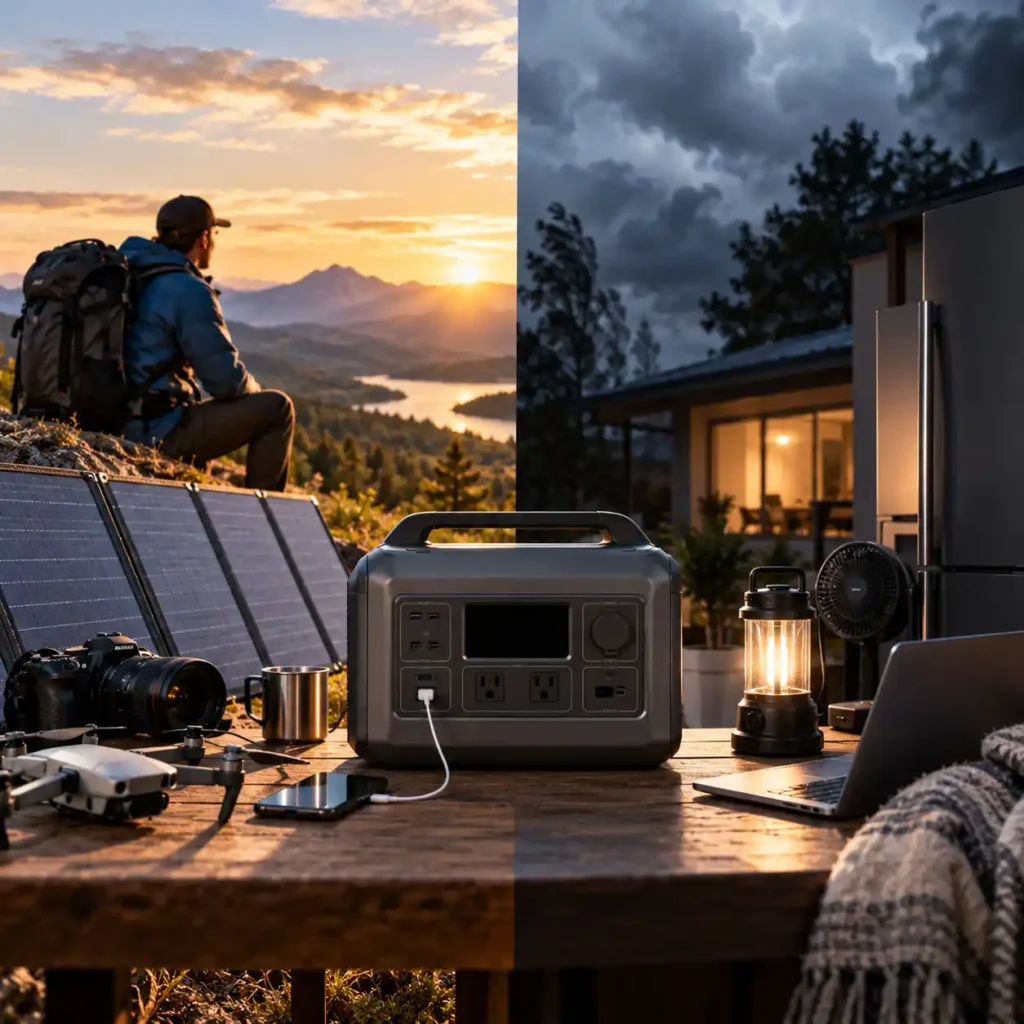
A useful way to understand DJI is to separate the strengths of its Power ecosystem from the limitations imposed by the portable battery format.
Strengths
Portable energy across several capacity classes.
DJI has developed the Power range beyond a single portable station, with current products covering smaller, approximately 1 kWh, and 2 kWh-class configurations.
Multiple charging pathways.
Depending on the model, DJI supports combinations of grid, solar, vehicle, and USB-C charging, giving users more than one way to replenish stored energy.
Solar-ready ecosystem.
Compatible DJI Power products can be integrated with solar charging equipment, making the platform relevant to off-grid and extended outdoor use.
Software management.
DJI Home adds device monitoring and supported control functions for compatible Power products.
Expansion on supported models.
The larger part of the range can be expanded with compatible batteries, allowing storage capacity to increase as requirements grow.
Limitations
Not every feature is available on every model.
Charging methods, expansion capability, output, and accessory compatibility differ across the DJI Power range. Users need to check the exact model rather than assuming that a feature advertised for the ecosystem applies universally.
Portable does not mean whole-house.
Even a high-capacity portable power station remains a different type of backup system from a permanently installed home battery or standby generator.
Higher capacity means greater weight.
The larger the battery system, the less convenient it becomes to move frequently. This matters for users whose primary requirement is lightweight portability.
Accessory compatibility requires attention.
Some charging and expansion functions depend on dedicated DJI accessories. The total system should therefore be evaluated rather than considering the power station alone.
Solar performance depends on conditions.
A solar-compatible power station does not guarantee a particular charging rate. Solar irradiance, panel configuration, temperature, orientation, and the station’s input limits all affect actual charging performance.
DJI Warranty & Customer Support
Warranty terms for DJI Power products should be checked by specific model and market, rather than presented as one universal DJI Power warranty.
Warranty terms vary by product and market, so DJI Power coverage should be checked on the official U.S. DJI product or support page for the specific model. Different Power products may have different warranty periods and extension conditions.
The Power 2000 has different current warranty wording: DJI’s official FAQ states a five-year default warranty period.
This difference is important enough that a Brand Profile should not simply state “DJI Power has a five-year warranty” as a blanket rule.
DJI also provides product manuals, safety documentation, firmware and release notes, DJI Home support, and DJI Assistant 2 software for supported Power products.
For a purchase, the applicable warranty conditions should be verified on the regional DJI product page for the exact model.
DJI Guides, Reviews & Comparisons
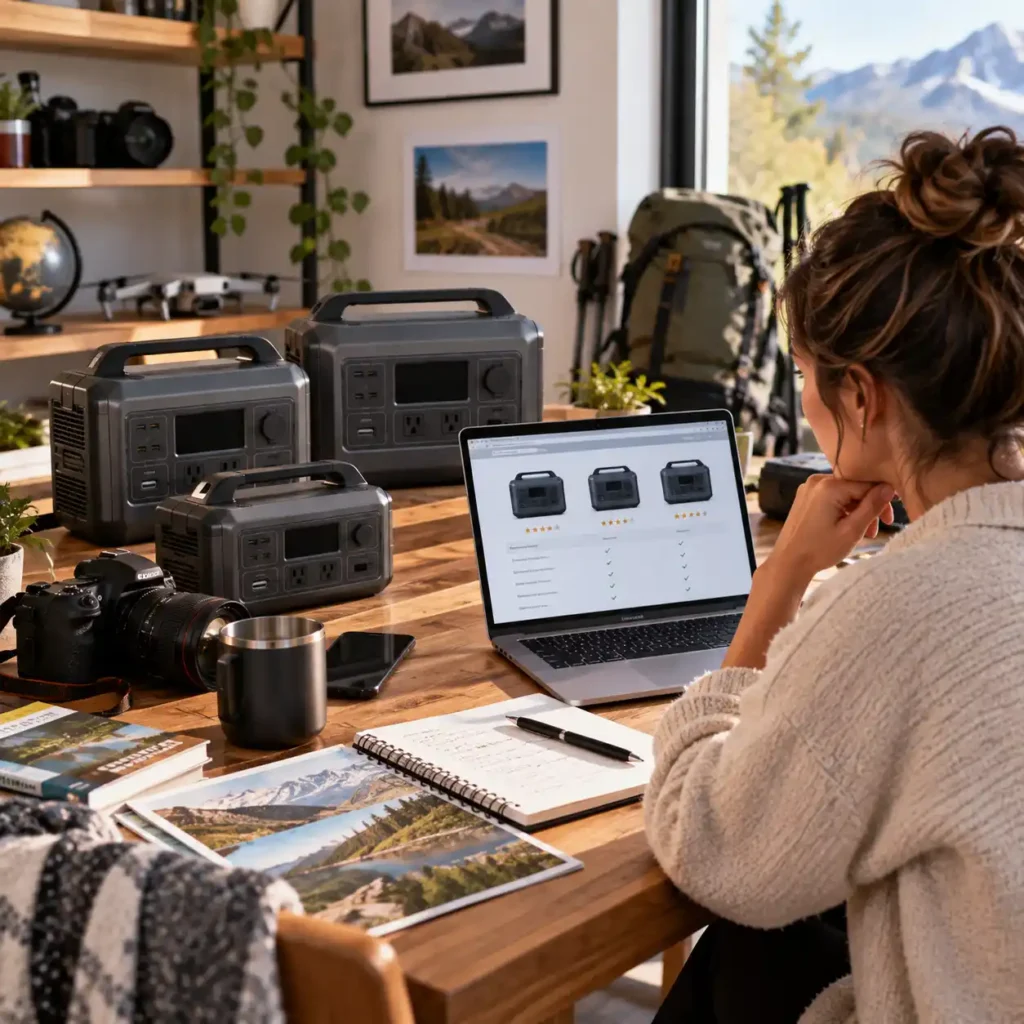
Power Ready Guide covers the broader categories that help readers understand where DJI Power fits without turning this Brand Profile into a product-ranking page.
For readers deciding whether a portable power station is appropriate for their needs, our How to Choose a Portable Power Station guide addresses the selection process independently of any single brand.
Readers who are unsure how much stored energy they actually need can use How Much Power Do You Really Need? before comparing specific products.
For capacity planning, the Power Station Size Calculator can help translate expected loads and runtime requirements into a more practical starting point.
Readers interested specifically in solar-powered portable systems can also explore Best Portable Solar Panels, while those considering more permanent residential storage can move to Best Home Battery Backup Systems.
The purpose of this structure is intentional: the DJI page explains the brand and its energy ecosystem, while the supporting pages answer the separate questions of sizing, product selection, solar equipment, and home backup.
Frequently Asked Questions About DJI Power
Does DJI Power support solar charging?
Yes. Compatible DJI Power stations can be recharged using solar panels through DJI’s supported solar charging solutions. Depending on the model, solar charging may require the DJI Power Solar Panel Adapter Module (MPPT) or a compatible solar/vehicle charger. Solar input limits and connection requirements vary by model.
Can DJI Power be used as a home backup battery?
Yes. DJI positions parts of the Power Series for home backup use. A compatible power station can provide electricity to selected household devices during an outage, while some models also support UPS functionality. However, portable backup power is different from a permanently installed whole-home battery system.
Does DJI Power have UPS mode?
Yes. Supported DJI Power models include a UPS mode that can automatically switch connected equipment to battery power when grid electricity is interrupted. For example, DJI states that Power 1000 can begin supplying power within approximately 0.02 seconds, while Power 2000 can do so within approximately 0.01 seconds.
How long does a DJI Power battery last?
Battery longevity depends on the model and operating conditions. DJI states that the Power 1000 and Power 500 use LFP battery cells and can maintain more than 70% capacity after up to 4,000 cycles under specified test conditions. DJI describes an approximate 10-year lifespan for these models based on one full cycle per day, but actual service life varies with use and storage conditions.
How fast can DJI Power be recharged?
Recharge time varies significantly by model and charging method. For example, DJI states that the Power 1000 can charge from 0% to 100% in approximately 70 minutes using its fastest AC charging mode. Other models can use different combinations of AC, solar, and vehicle charging, so the actual charging time depends on the configuration.
Can DJI Power be charged from a car?
Yes. Supported DJI Power models can be recharged from a vehicle using compatible DJI charging cables or Super Fast Car Chargers. Some configurations can use power from the vehicle’s alternator rather than relying only on a conventional 12 V accessory outlet. Compatibility and charging performance depend on the specific Power model and vehicle-charging equipment.
Can DJI Power be expanded with an extra battery?
Some DJI Power stations support additional battery capacity. The DJI Power Expansion Battery 2000 is compatible with the DJI Power 1000 and DJI Power 2000. The Power 2000 can support multiple expansion batteries, allowing substantially more stored energy than the base unit alone. Expansion compatibility depends on the specific Power model.
Does DJI Power work with non-DJI solar panels?
Some DJI Power configurations can work with solar panels that are not DJI-certified, but the electrical specifications and connection requirements must be followed carefully. DJI recommends its compatible solar panels and specifies voltage and power limits when using other panels with its MPPT adapter. Users should check the exact requirements for their Power model before connecting third-party panels.
Can DJI Power be controlled with an app?
Compatible DJI Power products can connect to the DJI Home app for monitoring and supported control functions. Depending on the model, the app can provide information about the power station and connected expansion equipment and can also be used for certain settings and software updates.
How long is the DJI Power warranty?
The warranty depends on the specific DJI Power model and market. DJI’s current documentation shows different warranty structures across the range, so there is no single warranty period that should be applied to every DJI Power station. For example, DJI currently lists a five-year default warranty for Power 2000 on its official FAQ, while other regional product pages may specify a three-year standard period with an additional extension under certain conditions.
Our Take on DJI
DJI’s position in portable energy is best understood through the DJI Power ecosystem, rather than through individual power stations.
The company has built a portfolio that spans compact portable power, approximately 1 kWh-class systems, and larger 2 kWh-class configurations. Across that range, DJI combines rechargeable battery storage with multiple charging methods, solar compatibility, software management, and — on supported systems — capacity expansion.
That makes DJI particularly relevant to users who want portable electricity that can move between outdoor, mobile, professional, and backup applications.
At the same time, the brand should be evaluated according to the actual requirement. A portable battery system is not automatically a replacement for an installed home-energy system, and a solar-compatible power station still requires appropriate panels, connections, and environmental conditions to recharge effectively.
The most useful way to evaluate DJI, therefore, is not to ask whether DJI Power is universally suitable, but to determine which role portable energy needs to play in your setup — mobile power, outdoor energy, temporary backup, solar-assisted operation, or a larger expandable battery system.
Final Navigation
If you are researching DJI as part of a broader portable-power decision, the next step should depend on your actual requirement:
- Choosing a portable power station: See our How to Choose a Portable Power Station guide.
- Determining the required capacity: Use our Power Station Size Calculator.
- Understanding your total electricity needs: Read How Much Power Do You Really Need?
- Adding solar to a portable setup: Explore Best Portable Solar Panels.
- Looking for residential battery storage: See Best Home Battery Backup Systems.
This keeps the DJI Brand Profile focused on what it is designed to answer: who DJI is in the portable-energy market, how its Power ecosystem is organized, and where that ecosystem fits within the wider backup-power landscape.
Sources
- DJI — DJI Power Series — Official overview of the DJI Power Series, including the current portable power lineup, charging options, accessories, and energy-use scenarios.
- DJI — DJI Power 1000 — Official product information covering the DJI Power 1000, including its portable power positioning, charging capabilities, solar support, battery technology, and backup functionality.
- DJI — DJI Power 1000 V2 — Official U.S. DJI Store information for the Power 1000 V2, including its portable power, solar, UPS, battery, and charging capabilities.
- DJI — DJI Power 2000 — Official U.S. product information covering the Power 2000, including its capacity, output, charging methods, expansion capability, and home-backup positioning.
- DJI — DJI Power 500 — Official U.S. product information covering the Power 500, including its portable power positioning, solar charging support, LFP battery, and charging capabilities.
- DJI — Support & Downloads — Official DJI United States support portal for product support, manuals, software, firmware, downloads, repairs, and technical assistance, including DJI Power products.