
EcoFlow is an energy technology company founded in 2017 by a group of battery engineers. The brand initially became known for portable power products and has since expanded into solar technology, residential energy storage, smart energy management, and integrated power systems for mobile and off-grid applications.
Today, EcoFlow’s portfolio includes portable power stations, solar products, home energy systems, connected energy-management solutions, and specialized systems for applications such as RVs and off-grid living. Its product families include DELTA, RIVER, STREAM, PowerOcean, PowerStream, and Power Kits, although availability varies by market.
Power Ready Guide covers EcoFlow because the brand operates across several areas of the backup-power and energy market. This guide explains what EcoFlow offers, how its portfolio is organized, what its technology means in practical terms, and which types of users may find the brand a suitable fit.
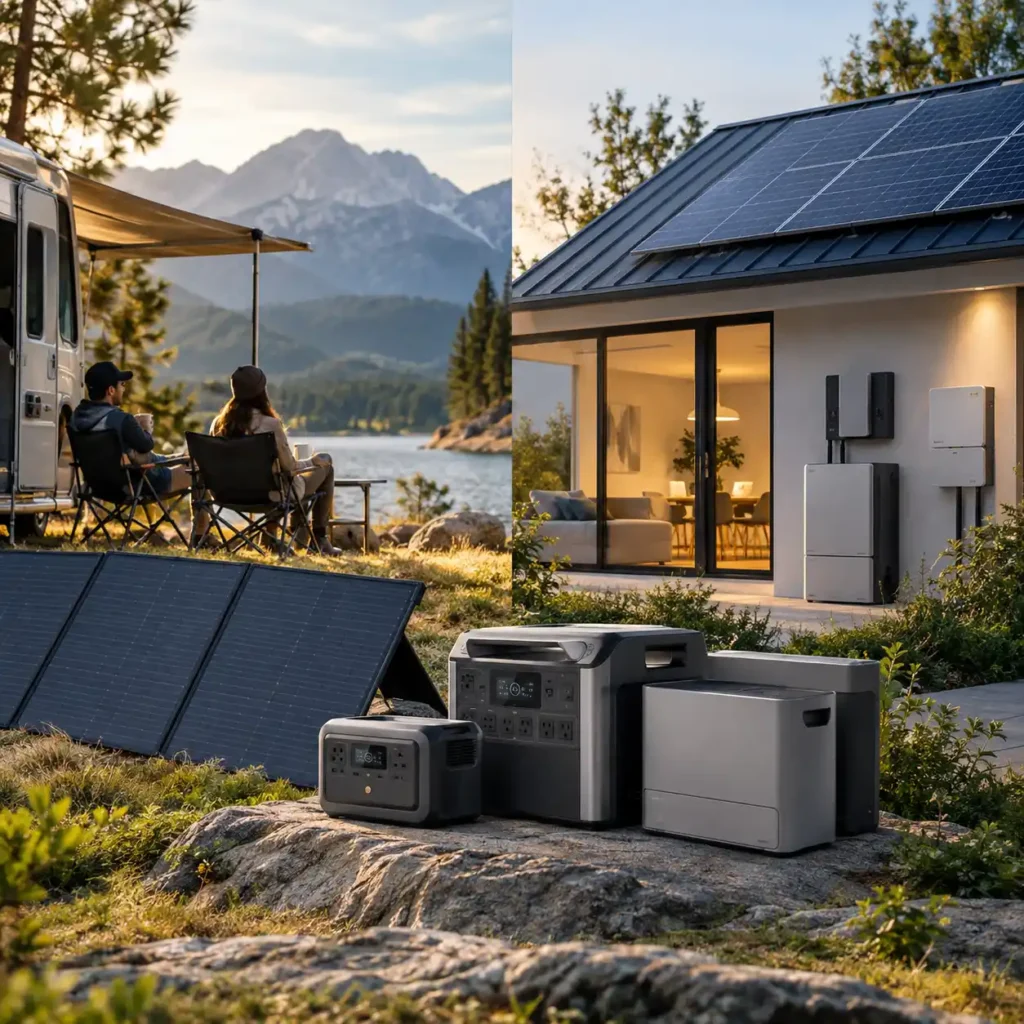
Table of Contents
EcoFlow at a Glance
| Attribute | EcoFlow |
|---|---|
| Brand | EcoFlow |
| Founded | 2017 |
| Main Categories | Portable power, solar energy, home energy storage, smart energy systems, and mobile/off-grid power |
| Known For | Portable power stations, fast charging, solar integration, connected energy management, and expandable energy systems |
| Major Product Families | DELTA, RIVER, STREAM, PowerOcean, PowerStream, and Power Kits |
| Official Website | EcoFlow |
| Warranty & Support | Warranty terms vary by product and market; EcoFlow provides warranty registration, documentation, technical support, and after-sales resources |
EcoFlow’s current portfolio extends well beyond portable power stations. Its official product structure includes portable power, plug-in solar systems, residential energy solutions, and specialized mobile power systems. The exact products and configurations available depend on the market.
About EcoFlow
EcoFlow was founded in 2017 by a group of battery engineers. The company initially focused on portable power and subsequently expanded into solar technology and broader energy-management solutions.
That evolution is important when looking at EcoFlow today. The brand is no longer limited to portable battery systems. Its current portfolio covers several layers of the energy chain, including energy storage, solar generation, portable backup, residential energy management, and connected control systems.
EcoFlow’s current home-energy strategy also goes beyond simply providing backup electricity. Its residential portfolio includes systems designed to combine energy generation, storage, monitoring, and intelligent management. The company describes this broader approach around smart and integrated home energy management.
At the same time, EcoFlow maintains a substantial portable-power business. The current U.S. product portfolio includes DELTA and RIVER power stations, as well as newer portable and plug-in energy products.
For Power Ready Guide readers, the most useful way to understand EcoFlow is therefore as a multi-layer energy brand rather than as a single product category:
portable power → solar → storage → smart control → home energy
Not every EcoFlow product participates in every layer, and product availability differs by market. But this progression explains why the brand appears across several areas of the backup-power and energy landscape.
What Is EcoFlow Known For?

EcoFlow is particularly associated with several areas of the power and energy market.
Portable Power Stations
Portable power stations remain one of EcoFlow’s most recognizable product categories.
The brand’s current lineup includes the DELTA family for higher-capacity applications and the RIVER family for lighter portable power. EcoFlow also lists additional portable products and newer product families in its current portfolio.
This range allows the brand to address applications ranging from personal electronics and outdoor use to higher-demand emergency backup.
Fast Charging
Charging speed has been a prominent part of EcoFlow’s portable-power strategy.
Its X-Stream technology is designed to provide high-rate AC charging for compatible power stations, reducing the amount of time required to recharge the battery from an AC outlet.
The practical value is straightforward: for someone using a battery as emergency backup, a shorter recharge period can make the system available again sooner.
Solar Integration
Solar is another important part of EcoFlow’s product ecosystem.
The company offers solar products for portable applications as well as larger solar-storage solutions. This allows compatible EcoFlow batteries and energy systems to use solar generation as an additional charging or energy source.
The important distinction is that solar integration does not mean a system will produce a fixed amount of energy every day. Actual solar production depends on panel configuration, sunlight, orientation, temperature, system limits, and other conditions.
Home Energy Storage
EcoFlow has expanded into permanent residential energy storage through platforms such as PowerOcean and OCEAN.
These systems are fundamentally different from a portable power station. They are designed as home-energy systems combining storage with power conversion, solar integration, monitoring, and other energy-management functions depending on the specific configuration and market.
Smart Energy Management
Connected monitoring and control are another recurring theme across EcoFlow’s ecosystem.
The EcoFlow app provides monitoring and control for compatible products, while the company’s broader home-energy systems add additional layers of energy management. EcoFlow’s support platform specifically provides access to the EcoFlow App, product documentation, firmware-related resources, and technical support.
EcoFlow Product Categories
EcoFlow’s portfolio becomes easier to understand when it is organized by what the products do, rather than by individual model names.
Portable Power Stations
Portable power stations are one of EcoFlow’s core product categories.
They combine rechargeable battery storage, an inverter, AC outlets, DC outputs, USB ports, and charging inputs into a portable system. Depending on the model, they can be used for outdoor activities, mobile work, emergency backup, or higher-demand household loads.
The current EcoFlow lineup includes several capacity and output classes, with the DELTA family generally occupying the higher-capacity end and RIVER focusing on lighter portable power.
For buyers, the important distinction is not simply the model name but the required capacity, continuous output, surge capability, charging options, and portability.
Solar Products
Solar products form another layer of the EcoFlow ecosystem.
EcoFlow offers solar solutions intended to work with portable power systems as well as products designed for home-energy applications. The role of solar can therefore range from recharging a portable battery outdoors to contributing to a larger residential energy system.
This category is particularly relevant to users who want to combine energy storage with on-site generation rather than relying exclusively on grid charging.
Home Energy Storage
Home energy storage represents EcoFlow’s move into more permanent residential applications.
Products such as PowerOcean and OCEAN systems are designed around home energy storage, solar integration, backup power, and energy management. The exact system architecture varies by product and region.
This category should not be confused with portable home backup. A permanently installed residential system has different electrical, installation, and regulatory considerations.
Plug-In Solar and Home Energy
EcoFlow also operates in the plug-in solar segment through products such as PowerStream and the newer STREAM family.
PowerStream is designed around balcony or plug-in solar and compatible EcoFlow portable power stations, while STREAM represents a more integrated approach combining battery storage, solar input, and home energy management.
This gives EcoFlow a position between traditional portable power and permanently installed residential solar-storage systems.
Mobile and Off-Grid Power Systems
EcoFlow Power Kits are a distinct category aimed at applications such as vans, RVs, trailers, and off-grid builds.
Rather than functioning as a single portable battery, Power Kits integrate multiple electrical components into a more complete power architecture. EcoFlow describes the system as modular and designed specifically for mobile and off-grid applications.
That makes Power Kits particularly relevant to users who need a more permanent electrical system inside a mobile or remote environment.
EcoFlow Product Lines
The easiest way to understand EcoFlow’s product architecture is to separate its major families by their intended role.
DELTA
DELTA is EcoFlow’s higher-capacity portable power family.
The current DELTA range includes models with substantially different capacities and output levels, so DELTA should not be treated as a single specification class. EcoFlow positions the family around emergency home backup and higher-demand portable power.
In practical terms, DELTA is the part of the portable portfolio to consider when a user needs substantially more energy storage or output than a compact portable power station can provide.
The family also includes expandable configurations, depending on the specific model.
RIVER
RIVER represents the lighter and more portable side of EcoFlow’s power-station portfolio.
Current RIVER models cover smaller capacity and output classes than the larger DELTA systems and are positioned for portable applications such as outdoor use, home-office power, and everyday mobile electricity.
The basic distinction is therefore straightforward:
RIVER → portability and lighter loads
DELTA → greater capacity and higher-demand applications
The exact capabilities still need to be checked at the individual model level.
STREAM
STREAM is part of EcoFlow’s newer plug-in solar and home-energy direction.
The STREAM family is designed around integrated home energy rather than functioning simply as a portable battery. EcoFlow’s current portfolio presents STREAM products alongside plug-in solar solutions, with battery storage and solar-input capabilities depending on the configuration.
This places STREAM closer to the residential-energy side of EcoFlow’s portfolio than RIVER or DELTA.
PowerOcean and OCEAN
PowerOcean and the broader OCEAN family represent EcoFlow’s residential energy-storage architecture.
These systems are intended for permanent home applications and can combine battery storage, solar integration, power conversion, backup functionality, and energy management. EcoFlow’s current home-energy portfolio includes newer OCEAN products as well as PowerOcean solutions.
The key distinction is that these are home energy systems, not simply larger versions of portable power stations.
PowerStream
PowerStream is EcoFlow’s plug-in solar platform.
It is designed to connect solar generation with compatible EcoFlow portable power products and smart controls, allowing users to use stored energy beyond the period when solar generation is available.
Its role within the EcoFlow portfolio is therefore different from both DELTA and STREAM: it functions as part of a plug-in solar architecture rather than being primarily a standalone battery family.
Power Kits
Power Kits are integrated power systems designed for vans, RVs, trailers, and off-grid applications.
EcoFlow describes them as modular, plug-and-play systems that combine several electrical functions into a compact architecture. The system can be expanded with additional battery capacity and connected to solar generation.
This makes Power Kits particularly relevant to users who need a complete mobile electrical system rather than a portable power station that can simply be carried from one location to another.
EcoFlow Technology & Ecosystem
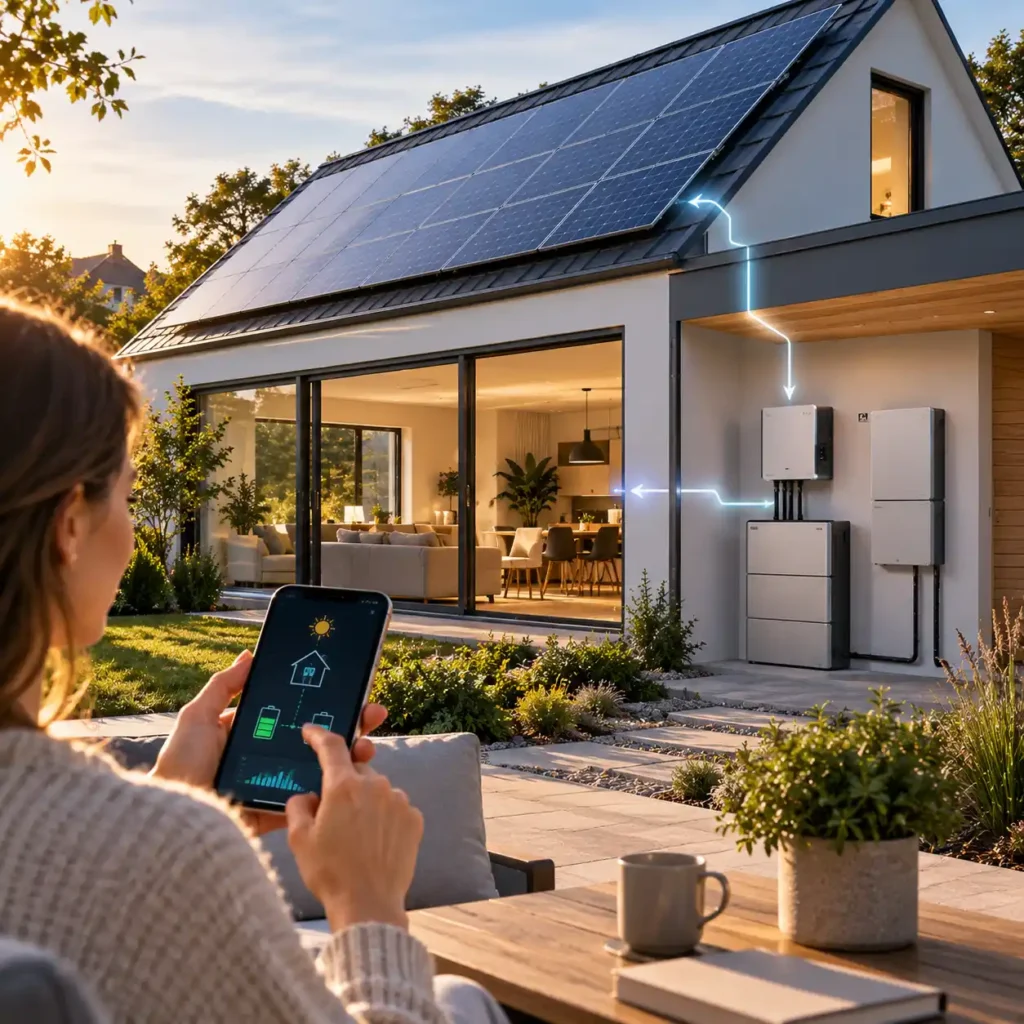
EcoFlow’s broader strategy is increasingly based on connecting storage, solar generation, power conversion, monitoring, and energy management rather than treating each device as an isolated product.
Fast charging → shorter recharge time → greater availability
EcoFlow’s charging technologies are designed to reduce recharge times on compatible products.
For portable power users, the practical implication is simple: a battery that can recharge faster can return to service sooner after an outage, trip, or previous discharge. The actual charging performance remains model-specific.
Solar integration → additional energy source → greater flexibility
Compatible EcoFlow systems can use solar generation as an additional energy source.
For portable products, this can extend the usefulness of a battery during camping or extended outages. In home systems, solar can become part of a larger generation-and-storage architecture.
The benefit depends heavily on the actual solar array, weather conditions, system input limits, and energy demand.
App control → monitoring and configuration → easier management
The EcoFlow App provides monitoring and control for compatible devices.
EcoFlow’s support platform lists functions including monitoring power usage, setting limits and modes, and accessing product-related software and documentation.
For a simple portable battery, this may mainly be a convenience feature. For a larger energy system, remote monitoring and configuration become more consequential because there are more operating parameters to manage.
Modular storage → expandable capacity → system growth
Some EcoFlow product families allow additional battery capacity or modular system expansion.
The practical advantage is that a user may be able to increase storage as energy requirements grow instead of replacing the entire system. However, expansion capabilities are product-specific and should never be assumed across the entire EcoFlow portfolio.
Integrated ecosystem → multiple energy functions → fewer disconnected components
EcoFlow’s current ecosystem increasingly connects portable power, solar, batteries, smart controls, and home-energy equipment.
Its official home-energy platform also describes integration with other connected-home devices, including energy monitors, thermostats, EV chargers, and other equipment.
The resulting advantage is ecosystem-level coordination. The trade-off is that users need to pay closer attention to compatibility, regional availability, installation requirements, and which features are supported by the particular products they choose.
Who Is EcoFlow Best For?

EcoFlow may be a strong fit for users who want more than a basic battery backup system. The brand’s portfolio covers portable power, solar charging, mobile applications, residential energy storage, and connected energy management, allowing users to build solutions around different power requirements.
Home Backup Users
EcoFlow can be relevant for homeowners who want backup power for essential appliances without immediately installing a traditional standby generator.
Portable DELTA systems can cover smaller backup requirements, while EcoFlow’s larger home-energy products are designed for more integrated residential applications.
The right solution depends on the home’s electrical loads, desired backup duration, installation requirements, and whether automatic whole-home backup is needed.
For portable solutions, see our guide to the Best Portable Power Stations for Home Backup.
RV and Off-Grid Users
EcoFlow also targets mobile and off-grid applications. Portable power stations can provide electricity for appliances, electronics, refrigeration, lighting, and other equipment without relying on a fixed electrical connection.
For more permanent mobile installations, EcoFlow Power Kits are designed around integrated components rather than a single portable power station.
This makes EcoFlow relevant to RV owners, van conversions, cabins, and other applications where portability, solar charging, and expandable storage are important.
Camping and Outdoor Users
The RIVER family is positioned toward smaller and more portable power requirements, making it more relevant to camping, travel, outdoor work, and short-duration backup needs.
The main advantage of this approach is flexibility: users can choose a smaller system when they need portability rather than carrying a large home-backup battery.
However, capacity and output still need to match the equipment being powered. A compact power station is not automatically suitable for high-wattage appliances.
Home Energy and Solar Users
EcoFlow is also relevant to homeowners interested in combining solar generation, battery storage, and energy management.
Products such as PowerOcean and STREAM address more integrated residential energy applications, while PowerStream focuses on connecting solar generation with home energy use and compatible batteries.
These systems are substantially different from buying a portable power station, so installation requirements, electrical configuration, local regulations, and product availability should be considered separately.
Who May Want to Consider Other Brands?
EcoFlow covers a broad part of the backup-power market, but that does not mean it is the right fit for every buyer.
Users Looking for the Simplest Possible Solution
If the goal is simply to keep a few devices running during a short outage, a basic portable power station from another manufacturer may offer everything needed without requiring a broader ecosystem.
EcoFlow’s wider product range can be an advantage, but users who do not need solar integration, app control, expansion, or home-energy features may prefer a simpler solution.
Buyers Focused Primarily on Price
EcoFlow products can include features such as fast charging, app connectivity, expandable batteries, solar integration, and ecosystem compatibility.
Those features can add value, but they can also increase the purchase price.
For buyers whose primary requirement is the lowest upfront cost for a specific watt-hour capacity, comparing competing brands on price, output, warranty, battery chemistry, and charging capabilities is worthwhile.
Users Requiring a Traditional Standby Generator
A portable battery system and a permanently installed standby generator solve different problems.
If the priority is automatic operation during a prolonged outage, integration with a home’s electrical panel, and extended runtime supported by fuel availability, a conventional standby generator may be more appropriate.
EcoFlow’s home-energy products should therefore be evaluated according to the specific installation rather than treated as a universal replacement for every generator configuration.
Buyers in Markets With Limited Product Availability
EcoFlow’s product portfolio varies by country and region. A product available in one market may not have the same availability, configuration, warranty terms, or support arrangements elsewhere.
For European buyers in particular, the exact regional product page and warranty documentation should be checked before purchasing.
EcoFlow Strengths and Limitations
EcoFlow’s main strength is the breadth of its energy ecosystem. Instead of focusing exclusively on portable power stations, the company connects portable power, solar generation, batteries, home energy management, and mobile/off-grid applications.
EcoFlow Strengths
- Broad product portfolio: EcoFlow covers portable power, solar, residential storage, mobile power, and connected energy solutions.
- Multiple product families: DELTA, RIVER, STREAM, PowerOcean, PowerStream, and Power Kits address different applications and power requirements.
- Solar integration: Many EcoFlow solutions are designed to work with solar generation, either through portable solar panels or integrated home-energy systems.
- Fast charging technology: Charging speed is a major part of EcoFlow’s portable-power proposition and can reduce the time required to prepare a battery for use.
- Connected energy management: Compatible products can provide monitoring and control through the EcoFlow app.
- Expandable systems: Selected products support additional batteries or system components, allowing capacity to be increased when requirements grow.
EcoFlow Limitations
- Portfolio complexity: Because EcoFlow sells products across several categories, it can take time to understand which product family is appropriate for a particular use case.
- Price: Some EcoFlow systems include advanced features that may not be necessary for users seeking a basic backup battery.
- Regional differences: Product availability, specifications, warranty conditions, and support can vary by market.
- Ecosystem considerations: Users who build around multiple compatible EcoFlow products may benefit from integration, but this can also make switching between ecosystems less convenient.
- Installation requirements: Residential energy-storage products are not equivalent to plug-and-play portable power stations and may require professional installation or additional system components.
The important distinction is that these limitations do not make EcoFlow products unsuitable. They simply mean that the brand should be evaluated according to the user’s actual power requirements rather than brand recognition alone.
EcoFlow Warranty & Customer Support
EcoFlow provides warranty registration, product documentation, troubleshooting resources, technical support, and after-sales services through its support infrastructure.
However, warranty coverage should not be treated as a single universal policy for every EcoFlow product.
Warranty duration and conditions can differ depending on the product, market, purchase channel, and applicable regional terms. Buyers should therefore check the warranty documentation for the exact model and country before purchasing.
EcoFlow’s support resources also include product documentation and information for using the EcoFlow app and compatible energy systems.
For an expensive home-energy installation, warranty terms are particularly important because the system may include multiple components with different coverage conditions.
Popular EcoFlow Products
This section is intended as navigation into the EcoFlow portfolio rather than a ranking of the “best” products.
EcoFlow DELTA Series
The DELTA family represents EcoFlow’s larger portable power stations and higher-capacity backup solutions.
Depending on the model, DELTA systems can target home backup, demanding appliances, outdoor applications, and expandable energy storage.
For independent comparisons of portable power stations, see our Best 1000Wh Portable Power Stations guide.
EcoFlow RIVER Series
The RIVER family focuses on smaller and more portable power requirements.
These systems can be more appropriate for camping, travel, electronics, and situations where portability matters more than maximum capacity.
EcoFlow STREAM Series
STREAM is part of EcoFlow’s newer plug-in solar and home-energy approach.
Rather than treating a power station as a standalone portable battery, the STREAM concept is designed around integrating battery storage and solar energy with household electricity use.
EcoFlow PowerOcean
PowerOcean belongs to EcoFlow’s residential energy-storage portfolio.
It is intended for homeowners looking for a more integrated battery-storage system rather than a portable power station.
EcoFlow PowerStream
PowerStream focuses on residential and balcony-solar applications, connecting solar generation with household energy use and compatible battery systems.
Its role is therefore different from that of a traditional portable power station.
EcoFlow Power Kits
Power Kits are designed for mobile and off-grid applications such as RVs and van conversions.
The architecture combines several power components into a more integrated system, making it different from simply carrying a portable power station.
EcoFlow Guides, Reviews & Comparisons
Power Ready Guide covers EcoFlow from several different angles because the brand appears across multiple backup-power categories.
For readers evaluating portable systems, our Best Portable Power Stations for Home Backup guide focuses specifically on home-backup use cases.
For mobile applications, the Best Portable Power Stations for RV guide addresses RV-oriented requirements.
Readers who are still deciding what capacity they actually need can use our Power Station Size Calculator or learn how to choose a portable power station before comparing individual models.
For larger residential systems, our Best Home Battery Backup Systems and Best Whole House Backup Power Systems guides address a different level of backup planning.
This separation is intentional: the EcoFlow Brand Profile explains the brand and its product architecture, while the individual Power Ready Guide articles answer specific buying and sizing questions.
Frequently Asked Questions FAQ
What is EcoFlow?
EcoFlow is an energy technology company founded in 2017. It initially became known for portable power stations and has expanded into solar products, residential energy storage, smart energy management, and mobile/off-grid power systems.
What is EcoFlow best known for?
EcoFlow is best known for portable power stations, particularly its DELTA and RIVER product families, as well as fast charging, solar integration, connected energy management, and expandable power systems.
Is EcoFlow a good brand?
EcoFlow can be a strong fit for users who want portable power combined with solar charging, battery expansion, app control, or a broader energy ecosystem. Whether it is the right brand depends on the user’s power requirements, budget, and intended application.
What are the main EcoFlow product lines?
The major EcoFlow families include DELTA, RIVER, STREAM, PowerOcean, PowerStream, and Power Kits. Each addresses a somewhat different application, from portable power to residential energy storage and mobile/off-grid systems.
Is EcoFlow only a portable power station company?
No. Portable power stations remain an important part of EcoFlow’s portfolio, but the company also offers solar products, residential battery storage, plug-in solar systems, energy-management solutions, and mobile/off-grid power systems.
Can EcoFlow products be used with solar panels?
Yes. Solar integration is an important part of the EcoFlow ecosystem. However, solar input limits, compatible panels, connectors, and charging configurations depend on the specific product.
Does EcoFlow offer home battery storage?
Yes. EcoFlow’s portfolio includes residential energy-storage products such as PowerOcean and other home-energy solutions. These systems should be evaluated separately from portable power stations because their installation and electrical requirements can be substantially different.
Does EcoFlow have an app?
Compatible EcoFlow products can be monitored and controlled through the EcoFlow app. The exact functions available depend on the product and system configuration.
Does EcoFlow offer a warranty?
Yes. EcoFlow provides warranty coverage, but warranty duration and conditions vary by product and market. Buyers should check the applicable regional warranty for the exact model.
Our Take on EcoFlow
EcoFlow has evolved beyond the traditional portable power station category into a broader energy ecosystem covering portable power, solar, battery storage, home energy management, and mobile applications.
That breadth is one of EcoFlow’s biggest advantages, particularly for users who expect their energy needs to grow over time. A buyer may start with a portable power station and later become interested in solar charging, additional battery capacity, or a more integrated home-energy solution.
At the same time, EcoFlow’s broad portfolio means that choosing the right product requires more than simply comparing battery capacity.
The most useful way to evaluate EcoFlow is to start with the application: what needs to be powered, for how long, where the system will be used, how it will be charged, and whether portability or permanent installation matters.
Once those requirements are clear, the appropriate EcoFlow product family becomes much easier to identify.
Final Navigation
EcoFlow covers a wide range of backup-power and energy-storage applications, so there is no single product that makes sense for every user.
If you are considering an EcoFlow system, start with your actual power requirements and then explore the relevant product category.
For portable backup, compare power stations by output, battery capacity, runtime, charging speed, solar input, and expansion capability.
For residential energy storage, consider system capacity, electrical integration, solar compatibility, installation requirements, and warranty coverage.
And if you are not yet sure what size system you need, use the Power Ready Guide calculators and sizing guides before choosing a specific product.
Power Ready Guide focuses on helping readers understand the technology first, compare the right products second, and make a more informed backup-power decision.