
Choosing among the best portable power stations under $2,000 is not simply about finding the largest battery or the highest output rating. At this price level, the differences between models become more meaningful: some prioritize battery capacity, others emphasize high continuous output, fast charging, solar input, UPS performance, or expandable storage. The challenge is determining which capabilities provide real value for your intended use—and when spending more stops making practical sense.
This guide evaluates five current portable power stations available through Amazon.com, comparing battery capacity, continuous and surge output, charging performance, solar input, UPS capability, portability, and expansion potential. We also examine how effectively each model uses the available budget.
Rather than trying to rank every portable power station available below $2,000, we focus on five models that represent the most meaningful capability trade-offs as you move up the budget. The goal is to show what you actually gain by spending more—from stronger 2,000Wh-class performance to 3,000Wh-class capacity and expandable backup systems—and when those upgrades are worth paying for.
As an Amazon Associate, I earn from qualifying purchases.
Table of Contents
Quick Answer
If you want the strongest all-around balance within this budget, the DJI Power 2000 — Best Overall is the leading choice. Its combination of 2,048Wh capacity, 3,000W continuous output, fast charging, UPS capability, and unusually large expansion potential makes it a strong fit for buyers who want high performance without moving immediately to a much heavier 3kWh-class system. Its main limitation is that its standard capacity is still about 2kWh, and its higher solar-charging capability depends on an additional charger rather than a built-in high-wattage PV input.
For a 2,000Wh-class station where portability and value matter more than maximum output or long-term expansion, the Anker SOLIX C2000 Gen 2 — Best 2,000Wh Value is a compelling alternative. The BLUETTI Elite 300 — Best Compact 3kWh Value and Jackery HomePower 3000 — Best High-Output 3kWh Option make more sense if your priority is moving into the roughly 3,000Wh class, with Jackery offering the higher 3,600W continuous output. Their main trade-off is that neither system is expandable.
If you expect your power needs to grow substantially, the Anker SOLIX F3000 — Best Expandable Power Station is the most system-oriented option in this group, with 3,072Wh, 3,600W output, up to 2,400W solar input. The F3000 can expand from 3,072Wh to 12,288Wh with three BP3000 expansion batteries. A larger 24kWh configuration requires two F3000 units. The trade-off is substantial weight and a larger overall footprint. The right choice therefore depends less on spending the full $2,000 and more on whether you need additional capacity, higher output, faster recharging, or expandable backup capability.
Our Evidence & Evaluation Method
We evaluate each portable power station using the same core factors so the five models can be compared on a consistent basis. Our primary evidence comes from official manufacturer specifications, technical documentation, warranty information, and the specific U.S. product configurations reviewed for this guide. Where reliable independent testing or measurements are available, they can provide additional context; we do not present manufacturer claims as proprietary test results. Key product specifications are checked against the relevant U.S. manufacturer documentation and Amazon.com listings for the configurations reviewed.
| Factor | What We Examine | Evidence |
|---|---|---|
| Capacity | Wh capacity and available energy | Manufacturer specifications and independent testing where available |
| Output | Continuous and surge output | Manufacturer specifications and independent measurements where available |
| Charging | AC, solar, and vehicle charging capabilities | Technical documentation and manufacturer specifications |
| Portability | Weight, dimensions, and practical size | Published product specifications |
| Runtime | Estimated performance with common loads | Calculated estimates based on stated capacity and typical power consumption |
| Reliability | Battery chemistry, cycle information, warranty, and relevant reliability indicators | Manufacturer documentation, warranty terms, and credible independent reports where available |
Runtime figures in this guide are estimates rather than laboratory measurements. Actual results can vary with load, conversion efficiency, temperature, battery condition, and operating conditions. Portability and ownership assessments are based on published specifications and documented features rather than proprietary hands-on testing.
Who This Guide Is For
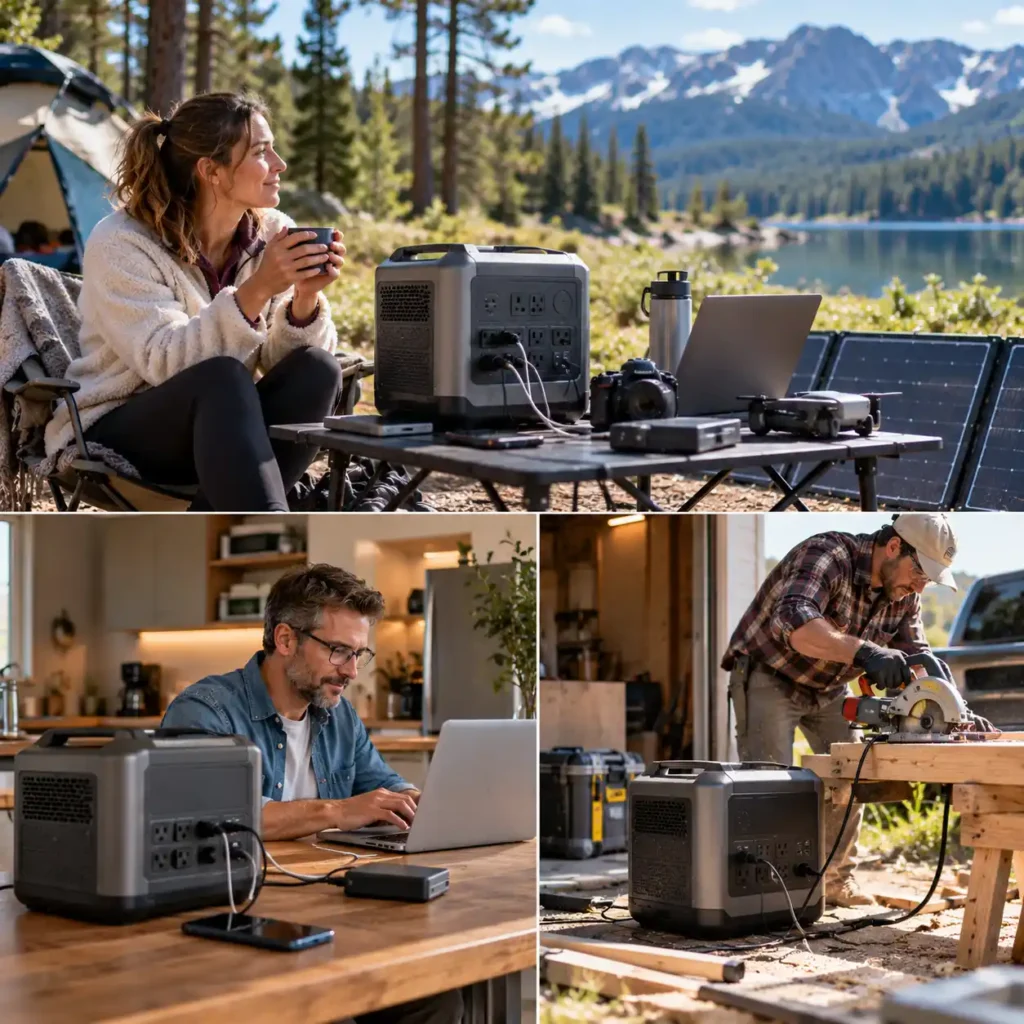
This guide is for shoppers with a budget of up to $2,000 who want to compare portable power stations by overall value, capacity, output, charging capability, portability, and expansion potential. It is especially useful if you are deciding whether to stay around the 2,000Wh class, move up to roughly 3,000Wh, or spend more for higher output and expandable backup capability.
Who Should Use Another Guide
If you already know the capacity you need and want to compare only 2,000Wh or 3,000Wh models, use our dedicated Best 2000Wh Portable Power Stations or Best 3000Wh Portable Power Stations guides. If you first need to determine the right battery size for your appliances or backup needs, start with What Size Power Station Do I Need? rather than choosing by budget alone.
Quick Summary: Our Top Picks
The five power stations in this guide represent different ways to use a budget of up to $2,000. Rather than treating battery capacity or AC output as the only measures of value, we selected each model for a specific combination of capacity, output, charging performance, portability, UPS capability, and expansion potential. Each pick also has a clear limitation, because the strongest option for one buyer may not be the best fit for another.
DJI Power 2000
Award: Best Overall
Best For: Buyers who want the strongest overall balance of capacity, output, charging performance, UPS capability, and future expansion.
Key Reason: Its 2,048Wh LFP battery, 3,000W continuous AC output, fast AC charging, UPS capability, and unusually large expansion potential make it one of the most capable 2kWh-class options in this price range.
Main Limitation: Its standard capacity remains about 2kWh. Its highest solar-input capability requires DJI’s optional 1.8kW Solar/Car Super Fast Charger rather than coming from the station’s standard built-in solar input.
Anker SOLIX C2000 Gen 2
Award: Best 2,000Wh Value
Best For: Buyers who want a relatively lightweight 2kWh-class power station with strong output, fast charging, and moderate expansion capability.
Key Reason: Its 2,048Wh battery, 2,400W continuous output, 800W solar input, 10ms UPS, and expansion to 4kWh provide a strong combination of capability and portability at 41.7 pounds.
Main Limitation: Its 2,400W output and 4kWh expansion ceiling are lower than the capabilities offered by the more system-oriented models in this guide.
BLUETTI Elite 300
Award: Best Compact 3kWh Value
Best For: Buyers who want to move from the 2kWh class to roughly 3kWh without choosing a much larger or more complex expandable system.
Key Reason: Its 3,014Wh capacity, 2,400W continuous output, 1,200W solar input, 10ms UPS, and 5-year warranty provide a strong combination for buyers who prioritize additional energy capacity in a relatively compact 3kWh-class design.
Main Limitation: It is not expandable, so buyers who expect their backup capacity to grow over time will need a different platform.
Jackery HomePower 3000
Award: Best High-Output 3kWh Option
Best For: Buyers who want roughly 3kWh of capacity together with higher continuous AC output for more demanding loads.
Key Reason: Its 3,072Wh battery and 3,600W continuous AC output give it substantially more continuous power than the 2,400W BLUETTI Elite 300 while keeping its weight around 59.5 pounds.
Main Limitation: It is not expandable, and its 20ms UPS response is less competitive than the faster UPS specifications offered by some other models in this group.
Anker SOLIX F3000
Award: Best Expandable Power Station
Best For: Buyers who expect their backup needs to grow and want a portable power station that can become part of a much larger energy system.
Key Reason: Its 3,072Wh capacity, 3,600W continuous output, up to 2,400W solar input. The F3000 can expand from 3,072Wh to 12,288Wh with three BP3000 expansion batteries. A larger 24kWh configuration requires two F3000 units. make it the most scalable platform in this group.
Main Limitation: At about 91.5 pounds, it is substantially heavier and less convenient to move than the other four models, making it a better fit for a more stationary backup setup.
Comparison Table
| Model | Capacity | AC Output | Weight | Best For |
|---|---|---|---|---|
| DJI Power 2000 | 2,048Wh | 3,000W | ~48.5 lb | Overall balance of power, capacity, charging, and expansion |
| Anker SOLIX C2000 Gen 2 | 2,048Wh | 2,400W | 41.7 lb | Lightweight 2kWh-class value |
| BLUETTI Elite 300 | 3,014Wh | 2,400W | ~58.0 lb | Compact 3kWh-class capacity |
| Jackery HomePower 3000 | 3,072Wh | 3,600W | ~59.5 lb | Higher-output 3kWh-class power |
| Anker SOLIX F3000 | 3,072Wh | 3,600W | ~91.5 lb | Expandable long-term backup capacity |
How We Evaluated
A $2,000 budget can buy very different types of portable power stations. We therefore evaluate each model not by a single headline specification, but by how its capabilities work together and whether they justify its position within this price range.
Energy Capacity
We compare the stated battery capacity in watt-hours to determine how much stored energy each model provides and how it fits within the 2kWh and 3kWh classes.Usable Energy
We consider how much of the stated battery capacity can realistically be delivered to connected loads after normal conversion and operating losses. Where manufacturer data does not provide a directly comparable usable-energy figure, we avoid presenting theoretical capacity as guaranteed delivered energy.Inverter Capability
We examine continuous AC output, surge capability, and relevant load-management features to determine what types of appliances and equipment each station can realistically support.Charging Speed
We compare AC, solar, and vehicle charging capabilities, including maximum input and documented charging times, because faster recharge can materially change how useful a power station is during repeated outages or off-grid use.Portability
Weight, dimensions, handles, wheels where applicable, and the relationship between capacity and physical size all matter. A larger battery is not automatically the better choice if it is difficult to move.Solar Compatibility
We assess maximum solar input, supported charging configurations, and whether additional equipment is required to reach the manufacturer’s stated solar-charging capability.Expandability
We look at whether additional batteries can be connected, the maximum supported expansion, and whether the expansion architecture meaningfully changes the station’s long-term usefulness.Warranty / Ecosystem
Warranty coverage, documented battery information, app and connectivity features, accessories, and the manufacturer’s broader ecosystem can affect long-term ownership value.Value
We consider what additional capability the buyer receives as the price increases. The goal is not to reward the most expensive model, but to determine whether its additional capacity, output, charging performance, or expansion capability justifies the added cost.Use-Case Fit
Finally, we match each model’s strengths and limitations to realistic buyer priorities. A station can be technically impressive without being the right purchase for someone who values portability, while a less powerful model may be the better choice when capacity and weight matter more than maximum output.
Best Portable Power Stations Under $2,000: Detailed Reviews
DJI Power 2000
Best Overall

Quick Verdict
The DJI Power 2000 is a 2,048Wh portable power station built for buyers who want substantial battery capacity without stepping up to a much heavier 3kWh-class system. Its 3,000W continuous AC output gives it more headroom for demanding loads than most 2kWh-class options, while its LFP battery, fast AC charging, and UPS capability make it suitable for both everyday power needs and backup use. DJI Official
It is the strongest overall fit in this group for buyers who value power and future expansion alongside a manageable 2kWh-class form factor. The Power 2000 can also be expanded substantially, making it more than a fixed-capacity power station for buyers whose backup requirements may grow over time. The main caveat is that its maximum solar-charging capability relies on DJI’s dedicated charging accessory rather than representing a standard built-in PV input
Snapshot
| Specification | DJI Power 2000 |
|---|---|
| Battery Capacity | 2,048Wh |
| Battery Chemistry | LiFePO4 |
| Continuous AC Output | 3,000W |
| Peak / Surge Output | 4,000W |
| Weight | ~48.5 lb |
| Expansion | Up to 22,528Wh |
Why We Chose It
The DJI Power 2000 earns Best Overall because it offers the strongest combination of capabilities among the five models rather than simply leading in one specification. Its 2,048Wh capacity and 3,000W continuous output give it more power headroom than the 2,400W Anker SOLIX C2000 Gen 2 and BLUETTI Elite 300, while its capacity remains below the 3,000Wh class represented by the Elite 300, Jackery HomePower 3000, and Anker SOLIX F3000. That makes it a particularly balanced choice for buyers who want higher output without moving immediately to a substantially larger 3kWh-class station.
The biggest differentiator is what happens beyond its standard capacity. The Power 2000 supports expansion up to 22,528Wh, giving it a much higher long-term expansion ceiling than the C2000 Gen 2 and the non-expandable Elite 300 and HomePower 3000. The F3000 can reach a higher 24kWh ceiling, but it starts at the same 3,072Wh class as the other larger stations and weighs substantially more. For this guide’s budget-focused intent, the DJI therefore offers the most balanced combination of power, manageable capacity, and future scalability rather than forcing the buyer to choose the largest system from the start.
Check the latest price and customer reviews on Amazon.

Living With It
At about 48.5 pounds, the DJI Power 2000 is substantial but still more manageable than the 3kWh-class Anker SOLIX F3000, which weighs about 91.5 pounds. Its 2kWh-class footprint makes it easier to place in a home, garage, vehicle, or campsite without giving up the output capacity needed for more demanding equipment.
For occasional moves, the built-in carrying handles make the Power 2000 practical to reposition between storage and use. In a home-backup scenario, it can remain in a convenient location and be connected when needed; for camping, RV, or remote-work use, its relatively compact 2kWh format is easier to accommodate than a larger 3kWh system.
The main everyday limitation is still its weight. At nearly 50 pounds, this is not a power station most people will want to carry long distances or move repeatedly on their own. Its portability is therefore best understood as manageable for a high-output 2kWh station, rather than genuinely lightweight.
Evaluation
| Evaluation Factor | This Model | How It Compares | Buyer Implication |
|---|---|---|---|
| Continuous AC Output | 3,000W | Higher than the 2,400W output of the Anker SOLIX C2000 Gen 2 and BLUETTI Elite 300; matches the 3,000W+ capability expected from the larger options without starting at 3kWh capacity. | Provides more headroom for higher-demand appliances without requiring a 3kWh-class power station. |
| Power-to-Capacity Balance | 3,000W from 2,048Wh | Delivers a higher output-to-capacity balance than the 2,400W 2kWh-class alternatives, while remaining smaller than the 3,000Wh-class models. | A strong choice when you want high output but do not need to carry a full 3kWh battery. |
| Expansion Potential | Up to 22,528Wh | Far exceeds the 4kWh expansion ceiling of the C2000 Gen 2 and the non-expandable Elite 300 and HomePower 3000; only the F3000 reaches a comparable system scale at 24kWh. | Lets buyers start with a manageable 2kWh-class station and add substantial capacity later if their backup needs grow. |
| Charging & Backup Capability | Fast AC charging and ~10ms UPS | Combines fast recharge with a faster UPS response than the 20ms specification of the Jackery HomePower 3000 and Anker SOLIX F3000. | Better suited to buyers who value quick recovery between uses and fast backup transfer alongside high output. |
Who Should Buy This
The DJI Power 2000 is a strong fit for buyers who:
- Need around 2kWh of battery capacity but want more than 2,000W of continuous AC output for higher-demand appliances and equipment.
- Want a power station that can serve as both an everyday portable power source and a backup system rather than a station limited to occasional light loads.
- Prefer a 2kWh-class form factor over moving directly to a heavier 3kWh-class model, while still wanting substantial output capability.
- Expect their power needs to grow and value the ability to add significant battery capacity later rather than replacing the original station.
- Want a strong all-around option where output, charging, UPS capability, and expansion matter more than having the largest possible starting battery.
Who Should Skip This
The DJI Power 2000 may not be the best fit if you:
- Need more than 2kWh of capacity immediately and would rather start with a 3kWh-class station such as the BLUETTI Elite 300, Jackery HomePower 3000, or Anker SOLIX F3000.
- Prioritize maximum solar input from the station itself and do not want to rely on an additional charging accessory for DJI’s highest solar-charging capability.
- Need a lighter power station for frequent carrying, in which case the 41.7-pound Anker SOLIX C2000 Gen 2 is easier to move.
- Want the largest possible expandable system and are prepared to accept substantially more weight. The Anker SOLIX F3000 can expand from 3,072Wh to 12,288Wh with three BP3000 expansion batteries. A larger 24kWh configuration requires two F3000 units.
Final Verdict
The DJI Power 2000 is the strongest choice in this group for buyers who want high AC output, a manageable 2kWh-class starting point, and the option to build substantially more capacity later. Its value comes from balancing these capabilities rather than maximizing any single specification.
The main limitation is that buyers who already know they need 3kWh or more from the start may get better practical value from a larger-capacity model in this guide. For everyone else, the Power 2000 offers a particularly strong starting point without forcing the added size and weight of a larger system.
Check the latest price and customer reviews on Amazon.
Related Guide: If you are unsure whether a 2,048Wh power station is enough for your appliances and backup needs, see our What Size Power Station Do I Need? guide for help choosing the right capacity.
Anker SOLIX C2000 Gen 2
Best 2,000Wh Value
Quick Verdict
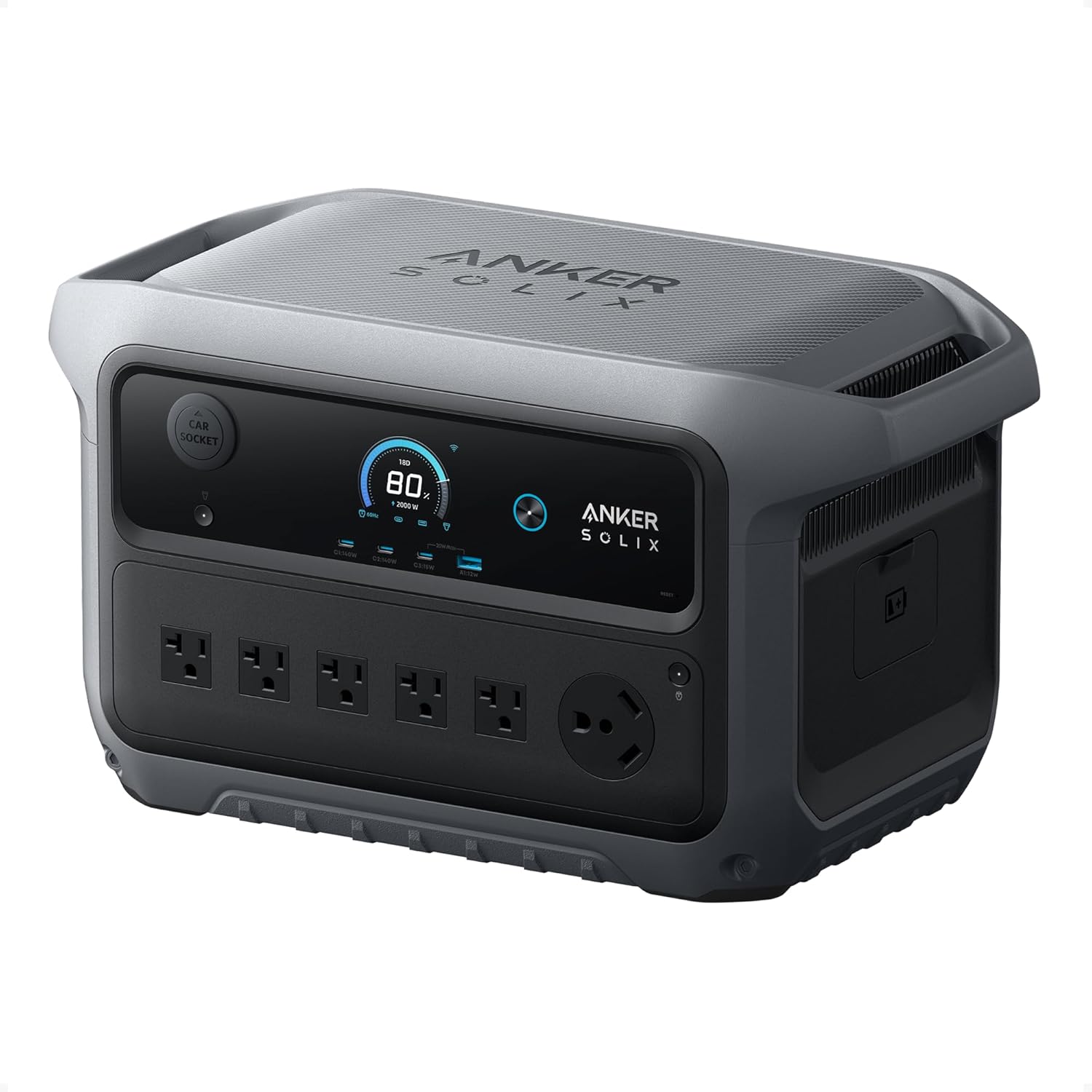
The Anker SOLIX C2000 Gen 2 is a 2,048Wh LFP portable power station designed for buyers who want a substantial 2kWh-class battery without moving to a heavier 3kWh-class system. It delivers 2,400W of continuous AC output, up to 4,000W peak power, and weighs 41.7 pounds, making it one of the more manageable options in this group. Anker SOLIX
It is particularly well suited to buyers who want strong everyday output, fast recharging, and some room to grow without paying for a larger system from the start. The C2000 Gen 2 supports up to 4kWh with an additional BP2000 Gen 2 expansion battery and offers 800W solar input, while its 10ms UPS capability adds another layer of usefulness for backup applications.
Snapshot
| Specification | Anker SOLIX C2000 Gen 2 |
|---|---|
| Battery Capacity | 2,048Wh |
| Battery Chemistry | LiFePO4 |
| Continuous AC Output | 2,400W |
| Peak / Surge Output | 4,000W |
| Weight | 41.7 lb |
| Expansion | Up to 4kWh |
Why We Chose It
The Anker SOLIX C2000 Gen 2 earns Best 2,000Wh Value because it offers a particularly strong combination of capability and portability within the 2kWh class. Its 2,048Wh battery and 2,400W continuous output provide substantial everyday power, while its 41.7-pound weight makes it easier to handle than the larger 3kWh-class models in this group. It also adds 800W solar input, 10ms UPS capability, and expansion to 4kWh without requiring buyers to start with a larger system.
Compared with the DJI Power 2000, the C2000 Gen 2 gives up some output and long-term expansion potential, but it is lighter and still covers the core requirements of a capable 2kWh-class station. Compared with the BLUETTI Elite 300, Jackery HomePower 3000, and Anker SOLIX F3000, it offers less starting capacity but substantially lower weight. That combination makes it the strongest value choice for buyers who want 2kWh-class capability without paying the size and weight penalty of moving into a 3kWh-class system.
Check the latest price and customer reviews on Amazon.

Living With It
At 41.7 pounds, the Anker SOLIX C2000 Gen 2 is the lightest model in our five-station comparison. Its 2kWh-class size makes it easier to place in a garage, vehicle, home workspace, or campsite without taking up the physical footprint of the larger 3kWh-class systems.
The relatively manageable weight is particularly useful when the station needs to move between storage and use. It can work well as a portable backup for selected home loads or as a higher-capacity power source for camping, RV trips, and remote work where carrying a 3kWh-class unit would be less convenient.
The main everyday limitation is that its portability comes with a smaller starting capacity than the 3kWh-class models in this guide. Buyers who regularly need longer runtime from a single charge may find the BLUETTI Elite 300, Jackery HomePower 3000, or Anker SOLIX F3000 more practical despite their additional weight.
Evaluation
| Evaluation Factor | This Model | How It Compares | Buyer Implication |
|---|---|---|---|
| Portability | 41.7 lb | The lightest model among the five stations in this guide. | Easier to move between home, vehicle, and outdoor locations than the larger 3kWh-class options. |
| Continuous AC Output | 2,400W | Matches the BLUETTI Elite 300 but is below the 3,000W DJI Power 2000 and 3,600W output of the Jackery HomePower 3000 and Anker SOLIX F3000. | Provides strong everyday output while avoiding the size and weight of the higher-output 3kWh-class systems. |
| Solar Charging | Up to 800W | Its 800W built-in solar input is higher than the DJI Power 2000's standard 400W solar-adapter configuration, although DJI can accept more solar through optional charging hardwar. | Provides a practical solar-recharging option without requiring the larger system size of the higher-capacity models. |
| Expansion | Up to 4kWh | Offers more capacity growth than the non-expandable BLUETTI Elite 300 and Jackery HomePower 3000, but far less than the 22,528Wh DJI Power 2000 and 24kWh Anker SOLIX F3000. | Gives buyers some room to increase capacity later without committing to a large expandable backup platform from the beginning. |
Who Should Buy This
The Anker SOLIX C2000 Gen 2 is a strong fit for buyers who:
- Want a 2,000Wh-class power station but do not want the added weight of a 3kWh-class model.
- Need 2,400W of continuous AC output for a broader range of everyday appliances and equipment.
- Expect to move the power station between home, a vehicle, a campsite, or a remote workspace often enough for weight to matter.
- Want solar recharging and UPS capability without moving to a larger, more expensive backup platform.
- May need more capacity later but only require moderate expansion to 4kWh, rather than a large whole-system expansion architecture.
Who Should Skip This
The Anker SOLIX C2000 Gen 2 may not be the best fit if you:
- Need more than 2,048Wh of starting capacity and want longer runtime without adding an expansion battery.
- Regularly run higher-demand loads that benefit from more than 2,400W of continuous AC output, in which case the DJI Power 2000 or 3,600W models may provide more headroom.
- Expect your backup system to grow substantially beyond 4kWh, making the much larger expansion potential of the DJI Power 2000 or Anker SOLIX F3000 more relevant.
- Prefer to maximize solar charging speed and want a higher-input system such as the BLUETTI Elite 300, Jackery HomePower 3000, or Anker SOLIX F3000.
Final Verdict
The Anker SOLIX C2000 Gen 2 is the better choice when 2kWh-class capacity, useful AC output, and easier portability matter more than having the largest battery or expansion platform. Its 41.7-pound weight makes it particularly practical for buyers who expect to move the station regularly.
The main limitation is its 4kWh expansion ceiling. If your requirements are likely to grow into a substantially larger backup system, the DJI Power 2000 or Anker SOLIX F3000 offers a much higher expansion path and may be the better long-term investment.
Check the latest price and customer reviews on Amazon.
Related Guide: If you want to compare the Anker SOLIX C2000 Gen 2 with other power stations in the same capacity class, see our Best 2000Wh Portable Power Stations (2026) guide.
BLUETTI Elite 300
Best Compact 3kWh Value

Quick Verdict
The BLUETTI Elite 300 is a 3,014.4Wh portable power station designed for buyers who want to move into the 3kWh class without taking on the size of a much larger backup system. The U.S. version delivers 2,400W of continuous AC output, weighs about 58 pounds, and supports up to 1,200W of solar input. Its 10ms UPS capability and 5-year warranty add useful value for backup-oriented buyers. BLUETTI-US
It is particularly well suited to buyers who value more stored energy in a relatively compact 3kWh-class package. The Elite 300 also has a TT-30 RV outlet and 12V/30A DC output, making it practical for RV and mobile power scenarios. Its main limitation is that the unit itself is not expandable, so buyers expecting to build a much larger battery system later should consider an expandable model such as the DJI Power 2000 or Anker SOLIX F3000
Snapshot
| Specification | BLUETTI Elite 300 |
|---|---|
| Battery Capacity | 3,014.4Wh |
| Battery Chemistry | LiFePO4 |
| Continuous AC Output | 2,400W |
| Peak / Surge Output | up to 4,800W for supported resistive loads |
| Weight | ~58.0 lb |
| Expansion | Not expandable |
Why We Chose It
The BLUETTI Elite 300 earns Best Compact 3kWh Value because it gives buyers a meaningful step up in stored energy without requiring the much larger footprint and weight of the Anker SOLIX F3000. Its 3,014.4Wh capacity is substantially higher than the 2,048Wh DJI Power 2000 and Anker SOLIX C2000 Gen 2, while its 2,400W continuous output is sufficient for a broad range of household and mobile loads.
The Elite 300 also strengthens its 3kWh proposition with up to 1,200W solar input, 10ms UPS capability, and a 5-year warranty. Compared with the Jackery HomePower 3000, it gives up 3,600W continuous output, but it offers a similar starting capacity in a compact package. Unlike the Anker SOLIX F3000, it is not designed as a large expandable platform. That makes the Elite 300 a better fit for buyers who want more capacity now rather than a system designed to grow substantially later.
Check the latest price and customer reviews on Amazon.

Living With It
At about 58 lb, the BLUETTI Elite 300 is substantial but still manageable for a 3kWh-class power station. Its larger capacity comes with a noticeable increase in size and weight compared with the 2,048Wh DJI Power 2000 and Anker SOLIX C2000 Gen 2, but it remains practical to keep in a garage, utility area, RV, or other dedicated power-storage location.
For everyday use, the Elite 300 is better suited to being placed where you need it and moved occasionally rather than carried frequently over long distances. Its 3,014.4Wh capacity makes it particularly useful when you want more stored energy available at once, such as during an extended outage or when powering multiple devices at a campsite or RV. The TT-30 outlet and 12V/30A DC output also make the unit practical for RV-oriented setups without requiring the station to be treated as a purely household backup device.
The main limitation in day-to-day ownership is its fixed capacity. Unlike the DJI Power 2000 and Anker SOLIX F3000, the Elite 300 cannot be expanded later, so the approximately 3kWh capacity you buy is the capacity you will continue to have. That makes its relatively compact 3kWh design attractive for buyers who know they want more energy now, but less suitable for someone planning to build a much larger expandable backup system over time.
Evaluation
| Evaluation Factor | This Model | How It Compares | Buyer Implication |
|---|---|---|---|
| Stored Energy | 3,014.4Wh | Provides substantially more capacity than the 2,048Wh DJI Power 2000 and Anker SOLIX C2000 Gen 2, while staying close to the 3kWh class of the Jackery HomePower 3000 and Anker SOLIX F3000. | A strong choice when moving beyond 2kWh capacity is more important than having an expandable platform. |
| Compactness in the 3kWh Class | About 58 lb | Considerably lighter than the 91.5-lb Anker SOLIX F3000, while offering a similar starting capacity to the 3,072Wh Jackery HomePower 3000. | Buyers can get 3kWh-class storage without taking on the much greater weight of the F3000. |
| Solar Charging | Up to 1,200W | Higher than the 800W Anker SOLIX C2000 Gen 2 and 1,000W Jackery HomePower 3000, although below the 2,400W capability of the Anker SOLIX F3000. | A useful middle ground for buyers who want faster solar replenishment without choosing the much larger F3000 platform. |
| Expansion Potential | Not expandable | Unlike the DJI Power 2000 and Anker SOLIX F3000, the Elite 300 cannot be expanded as a larger battery system later. | Best suited to buyers who are comfortable with roughly 3kWh as their long-term capacity rather than planning for a much larger backup system. |
Who Should Buy This
The BLUETTI Elite 300 is a strong fit if you:
Want to move from 2kWh to roughly 3kWh of stored energy without stepping up to the much heavier Anker SOLIX F3000.
Need more capacity immediately, rather than buying a smaller station with the intention of adding batteries later.
Want a balanced 3kWh-class station with 2,400W of continuous AC output for a broad range of household and mobile loads.
Plan to use solar charging and want up to 1,200W of solar input as part of your setup.
Need a portable power station for RV use, particularly if the TT-30 outlet and 12V/30A DC output match your setup.
Prefer a self-contained system and do not expect to expand beyond its built-in 3,014.4Wh capacity.
Value a relatively compact 3kWh package and are willing to accept roughly 58 lb of weight in exchange for the additional stored energy.
Who Should Skip This
The BLUETTI Elite 300 may not be the best fit if you:
Need more than 2,400W of continuous AC output for higher-demand appliances or multiple heavy loads running at the same time. In that case, a 3,600W model such as the Jackery HomePower 3000 or Anker SOLIX F3000 provides more output headroom.
Want to expand the battery capacity substantially later. The Elite 300 is designed as a self-contained 3,014.4Wh power station, so buyers who expect their backup requirements to grow significantly may be better served by an expandable platform such as the DJI Power 2000 or Anker SOLIX F3000.
Prioritize the lightest possible option for frequent transport. At about 58 pounds, the Elite 300 is reasonably manageable for a 3kWh-class station, but the 41.7-pound Anker SOLIX C2000 Gen 2 is substantially easier to move.
Need the highest solar-input capability available in this group. The Elite 300 supports up to 1,200W of solar input, but the Anker SOLIX F3000 can accept up to 2,400W, making it a better choice when rapid solar replenishment is a major priority.
Do not actually need 3kWh of starting capacity. If your typical backup loads can be covered by a 2kWh-class station, choosing a smaller and lighter model may provide better overall value rather than paying for capacity you are unlikely to use.
Final Verdict
The BLUETTI Elite 300 makes the most sense for buyers who have decided that 2kWh is no longer enough but do not want to move into the much heavier, more expandable end of the market. Its combination of roughly 3kWh of stored energy, 2,400W of continuous output, and a relatively manageable 58-lb form factor gives it a clear role between the smaller 2kWh models and larger expandable systems.
The trade-off is straightforward: you are buying a finished 3kWh solution rather than a platform that can grow with your needs. If that capacity is sufficient for the foreseeable future, the Elite 300 offers a well-balanced way to step up in stored energy. If you expect your backup requirements to increase substantially, the lack of expansion makes the DJI Power 2000 or Anker SOLIX F3000 the more forward-looking choices.
Check the latest price and customer reviews on Amazon.
Related Guide: Using the Elite 300 for RV power? See our guide to the Best Portable Power Stations for RV (2026) for a broader look at portable power options for RV electrical needs.
Jackery HomePower 3000
Best High-Output 3kWh Option

Quick Verdict
The Jackery HomePower 3000 is a 3,072Wh portable power station built for buyers who want 3kWh-class energy storage without giving up high AC output. With 3,600W of continuous power and up to 7,200W of surge power, it offers more output headroom than the 2,400W BLUETTI Elite 300 while matching the Anker SOLIX F3000 on continuous AC output. Its approximately 59.5-lb weight also keeps it considerably more manageable than the 91.5-lb F3000.
This model is particularly well suited to buyers who expect to run several higher-draw appliances from a single 3kWh-class station, whether during a home outage or in a mobile setup. The 3,072Wh battery, 3,600W output, 1,000W maximum solar input, and 20ms UPS switching time provide a strong combination for high-demand backup use. The key trade-off is that the HomePower 3000 is not an expandable platform, so its value is strongest for buyers who want substantial capacity and output from one self-contained unit rather than a system they plan to grow later.
Snapshot
| Specification | Jackery HomePower 3000 |
|---|---|
| Battery Capacity | 3,072Wh |
| Battery Chemistry | LiFePO4 |
| Continuous AC Output | 3,600W |
| Peak / Surge Output | 7,200W |
| Weight | ~59.5 lb |
| Expansion | Not expandable |
Why We Chose It
The Jackery HomePower 3000 earns Best High-Output 3kWh Option because it delivers 3,600W of continuous AC output while keeping its starting capacity in the 3kWh class. That gives it substantially more output headroom than the 2,400W BLUETTI Elite 300 and Anker SOLIX C2000 Gen 2, while avoiding the much greater weight of the 91.5-lb Anker SOLIX F3000.
Its advantage is therefore more specific than simply having a large battery. The DJI Power 2000 offers an excellent 3,000W-to-2,048Wh balance and much greater expansion potential, while the F3000 provides similar 3,600W output with a far stronger expansion platform. The HomePower 3000 sits between them: it gives buyers 3,072Wh of capacity and 3,600W of continuous output in a roughly 59.5-lb unit, making it the stronger choice when high output from a single 3kWh-class station matters more than future expansion.
Check the latest price and customer reviews on Amazon.

Living With It
At about 59.5 lb, the Jackery HomePower 3000 is a substantial unit, but its weight remains manageable for a 3kWh-class power station. It is best treated as a station you place where you need it and move when necessary rather than something you carry frequently. A garage, utility area, home office, or RV setup can provide a practical permanent or semi-permanent location.
In a real outage, the HomePower 3000 is well suited to staying in one location while supplying several higher-draw appliances from its 3,600W inverter. Its roughly 3kWh capacity gives it more stored energy than the 2,048Wh models in this guide, while the high continuous output provides additional headroom when multiple loads need to run at the same time.
The main day-to-day limitation is that its size and weight make frequent repositioning less convenient than with a 2kWh-class model such as the Anker SOLIX C2000 Gen 2. It is also a fixed-capacity system, so buyers who later need substantially more stored energy cannot expand the HomePower 3000 with additional battery capacity. For occasional relocation this is reasonable; for frequent transport or a growing backup system, another model may be more practical.
Evaluation
| Evaluation Factor | This Model | How It Compares | Buyer Implication |
|---|---|---|---|
| Continuous AC Output | 3,600W | Matches the Anker SOLIX F3000 and exceeds the 3,000W DJI Power 2000 and 2,400W BLUETTI Elite 300 and Anker SOLIX C2000 Gen 2. | A strong choice when running several higher-draw appliances or needing more output headroom from one unit is a priority. |
| 3kWh-Class Capacity | 3,072Wh | Provides substantially more stored energy than the 2,048Wh DJI and Anker C2000 Gen 2, while remaining in the same capacity class as the BLUETTI Elite 300 and Anker F3000. | Gives buyers the combination of higher capacity and high output without starting with a substantially larger-capacity system. |
| Output-to-Portability Balance | ~59.5 lb | Considerably lighter than the 91.5-lb Anker SOLIX F3000 while delivering the same 3,600W continuous AC output. | A better fit for buyers who want F3000-level continuous output without taking on its much greater weight. |
| Expansion Potential | Not expandable | Unlike the DJI Power 2000 and Anker SOLIX F3000, the HomePower 3000 cannot be expanded with additional battery capacity. | Best for buyers whose 3,072Wh capacity is sufficient and who prioritize high output from a self-contained system over future scalability. |
Who Should Buy This
The Jackery HomePower 3000 is a strong fit if you:
Need high continuous AC output from a single portable power station. Its 3,600W inverter provides more output headroom than the 2,400W models in this guide.
Want 3kWh-class capacity and high output together. The 3,072Wh battery provides substantially more stored energy than the 2,048Wh models while retaining 3,600W continuous output.
Expect to run multiple higher-draw appliances at the same time and want more inverter headroom without moving to a substantially heavier system.
Prefer a self-contained 3kWh-class station and do not expect to expand the battery capacity later.
Need a station that can be relocated occasionally between a home backup location, garage, RV, or similar setup, but do not need something designed for frequent carrying.
Want the high-output capability of the Anker SOLIX F3000 without its 91.5-lb weight.
Who Should Skip This
The Jackery HomePower 3000 is less suitable if you:
Want to expand your battery capacity later. The HomePower 3000 is not expandable, making the DJI Power 2000 or Anker SOLIX F3000 better choices for a system that may need substantially more stored energy over time.
Prioritize maximum expansion over a self-contained system. The Anker SOLIX F3000 can scale to a much larger battery system, while the Jackery remains fixed at 3,072Wh.
Need the lightest option in this guide. At about 59.5 lb, it is considerably heavier than the 41.7-lb Anker SOLIX C2000 Gen 2 and is better suited to occasional relocation than frequent carrying.
Want the highest solar-input capability among these models. The Anker SOLIX F3000 supports up to 2,400W of solar input, compared with the HomePower 3000’s 1,000W maximum.
Do not need more than 3kWh of starting capacity or 3,600W of output. In that case, a lighter 2kWh model may offer a more practical balance of portability and capability.
Final Verdict
The Jackery HomePower 3000 is the right choice when your priority is high output from a single 3kWh-class power station. Its 3,600W continuous inverter gives it the headroom to handle demanding loads without moving to the much heavier F3000, while its roughly 59.5-lb weight keeps the system reasonably practical to relocate when needed.
The deciding question is what you expect to need later. If 3,072Wh is enough for your foreseeable backup requirements, the HomePower 3000 delivers a strong combination of capacity and output in one self-contained unit. If you expect your energy needs to grow, its lack of expansion changes the buying decision: an expandable model such as the DJI Power 2000 or Anker SOLIX F3000 is the more flexible long-term investment.
Check the latest price and customer reviews on Amazon.
Related Guide: Planning to use the HomePower 3000 for household backup? See our guide to the Best Portable Power Stations for Home Backup (2026) for a broader comparison of portable power options for outages and essential home loads.
Anker SOLIX F3000
Best Expandable Power Station

Quick Verdict
The Anker SOLIX F3000 is a 3,072Wh portable power station designed for buyers who want high output today but also want the option to build a much larger backup system later. It delivers 3,600W of continuous AC output, weighs about 91.5 lb, accepts up to 2,400W of solar input, and can expand to as much as 24kWh of battery capacity. That makes it fundamentally different from the non-expandable 3kWh-class options in this guide.
This model is best suited to buyers who view a portable power station as the foundation of a longer-term backup system rather than simply a self-contained 3kWh battery. Its expansion capability gives it the strongest growth path among the five models, while its high output makes the initial system capable enough for demanding loads. The trade-off is substantial: at about 91.5 lb, the F3000 is by far the heaviest option here, so its value depends on whether future scalability is worth sacrificing portability.
Snapshot
| Specification | Anker SOLIX F3000 |
|---|---|
| Battery Capacity | 3,072Wh |
| Battery Chemistry | LiFePO4 |
| Continuous AC Output | 3,600W |
| Peak / Surge Output | 7,200W |
| Weight | ~91.5 lb |
| Expansion | Up to 12,288Wh with three BP3000 expansion batteries; 24kWh requires two F3000 units. |
Why We Chose It
The Anker SOLIX F3000 earns Best Expandable Power Station because it combines a substantial 3,072Wh starting capacity with 3,600W of continuous AC output. The Anker SOLIX F3000 can expand from 3,072Wh to 12,288Wh with three BP3000 expansion batteries. A larger 24kWh configuration requires two F3000 units. That makes it the strongest choice in this group for buyers who want a capable 3kWh-class system today but do not want to treat that initial capacity as a long-term ceiling.
The DJI Power 2000 offers even greater expansion potential relative to its 2,048Wh starting capacity, making it an excellent option for buyers who want high output in a more manageable package. The F3000 takes a different approach: it starts with substantially more stored energy and higher continuous output, while still allowing the system to grow dramatically. The trade-off is its approximately 91.5-lb weight, which is far higher than every other model in this guide. For buyers who prioritize scalability over portability, that trade-off is what makes the F3000 the strongest expandable choice.
Check the latest price and customer reviews on Amazon.

Living With It
At about 91.5 lb, the Anker SOLIX F3000 is by far the heaviest power station in this guide. Its size and weight make it better suited to a dedicated location such as a garage, utility area, or home backup setup than to frequent carrying. Moving it is practical when necessary, but it is not a unit most buyers will want to reposition regularly.
In a real backup scenario, the F3000 makes more sense as the central power unit that stays in place and supplies demanding loads during an outage. Its 3,072Wh starting capacity and 3,600W continuous output provide a substantial base, while the ability to expand the system means the same platform can serve a much larger backup requirement as needs grow. That makes the F3000 particularly well suited to buyers who are planning beyond occasional portable use.
The main limitation in everyday ownership is therefore portability. At roughly twice the weight of the Anker SOLIX C2000 Gen 2, it requires more effort and planning to move, and its advantages are harder to justify if the station will frequently be transported between locations. For buyers who prioritize easy handling or regular camping and vehicle use, a lighter model is likely to be more practical.
Evaluation
| Evaluation Factor | This Model | How It Compares | Buyer Implication |
|---|---|---|---|
| Expansion Potential | Up to 12,288Wh with three BP3000 expansion batteries; 24kWh requires two F3000 units. | The strongest expansion path in this group alongside the DJI Power 2000, but with a larger 3,072Wh starting capacity. | A strong choice for buyers who want to build substantially more storage over time rather than remain at a fixed 3kWh-class capacity. |
| Starting Capacity | 3,072Wh | Provides about 50% more initial capacity than the 2,048Wh DJI Power 2000 and Anker SOLIX C2000 Gen 2, while matching the 3kWh-class BLUETTI Elite 300 and Jackery HomePower 3000. | You get a substantial starting system without needing to purchase additional batteries immediately. |
| Continuous AC Output | 3,600W | Matches the Jackery HomePower 3000 and exceeds the 3,000W DJI Power 2000 and 2,400W BLUETTI Elite 300 and Anker SOLIX C2000 Gen 2. | Provides strong output headroom for demanding loads while leaving room to expand the battery system later. |
| Scalability vs. Portability | ~91.5 lb | By far the heaviest model in this group; the other four range from about 41.7 to 59.5 lb. | The F3000 makes the most sense when expansion is more important than frequent transport; buyers prioritizing portability should choose a lighter model. |
Who Should Buy This
The Anker SOLIX F3000 is a strong fit if you:
Want a portable power station that can grow into a much larger backup system. Its expansion capability is the primary reason to choose it over the fixed-capacity models in this guide.
Need substantial capacity from the start. Its 3,072Wh base capacity gives you more stored energy immediately than the 2,048Wh DJI Power 2000 and Anker SOLIX C2000 Gen 2.
Need high continuous AC output alongside expandability. The 3,600W inverter provides more output headroom than the 2,400W models while maintaining a large expansion path.
Are planning for increasing backup requirements. It makes sense if your current needs can be handled by roughly 3kWh but you expect to need significantly more storage later.
Expect the system to stay primarily in one location. A garage, utility area, or dedicated home-backup location makes more sense than frequent transport given its approximately 91.5-lb weight.
Value solar replenishment as part of a larger backup setup. Its up-to-2,400W solar-input capability supports a higher-input solar configuration than the other models in this group.
Who Should Skip This
The Anker SOLIX F3000 is less suitable if you:
Need a power station that is easy to carry or relocate frequently. At about 91.5 lb, it is substantially heavier than every other model in this guide.
Primarily need portable power for camping, travel, or frequent vehicle use. A lighter model such as the Anker SOLIX C2000 Gen 2 is more practical when regular transport matters.
Know that roughly 3kWh of capacity will be enough for your long-term needs. In that case, paying for an expandable platform and accepting its additional weight may provide little practical benefit.
Want a compact 3kWh-class station for occasional backup. The BLUETTI Elite 300 or Jackery HomePower 3000 offers similar starting capacity in a considerably lighter package.
Want the strongest output-to-weight balance rather than maximum scalability. The DJI Power 2000 delivers 3,000W of continuous output at about 48.5 lb, making it a more practical choice when portability carries more weight than future expansion.
Final Verdict
The Anker SOLIX F3000 is the strongest choice in this group when future capacity is part of the buying decision, not simply a nice-to-have feature. Its 3,072Wh starting capacity already provides a substantial foundation, while the expansion path allows the same platform to evolve into a much larger backup system as power requirements increase. That makes it particularly compelling for buyers who are planning for long-term backup rather than a fixed 3kWh solution.
The price of that flexibility is portability. At about 91.5 lb, the F3000 is a poor fit if the station needs to be carried or repositioned regularly. If you expect to keep the system in one place and genuinely anticipate needing more capacity later, its weight is a reasonable trade-off for scalability; if not, a lighter model will deliver a more practical ownership experience.
Check the latest price and customer reviews on Amazon.
Related Guide: Planning a larger home backup system? See our guide to the Best Home Battery Backup Systems (2026) for a broader look at scalable battery solutions for longer-term household backup.
What Can You Get at Different Price Points?
A $2,000 budget gives you access to substantially more capable portable power stations, but spending more does not automatically mean getting better value.As the budget increases, the meaningful differences are usually not limited to battery capacity. You can gain higher continuous output, larger 3kWh-class batteries, faster solar charging, greater expansion potential, and more capable systems for extended backup.
Price context: Portable power station prices can change with promotions, bundles, and Amazon.com offers. We selected the models in this guide based on their U.S. configurations being available within the $2,000 budget at the time of evaluation. The budget tiers below are intended to show what additional capabilities become available as you spend more, rather than fixed price points. The goal is not to identify the most expensive station you can buy for $2,000, but to determine which additional capabilities are actually worth paying for.
The important question is therefore not simply how much you can spend, but what additional capability each part of the budget actually gives you. A buyer who needs longer runtime may benefit most from moving into the 3kWh class, while another buyer may get more value from higher output, faster solar charging, or an expandable platform.
Around $1,000: Strong 2kWh-Class Performance
At roughly the $1,000 level, the priority is usually getting a capable 2kWh-class power station with enough output and charging performance for a broad range of everyday and backup needs.
This price range can already provide a substantial energy reserve, along with continuous output around or above 2,000W on many capable models. For buyers with moderate backup requirements, that can be enough capacity and power without moving into the larger and heavier systems available at higher prices.
The main limitation is that you are generally still choosing between strong 2kWh-class performance and the additional capacity or system-level flexibility available higher in the budget. If your loads are moderate and your expected runtime is manageable, there may be little reason to spend substantially more. For buyers comparing whether a lower budget is enough, see our guide to Best Portable Power Stations Under $1,000 (2026).
What the next $500 can change: moving above this level can begin to buy a meaningful increase in stored energy, rather than simply adding minor features.
Around $1,200–$1,500: Moving Into the 3kWh Class
The $1,200–$1,500 range is where the budget can begin to change the type of power station you are buying, not just improve the same basic configuration.
This is where 3kWh-class systems become more relevant. Moving from roughly 2,000Wh to around 3,000Wh gives you a substantially larger energy reserve for longer outages, extended off-grid use, or situations where several devices need to remain powered for longer periods.
Higher-priced models in this range can also combine that additional capacity with stronger output, better solar input, or other useful capabilities. The result is a system that can cover a wider range of loads and provide more runtime without necessarily moving all the way to the largest expandable platforms.
What the next $500 can change: you may gain not only more stored energy, but a broader combination of capacity, output, and charging capability.
Around $1,500–$2,000: Higher Output, Faster Solar, and Expansion
At the upper end of the budget, the biggest change is that you can begin choosing between different system architectures rather than simply buying more battery.
A $1,500–$2,000 budget can open access to 3kWh+ systems with higher continuous output, stronger solar-input capability, and substantial expansion potential. Depending on the model, the additional budget can also provide a more capable platform for longer-term backup rather than a fixed-capacity power station.
This is where the question of what you are actually buying becomes especially important. If you need 3,600W of continuous output, faster solar replenishment, or the ability to expand substantially beyond the initial battery capacity, spending toward the top of the budget can solve a real limitation.
But those capabilities come with practical trade-offs. Larger systems can be significantly heavier, and an expandable platform may provide little additional value to a buyer who expects to remain within roughly 3kWh of capacity.
What Does Each Additional $500 Actually Buy?
A useful way to think about the $2,000 budget is not as a single spending target, but as a series of capability upgrades:
Around $1,000: strong 2kWh-class capacity and output for moderate backup needs.
Around $1,200–$1,500: more stored energy, including 3kWh-class options, for buyers who need longer runtime.
Around $1,500–$2,000: higher output, faster solar charging, expansion, and more system-level flexibility for demanding or extended backup needs.
The important point is that each additional $500 should solve a specific limitation. If you do not need the additional capacity, output, charging speed, or expansion capability, moving to the next price tier may simply add cost and weight without improving your actual experience.
Should You Spend the Full $2,000?
Not necessarily.
A buyer who needs a strong 2kWh-class station may get everything they need around the $1,000 level. Someone who needs substantially more stored energy may have a better reason to move into the $1,200–$1,500 range. And a buyer planning for demanding loads or a larger backup system may find that spending closer to $2,000 unlocks capabilities that materially change what the system can do.
The right stopping point is therefore the price at which the next capability stops solving a real problem. A $2,000 budget gives you access to materially more capability, but the right purchase depends on which capability you are actually buying.
How Much Power Do You Need?
The right portable power station is not necessarily the one with the largest battery or the highest output. When your budget reaches $2,000, it becomes even more important to match the station to the type of power you actually need rather than assuming that a more expensive system will provide better value.
Two numbers matter most: battery capacity, measured in watt-hours (Wh), and continuous AC output, measured in watts (W). Capacity affects how long the station can provide energy, while continuous output determines how much power you can draw from it at one time.
Start With Your Power Demand
Think about the devices you expect to run simultaneously rather than simply adding up everything you own.
A laptop, phone chargers, lights, Wi-Fi equipment, and a small fan may require relatively little continuous power. A refrigerator, microwave, coffee maker, air fryer, or power tool can require considerably more.
The important question is therefore not simply, “How many watts does my appliance use?” but “What is the highest combined load I am likely to run at the same time?”
That figure should remain below the power station’s rated continuous output. Short startup demands from some appliances are a separate consideration, which is why peak or surge output should not be treated as a substitute for continuous power.
Then Consider How Long You Need It to Run
Once you understand your expected load, battery capacity becomes the next consideration.
A higher Wh rating generally means more stored energy and potentially longer runtime under the same load. This is where moving from a 2,000Wh-class station toward a 3,000Wh-class model can become meaningful: you are primarily paying for a larger energy reserve rather than simply a higher specification on paper.
That additional capacity can matter during longer outages, extended off-grid use, or situations where several lower-power devices need to remain available for many hours.
But if your typical loads are modest or your backup periods are short, moving into the 3kWh+ class may add more weight and cost than practical value.
Match Your Need to the Budget
For a budget of up to $2,000, a useful way to think about the options is:
Around 2,000Wh: a strong starting point when you need substantial stored energy but do not require 3kWh-class runtime.
Around 3,000Wh: more appropriate when longer runtime or a larger energy reserve is the reason you are considering spending more.
3,000W+ continuous output: worth prioritizing when you expect to run higher-draw appliances or several substantial loads simultaneously.
3,000Wh+ capacity and higher output together: useful when you need both longer runtime and the ability to handle demanding loads, but expect a larger and heavier system.
Expandable capacity: relevant when your current requirements are manageable but you expect your backup needs to grow beyond the initial battery capacity.
The key is that these capabilities solve different problems. More Wh gives you more stored energy; more W gives you more instantaneous power; expansion gives you more capacity later. A higher budget is worthwhile only when one of those additional capabilities addresses a real limitation in your current setup.
For a detailed calculation of the capacity and output required for your specific devices, see our guide to What Size Power Station Do I Need?
Capacity vs. Output: Which Matters More at This Budget?
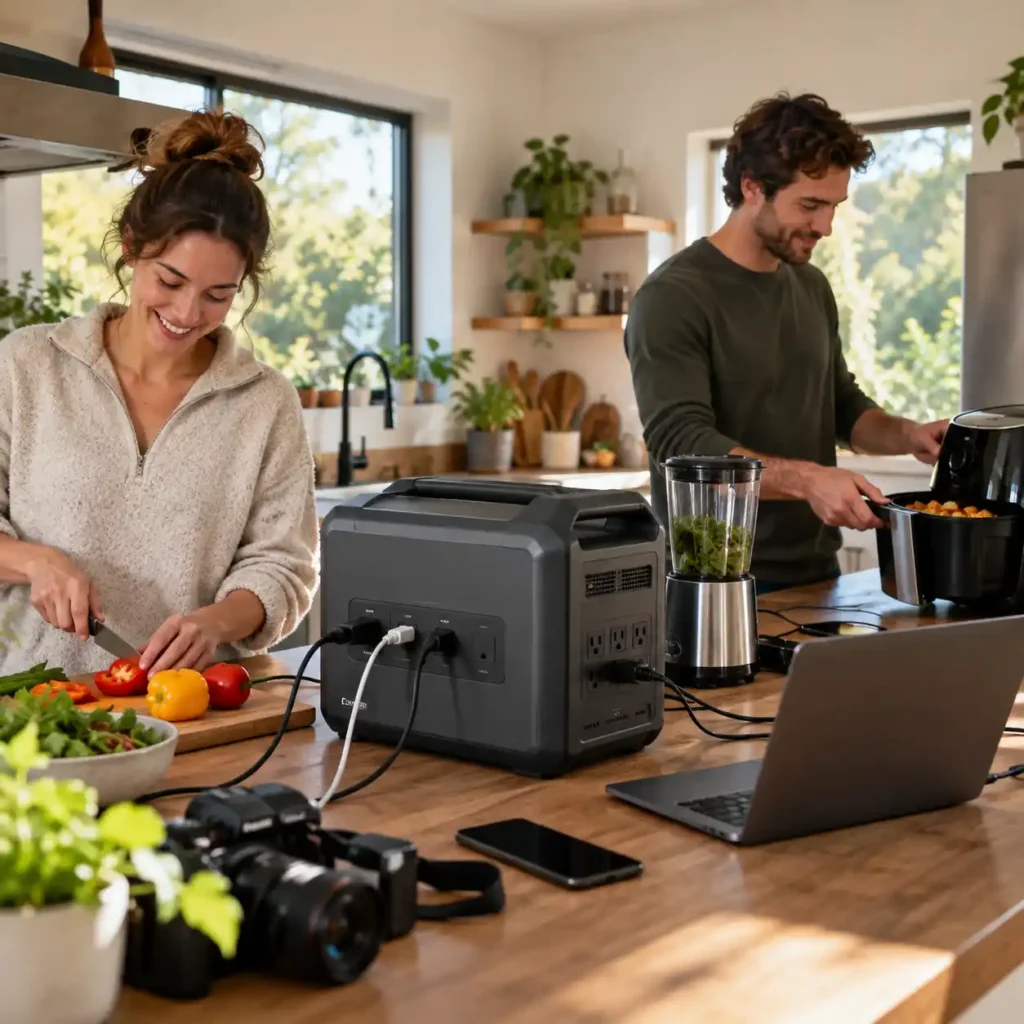
When the budget reaches $2,000, it becomes easier to buy both a larger battery and a more powerful inverter. But watt-hours and watts solve different problems, so paying more for one does not automatically make a power station a better choice.
The right balance depends on what is limiting your current setup. If your main problem is that the battery runs out too quickly, additional capacity is more valuable. If the limitation is that the station cannot continuously support a demanding appliance or several loads at once, higher output matters more.
Capacity Determines How Much Energy You Have
Battery capacity, measured in watt-hours (Wh), tells you how much energy the power station can store.
A higher Wh rating generally gives you more energy to work with and can extend runtime when powering the same load. This makes capacity particularly important when your priority is longer backup, extended off-grid use, or running several lower-power devices over a longer period.
At this budget level, moving from roughly 2,000Wh to around 3,000Wh can represent a meaningful increase in stored energy. That can justify the higher price when your existing limitation is runtime rather than the ability to power a particular appliance.
But additional capacity also tends to mean more weight, a larger footprint, and a higher purchase price. If your typical loads already run for as long as you need, paying for another 1,000Wh may not materially improve your experience.
Output Determines What You Can Run
Continuous AC output, measured in watts (W), answers a different question: how much power can the station deliver at one time?
A power station with substantial battery capacity can still be unsuitable for a high-demand appliance if its continuous output is too low. Conversely, a station with very high output but limited capacity may operate a demanding device while providing less overall runtime.
This distinction becomes especially important near the upper end of a $2,000 budget, where 3,000W-plus systems become available. Higher continuous output can provide more headroom for appliances with substantial running loads or for multiple devices operating simultaneously.
Peak or surge output can help accommodate short startup demands from certain appliances, but it should not be treated as the station’s sustained power capability. For buying decisions, continuous output should remain the primary figure.
Prioritize Capacity When:
Capacity should take priority when:
you need longer runtime rather than more instantaneous power;
most of your devices have relatively modest power demands;
you want a larger energy reserve for extended outages;
you expect to power several lower-power devices over time;
your existing station can already handle your highest-demand appliance but runs out of stored energy too quickly.
In these situations, moving toward a 3kWh-class station can be more valuable than paying for substantially higher inverter output.
Prioritize Continuous Output When:
Higher continuous output should take priority when:
you need to operate higher-draw appliances;
several substantial loads may run simultaneously;
your current station shuts down because a load exceeds its continuous output rating;
you need more headroom for demanding equipment;
additional battery capacity would not solve the actual limitation.
In this situation, spending more on Wh alone does not address the problem. You need an inverter capable of delivering the required continuous power.
When You Need Both
Some buyers genuinely need both a larger energy reserve and higher output.
For example, a household may want enough stored energy to cover an extended outage while also running a refrigerator, networking equipment, lighting, and selected higher-draw appliances. In that situation, a 3kWh-class station with higher continuous output can provide a broader operating range than a smaller battery or a high-output station with less stored energy.
This is also where the upper end of the $2,000 budget can become easier to justify. You are no longer paying for one isolated specification; you are paying for a combination of capacity and output that removes two different limitations at the same time.
The Best Value Is the Right Combination
For a budget of up to $2,000, the goal is not to maximize either number in isolation. It is to find the best combination of capacity and continuous output for your actual loads and required runtime.
A 2kWh-class power station can be the better value when you mainly need a substantial energy reserve in a more manageable package. A 3kWh-class model becomes more compelling when longer runtime is the reason for spending more. A higher-output system makes more sense when the limiting factor is what you can run at one time.
In other words, buy enough capacity for the runtime you need and enough continuous output for the devices you need to run. The additional budget is valuable when it removes a real limitation—not simply because a larger number appears on the specification sheet.
Charging and Solar Input: When Does Paying More Matter?
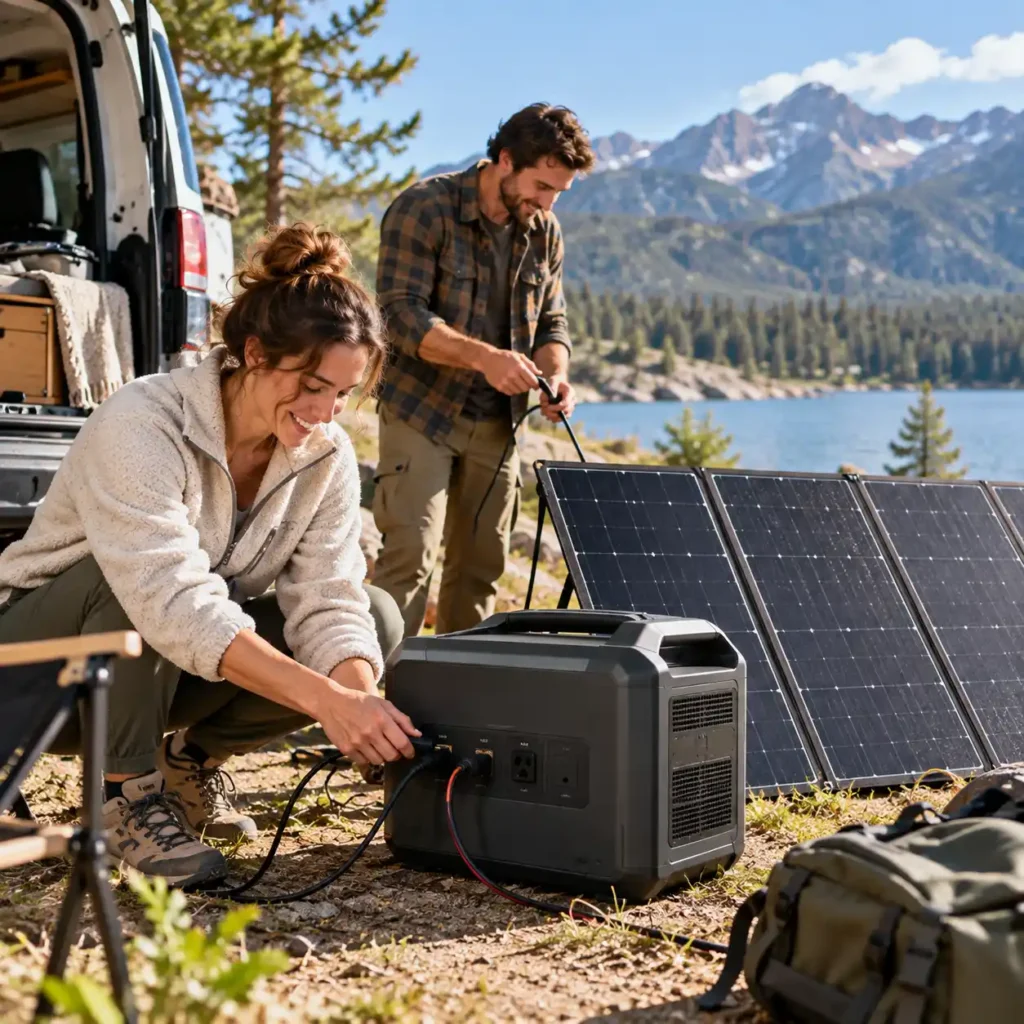
Charging capability becomes more valuable as you move toward the upper end of a $2,000 budget, but it is not automatically worth paying more for. The right question is how often you expect to recharge the power station and whether faster charging or stronger solar input will materially change how you use it.
When Faster AC Charging Matters
Faster AC charging can be valuable when you use the power station frequently and need to get it ready for the next use quickly.
For example, if you rely on the station during repeated outages, use it regularly for off-grid power, or expect to cycle the battery frequently, reducing recharge time can make the system considerably more convenient. A higher-priced model can therefore be worth considering when charging speed reduces downtime between uses.
For an emergency-only power station that spends most of its time stored and fully charged, however, faster AC charging may have little practical value. If you rarely need to recharge the battery under time pressure, paying more for charging performance may not improve your ownership experience enough to justify the additional cost.
When Higher Solar Input Matters
Solar input becomes more important when you expect to recharge the power station away from the electrical grid or want to replenish a large battery during the same day.
A higher maximum solar input can allow a compatible solar array to put more power into the station under suitable conditions. This can be particularly useful for larger 3kWh-class systems, because a larger battery also takes more energy to replenish. If you want to estimate how long a specific battery will take to recharge from solar, our Solar Charging Time Calculator can help.
But maximum solar input should not be viewed in isolation. You need compatible solar panels and suitable conditions to take advantage of a higher input limit. If you do not plan to use solar charging regularly, paying substantially more for a higher solar-input capability may provide little benefit.
When Paying More for Charging Makes Sense
A higher budget is easier to justify when charging capability solves a real operational limitation.
Consider paying more for faster AC charging or stronger solar input if you:
use the power station frequently rather than storing it primarily for emergencies;
need to restore a substantial battery quickly between uses;
rely on solar charging during extended off-grid periods;
have a larger battery that would otherwise take longer to replenish;
want more flexibility when grid power is unavailable.
In these situations, charging capability can be part of the reason to move toward the $1,500–$2,000 range rather than simply an extra specification on a product page.
When You Do Not Need to Pay More
Charging and solar capability are less important if the power station will be used only occasionally.
If your main requirement is to keep a charged battery available for an unexpected outage, you may rarely benefit from the fastest AC charging or the highest solar-input limit. Likewise, if you have no plans to use solar panels, a higher solar-input rating does not by itself make a more expensive power station a better value.
The same principle applies to both capabilities: pay for charging performance when it changes how quickly or reliably you can get usable energy back into the battery.
The Budget Trade-Off
At up to $2,000, charging and solar input should be considered alongside capacity and output rather than treated as independent reasons to spend more.
A buyer who needs longer runtime may get more value from moving to a larger battery. A buyer who needs to run higher-draw appliances may benefit more from higher continuous output. But when those needs are already covered, faster AC charging or stronger solar input can become the capability that makes a higher-priced model worthwhile.
The best choice is therefore not the station with the highest charging or solar specification. It is the model whose charging capability matches how often and how independently you expect to use the power station.
2kWh vs. 3kWh+: When Is the Extra Capacity Worth It?
Moving from a 2kWh-class power station to a 3kWh+ model is one of the most meaningful upgrades available as your budget approaches $2,000. You are not simply getting a higher number on the specification sheet: a roughly 3,000Wh battery provides about 50% more stored energy than a 2,000Wh-class station, which can make a noticeable difference during longer periods without grid power.
But the additional capacity is not automatically worth paying for. A larger battery also tends to mean a heavier, larger, and more expensive power station. The right choice depends on whether your actual limitation is insufficient runtime or whether a 2kWh-class system already provides enough energy for your typical use.
When 2kWh Is Enough
A 2kWh-class power station can be the better choice when your primary needs are moderate backup, shorter outages, or a mix of electronics and appliances that you do not need to operate continuously for very long periods. If you have already decided that the 2kWh class is right for you, see our deeper comparison of Best 2000Wh Portable Power Stations (2026).
It can also make sense when portability matters. A smaller battery can be substantially easier to move between rooms, load into a vehicle, or take on an outdoor trip. If you regularly transport the power station, the lower weight may be more valuable than the additional energy reserve of a 3kWh+ model.
In these situations, spending more for another 1,000Wh may provide capacity that you rarely use.
When 3kWh+ Becomes Worth the Extra Cost
The move into the 3kWh class becomes easier to justify when runtime is the problem you are trying to solve.
A larger energy reserve can be valuable when you:
need to cover longer power outages;
want to keep several lower-power devices running for an extended period;
expect to use a refrigerator and other essential household loads for longer;
spend extended periods off-grid;
want more energy available before the next recharge opportunity;
prefer to have additional reserve rather than operate close to the battery’s limits.
In these situations, the additional capacity is not simply extra headroom. It directly reduces the frequency with which you need to recharge or conserve power.
The Extra 1,000Wh Is Most Valuable When Runtime Is the Limitation
The easiest way to decide between these capacity classes is to identify what currently limits your setup.
If the station can already power the devices you need but runs out of energy sooner than you would like, moving from roughly 2,000Wh to 3,000Wh addresses the problem directly.
If the battery still has plenty of energy available but the inverter cannot handle a particular appliance or combination of loads, buying more Wh will not solve the problem. In that case, a higher continuous AC output may be a more useful reason to spend more.
This distinction matters because more capacity and more output solve different limitations.
What You Give Up for the Extra Capacity
The additional energy reserve comes with practical trade-offs.
A 3kWh+ power station is generally heavier and takes up more space than a 2kWh-class model. That matters if you need to carry the unit frequently, store it in a limited space, or move it between locations.
The higher purchase price can also be difficult to justify if your typical use rarely consumes more than a fraction of a 2kWh battery.
For a station that spends most of its time in one location during home backup, the additional weight may be relatively unimportant. For a station that regularly goes into a vehicle or moves between rooms, it can become a significant part of the ownership experience.
2kWh vs. 3kWh+: Which Buyer Should Choose Which?
A useful way to frame the decision is:
Choose around 2kWh if portability matters, your outages are generally shorter, and your existing energy needs fit comfortably within that capacity.
Choose around 3kWh if longer runtime is a recurring requirement and you want a larger energy reserve without necessarily building a much larger system. If 3kWh-class capacity is the direction you have decided on, see our comparison of Best 3000Wh Portable Power Stations (2026).
Choose 3kWh+ with expansion if you need more capacity now and expect your backup requirements to increase substantially in the future.
The last option changes the decision again because you are no longer paying only for additional battery capacity. You are also paying for the ability to build a larger system later.
When the Extra Capacity Is Not Worth Paying For
You probably do not need to move into the 3kWh+ class if:
your typical loads already run for as long as you need on a 2kWh-class station;
your main use is charging electronics and powering modest loads;
portability is important;
you rarely experience extended outages;
you do not expect to use the additional energy reserve;
the higher price would be better spent on another capability you actually need.
The goal is therefore not to buy the largest battery your budget allows. The extra 1,000Wh is worth paying for when it materially extends the amount of time you can keep your essential loads running. If runtime is not your limitation, a 2kWh-class station may be the better value even within a $2,000 budget.
Expansion: When Is It Worth Paying For?
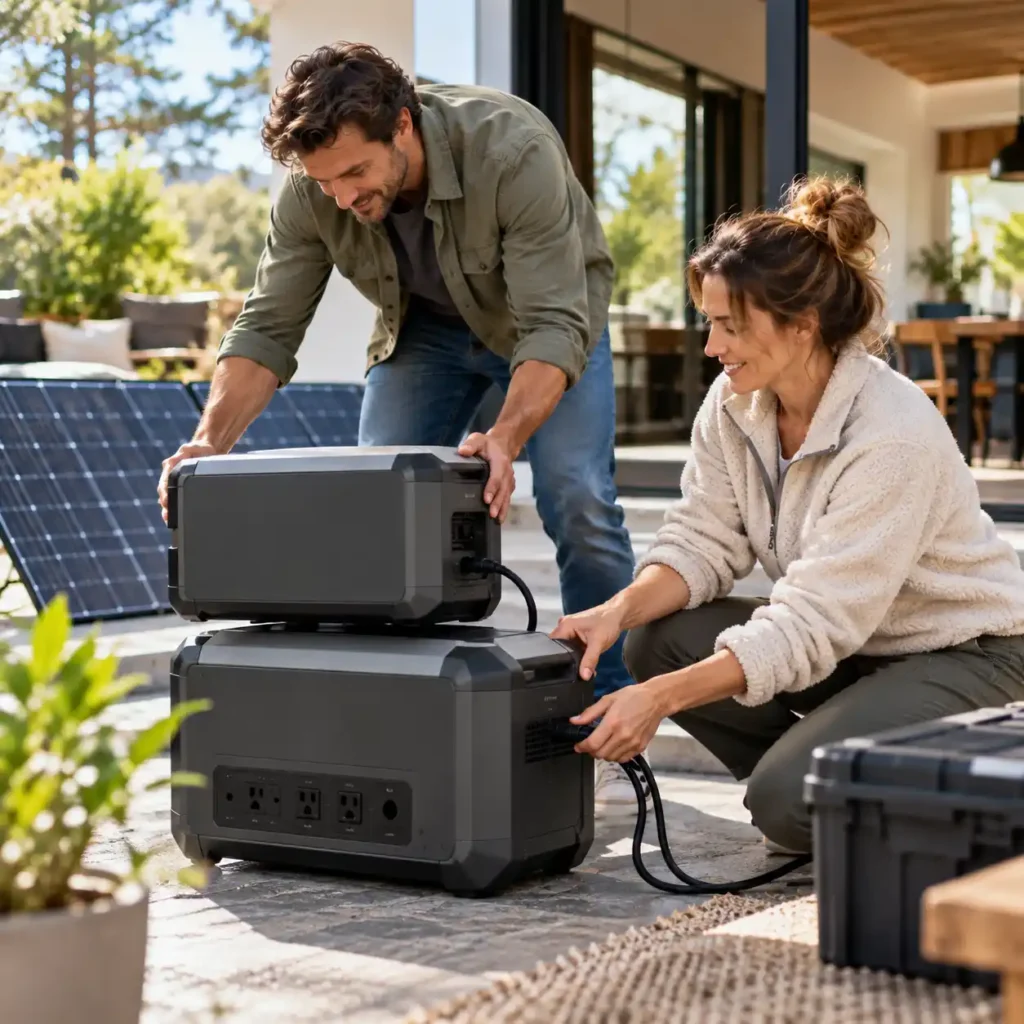
Battery expansion changes what you are buying. Instead of choosing a power station with enough capacity for your needs today, you are paying for a platform that can add substantially more stored energy later. That flexibility can be valuable, but only if your future requirements are likely to exceed the capacity of the base unit.
When Expansion Is Worth Paying For
Expansion makes the most sense when your current needs are manageable but you expect them to grow.
You may want to consider an expandable system if you:
expect longer or more frequent power outages in the future;
want to start with a portable system and increase capacity later;
expect your household backup requirements to grow;
want more stored energy without replacing the original power station;
plan to build a larger backup system gradually rather than buying all the capacity at once.
In these situations, the additional cost is buying future capacity without committing to the full system immediately.
When a Fixed-Capacity Station Is the Better Value
Expansion is less important when you already know approximately how much capacity you need.
If a 2kWh or 3kWh-class station comfortably covers your expected runtime and you do not anticipate needing substantially more energy, a non-expandable model can provide better value. You avoid paying for a larger ecosystem and can focus your budget on the capabilities you will actually use today.
This can also make sense when portability matters. Expandable platforms designed for much larger systems can be considerably heavier, while a fixed-capacity station may be easier to move and store.
Expansion Is Not the Same as More Capacity Today
One important distinction is that expansion does not give you additional energy immediately unless you actually add the compatible battery capacity.
A 3kWh expandable power station and a 3kWh non-expandable station may provide similar starting capacity. The difference is what happens later: the expandable system gives you a path to substantially more stored energy, while the fixed-capacity model remains at its original capacity.
That means you should not choose expansion simply because a product offers it. Choose it when the possibility of needing more capacity later is itself valuable to you.
When Expansion Can Justify the Upper End of the Budget
Expansion becomes easier to justify near the top of a $2,000 budget when the power station is intended to become part of a larger backup system.
For example, the Anker SOLIX F3000 starts with 3,072Wh but can be expanded to a much larger system. The DJI Power 2000 also offers a substantial expansion path from its 2,048Wh base capacity. These models appeal to different buyers, but both illustrate the same principle: you are paying not only for the battery you receive today, but for the ability to add capacity later.
That capability can be particularly useful when your immediate budget does not justify buying a much larger system, but you expect your backup requirements to increase. If your goal is to build toward a larger household backup system, see our guide to Best Home Battery Backup Systems (2026).
When You Should Not Pay for Expansion
You probably do not need an expandable platform if:
your expected capacity requirement is already clear;
roughly 2–3kWh will comfortably cover your foreseeable needs;
portability matters more than future scalability;
you are buying primarily for occasional emergency use;
you have no realistic plan to add batteries later.
In these cases, expansion can become a feature you pay for without receiving meaningful value from it.
The Real Question: Will Your Needs Grow?
The best reason to pay for expansion is not that it makes a power station look more capable on paper. It is that your future power requirements are uncertain or likely to increase.
If you expect your needs to remain stable, buy enough capacity for the job and prioritize the characteristics that matter today. If you expect to move from occasional backup to longer outages, larger household loads, or a more substantial energy system, an expandable platform can make the higher initial investment easier to justify.
In other words, expansion is worth paying for when you are buying a power station as the beginning of a larger system—not when you simply want the longest specification sheet for your money.
Portability vs. Capacity: What Are You Giving Up?
More battery capacity can give you longer runtime, but it usually comes with a practical cost: more weight and a larger physical footprint. At a $2,000 budget, this trade-off becomes especially important because moving from a 2kWh-class power station to a 3kWh or larger system can add substantial capacity while also making the unit much less convenient to move.
More Capacity Usually Means More to Carry
The difference is easy to overlook when comparing specifications online. A 2kWh-class power station may already be a substantial piece of equipment, while 3kWh-class models are generally larger and heavier. Expandable systems can go even further, particularly when additional battery modules are added.
In this guide, the DJI Power 2000 weighs about 48.5 pounds, while the BLUETTI Elite 300 and Jackery HomePower 3000 are around 58 and 59.5 pounds respectively. The Anker SOLIX F3000 is substantially heavier at about 91.5 pounds before considering additional expansion batteries.
That is a significant difference in what you have to lift, carry, load into a vehicle, or move around the house.
The benefit of the heavier models is a larger energy reserve and, in some cases, higher continuous output or greater expansion potential. The question is whether you will use those additional capabilities often enough to justify the extra size and weight.
When the Extra Capacity Is Worth the Weight
A larger and heavier power station can make sense when you expect to:
need longer runtime between charges;
keep more essential devices running during extended outages;
power several devices over a longer period;
operate the station primarily from one location;
use higher-output appliances that benefit from a more capable inverter;
build toward a larger backup system through battery expansion.
In these situations, additional capacity and system capability can be more valuable than minimizing weight.
For example, a 3kWh-class station can be a sensible step up from 2kWh when runtime is the main limitation. An expandable system can make even more sense when today’s requirements are moderate but you expect your backup needs to grow.
When Portability Matters More
A smaller power station can be the better choice when you expect to move it regularly.
If you carry the unit between rooms, load it into a vehicle, take it on outdoor trips, or simply do not have a permanent location for it, every additional pound becomes part of the ownership experience.
This is particularly important at the upper end of a $2,000 budget. A model with more capacity, higher output, and expansion capability may look better on a specification sheet, but those advantages are less valuable if the station is difficult for you to move when you actually need it.
For these buyers, giving up some capacity or system capability can be a sensible trade if it results in a power station that is easier to handle, transport, and store.
The Right Balance Depends on How You Use It
There is no universal point at which a power station becomes “too heavy.” The right balance depends on whether capacity or mobility is the bigger constraint in your situation.
A 2kWh-class model can be the smarter choice when portability and occasional backup are priorities. A 3kWh-class model becomes more compelling when longer runtime matters more than carrying convenience. A much larger expandable system makes the most sense when the station will primarily serve as a stationary or semi-stationary backup system.
The important thing is to consider how often you will physically move the power station, not just whether you technically can.
If the unit will spend most of its time in one place, additional capacity and output may be worth the weight. If you expect to carry it regularly, a lighter model with enough capacity for your actual needs can provide better overall value.
For that reason, do not treat portability as a secondary specification. The best power station is one whose capacity and capabilities you will actually use and whose weight you are comfortable handling.
Common Buying Mistakes When Shopping Under $2,000
A $2,000 budget gives you access to significantly more capable portable power stations, but it also makes overbuying easier. The biggest mistake is assuming that the most expensive or most powerful model automatically offers the best value.
The better approach is to identify the specific limitation you need to solve—whether that is runtime, continuous output, charging speed, solar input, portability, or future expansion—and choose a model whose capabilities address that limitation without paying for features you are unlikely to use.
Paying for More Capacity Than You Need
A $2,000 budget can put 3kWh-class and expandable power stations within reach, but more capacity is not automatically better.
Moving from roughly 2,000Wh to 3,000Wh provides about 50% more stored energy, but it also generally means a larger and heavier power station.
If your typical loads can be covered comfortably by a 2kWh-class model and your outages are relatively short, paying for additional capacity may simply add cost, weight, and size without improving your actual experience.
Pay for more capacity when longer runtime is the limitation you need to solve—not simply because your budget allows it.
Looking at Capacity Without Checking Continuous Output
Battery capacity tells you how much energy a power station stores. Continuous AC output tells you how much power it can deliver to your devices at the same time.
A 3,000Wh-class station can still be the wrong choice if its continuous output does not comfortably support the appliances you intend to run. Conversely, a high-output model may not provide enough runtime if its battery is too small for your needs.
Check both numbers before deciding where your budget should go.
Confusing Peak Output With Continuous Output
Peak or surge output is intended to handle short startup demands from certain appliances. It is not the power level a station should be expected to sustain continuously.
When comparing models under $2,000, use continuous AC output as the primary measure of what the inverter can support. Treat peak or surge ratings as additional information for startup requirements, not as a substitute for continuous output.
Paying for Expansion You Do Not Plan to Use
Expandable systems can be valuable because they let you increase storage later without replacing the original power station. But that flexibility has value only if you expect your power needs to grow.
If your required capacity is already known and unlikely to change, a non-expandable model can be the simpler and more cost-effective choice.
Do not treat expansion as an automatic advantage. Treat it as a feature you are paying for because you expect to use it.
Underestimating Weight Because the Station Is Still Called “Portable”
At this budget, some of the most capable stations weigh well over 50 pounds, and large expandable systems can be considerably heavier.
A power station may technically be portable while still being inconvenient to move regularly. If you expect to load it into a vehicle, move it between rooms, or use it outdoors, consider whether the additional capacity and output are worth the extra weight.
Portability is part of the ownership experience, not just a specification on a product page.
Paying More for Charging and Solar Capability You Will Rarely Use
Higher-priced models can offer faster AC charging, higher solar input, and greater flexibility for replenishing the battery. These capabilities can be valuable if you use the station frequently, rely on solar charging, or need to recover capacity quickly between outages.
But if the power station will spend most of its time stored and only be used occasionally, paying more for charging performance you rarely need may not improve its value.
The right question is not which model charges fastest. It is whether faster charging changes how you will actually use the station.
Choosing by Price Instead of the Capability You Actually Need
Spending closer to $2,000 gives you access to higher output, larger batteries, faster charging, stronger solar input, and more expandable systems. That does not mean every buyer should spend the full budget.
A less expensive model can be the better choice when it already provides enough capacity, output, and charging capability for your intended use. Likewise, a $2,000 model is not necessarily a better purchase if its additional capabilities will rarely be used.
Before buying, identify the specific limitation you need to solve:
- Need longer runtime? Prioritize battery capacity.
- Need to run higher-draw appliances? Prioritize continuous output.
- Need faster replenishment? Look at AC charging and solar input.
- Expect your needs to grow? Consider expansion.
- Need to move the station regularly? Give more weight to portability.
At this budget, the best purchase is usually not the model with the longest specification list. It is the least expensive model that comfortably solves the problems you actually expect to have.
Frequently Asked Questions
Can a portable power station under $2,000 run a refrigerator?
Yes. Many models in this price range have enough capacity and continuous output to support a typical household refrigerator, provided the inverter can handle the refrigerator’s startup demand. Actual runtime depends on the refrigerator’s energy consumption, compressor cycling, and the power station’s usable capacity. For a more detailed comparison focused specifically on refrigerator backup, see Best Portable Power Stations for Refrigerator Backup (2026).
Is a $2,000 portable power station enough for a power outage?
For many essential-load situations, yes. A capable station can provide backup power for a refrigerator, internet equipment, lights, laptops, and other moderate loads. The important limitation is that a portable power station is not designed to replace every electrical circuit in a home at the same time.
Do I need UPS capability if I am buying a power station for home backup?
Not necessarily. UPS capability is most useful when you want the power station to remain connected to sensitive electronics such as computers, networking equipment, or other devices that should stay powered during a grid interruption. If you plan to connect the station only when an outage occurs, UPS performance may be less important. If fast transfer for computers and other critical devices is your main concern, see Best Portable Power Stations for UPS Backup (2026).
Can a portable power station under $2,000 run high-power appliances?
Some can, but the answer depends on the station’s continuous AC output and the appliance’s startup requirements. Models with 3,000W or more of continuous output provide considerably more flexibility for demanding appliances than lower-output stations. Check the appliance’s actual power requirements rather than relying on the station’s peak rating alone.
Can a portable power station under $2,000 replace a whole-home backup system?
Usually not. A portable power station can provide substantial backup for selected essential loads, but whole-home backup generally requires much more energy storage, higher system-level power capability, and often permanent electrical integration. A portable station is better viewed as a flexible backup solution for selected circuits or appliances rather than a direct replacement for a whole-home system.
How long will a portable power station under $2,000 last?
There is no single runtime or lifespan number because both depend on how the station is used. Runtime depends primarily on battery capacity and the power draw of your devices. For a deeper explanation of runtime, battery life, and lifespan, see How Long Does a Power Station Last? Battery longevity depends on factors such as cycle count, operating conditions, charging practices, and the manufacturer’s battery specifications. For a specific appliance or load, use its actual energy consumption rather than a generic runtime estimate.
Final Verdict
The best portable power station under $2,000 is not necessarily the largest or most powerful model. At this budget, the right choice depends on whether you value longer runtime, higher output, portability, charging capability, or the ability to expand later.
For most buyers, the DJI Power 2000 offers the strongest overall balance of capability and practicality. Buyers who need more capacity, higher output, or a larger expandable system may get better value from one of the 3kWh-class options.
The goal is not to spend the full $2,000. It is to choose the model whose additional capability solves a real need.
Our Recommendation
Choose the DJI Power 2000 if you want the strongest all-around balance of capacity, output, portability, and flexibility.
Choose the Anker SOLIX C2000 Gen 2 if your priority is value in the 2,000Wh class and you want a lighter alternative with useful expansion potential.
Choose the BLUETTI Elite 300 if your priority is longer runtime from a compact 3kWh-class system and you do not need expansion.
Choose the Jackery HomePower 3000 if your priority is higher continuous output in a 3kWh-class power station.
Choose the Anker SOLIX F3000 if your priority is future expansion and larger-scale backup capability, and its substantially greater weight is acceptable.
If you are still unsure, start with the capability you need most—overall balance, value, runtime, output, or expansion—rather than starting with the price.
Related Guides
If you want to narrow your decision further, these guides cover the next step:
Best Portable Power Stations Under $1,000 (2026) — if you want to determine whether you can meet your needs without using the full $2,000 budget.
Best 2000Wh Portable Power Stations (2026) — if you have decided that a 2kWh-class station is the right capacity and want a deeper comparison of that category.
Best 3000Wh Portable Power Stations (2026) — if longer runtime and 3kWh-class capacity are your main priorities.
What Size Power Station Do I Need? — if you still need to determine the capacity and output required for your specific devices.
Best Portable Power Stations for Home Backup (2026) — if your primary goal is keeping essential household devices running during power outages.
Best Portable Power Stations for RV (2026) — if your power station will primarily be used for RV travel and camping.
Power Ready Guide Commitment
At Power Ready Guide, our goal is not to tell you to spend the most. It is to help you understand what you are actually getting for your money.
We compare portable power stations based on the capabilities that matter to real buying decisions—capacity, output, charging, portability, expansion, and overall value. We make the trade-offs clear so you can see not only which model stands out, but why another option may make more sense for your needs.
Our commitment is simple: help you spend your budget with confidence, not simply spend the entire budget.